Source Marine Boarding Ladder for Ships, Yachts, and Docks
Find 30 Marine Boarding Ladder options made from stainless steel and aluminum for ships, yachts, and docks. Compare specifications like load capacity and dimensions from verified suppliers in China.
Key considerations
Products List
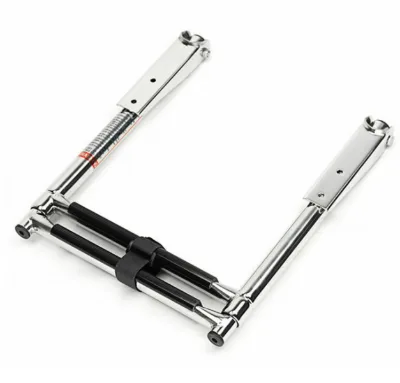


Marine Parts Ladder for Marine Bollards for Boat Marine Bollard Deck Hardware
$299.00 - $999.00
MOQ: 2 Pieces


Comprehensive Sourcing Guide
Strategic Sourcing Guide for Marine Boarding Ladders
The procurement of marine boarding ladders requires a disciplined approach that balances safety compliance, material durability, and specific vessel requirements. As a critical component of maritime safety and accessibility, these ladders serve as the primary interface between a vessel and the water or dock. Buyers must navigate a complex landscape of material specifications, certification standards, and operational constraints. This guide outlines the essential factors for sourcing marine boarding ladders, drawing on observed market data and industry best practices to ensure a secure and compliant procurement process.
Technical Specifications and Material Selection
The foundation of a reliable Marine Boarding Ladder lies in its technical specifications and the materials used in its construction. Market observations indicate a divergence in material choices, with stainless steel and aluminum being the predominant options. Stainless steel offers superior corrosion resistance in harsh saltwater environments, making it a preferred choice for vessels operating in aggressive marine conditions. Conversely, aluminum ladders provide a lightweight alternative that reduces the overall weight of the vessel while maintaining structural integrity.
Key dimensional parameters must be strictly defined during the sourcing phase. The step width is a critical safety metric, with observed specifications often centering around 205mm to ensure secure footing. The main beam dimensions also play a vital role in load-bearing capacity; typical observed values include a main beam width of 105mm and a thickness of 25mm. For telescopic or adjustable models, the handrail tube diameter is frequently standardized at 30mm to provide adequate grip and structural support.
The loading capacity is another non-negotiable specification. Data from current listings indicates a standard loading capacity of 150kg, which must be verified against the intended user load and dynamic forces generated during boarding. The angle of installation is equally important, with an optimal ground or deck angle of approximately 60 degrees recommended to balance ease of ascent with stability. Buyers should note that while some models offer fixed dimensions, many suppliers provide customization options for length, height, and board size to meet specific vessel requirements.
Compliance and Certification Verification
In the maritime industry, compliance is not merely a regulatory formality but a prerequisite for operational safety. When sourcing marine boarding ladders, buyers must verify that products hold recognized certifications. The supply chain includes products certified under ISO 9001, which validates the manufacturer's quality management systems. However, for marine-specific applications, industry-specific certifications are paramount.
Observed certification data highlights the importance of classification society approvals. Ladders intended for commercial or high-standard vessels often require certification from bodies such as CCS (China Classification Society), ABS (American Bureau of Shipping), GL (Germanischer Lloyd), BV (Bureau Veritas), LR (Lloyd's Register), NK (Nippon Kaiji Kyokai), DNV (Det Norske Veritas), and Rina. The presence of these certificates ensures that the ladder has undergone rigorous testing for structural integrity, load capacity, and corrosion resistance.
Buyers should request proof of certification for every batch of ladders ordered. It is essential to distinguish between general manufacturing certifications and specific marine product certifications. While some products may claim compliance with general standards like ISO 799, the primary verification should focus on the specific classification society approvals relevant to the vessel's flag state and operating region. The absence of these specific marine certifications can lead to significant liability issues and potential rejection by port authorities or insurance providers.
Cost Drivers and Pricing Structures
Understanding the cost drivers for marine boarding ladders is essential for budgeting and supplier negotiation. The pricing structure is influenced by several variables, including material type, customization level, and certification requirements. Stainless steel models generally command a higher price point than aluminum counterparts due to the raw material costs and the more intensive manufacturing processes required to achieve the necessary corrosion resistance.
Customization is a significant factor in cost determination. While standard models may have a lower base price, ladders with custom dimensions, specific surface finishes, or unique mounting configurations will incur additional charges. The observed market data shows a wide price range, reflecting the diversity of product specifications. Buyers should be aware that "customized" standards often imply a longer lead time and higher unit cost compared to off-the-shelf inventory.
Packaging and logistics also contribute to the final cost. Products are typically packed in cartons, bubble film, or export-standard packaging to prevent damage during transit. The single gross weight and volume of the product affect shipping costs, particularly for large telescopic or gangway ladders. Buyers should request detailed Incoterms that clarify whether the quoted price includes packaging, insurance, and freight to the destination port.
Typical Applications and Operational Context
Marine boarding ladders serve diverse applications ranging from recreational boating to commercial shipping and offshore operations. The specific use case dictates the required features and durability standards. For instance, ladders designed for ship accessories must withstand constant exposure to saltwater and mechanical stress, whereas attic or general-purpose ladders may have different requirements.
The "Part" classification in the supply chain often identifies the ladder as a "Marine Ladder" or "Marine Aluminium Ship Gangway Ladder," indicating its intended use for boarding and disembarking. These ladders are critical for crew safety, passenger access, and emergency evacuation procedures. The loading capacity of 150kg suggests suitability for multiple users or heavy equipment, but the specific application must be matched to the ladder's design limits.
Telescopic ladders offer versatility for vessels with limited storage space, allowing for compact stowage when not in use. However, their mechanical complexity requires regular maintenance to ensure the telescoping mechanism functions smoothly. Fixed ladders, on the other hand, offer simplicity and robustness but require dedicated space for installation. Buyers must assess the operational environment, including wave conditions, vessel motion, and frequency of use, to select the most appropriate ladder type.
Supplier Evaluation and Sourcing Strategy
Selecting the right supplier is a critical step in the procurement process. The supply base for marine boarding ladders is concentrated in specific regions, with Shandong and Jiangsu in China emerging as key manufacturing hubs. These regions offer a concentration of suppliers capable of producing both stainless steel and aluminum ladders with varying levels of customization.
When evaluating suppliers, buyers should look for evidence of OEM (Original Equipment Manufacturer) capabilities and customization availability. The ability to produce ladders according to specific client requirements is a strong indicator of a supplier's flexibility and technical competence. Additionally, the supplier's track record in handling export orders and providing standard export packaging is essential for ensuring the product arrives in pristine condition.
Quality level is another key evaluation criterion. Suppliers should demonstrate a commitment to high-quality standards, often evidenced by their adherence to ISO 9001 and specific marine certifications. Buyers should verify the supplier's capacity to handle the required order volume, as the observed MOQ (Minimum Order Quantity) ranges from 1 to 100 pieces. This flexibility allows buyers to order small batches for testing or larger quantities for fleet-wide deployment.
Quality Control and Inspection Protocols
Implementing a robust quality control (QC) protocol is essential to mitigate the risks associated with marine equipment procurement. Given the safety-critical nature of boarding ladders, visual inspection alone is insufficient. Buyers should establish a QC plan that includes material verification, dimensional checks, and load testing.
Material verification should confirm that the supplied stainless steel or aluminum meets the specified grade and composition. Dimensional checks must ensure that step widths, beam thicknesses, and handrail diameters align with the agreed specifications. For telescopic models, the extension and retraction mechanisms should be tested for smooth operation and locking stability.
Load testing is a crucial component of the QC process. While specific test data may not always be publicly available, buyers should request third-party test reports or witness load tests to verify the 150kg loading capacity claim. The surface finish, described as "bright finish" in some listings, should be inspected for uniformity and absence of defects that could compromise corrosion resistance.
Long-Term Procurement Considerations
Sourcing marine boarding ladders is not a one-time transaction but part of a long-term relationship that impacts vessel safety and operational efficiency. Buyers should consider the long-term maintenance requirements and the availability of spare parts. Ladders with high-quality finishes and robust construction will have a longer service life, reducing the frequency of replacement and associated costs.
Lead time is a critical factor in long-term planning. Observed delivery times can range from 30 days for standard orders to longer periods for highly customized solutions. Buyers should factor in these lead times when scheduling vessel maintenance or new construction projects to avoid operational delays.
Finally, the supplier's ability to provide ongoing support, including technical assistance and after-sales service, is vital. A supplier that offers customization and maintains high quality standards will be better positioned to support the buyer's evolving needs. By focusing on these long-term considerations, buyers can ensure a sustainable and safe procurement strategy for marine boarding ladders.
FAQs
What materials are used for marine boarding ladders?
Marine boarding ladders are constructed from stainless steel or aluminum. Stainless steel offers superior corrosion resistance in saltwater, while aluminum provides a lightweight alternative that reduces vessel weight while maintaining structural integrity.
Which certifications are required for marine ladders?
Ladders require specific classification society approvals such as CCS, ABS, GL, BV, LR, NK, DNV, and Rina. General manufacturing certifications like ISO 9001 validate quality management but do not replace mandatory marine-specific safety approvals.
How much weight can a standard marine ladder hold?
A standard Marine Boarding Ladder supports a loading capacity of 150kg. This limit must be verified against intended user loads and dynamic forces to ensure safety during boarding and disembarking operations.
Can these ladders be customized for specific vessels?
Yes, customization is available for length, height, and board size to meet specific vessel requirements. Suppliers offer OEM services and can adjust dimensions like step width and beam thickness according to client specifications.
Where are Marine Boarding Ladder manufacturers located?
Manufacturers are primarily located in Shandong and Jiangsu, China. These regions host a concentration of suppliers capable of producing both stainless steel and aluminum ladders with varying levels of customization and export capabilities.
What is the typical lead time for delivery?
The typical delivery time is 30 days for standard orders. Highly customized solutions may require longer periods, so buyers should factor in these timelines when scheduling vessel maintenance or new construction projects.