Source Marine Boat Battery Disconnect Switch for RVs, Trucks, and Yachts
Compare 30 verified listings for the Marine Boat Battery Disconnect Switch, featuring options with 275A to 1250A ratings, 48V DC voltage, and ISO9001 certification. Buyers can evaluate manual operation styles, ABS+Copper or plastic materials, and mounting configurations for boats, RVs, and caravans.
Key considerations
Products List


Blue Ocean Replacement 6007 Battery Switch Isolator Battery Disconnect Switch
$7.99 - $19.99
MOQ: 100 Pieces

Blue Type Sea 6005 Battery Switch Isolator for Marine Best Electric Control
$7.99 - $12.50
MOQ: 100 Pieces






Comprehensive Sourcing Guide
Strategic Sourcing Guide for Marine Boat Battery Disconnect Switches
Understanding Technical Specifications and Operational Parameters
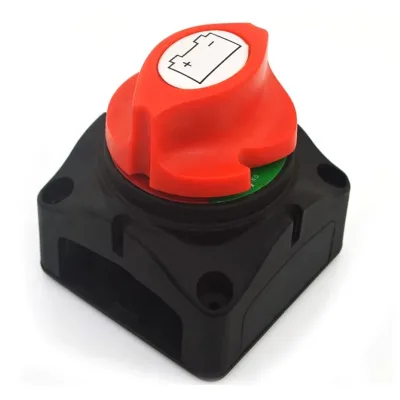
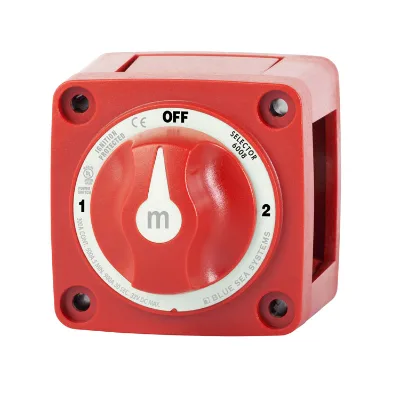
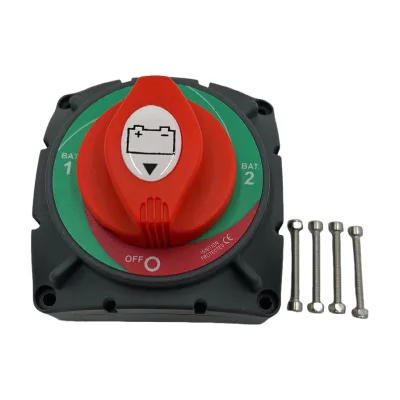
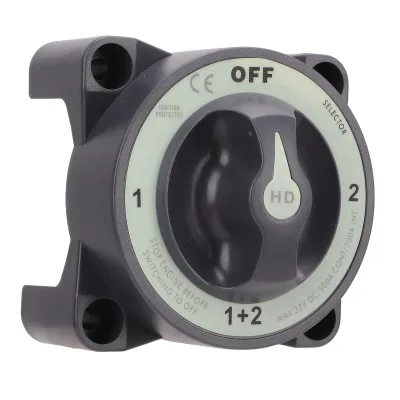
When sourcing a Marine Boat Battery Disconnect Switch, the primary objective is to identify components that ensure safety, reliability, and compatibility with specific vessel electrical architectures. The market presents a diverse array of options, ranging from manual rotary types to embedded surface-mounted units. A critical observation from current product listings indicates that these switches are frequently categorized as low-voltage devices, typically operating within a voltage range of 48V DC, though some specifications note a broader operational window of 8V to 50V. This variability necessitates a rigorous verification process to ensure the selected switch matches the vessel's specific electrical system requirements.
The current handling capabilities are equally vital. Data from available product attributes reveals that continuous rated currents can be as high as 275A DC, with intermittent rated currents reaching up to 455A DC. In more heavy-duty configurations, maximum ampere draws are observed to reach 1250A. These figures are not universal; they represent specific product models rather than a blanket standard for all disconnect switches. Buyers must carefully cross-reference these numbers against their vessel's peak load requirements to prevent thermal failure or switch degradation under load. Furthermore, the physical structure of the switch plays a significant role in installation. Many units are designed as single-column disconnectors with a horizontal rotary type operation mode, offering a manual operation interface that allows for immediate isolation of the battery bank.
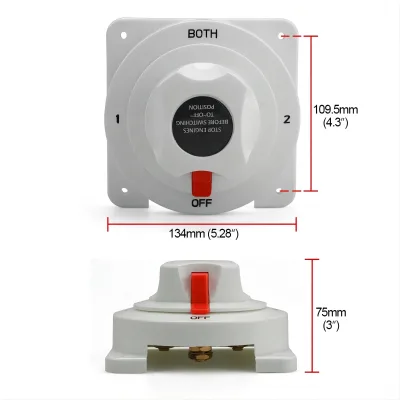
Installation flexibility is another key technical consideration. The supply chain data indicates that these switches support both embedded and surface-mounted installation methods. This dual capability allows for integration into various boat designs, from compact RVs and caravans to larger yachts and commercial vessels. The mounting hardware is often standardized, with specific models featuring a 1/4" (M6) screw mounting hole, ensuring compatibility with standard marine hardware. The physical construction materials are predominantly a combination of ABS plastic and copper, balancing electrical conductivity with resistance to the harsh marine environment. Some listings specify a "Red switch" color, while others offer white variants, which may be relevant for aesthetic integration or specific safety coding requirements on board.
Compliance, Certification, and Safety Standards
In the marine sector, compliance with international and regional safety standards is non-negotiable. The safety of the vessel and its occupants relies heavily on the integrity of the electrical isolation systems. Current product data highlights several certifications and standards that buyers should prioritize during the vetting process. Notably, the UL standard is frequently cited as a benchmark for electrical safety, indicating that the product has undergone rigorous testing for fire and shock hazards. Additionally, ISO9001 certification is observed in the supply chain, which signifies that the manufacturer adheres to specific quality management system requirements, ensuring consistent production quality.
Beyond general quality management, specific marine certifications are essential. Some products are described as having "Anti-Airlock" and "Ignition Protected" features. These attributes are critical for applications where the switch is located in areas prone to fuel vapors, such as engine compartments. Ignition protection ensures that the switch does not generate sparks that could ignite flammable gases, a requirement often mandated by maritime safety regulations. While some background information mentions CE certification, buyers should treat this as a variable attribute to be verified on a per-supplier basis rather than a guaranteed standard for all listed items.
The distinction between standard and non-standard products is also relevant. Most observed listings fall under the "Standard" classification, implying they meet general industry expectations. However, for specialized vessels or those operating in extreme environments, buyers must verify if the product meets specific regional maritime codes. The "Genuine Marine" branding observed in some listings suggests a focus on marine-specific durability, but this is a marketing term rather than a regulatory certification. Buyers should request third-party test reports to confirm that the "High Breaking Capacity" and "M" fusing speed attributes mentioned in product descriptions are validated by independent laboratories.
Cost Drivers and Pricing Dynamics
The pricing landscape for marine battery disconnect switches is influenced by a complex interplay of technical specifications, material costs, and order volumes. The observed price range in the market spans from approximately $1.10 to $39.99 USD. This wide disparity is not arbitrary; it reflects differences in current ratings, material quality, and certification levels. A switch rated for 275A continuous current with UL and ISO9001 certifications will naturally command a higher price point than a basic unit with lower amperage ratings and fewer certifications.
Material composition is a significant cost driver. Switches constructed with a blend of ABS plastic and copper offer superior conductivity and durability compared to those made from plastic alone. The presence of copper contacts, essential for handling high amperage draws without excessive heat generation, adds to the manufacturing cost. Additionally, the complexity of the design, such as the inclusion of anti-airlock mechanisms or specific mounting configurations, can increase production expenses.
Order volume plays a pivotal role in the final unit cost. The Minimum Order Quantity (MOQ) ranges from 1 to 2000 units. Buyers purchasing small quantities, often for retrofitting a single vessel, will face higher per-unit costs. Conversely, bulk procurement for fleet outfitting or manufacturing partnerships can significantly reduce the cost per unit. The packaging method, typically a carton box with a single unit per box, also influences logistics costs. For large orders, optimizing packaging to reduce shipping volume can yield substantial savings. Buyers should negotiate based on their specific volume requirements, understanding that the price floor is likely determined by the raw material costs of copper and the overhead of maintaining high-standard certifications.
Typical Applications and Vessel Compatibility
The versatility of marine battery disconnect switches allows them to be deployed across a wide spectrum of vessel types. The product attributes explicitly list applications including boats, RVs, yachts, vans, caravans, trucks, and general vehicles. This broad applicability underscores the importance of selecting a switch that matches the specific environmental and operational demands of the vessel. For inland and coastal boats, the focus is often on corrosion resistance and ease of manual operation. The horizontal rotary type operation mode is particularly suited for these applications, providing a clear visual indication of the switch status (ON-OFF) and allowing for quick disconnection in emergency situations.
In the context of RVs and caravans, the switch must often accommodate limited space and varying electrical loads. The ability to mount the switch either embedded or on the surface provides flexibility for these compact living spaces. The 48V DC rating is particularly relevant for modern RVs and electric vehicles that utilize higher voltage battery banks for efficiency. For larger yachts and commercial vessels, the high breaking capacity and high continuous rated current (up to 275A or more) become critical. These vessels often have complex electrical systems with multiple battery banks, requiring robust disconnect switches that can handle the surge currents of starting engines or powering heavy loads without failure.
The "Genuine Marine" designation and specific application tags like "Boat Marine Ship" suggest that these switches are engineered to withstand the unique challenges of the marine environment, including saltwater exposure, humidity, and vibration. However, buyers should not assume that a switch labeled for "Marine" use is automatically suitable for all marine applications. The specific voltage and current ratings must align with the vessel's electrical architecture. For example, a switch designed for a small fishing boat with a 12V system may not be appropriate for a large yacht with a 48V system, even if both are marketed for marine use.
Supplier Evaluation and Quality Assurance
Evaluating suppliers for marine battery disconnect switches requires a multi-faceted approach that goes beyond price comparison. The origin of the products is a key factor, with the majority of observed listings indicating production in China, specifically in the Guangdong region. This region is a known hub for electrical component manufacturing, offering a wide range of options but also requiring careful due diligence to ensure quality consistency. Buyers should verify the supplier's track record in the marine industry, looking for evidence of long-term partnerships with reputable boat manufacturers or marine equipment distributors.
Quality assurance processes are paramount. The presence of ISO9001 certification is a strong indicator of a supplier's commitment to quality management, but it should be complemented by specific product testing data. Buyers should request documentation that validates the "High Breaking Capacity" and "M" fusing speed attributes. Additionally, the "Single-column Disconnector" structure and "Manual" operation mode should be verified against physical samples to ensure they meet the tactile and visual requirements of the end-user. The packaging, described as a "Carton Box" with "1PC/Box," should be inspected for durability to prevent damage during transit, especially for international shipments.
Supplier reliability is also measured by their ability to meet lead times and handle customizations. The availability of customization options is a positive sign, suggesting that the supplier can adapt products to specific buyer requirements. However, buyers must clarify the scope of these customizations, including any impact on lead times or pricing. The "Standard" classification of most products suggests that off-the-shelf options are readily available, but for specialized needs, the supplier's flexibility and communication channels are critical. Buyers should establish clear communication protocols to ensure that any deviations from standard specifications are documented and agreed upon before production begins.
Long-Term Procurement and Maintenance Considerations
Sourcing marine battery disconnect switches is not merely a one-time transaction but a strategic decision that impacts the long-term reliability and safety of the vessel. The durability of the switch is directly linked to the materials used and the quality of the manufacturing process. The combination of ABS plastic and copper is a standard choice for balancing cost and performance, but buyers should inquire about the specific grade of materials used. Higher-grade copper alloys and UV-resistant ABS plastics can extend the lifespan of the switch, reducing the frequency of replacements and maintenance costs.
Maintenance considerations are also influenced by the installation method. Surface-mounted switches are generally easier to inspect and replace, while embedded switches may require more effort to access in the event of a failure. The "ON-OFF" function and the clear visual indication provided by the rotary mechanism are essential for routine checks. Buyers should ensure that the switch design allows for easy visual confirmation of the switch status, which is crucial for pre-departure safety checks.
Long-term procurement strategies should also account for the availability of spare parts and replacement units. The "Single package size" of 10x10x10 cm and a gross weight of 1.000 kg indicate that these switches are relatively compact and lightweight, facilitating easy storage and replacement. However, buyers should verify the availability of compatible mounting hardware and replacement parts to ensure that the switch can be maintained or replaced without the need for custom fabrication. Finally, the "Selling Units" being listed as "Single item" suggests that the market supports both individual purchases and bulk orders, allowing buyers to scale their procurement based on their specific needs and inventory requirements. By focusing on these long-term factors, buyers can ensure that their investment in marine battery disconnect switches delivers sustained value and safety over the life of the vessel.
FAQs
How is the Marine Boat Battery Disconnect Switch operated?
The switch operates manually via a horizontal rotary type mechanism. This design allows for immediate isolation of the battery bank and features a clear ON-OFF function for easy visual status checks during vessel maintenance or emergencies.
What voltage ratings are available for these disconnect switches?
Most units are rated for 48V DC, though some models support a broader range of 8V to 50V. Buyers must verify the specific voltage rating against their vessel's electrical system to ensure compatibility and prevent equipment failure.
Which certifications should I look for in a marine battery switch?
Prioritize switches with UL standards for electrical safety and ISO9001 for quality management. Some models also feature ignition protection and anti-airlock capabilities, which are critical for safety in areas prone to fuel vapors on board.
Can I install this switch in an embedded or surface mount?
Yes, the product supports both embedded and surface-mounted installation methods. This flexibility allows integration into various boat designs, from compact RVs to larger yachts, often utilizing standard 1/4 inch M6 screw mounting holes.
What is the maximum continuous current rating for these switches?
Continuous rated currents can reach up to 275A DC, with intermittent ratings as high as 455A DC. Heavy-duty configurations may support maximum ampere draws of 1250A, but these figures vary by specific model and must be checked.
Which materials are used to construct these marine switches?
Construction typically combines ABS plastic and copper to balance durability with electrical conductivity. This material blend ensures resistance to harsh marine environments while maintaining the high breaking capacity required for safe electrical isolation.
How does the price range vary for these disconnect switches?
Prices range from approximately 1.10 to 39.99 USD depending on specifications and order volume. Higher-rated switches with UL and ISO9001 certifications generally cost more than basic units with lower amperage ratings and fewer certifications.
Where are these marine battery switches typically manufactured?
The majority of products originate from Guangdong, China, a known hub for electrical component manufacturing. Buyers should verify supplier track records and quality assurance processes to ensure consistency given the concentration of production in this region.