Source MDF Bathroom Vanity with Mirror Lamp for Villa, Hotel, Apartment
Explore 30 listings for the MDF Bathroom Vanity with Mirror Lamp, comparing options like floor-mounted and wall-mounted styles with LED mirrors. Buyers can evaluate materials such as MDF, solid wood, and tempered glass to find suitable solutions for villas, hotels, and apartments.
Key considerations
Products List

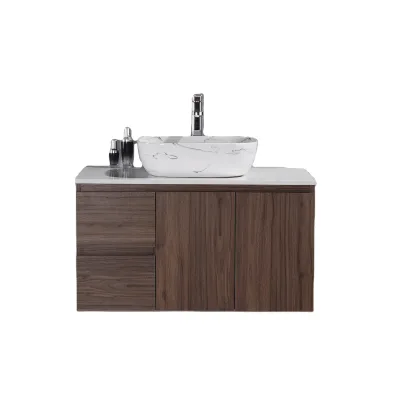


Marble Vanity Top Simple Modern Wall Cabinet Bathroom Vanity with Mirror
$100.00 - $300.00
MOQ: 20 Sets


Free Standing Storage Sink Vanity with Mirror Modern Bathroom Cabinet Vanity
$80.00 - $200.00
MOQ: 1 Pieces

Hotel Modern MDF Lacquer Painting or Wood Color Bathroom Vanity with Side Cabinet
$199.00 - $399.00
MOQ: 1 Sets


Wall Mounted Bathroom Vanity Two Pack Lacquer Finish Bathroom Customized Vanity
$100.00 - $200.00
MOQ: 1 Pieces


Modern Wall Mounted MDF Plywood Sink Basin Mirror Bathroom Vanity Cabinet
$39.00 - $89.00
MOQ: 1 Pieces


Comprehensive Sourcing Guide
Strategic Sourcing Guide for MDF Bathroom Vanities with Integrated Mirror Lighting
Selecting the right bathroom vanity is a critical decision that balances aesthetic appeal with functional durability, particularly when the core requirement involves a Medium Density Fiberboard (MDF) carcass paired with an integrated mirror lamp. In the global B2B procurement landscape, this specific configuration offers a modern, cost-effective solution for residential and commercial projects. However, the market is fragmented with varying material grades, installation methods, and lighting standards. This guide provides a disciplined framework for evaluating suppliers and products, ensuring that the final procurement aligns with technical requirements and quality expectations without relying on unverified marketing claims.
Material Composition and Structural Integrity
The foundation of any bathroom vanity is its carcass material. When the core keyword specifies "MDF," buyers must understand that not all MDF is created equal. In the context of bathroom environments, moisture resistance is the primary concern. Standard MDF is susceptible to swelling and degradation when exposed to high humidity or direct water contact. Therefore, the sourcing strategy must prioritize verifying the specific treatment of the MDF used. While some suppliers may list "MDF" broadly, the critical technical distinction lies in whether the board is moisture-resistant (MR-MDF) or treated with water-repellent resins.
In addition to the carcass, the countertop material significantly influences the product's longevity. The observed market data indicates a divergence in countertop options, ranging from Tempered Glass and Artificial Stone to Marble and Ceramics. For an MDF-based vanity, the countertop must provide a robust barrier against water. Tempered glass offers a sleek, modern look but requires careful handling during installation. Artificial stone provides a solid surface that is less prone to chipping, while marble offers a premium aesthetic but demands sealing to prevent staining. The integration of these materials with the MDF base requires precise engineering to ensure that expansion and contraction rates do not cause structural failure over time.
Furthermore, the basin material presents another variable. While some configurations utilize glass basins, others rely on ceramics. Ceramic basins are generally more durable and easier to clean, making them a preferred choice for high-traffic commercial applications. Buyers must ensure that the chosen basin material is compatible with the countertop cutout and the overall weight distribution of the unit. The presence or absence of a water blocking plate is also a critical structural detail. Units equipped with a water blocking plate offer an additional layer of protection against spills reaching the MDF carcass, whereas those without this feature rely entirely on the sealant quality and the countertop material's impermeability.
Technical Specifications and Installation Requirements
The technical specifications of a bathroom vanity dictate its fit within a specific architectural space. Installation type is a primary differentiator, with options ranging from floor-mounted to wall-mounted configurations. Floor-mounted vanities provide a stable base and are often easier to install, as they do not require the wall to bear the full weight of the unit. This is particularly relevant for MDF units, which may have weight limitations compared to solid wood or stone alternatives. Conversely, wall-mounted units offer a floating aesthetic that can make smaller bathrooms appear larger, but they demand rigorous verification of wall stud integrity and anchoring hardware.
Dimensions are another vital specification. The market data highlights specific model standards, such as 82x49x83cm, which serves as a reference point for standard sizing. However, buyers should not assume that all units conform to these dimensions. Customization is a frequently observed attribute in this category, allowing for tailored solutions to fit unique room layouts. When dealing with custom orders, the lead time and production complexity increase. The packaging method also plays a role in the logistics chain; options range from flat packages designed for efficient shipping to complex assemblies involving foam, five-layer cartons, and strong wood cases. The choice of packaging directly impacts the risk of transit damage, especially for units with glass countertops or integrated LED mirrors.
The lighting component, specifically the mirror lamp, adds a layer of electrical complexity to the procurement process. Some units come with integrated LED mirrors, while others are supplied without mirror lamps, requiring separate installation. The presence of an LED mirror necessitates verification of the electrical rating, voltage compatibility, and the IP (Ingress Protection) rating to ensure safety in wet environments. Buyers must confirm that the electrical components meet the safety standards of the destination country, as this is a common point of failure in cross-border procurement.
Compliance, Certification, and Environmental Standards
Navigating the regulatory landscape is essential for B2B buyers, particularly when importing from manufacturing hubs like China or Hangzhou. While the provided data mentions "CE" as a standard, it is crucial to treat this as a background observation rather than a guaranteed certification for every listed product. The CE mark indicates conformity with health, safety, and environmental protection standards for products sold within the European Economic Area, but buyers must request specific test reports and certificates of conformity to validate this claim. Relying solely on a supplier's assertion of compliance without documentary evidence poses a significant risk.
Environmental standards are equally important, especially for projects targeting green building certifications or eco-conscious markets. The data references the E0 and E1 standards, which relate to formaldehyde emission levels. E0 represents the lowest emission level, followed by E1. For indoor air quality, especially in enclosed spaces like bathrooms, verifying that the MDF and any composite materials meet E0 or E1 standards is a prudent step. Buyers should request third-party laboratory test results to confirm these emission levels, as the "E0/E1 Standard" label alone does not guarantee compliance without supporting documentation.
Additionally, the business type of the supplier, whether a manufacturer or a trading company, influences the ability to verify compliance. Manufacturers with R&D capabilities, such as those offering OEM and ODM services, are often better positioned to provide detailed technical documentation and customize products to meet specific regulatory requirements. However, even with a manufacturer, the burden of proof lies with the buyer to ensure that the specific batch of goods meets the required standards.
Cost Drivers and Pricing Dynamics
Understanding the cost structure of MDF bathroom vanities is vital for budget planning. The observed price range in the market spans from $32.5 to $399, a wide variance that reflects differences in material quality, design complexity, and customization levels. Several factors drive these costs. First, the countertop material is a major cost driver; marble and solid wood options typically command higher prices than artificial stone or glass. Second, the inclusion of integrated LED mirrors and advanced lighting systems adds to the unit cost. Third, the level of customization significantly impacts the price; non-customized, standard models are generally more affordable, while bespoke designs involving unique dimensions or finishes incur higher production costs.
The Minimum Order Quantity (MOQ) is another critical cost factor. The observed MOQ range of 1 to 30 units suggests flexibility in the market, but buyers must align their order volume with the supplier's capacity. Lower MOQs may result in higher per-unit costs due to setup fees and reduced economies of scale. Conversely, larger orders can negotiate better pricing but require careful inventory management. The packaging method also influences logistics costs; units requiring strong wood cases or multi-layer carton packaging will incur higher shipping expenses compared to flat-packed units.
Lead times, observed between 20 and 45 days for shipment, must be factored into the total cost of ownership. Delays in production or shipping can disrupt project timelines, leading to additional costs for storage or alternative sourcing. Buyers should verify the supplier's ability to meet delivery deadlines, especially for custom orders where production times may extend beyond the standard range.
Supplier Evaluation and Quality Assurance
Evaluating suppliers requires a systematic approach that goes beyond surface-level marketing claims. The business type, whether a manufacturer or a trading company, is a starting point. Manufacturers with in-house R&D and OEM/ODM capabilities often offer greater control over the production process and quality assurance. However, buyers must verify these claims through site audits or third-party inspections. The location of the supplier, such as Hangzhou, can provide insights into the local supply chain and logistics infrastructure, but it does not guarantee product quality.
Quality control should be a continuous process throughout the procurement lifecycle. Buyers should establish clear quality benchmarks for the MDF moisture resistance, the durability of the countertop, and the reliability of the LED lighting. Regular inspections during production and pre-shipment checks are essential to identify defects early. The packaging method should be scrutinized to ensure that the product arrives in pristine condition. For units with glass countertops or integrated mirrors, the risk of breakage is higher, making robust packaging a non-negotiable requirement.
When comparing suppliers, buyers should create a matrix that evaluates each candidate against key criteria: material specifications, compliance documentation, lead time reliability, and after-sales support. This structured approach helps in making an objective decision based on data rather than intuition. It is also important to consider the supplier's track record in the specific application sectors, such as villas, townhouses, apartments, hotels, or restaurants. Different applications have different wear-and-tear profiles, and a supplier experienced in hotel projects may offer more durable solutions than one focused on residential units.
Long-Term Procurement and Application Suitability
The long-term success of a bathroom vanity procurement depends on its suitability for the intended application. The data indicates that these products are designed for a wide range of settings, including villas, townhouses, apartments, hotels, and restaurants. Each application has unique requirements. For instance, hotel vanities must withstand high-frequency use and rigorous cleaning protocols, making durability and ease of maintenance paramount. Residential units, on the other hand, may prioritize aesthetic customization and specific design styles, such as modern or classic.
The style of the vanity, whether modern or classic, should align with the overall design scheme of the project. Modern styles often feature clean lines and integrated lighting, while classic styles may incorporate more ornate details. The color options, ranging from specific MDF finishes to "any color can be made," offer flexibility but require clear communication with the supplier to ensure the final product matches the design intent. The "as picture" attribute suggests that visual references are critical, and buyers should ensure that the supplier provides high-resolution images or samples before mass production.
Sustainability and environmental impact are increasingly important considerations for long-term procurement. The use of E0/E1 standard materials and eco-friendly manufacturing processes can enhance the marketability of the finished project. Buyers should also consider the end-of-life disposal of the vanity, particularly the MDF components, to ensure they align with local waste management regulations.
In conclusion, sourcing MDF bathroom vanities with mirror lamps requires a meticulous approach that balances technical specifications, compliance, cost, and supplier reliability. By adhering to the guidelines outlined in this guide, buyers can navigate the complexities of the market and secure high-quality products that meet their specific project needs. The key lies in verification, clear communication, and a commitment to quality at every stage of the procurement process.
FAQs
What installation types are available for MDF vanities?
Both floor mounted and wall mounted installation types are available for these vanities. Buyers should verify the specific model requirements, as some units like DT-22 are wall mounted while others are floor mounted, affecting structural support needs.
Can I find MDF vanities with integrated LED mirrors?
Yes, models with LED mirrors are available in the market. However, some configurations are supplied without mirror lamps, so buyers must explicitly check product attributes to ensure the selected unit includes the desired integrated lighting component.
Which countertop materials pair with MDF carcasses?
Countertops made of tempered glass, artificial stone, or marble can be paired with MDF carcasses. The choice depends on the specific model, as observed data shows variations including glass and stone options alongside the standard MDF base.
How does customization affect the ordering process?
Customization is available for many models, allowing for tailored dimensions and finishes. Buyers should note that some units are non-customized, and custom orders may require longer lead times and specific packaging like foam plus strong wood cases.
What are the standard delivery times for these units?
Shipped goods typically arrive within 20 to 45 days after order confirmation. This lead time applies to standard production cycles, though custom orders or specific packaging requirements might influence the exact delivery schedule.
Which environmental standards apply to MDF materials?
Products may comply with E0 or E1 standards regarding formaldehyde emissions. Buyers should request specific test reports to verify that the MDF used meets these environmental standards for indoor air quality and safety compliance.