Source Mdf Veneer Dining Table for Hotel, Home, and Restaurant
Find 30 verified options for the Mdf Veneer Dining Table suitable for hotels, homes, and restaurants. Buyers can compare features like soft-closing hardware, modern styles, and customizable dimensions from suppliers in China.
Key considerations
Products List


$150.00 - $180.00
MOQ: 30 Pieces


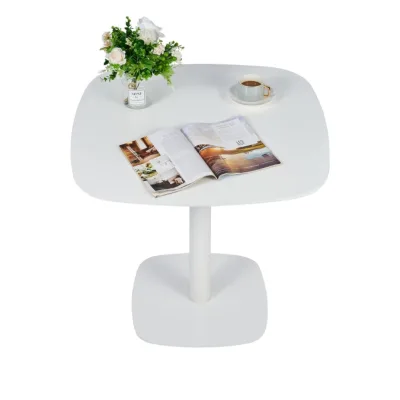
Modern Good Quality Home Furniture 4 Wood Legs MDF Material Restaurant Dining Table
$18.00 - $35.00
MOQ: 200 Pieces




Comprehensive Sourcing Guide
Strategic Sourcing Guide for MDF Veneer Dining Tables
Understanding Product Composition and Technical Specifications
When sourcing an Mdf Veneer Dining Table, the buyer must first distinguish between the core structural material and the surface finish. The supplied data indicates that the standard door and table materials often utilize Plywood, Melamined Board, or MDF (Medium Density Fiberboard) as the primary substrate. This choice of material is critical for the table's stability, weight, and cost profile. MDF is frequently selected for its smooth surface, which allows for high-quality veneer application and complex machining that solid wood might not support as easily.
The surface finish, or veneer, is applied over this core. While the provided facts list "Granite/Quartz/Mable/Artificial Stone" as countertop materials for related furniture, the specific request for a dining table with an MDF core suggests a focus on the wood-based variants. The standard specifications observed include dimensions such as 12080cm or 110197*74cm, indicating a range of sizes from compact square tables to larger rectangular configurations. The shape is predominantly observed as Rectangle or Square, catering to various dining room layouts.
A key technical attribute for these tables is the construction method. The data highlights "All Welded" solutions for metal frames, often made of Aluminum, which suggests that many MDF dining tables come with a hybrid construction: a metal frame for structural integrity and an MDF top for the dining surface. The thickness of the top is a crucial specification; while bench tops are noted as 20mm thick with laminated edges, the dining table tops themselves require verification of their specific thickness to ensure they can support daily dining loads without sagging. The "Weaving Style" and "Appearance" attributes suggest that some models may feature intricate surface patterns or woven accents, adding aesthetic value to the functional MDF core.
Compliance, Certification, and Regulatory Standards
In the B2B procurement of furniture, particularly items destined for commercial use in hotels or homes, verifying compliance is non-negotiable. The supplied facts explicitly mention CE and ISO certifications as standard attributes for the products in this category. Specifically, the "Certificate" field lists ISO, and the "Certification" field includes CE and ISOCondition:New. These certifications are vital indicators that the manufacturer adheres to international quality management systems and safety standards.
For MDF-based products, the presence of formaldehyde emissions standards is a primary concern, although specific numerical limits (such as E1 or E0) are not explicitly detailed in the provided text. Buyers must verify that the MDF core meets the relevant emission standards for the destination market. The "prod_standard" field notes the use of Melamined Board and MDF, which implies the need to check the formaldehyde content of the resin used in the board manufacturing. The "Condition: New" attribute confirms that the products are not refurbished, which is a baseline requirement for new inventory.
Furthermore, the "Guarantee: 3 Years" attribute observed in the data suggests a manufacturer confidence in the product's durability. This warranty period serves as a proxy for quality assurance; a supplier willing to offer a three-year guarantee on an MDF veneer table is likely using higher-grade adhesives and veneers that resist delamination and moisture damage. Buyers should request specific documentation proving that the CE and ISO certifications are current and applicable to the specific model number, such as HL-556 or DT-120, rather than generic company certifications.
Cost Drivers and Pricing Dynamics
The pricing for MDF veneer dining tables is influenced by a complex interplay of material costs, labor, and logistics. The observed price range in the market data spans from 18 to 699 USD. This wide variance indicates significant differences in product complexity, size, and finish quality. The lower end of the spectrum likely corresponds to smaller, simpler models with basic veneers and standard hardware, while the higher end reflects larger tables, premium veneers, or those with integrated features like soft-closing mechanisms.
Several specific factors drive these costs. First, the hardware selected plays a major role. The data lists "Blum, Hettice etc" as the hardware options. Blum and Hettice are premium brands known for high durability and smooth operation, particularly for soft-closing hinges and drawer sliders. Including these branded components will increase the unit cost significantly compared to generic hardware. Second, the customization level is a primary cost driver. The "Customization: Available" and "Customized: Customized" attributes indicate that bespoke orders, such as specific dimensions or unique veneer patterns, will incur higher costs than standard off-the-shelf models.
Logistics also impact the final landed cost. The "Loading Quantity" of 120 sets per HQ and the "40hq: 415PCS" data points highlight the efficiency of the packaging. Efficient stacking and flat-packing options reduce shipping volume, which can lower freight costs. However, the "Delivery Time: 30 Days" suggests a lead time that must be factored into the total cost of ownership, especially for time-sensitive projects. The "MOQ: 1 Set" offers flexibility for small buyers, but larger orders may benefit from volume discounts not explicitly detailed in the price range.
Typical Applications and Usage Scenarios
The versatility of MDF veneer dining tables makes them suitable for a broad spectrum of applications. The "Usage" attribute explicitly lists "Hotel" and "Home," confirming their dual utility in commercial hospitality and residential settings. In hotel environments, the tables must withstand high traffic and frequent cleaning. The "Modern" and "Antique" style attributes suggest that these tables can be sourced to match diverse interior design themes, from contemporary minimalist hotels to traditional boutique inns.
The "Shape" and "Size" variations further define their application. Square tables, such as those with dimensions around 120*80cm, are ideal for small dining areas or bistro settings. Rectangular tables, potentially reaching lengths of 197cm, are better suited for conference dining or large family gatherings. The "Folded: Unfolded" attribute indicates that some models may be collapsible or extendable, a feature highly valued in multi-purpose spaces like hotel banquet halls or compact urban apartments.
Additionally, the inclusion of accessories like "Backsplash, Drawer Basket, Faucet, Hinge" suggests that some of these units may be part of a larger kitchen or dining island system. In a hotel setting, a dining table with integrated storage or specific hardware can enhance guest convenience. The "Weaving Style" and "Appearance" features allow for aesthetic customization to match the specific branding of a hotel chain or the personal taste of a homeowner.
Supplier Evaluation and Operational Capabilities
Evaluating a supplier for MDF veneer dining tables requires a deep dive into their operational capabilities and logistical reliability. The "prod_origin" is consistently listed as "Shandong, China" or simply "China," indicating a concentration of manufacturing in this region. Shandong is a known hub for furniture production, but buyers should verify the specific factory location to assess the supply chain's resilience.
The "Packing Way" and "prod_packing" details are critical for evaluating a supplier's ability to protect the product during transit. The data mentions "Assembled or Flat Packed with Polyfoam" and "Paper" or "Carton Packing." Flat packing is generally preferred for international shipping as it reduces volume and damage risk. The "Stackable" attribute further supports efficient logistics. A supplier that offers polyfoam protection for flat-packed items demonstrates a commitment to quality control during shipping.
Lead time is another critical evaluation metric. The "Delivery Time: 30 Days" is a standard benchmark, but buyers must confirm if this is a fixed timeline or subject to fluctuation based on order volume. The "MOQ" range of 1 to 200 sets provides flexibility, but a supplier with a low MOQ of 1 set may have higher per-unit costs or less priority for small orders. Buyers should also verify the "Welding Solution" and "Frame" construction; "All Welded" Aluminum frames suggest a robust manufacturing process that requires skilled labor, which can be a differentiator between high-quality and low-quality suppliers.
Quality Control and Long-Term Procurement Considerations
Ensuring the long-term viability of an Mdf Veneer Dining Table investment requires rigorous quality control (QC) protocols. The "Condition: New" and "3 Years" guarantee are baseline expectations, but proactive QC is necessary to maintain these standards. Buyers should inspect the "Bench Top" thickness and edge lamination to ensure the 20mm specification is met consistently. The "Laminated Edge" is particularly important for MDF, as it prevents moisture ingress which can cause the core to swell.
The "Hardware" selection, specifically "Soft-Closing" hinges and sliders, is a key quality indicator. These components reduce wear and tear on the table structure and provide a premium user experience. However, they are also prone to failure if not installed correctly. Buyers should request samples or video evidence of the soft-closing mechanism in action to verify its performance.
Long-term procurement considerations also involve the sustainability and maintenance of the product. While the "Material" is listed as Wood or MDF, the specific type of veneer and the adhesive used affect the table's environmental footprint. Buyers should inquire about the source of the wood and the formaldehyde emission levels to ensure compliance with local environmental regulations. The "Customization" aspect allows for future-proofing; if a hotel chain expands, the ability to order matching tables with the same "Weaving Style" or "Color" (e.g., White or Yellow) ensures brand consistency.
Finally, the "Carton Size" and "G.W." (Gross Weight) data, such as 1288915cm and 21kgs/PCS, are essential for calculating storage and handling costs. A supplier that provides precise packaging dimensions allows for better warehouse planning. The "40hq: 415PCS" efficiency metric suggests that the supplier has optimized their packaging for container utilization, which can lead to cost savings that can be passed on to the buyer. By focusing on these technical and logistical details, buyers can secure a reliable supply of high-quality MDF veneer dining tables that meet both functional and aesthetic requirements.
Summary of Key Product Attributes
| Attribute Category | Observed Values | Procurement Implication |
|---|---|---|
| Material Core | Plywood, Melamined Board, MDF | Ensure formaldehyde emission compliance. |
| Surface Finish | Veneer (implied), Granite/Quartz (for benches) | Verify veneer quality and edge lamination. |
| Dimensions | 12080cm, 110197*74cm | Match to specific dining space requirements. |
| Hardware | Blum, Hettice, Soft-Closing | Premium brands ensure longevity and smooth operation. |
| Certification | CE, ISO | Verify current validity for target markets. |
| Packaging | Flat Packed, Polyfoam, Stackable | Reduces shipping damage and freight costs. |
| Lead Time | 30 Days | Plan inventory and project timelines accordingly. |
| MOQ | 1 Set to 200 Sets | Flexible for small buyers, volume discounts for large. |
| Warranty | 3 Years | Indicates manufacturer confidence in durability. |
This comprehensive guide underscores the importance of aligning technical specifications with commercial requirements. By rigorously checking the provided facts against specific project needs, buyers can navigate the complexities of sourcing MDF veneer dining tables effectively. The interplay of material quality, certification, and logistical efficiency determines the overall value proposition of the procurement.
FAQs
What certifications do mdf veneer dining tables have?
These tables typically hold CE and ISO certifications. The product data confirms CE and ISOCondition:New attributes, ensuring compliance with international safety and quality management standards for both hotel and home usage.
Can I customize the Mdf Veneer Dining Table dimensions?
Customization is available for specific orders. While standard models exist, the product attributes list Customization as Available and Customized as Customized, allowing buyers to request unique sizes or finishes beyond the standard 120*80cm or 110*197*74cm.
How long is the delivery time for these tables?
The standard delivery time is 30 days. This lead time applies to the production and shipping process from the origin in Shandong, China, ensuring timely arrival for projects requiring new condition furniture with a 3-year guarantee.
What hardware is included with the Mdf Veneer Dining Table?
Premium hardware like Blum and Hettice is often included. The specifications list Blum and Hettice as options, featuring soft-closing hinges and drawer sliders to ensure durability and smooth operation for commercial and residential dining environments.
Which materials are used for the table core and top?
The core uses MDF, plywood, or melamine board. The standard specifies these materials, while the top may feature granite, quartz, or artificial stone for bench tops, ensuring stability and a smooth surface for high-quality veneer application.
What is the minimum order quantity for mdf veneer dining tables?
The minimum order quantity starts at 1 set. This low MOQ allows buyers to test the market or fulfill small projects, with options for flat packing or assembled delivery depending on the specific model and supplier capacity.
How are the tables packed for international shipping?
Tables are packed as flat-packed or assembled units. The data indicates packing with polyfoam, paper, or cartons, often stackable to maximize container load, with specific carton sizes like 128*89*15cm provided for logistics planning.