Source Medical Table Top Steam Sterilizer for Clinics
Source a Medical Table Top Steam Sterilizer from 30 verified listings. Compare models like HTS-C and NL11007, featuring 20L-50L capacities, 134°C working temperatures, and ISO certifications for reliable clinic and lab use; compare the available evidence and request quotations based on your requirements.
Key considerations
Products List

Medical 35L 50L Table Top Pulse Vacuum Tablepressure Steam Sterilizer
$1000.00 - $1600.00
MOQ: 1 Pieces

High Quality Medical 35L 50L Table Top Dental Autoclave Steam Sterilizer
$1000.00 - $1600.00
MOQ: 1 Pieces

Hot Sale Digital Mode 35L50L Rapidly Sterilizing Autoclave Table Steam Sterilizer Equipment
$1000.00 - $1600.00
MOQ: 1 Pieces


Lt-T24D High Quality Medical Disinfect Equipment Table Top Steam Sterilizer
$842.00 - $893.00
MOQ: 1 Pieces
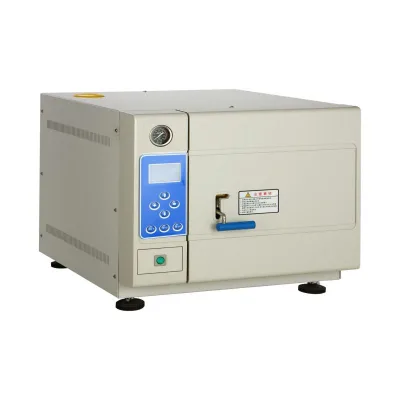


Laboratory Machine Automatic Table Top Steam Sterilizer with Factory Price
$1000.00 - $1250.00
MOQ: 1 Pieces


Comprehensive Sourcing Guide
Medical Table Top Steam Sterilizer Sourcing Guide
Procuring medical table top steam sterilizers requires a disciplined approach to aligning technical performance with clinical safety standards. Buyers must prioritize equipment that delivers consistent thermal distribution and reliable pressure control to ensure effective sterilization cycles. The core challenge lies in distinguishing between basic laboratory units and advanced clinical-grade devices capable of handling diverse load types. Understanding the specific operational parameters, such as working pressure and temperature ranges, is essential for selecting a unit that meets institutional hygiene protocols.
This guide provides evidence-based procurement strategies for sourcing these critical sterilization devices. It focuses on verifying technical specifications, ensuring regulatory compliance, and evaluating supplier qualifications. By adhering to structured verification steps, procurement teams can mitigate risks associated with equipment failure or non-compliance. The following sections detail the key attributes, documentation requirements, and commercial considerations necessary for making informed purchasing decisions in the medical equipment market.
Product Scope and Observed Listing Signals
The current market for medical table top steam sterilizers features a diverse range of models, with observed product counts indicating a robust supply base. Listings typically highlight variations in chamber dimensions, volume capacities, and power requirements, reflecting the need for adaptable solutions in different clinical settings. Buyers should note that observed price ranges and minimum order quantities vary significantly, suggesting a spectrum from entry-level units to high-capacity professional systems. This variability necessitates careful evaluation of individual product attributes rather than relying on generalized market assumptions.
Specific models observed in listings demonstrate distinct feature sets, such as the presence or absence of LCD displays and ultra-high temperature alarms. For instance, some units are equipped with data export capabilities storing over ten thousand cycles, while others focus on basic sterilization functions. The working temperature and pressure specifications, such as 134°C and 0.22MPa, are common benchmarks for effective steam sterilization. Procurement teams must cross-reference these observed signals with their specific operational needs to ensure the selected equipment aligns with their sterilization protocols and volume requirements.
Technical Specifications to Verify
Verifying technical specifications is paramount to ensuring the sterilizer meets clinical performance standards. Key parameters to confirm include the working temperature range, typically adjustable between 105°C and 134°C, and the heat average deviation, which should be within ±1°C for uniform sterilization. The chamber dimensions and volume capacity, such as 20L or 24L options, must align with the facility’s daily load requirements. Additionally, the power supply specifications, often AC220V 50Hz, need to match the local electrical infrastructure to prevent operational disruptions.
Further verification should focus on control features and safety mechanisms. Units with LCD displays offer enhanced monitoring and cycle tracking, while those without may require manual logging. The presence of ultra-high temperature alarms is a critical safety feature to prevent equipment damage and ensure patient safety. Buyers should also assess the sterilization time setting range, typically between 4 to 6 minutes for high-temperature cycles, and the material construction, which is predominantly stainless steel for durability and corrosion resistance. Confirming these details ensures the equipment operates reliably under clinical conditions.
Compliance and Safety Documentation
Compliance with international standards is non-negotiable for medical sterilization equipment. Buyers must verify that suppliers provide valid certifications, such as ISO and CE marks, which indicate adherence to quality management and safety directives. The presence of specific certification codes, like ISOCE or ISOEEC, should be validated against official registries to ensure authenticity. Documentation should clearly state the applicable standards for pressure vessel safety and electrical compliance, providing legal assurance for institutional procurement.
Safety documentation must also include detailed user manuals and maintenance guidelines. These documents should outline proper operating procedures, emergency shutdown protocols, and routine maintenance schedules to ensure long-term reliability. Buyers should request test reports or calibration certificates that demonstrate the equipment’s performance against specified parameters. Ensuring that all safety and compliance documents are up-to-date and accessible is crucial for regulatory audits and maintaining a safe clinical environment.
Cost Drivers and Commercial Terms
Cost drivers for medical table top steam sterilizers include material quality, technological features, and certification levels. Units with advanced features like LCD displays, data export capabilities, and precise temperature control typically command higher prices. The volume capacity and chamber dimensions also influence cost, with larger units generally being more expensive. Buyers should consider the total cost of ownership, including energy consumption and maintenance requirements, rather than focusing solely on the initial purchase price.
Commercial terms such as minimum order quantities, packaging standards, and lead times vary among suppliers. Standard export carton packing or wooden cases are common, but buyers should confirm packaging details to prevent transit damage. Negotiating favorable terms, including warranty periods and after-sales support, can significantly impact the overall value of the procurement. Understanding these commercial dynamics helps buyers secure competitive pricing while ensuring the supplier can meet delivery expectations and provide adequate support.
Supplier Qualification and Quality Control
Supplier qualification is a critical step in mitigating procurement risks. Buyers should assess suppliers based on their manufacturing capabilities, quality control processes, and track record in the medical equipment industry. Suppliers located in regions like Jiangsu or Guangdong, China, often have established manufacturing ecosystems, but buyers must verify their specific production standards and quality assurance protocols. Requesting factory audits or third-party inspections can provide insights into the supplier’s operational integrity.
Quality control measures should include rigorous testing of sterilization cycles, pressure integrity, and electrical safety. Buyers should inquire about the supplier’s defect rate and return policies to gauge their commitment to product quality. Establishing clear communication channels for technical support and spare parts availability is essential for long-term operational success. By prioritizing suppliers with robust quality control systems, buyers can ensure the reliability and safety of the sterilization equipment they procure.
Long-Term Procurement Checks
Long-term procurement success depends on establishing ongoing performance monitoring and supplier relationship management. Buyers should implement regular maintenance schedules and track equipment performance metrics to identify potential issues early. Data export features, if available, can be utilized to analyze sterilization cycle consistency and identify trends that may indicate maintenance needs. Proactive monitoring helps extend the lifespan of the equipment and ensures continuous compliance with clinical standards.
Supplier relationship management involves periodic reviews of service quality, parts availability, and technical support responsiveness. Buyers should maintain open lines of communication with suppliers to address any emerging issues promptly. Additionally, staying informed about technological advancements and regulatory changes in the sterilization equipment sector allows buyers to make informed decisions about future upgrades or replacements. By focusing on long-term checks, procurement teams can optimize the value and reliability of their medical sterilization investments.
FAQs
What is the working temperature range for these sterilizers?
The working temperature range is 105-134°C with an adjustment range of 105-134°C. The heat average is maintained at ±1°C. This ensures precise sterilization for various medical loads. The maximum working temperature reaches 134°C. This range supports effective steam sterilization cycles for sensitive instruments.
Can the device store sterilization cycle data?
Yes, the device can store over 10,000 cycles. It supports sterilization information recording and printing. This feature helps maintain accurate logs for compliance. The data export capability ensures traceability. Users can review past cycles easily for quality assurance purposes.
What certifications do these sterilizers hold?
Certifications include ISOCE, ISOEEC, and CE. These marks indicate compliance with international standards. The specific certification depends on the model. Buyers should verify the exact certificate for their region. These certifications support global market acceptance and regulatory approval.
What is the power consumption of the unit?
The power is 2000W at 220V. Some models operate on AC220V 50Hz. This standard voltage suits most commercial settings. The power rating ensures efficient heating. Users should check their local electrical supply compatibility before installation.
Is customization available for these sterilizers?
Customization is available for these units. Buyers can request specific modifications. This allows for tailored solutions. The standard packing is export carton. Custom options may affect lead times. Contact suppliers for specific customization details and requirements.
What is the chamber dimension of the HTS-C model?
The chamber dimension is 250mm by 450mm. This size accommodates standard medical loads. The compact design fits table tops. It supports various sterilization needs. Users should verify load sizes fit within these dimensions for optimal performance.
Does the NL11007 model have an LCD display?
Yes, the NL11007 model has an LCD display. It also features sterilization information recording and printing. This enhances user interface and monitoring. The display shows cycle parameters clearly. Buyers seeking digital interfaces should consider this specific model for better control.