Source Mesdan 798q Jointair Autowinder for Packaging
Find 30 listings for the Mesdan 798q Jointair Autowinder to compare specifications and pricing. Evaluate options for machinery hardware applications, including stator winding and roll slitting capabilities with automatic features; compare the available evidence and request quotations based on your requirements.
Key considerations
Products List


Slitting and Rewinding Machine Auto-Adjusting Air Shaft for Wind Rewinder
$100.00 - $600.00
MOQ: 1 Pieces

Packaging Machinery Dual-Airway Design Air Shaft for Wind and Rewinder
$100.00 - $600.00
MOQ: 1 Pieces


Lifetime Maintenance Reel Winding and Unwinding Air Shaft for Wind Rewinder
$100.00 - $600.00
MOQ: 1 Pieces

Magnetic Brake Integrated Expanding Strip Air Shaft for Wind and Rewinder
$100.00 - $600.00
MOQ: 1 Pieces






Auto Winder with Doffing Trolley Tray CE Certificate Proprietary Patent Vcro-E
$415000.00 - $420000.00
MOQ: 1 Pieces







Comprehensive Sourcing Guide
Mesdan 798q Jointair Autowinder Sourcing Guide
Procurement teams evaluating the Mesdan 798q Jointair Autowinder must first distinguish between specific model variants and general category offerings found in global marketplaces. The available data indicates a diverse range of winding and slitting equipment, including roll slitters and auto-winding machines with varying spindle counts and speed capabilities. Buyers should verify that the specific unit matches the intended application, such as machinery hardware or auto transmission systems, rather than assuming all listed "autowinders" share identical technical profiles.
When initiating contact with potential suppliers, it is critical to confirm the exact product model number and structural configuration against your operational requirements. The observed listings include models like LZCMP and GW-SD07-6, which feature distinct specifications such as stator dimensions and maximum speeds up to 3000rpm. Ensuring the supplier provides documentation for the specific variant you require prevents costly mismatches between the machine's physical capabilities and your production line needs.
Product Scope and Observed Listing Signals
The market for industrial winding equipment presents a wide spectrum of product types, ranging from simple rewinder machines to complex multi-station host structures. Listings often highlight features like air cylinder friction winders or optional shaftless configurations, which are essential for handling different substrate materials like mica tape or wire gauges. Buyers must carefully parse these descriptions to identify machines suitable for their specific substrate thickness and diameter requirements, as a single listing may not cover all potential use cases.
Observations of packaging and origin data reveal that many units originate from specific regions in China, such as Ruian City or Guangdong, and are shipped in wood cases or standard seaworthy packages. This logistical detail is vital for planning freight and customs clearance, as the packaging material and method directly impact the safety of the machinery during transit. Procurement teams should explicitly request the exact packing details for the specific model to ensure the equipment arrives without damage and complies with import regulations.
Technical Specifications to Verify
Technical due diligence requires a rigorous check of the machine's core performance metrics, including spindle numbers, work station counts, and maximum operational speeds. The available data suggests units may feature six spindles or work stations with speeds ranging from zero to 3000rpm, but these figures vary significantly by model. Buyers must demand a detailed specification sheet for the exact unit to confirm that the stator OD, height, and stack thickness capabilities align with their current production parameters.
Furthermore, the processing times for bridge lines and turntable transposition are critical factors for determining overall throughput efficiency. Specific models may offer processing times as fast as four seconds or transposition times of 1.5 seconds, but these are not universal standards across all listings. It is imperative to verify these cycle times against your production targets to ensure the selected machine can meet your volume requirements without creating bottlenecks in the manufacturing workflow.
Compliance and Safety Documentation
Safety and regulatory compliance are non-negotiable aspects of sourcing industrial machinery, particularly when dealing with high-speed rotating components. The observed listings frequently cite certifications such as ISO, CE, and SGS, which serve as indicators of adherence to international safety and quality standards. Buyers should request valid, up-to-date certification documents for the specific model being purchased to ensure the equipment meets the safety regulations of their operating jurisdiction.
In addition to general certifications, specific product standards and testing protocols must be verified to guarantee operational safety. Some listings mention standards that depend on the gauze roll or specific application requirements, indicating that compliance may be conditional on the setup. Procurement teams must ensure that the supplier provides a comprehensive compliance dossier, including test results and safety manuals, to mitigate liability risks and ensure the machine operates within safe parameters.
Cost Drivers and Commercial Terms
The pricing structure for industrial winding equipment is influenced by a complex array of factors, including customization levels, material composition, and packaging requirements. While observed price ranges are vast, the final cost is heavily dependent on the specific configuration, such as the inclusion of automatic features or specialized winding mechanisms. Buyers should seek a detailed breakdown of costs to understand how customization and specific technical features impact the total landed cost of the machinery.
Commercial terms, including minimum order quantities and warranty provisions, vary significantly across different suppliers and product models. The data indicates warranty periods of one year or one year for specific items, but these terms are not guaranteed for all listings. It is essential to negotiate clear commercial terms that define the scope of the warranty, the conditions for claims, and the lead times for production and delivery to avoid unexpected delays or financial liabilities.
Supplier Qualification and Quality Control
Supplier qualification involves a thorough assessment of the manufacturer's ability to deliver consistent quality and adhere to agreed-upon standards. The presence of certifications like ISO and CE suggests a baseline level of quality management, but buyers must verify the supplier's track record and specific quality control processes for the model in question. Requesting evidence of their quality assurance protocols, such as 100% testing for specific components, is crucial for ensuring the reliability of the purchased equipment.
Quality control extends beyond the initial purchase to include the condition of the product upon delivery and its long-term performance. Listings often describe items as "New" with specific conditions, but buyers must establish clear acceptance criteria and inspection procedures before finalizing the transaction. Implementing a robust quality control plan that includes pre-shipment inspections and post-delivery testing will help identify any discrepancies early and ensure the machine meets the required performance standards.
Long-Term Procurement Checks
Sourcing decisions should be evaluated based on long-term operational stability and the availability of support services. The warranty period, typically one year for the observed models, is a key indicator of the supplier's confidence in their product, but it does not cover the entire lifecycle of the machinery. Buyers should plan for ongoing maintenance, spare parts availability, and technical support to ensure the equipment remains operational and efficient throughout its intended service life.
Continuous monitoring of supplier performance and product reliability is essential for maintaining a resilient supply chain. Procurement teams should establish metrics for evaluating the machine's performance over time, including downtime frequency and maintenance costs, to assess the true value of the investment. Regular reviews of supplier relationships and product performance will help identify potential issues early and facilitate proactive management of the procurement lifecycle.
FAQs
What is the maximum speed of the auto winding machine?
The maximum speed reaches 0-3000rpm for efficient production. This automatic machine features a 6-station work station and 6 spindles. It is designed for machinery and hardware applications. The unit includes a 1-year warranty and is available for customization. Standard seaworthy packaging ensures safe transport from China.
Can the stator winding machine handle different stator sizes?
Yes, the machine adapts to stator OD of 200mm and heights from 8-45mm. It also supports stator stack thicknesses between 13mm and 65mm. This versatility allows processing various hardware components. The automatic structure ensures consistent performance across different product dimensions. Buyers can request customized specifications to match specific production needs.
What certifications do the rewinder machines have?
The rewinder machines hold ISO, CE, and SGS certifications. These standards ensure compliance with international safety and quality requirements. The products are new condition and 100% tested before shipment. Packaging includes film and wooden pallets for secure delivery. Buyers in various regions can rely on these verified credentials for sourcing.
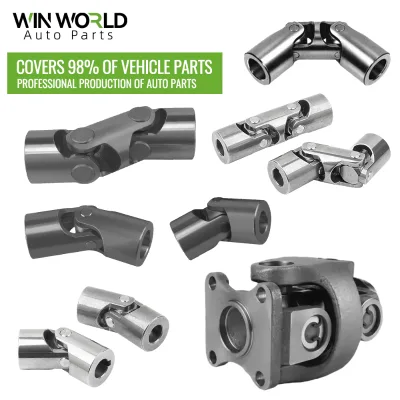
What is the MOQ for the cardan joint parts?
The observed MOQ range is 1-1000 units for these parts. The cardan joint is made of steel for the auto transmission system. It is suitable for right drive shaft replacement and repair. The product comes with a 1-year warranty and CE, SGS certificates. Buyers can order single items or bulk quantities based on their needs.
Where are the machinery products manufactured?
The products originate from China, specifically Guangdong and Ruian City, Zhejiang. These locations are known for manufacturing machinery and hardware components. The items are packaged in wood cases or standard shipping packages. Buyers can source customized products with specific models like LZCMP or GW-SD07-6. All items undergo quality testing before leaving the factory.
How long is the bridge line processing time?
The bridge line processing time is 4 seconds per cycle. The turntable transposition time is 1.5 seconds for efficient operation. These speeds support high-volume production for wire diameter adaptation from 0.17-1.2mm. The automatic machine ensures consistent output for various hardware applications. Buyers benefit from rapid cycle times and reliable performance.