Source Mini Portable Peltier Dehumidifier for Home, Office, and Travel
Explore 30 listings for the Mini Portable Peltier Dehumidifier, featuring varying dehumidification capacities, power consumption, and applicable spaces. Buyers can compare models with and without timing functions, different refrigerants, and customizable options to find the right unit for their specific needs.
Key considerations
Products List


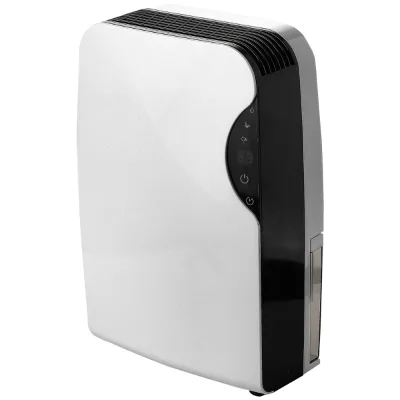
Newest Hot Sale China Manufacturer Portable Smart Mini Dehumidifier for Home
$14.68 - $16.08
MOQ: 10 Pieces




Comprehensive Sourcing Guide
Sourcing Guide for Mini Portable Peltier Dehumidifiers
Understanding the Product Category and Market Context
The search for a Mini Portable Peltier Dehumidifier often leads buyers into a complex landscape of product variations, as the term "Peltier" refers to a specific thermoelectric cooling technology, while the broader market includes compressor-based units. In the context of the available supply data, the observed product range includes both Desiccant Dehumidifiers and General or Multifunction units. It is critical for buyers to distinguish between these technologies before proceeding with procurement. While Peltier units are prized for their silent operation and lack of moving parts like compressors, the provided market data indicates a significant presence of compressor-driven models with varying capacities. The observed dehumidification capacities in the current market range widely, from units handling less than 10Kg/H to high-performance industrial models exceeding 40Kg/H. Buyers must verify that the specific unit they select actually utilizes Peltier technology, as many "mini" units in the market rely on traditional refrigerant cycles (such as R410A or R290) which offer different performance characteristics. The core keyword implies a need for compactness, portability, and low noise, but the technical reality of the supply chain shows a mix of integral structures and various power consumption profiles, ranging from 800W to 945W for larger units, while smaller portable units may have different electrical requirements.
Technical Specifications and Performance Verification
When evaluating technical specifications for a mini portable unit, buyers must scrutinize the dehumidification capacity, power supply, and operating temperature range. The provided data highlights specific models with distinct capabilities. For instance, one observed model (ECO-H60) features a dehumidification capacity of 50L/Day with a power consumption of 800W, suitable for spaces up to 200m2. In contrast, another model (PR50) is designed for smaller applications, covering 50-70m2 with a power consumption of 820W. A third observed unit (VD-DH01) boasts a capacity of over 40Kg/H, indicating a much larger industrial scale, while a fourth (T30) is listed with a capacity of less than 10Kg/H, which aligns more closely with the "mini" descriptor.
Power supply compatibility is another critical technical factor. The market data shows units operating on AC220-240V/50Hz/1pH and AC230V/50Hz/1pH. Buyers sourcing for regions with different voltage standards must ensure the unit's power supply matches their local grid to avoid damage or inefficiency. The rated current also varies, with observed values of 3.2A, 3.7A, and 4.2A. Furthermore, the operating temperature range is a limiting factor for Peltier units, which often struggle in very cold environments. The data indicates suitable temperature ranges of 5-38 Degrees Celsius and 18-38 Degrees Celsius. A unit designed for a 5-38 degree range is generally more versatile for general home use than one restricted to 18-38 degrees. Buyers should also check the refrigerant type; observed units use R410A, R290, or potentially no refrigerant if they are true desiccant or Peltier models. The physical dimensions are equally important for portability, with observed standards ranging from compact 366427602mm units to larger 605462915mm models.
Compliance, Certification, and Safety Standards
Compliance with international safety and environmental standards is non-negotiable for B2B procurement. The supply data confirms that many units in this category carry CE and RoHS certifications. The CE mark indicates conformity with health, safety, and environmental protection standards for products sold within the European Economic Area, while RoHS (Restriction of Hazardous Substances) ensures the product is free from specific hazardous materials. Buyers must verify that the certification documents provided by the supplier are valid and correspond to the specific model number being ordered.
In addition to general certifications, buyers should look for specific electrical safety standards relevant to the target market. While the provided data lists "5.94.78.7inch" and "643432cm" as product standards, these appear to be dimensional specifications rather than safety codes. True safety standards (such as UL, IEC, or EN standards) are distinct from physical dimensions. Buyers should request test reports from accredited laboratories to confirm that the electrical components, particularly the fan and control systems, meet the required safety thresholds. The presence of a "With Fan" attribute in the data suggests that airflow mechanisms are integral to the design, and these fans must be tested for noise levels and durability. For units claiming to be Peltier-based, the absence of refrigerant in the design can be a significant compliance advantage, as it eliminates the risk of refrigerant leaks, though the electrical safety remains paramount.
Cost Drivers and Pricing Dynamics
The pricing for mini portable dehumidifiers is influenced by several factors, including the cooling technology, build quality, and included features. The observed price range in the market spans from $5 to $1,079 USD, a vast disparity that reflects the difference between basic portable units and high-capacity industrial machines. For a true mini portable Peltier unit, the price is likely to be on the lower to mid-range of this spectrum, as these units generally have lower manufacturing costs compared to compressor-based systems. However, the inclusion of advanced features such as automatic control, timing functions, and removable water tanks can drive the price upward.
The data shows that customization is available for many products, which is a significant cost driver. Customization options may include branding, color variations (such as the observed White and Blue), or specific packaging requirements. The packaging itself, listed as Color Box, Carton, or Cnt (Carton), affects the logistics cost and the final price. Units packed in high-quality color boxes are often positioned as premium consumer goods, while those in simple cartons may be intended for bulk industrial use. Buyers should also consider the Minimum Order Quantity (MOQ), which ranges from 1 to 500 units. A lower MOQ allows for smaller test orders but may result in a higher unit cost, whereas larger orders typically benefit from economies of scale. The origin of the product, with suppliers located in Shenzhen and Hangzhou, China, also influences pricing due to regional manufacturing efficiencies and logistics costs.
Typical Applications and Usage Scenarios
The application of mini portable dehumidifiers varies significantly based on their capacity and design. The data indicates that these units are primarily intended for "Home" usage, but the specific suitability depends on the dehumidification capacity. Units with a capacity of less than 10Kg/H are ideal for small, enclosed spaces such as bedrooms, bathrooms, or small closets where moisture control is needed to prevent mold. These units are often used in residential settings where noise levels must be kept low, making Peltier technology particularly attractive.
For larger residential spaces or small commercial areas, units with capacities around 50L/Day (equivalent to roughly 100 pints/day) are more appropriate. The observed model ECO-H60, with a 50L/Day capacity and an applicable space of 200m2, is suitable for larger living rooms or small apartments. However, for industrial or large-scale commercial applications, the high-capacity units exceeding 40Kg/H are necessary. These are typically used in warehouses, basements, or large commercial facilities. The "Multifunction" type listed in the data suggests that some units may offer additional features beyond simple dehumidification, such as air purification or heating, which expands their application scope. Buyers must match the unit's applicable space rating to the actual square footage of the area they intend to treat to ensure effective performance.
Supplier Evaluation and Quality Control
Evaluating suppliers for mini portable dehumidifiers requires a rigorous approach to quality control and reliability. The supply data shows products originating from Shenzhen and Hangzhou, two major manufacturing hubs in China. While these locations are known for electronics manufacturing, buyers must verify the specific factory's capabilities and quality assurance processes. Key evaluation criteria should include the supplier's ability to provide consistent product specifications, particularly regarding the dehumidification capacity and power consumption.
Quality control measures should focus on the structural integrity of the unit, the reliability of the control system (automatic vs. manual), and the durability of the fan. The "Integral" structure mentioned in the data suggests a unified design, which can be more robust than modular designs. Buyers should request samples to test the timing function, the ease of removing the water tank, and the overall build quality. It is also essential to verify the packaging standards; the data lists "Color Box" and "Carton" as options, and the packaging must be sufficient to protect the unit during shipping, especially for portable models that may be handled frequently.
Long-Term Procurement and Operational Considerations
Long-term procurement success depends on understanding the operational lifespan and maintenance requirements of the dehumidifier. Units with a "Removable Water Tank" offer significant convenience for maintenance, allowing users to empty the tank without moving the entire unit. However, buyers should verify the tank capacity and whether the unit includes a continuous drainage option for unattended operation. The "With Timing Function" attribute is a valuable feature for energy management, allowing users to schedule operation during off-peak hours or specific times of the day.
Energy efficiency is another long-term consideration. The observed power consumption ranges from 800W to 945W for larger units, but mini Peltier units may have different profiles. Buyers should calculate the total cost of ownership, including electricity costs and potential replacement parts. The refrigerant type is also a long-term factor; units using R290 or R410A require professional handling for repairs, whereas Peltier units, which do not use refrigerants, may have lower long-term maintenance costs. Finally, the availability of spare parts and the supplier's after-sales support are critical for ensuring the longevity of the procurement investment. Buyers should establish clear communication channels with suppliers to address any potential issues that may arise during the product's lifecycle.
Comparative Analysis of Key Product Attributes
To assist in the decision-making process, the following table summarizes the key attributes observed in the current market data, highlighting the diversity of options available for buyers.
| Product Model | Dehumidification Capacity | Applicable Space | Power Consumption | Operating Temp Range | Key Features |
|---|---|---|---|---|---|
| VD-DH01 | >40Kg/H | 300m2 | 945W | 18-38°C | Integral Structure, With Fan |
| ECO-H60 | 50L/Day | 200m2 | 800W | 5-38°C | Automatic Control, R290 Refrigerant |
| PR50 | Not Specified | 50-70m2 | 820W | Not Specified | Multifunction, Carton Packing |
| T30 | <10Kg/H | Not Specified | Not Specified | Not Specified | Compact Dimensions (366427602mm) |
This comparison illustrates that there is no single "best" unit; the choice depends entirely on the specific requirements of the buyer. The T30 model, with its small dimensions and low capacity, is the closest match to a "mini portable" description, while the VD-DH01 represents a high-capacity industrial solution. Buyers must carefully align their needs with these specifications to avoid purchasing an underpowered or oversized unit.
FAQs
What certifications do mini portable dehumidifiers typically have?
Most units carry CE and RoHS certifications to ensure safety and environmental compliance. Buyers should verify these marks on specific models like the ECO-H60 or VD-DH01 before ordering to confirm adherence to international standards.
How does the dehumidification capacity vary across different models?
Capacities range widely from under 10Kg/H for mini units to over 40Kg/H for industrial scales. Smaller models like the T30 suit compact spaces, while larger units handle extensive areas up to 300 square meters effectively.
Can I find units with a removable water tank?
Yes, many available models feature a removable water tank for convenient maintenance. This attribute is common in home-use units, allowing users to empty water without moving the entire appliance during operation.
Which power supply voltages are supported by these devices?
Most units operate on AC220-240V or AC230V at 50Hz. Buyers must match these specifications to their local grid to ensure safe operation, as some models are not compatible with different voltage standards.
What is the typical operating temperature range for these units?
Suitable temperature ranges generally span from 5 to 38 degrees Celsius or 18 to 38 degrees Celsius. Selecting a unit with a wider range ensures better performance in varying environmental conditions.
How can I customize the product for my brand?
Customization is available for many products in this category. Buyers can request specific branding, colors like white and blue, or packaging options such as color boxes or cartons to meet their unique requirements.
What is the minimum order quantity for these dehumidifiers?
The minimum order quantity ranges from 1 to 500 units depending on the supplier. Lower MOQs allow for smaller test orders, while larger orders often benefit from better economies of scale.