Source Mini Portable RGB Gaming Speakers for Computer, Home Theatre, Karaoke
Find 30 Mini Portable RGB Gaming Speakers with USB, Bluetooth, and wireless connectivity. Buyers can compare models featuring RGB lights, waterproof designs, and bass output for use with computers, home theatre systems, and karaoke setups.
Key considerations
Products List
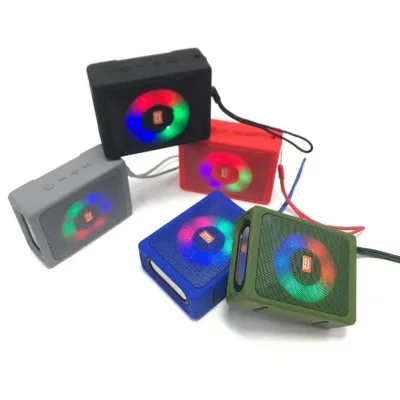

Wireless Bluetooth Speaker Colorful RGB Night Light Outdoor Portable Mini Speaker
$1.52 - $1.60
MOQ: 1000 Pieces


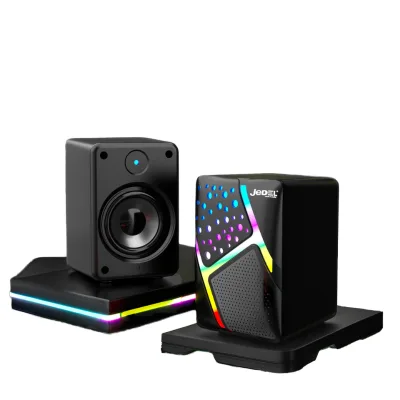
Gaming Computer Speaker Home Theatre Sound System USB Gaming PC RGB Speaker
$5.30 - $5.60
MOQ: 100 Pieces


Comprehensive Sourcing Guide
Strategic Sourcing Guide for Mini Portable RGB Gaming Speakers
Understanding Product Definitions and Core Attributes
When sourcing Mini Portable RGB Gaming Speakers, buyers must first establish a clear definition of the product category based on observed market data. The core keyword implies a device that combines compact form factors with dynamic lighting effects and audio performance suitable for gaming environments. Based on the available product facts, these units are characterized by specific connectivity options, primarily USB and wireless technologies including Bluetooth. The observed connectivity attributes indicate a strong reliance on USB interfaces for wired connections, while wireless capabilities are frequently supported via Bluetooth versions such as 5.2, which ensures a transmission range of approximately 10 meters.
The "RGB" aspect of the product is a critical visual differentiator. The data confirms that these speakers feature RGB lighting, often described as colorful LED lights or specific RGB light functions. This feature is not merely aesthetic; it is designed to enhance the immersive experience for users in settings like home theaters, stage/DJ performances, and karaoke. The physical construction of these units typically utilizes ABS plastic for the cabinet material, contributing to a lightweight profile with a single gross weight often around 0.500 kg. The compact nature is further evidenced by single package sizes ranging from 12x10x6 cm, making them highly portable for mobile phones, portable players, and outdoor activities.
It is essential for buyers to recognize that while the term "gaming speaker" is used, the observed usage categories are broad. The products are listed for use with computers, home theatre systems, mobile phones, and stage equipment. This versatility means that a single SKU can serve multiple market segments, from casual home entertainment to professional stage setups. However, the "mini" designation suggests that while they offer "Super Bass Speaker" or "Bass Speaker" capabilities, they are not intended to replace large-scale PA systems. The audio performance is often highlighted by features like "Super Bass," though the specific power output varies, with some units listed at 3W PMPO.
Technical Specifications and Performance Verification
Evaluating the technical specifications of Mini Portable RGB Gaming Speakers requires a granular approach to the provided data points. The model numbers observed, such as G-CS-1015-1, 2.1-CS-1156-1, S-CS-U80-13, and LS-155, indicate a diverse range of configurations available in the market. Buyers should not assume that all products labeled as "mini" share identical internal architectures. For instance, the 2.1-CS-1156-1 model implies a 2.1 channel configuration, suggesting a dedicated subwoofer setup, whereas other models like the P3-dual mic pink-#8524 may focus on microphone integration for karaoke applications.
Battery capacity is a pivotal specification for portable units. The data explicitly mentions a battery capacity of 600mAh for certain models, with a corresponding playing time of 3-4 hours. This is a critical metric for buyers targeting users who require extended usage without access to a power source. When evaluating suppliers, procurement teams must verify if the 600mAh figure is standard across the range or specific to certain SKUs. Furthermore, the power source is consistently listed as battery-powered, necessitating a check on rechargeability. The attribute "Rechargeable" is present in the data, confirming that these units are designed for repeated use rather than disposable battery operation.
Connectivity remains a primary technical differentiator. While USB is a universal standard observed, the inclusion of Bluetooth 5.2 represents a more advanced connectivity option. Buyers must verify the supported protocols for these wireless connections. The data lists "Bluetooth, USB, Wireless" and "USB Disk Support" as distinct features. This suggests that some units function as standalone media players capable of reading MP3 files directly from USB drives or memory cards, in addition to streaming audio from mobile devices. The "Support" attribute listing FM/USB/MP3/MP4/Mobile Phone confirms a multi-format capability. However, the absence of a display type ("without Display") in some listings indicates that users must rely on device controls or companion apps for playback management. The "support app: Yes" attribute suggests that certain models offer enhanced control via software, which is a valuable feature for customizing RGB lighting patterns or equalizer settings.
Compliance, Certification, and Safety Standards
In the B2B procurement of electronic audio devices, compliance with international safety and environmental standards is non-negotiable. The provided facts explicitly list "CE ROHS FCC BQB" as certifications for specific products. These acronyms represent critical regulatory hurdles that suppliers must clear before their goods can be legally sold in major markets. CE certification indicates conformity with health, safety, and environmental protection standards for products sold within the European Economic Area. ROHS (Restriction of Hazardous Substances) ensures that the manufacturing process limits the use of specific hazardous materials, which is increasingly important for sustainability and recycling compliance.
FCC certification is mandatory for electronic devices sold in the United States, ensuring that the product does not emit harmful levels of radio frequency interference. BQB (Bluetooth Qualification Body) certification is specific to Bluetooth-enabled devices, verifying that the wireless technology operates correctly and meets interoperability standards. The presence of these certifications in the data provides a baseline for buyers to expect from reputable suppliers. However, it is crucial to treat these as observations of specific listed products rather than universal guarantees for every item in the category. A buyer must request valid, up-to-date certification documents for each specific model number they intend to purchase.
The "Certification" attribute also serves as a proxy for the supplier's quality management systems. Suppliers who consistently provide CE, ROHS, FCC, and BQB documentation are likely to have more robust internal quality control processes. When evaluating potential partners, procurement teams should verify that the certification documents match the specific model numbers and batch numbers of the goods being supplied. Discrepancies between the claimed certifications and the actual product documentation can lead to customs seizures or market recalls. Additionally, the "Origin" is listed as China, which is a major manufacturing hub for these electronics. Buyers should be aware that while China is a source of high-volume production, the regulatory compliance landscape can vary by factory. Therefore, third-party testing reports or factory audit certificates should be requested to supplement the supplier's self-declared certifications.
Cost Drivers and Pricing Dynamics
The pricing structure for Mini Portable RGB Gaming Speakers is influenced by several key variables, including connectivity, battery capacity, and certification status. The observed listed price range in the market data spans from 1.01 to 24 USD. This wide variance indicates that the market is segmented by feature sets and build quality. The lower end of the spectrum likely corresponds to basic models with simple USB connectivity, minimal lighting effects, and standard battery capacities. Conversely, the higher price points are associated with advanced features such as Bluetooth 5.2, dual microphone support, RGB lighting customization, and comprehensive certification packages.
Minimum Order Quantity (MOQ) is another significant cost driver. The observed MOQ range is 1 to 10,000 units. This flexibility allows buyers to scale their procurement strategies effectively. Small order quantities, such as 1 unit, are suitable for sampling or testing the market with low financial risk. However, larger orders, potentially up to 10,000 units, are necessary to achieve economies of scale and reduce the per-unit cost. The "Small Orders: Accepted" attribute confirms that suppliers are willing to accommodate smaller initial orders, which is beneficial for new entrants or those testing new product lines.
Material costs also play a role in pricing. The use of ABS plastic for the cabinet material is a standard practice that balances durability with cost-efficiency. However, the inclusion of specialized components like RGB LED arrays, Bluetooth modules, and rechargeable batteries adds to the manufacturing cost. The "Brand Name" attribute shows a mix of branded items (e.g., ARROW, YIKD) and non-branded or generic options ("Non"). Branded products may command a premium due to perceived quality or marketing value, while generic models offer a cost-effective alternative for private labeling. Buyers should analyze the cost-to-feature ratio carefully, ensuring that the price aligns with the specific technical requirements of their target market.
Typical Applications and Market Segmentation
The versatility of Mini Portable RGB Gaming Speakers allows them to serve a wide array of applications, as evidenced by the diverse usage categories in the data. The primary application is clearly defined as "Computer" and "Home Theatre System," where the RGB lighting and bass performance enhance the visual and auditory experience of gaming and media consumption. The "Karaoke" usage category highlights another significant market segment, particularly for models equipped with dual microphones and USB disk support. These features enable users to record and play back audio, making the speakers ideal for social gatherings and entertainment venues.
The "Stage/DJ" and "Outdoor" usage attributes suggest that these speakers are robust enough for semi-professional applications. The "Waterproof" feature is a critical differentiator for outdoor use, protecting the internal electronics from moisture and dust. This makes the speakers suitable for pool parties, beach events, and camping trips. The "Portable Player" and "Mobile Phone" compatibility ensures that the devices can be easily integrated into modern mobile ecosystems. The "Support app: Yes" feature further enhances this by allowing users to control lighting and audio settings remotely, which is highly valued in the gaming and social media content creation sectors.
The "Party" and "Outdoor Activities" usage categories indicate a strong consumer appeal for events and recreational activities. The "Super Bass Speaker" and "Bass Speaker" attributes cater to users who prioritize low-frequency performance, which is essential for music and gaming. The "Customized Color" option allows buyers to tailor the product to specific brand identities or event themes, adding a layer of customization that is highly desirable in the B2B market. By understanding these diverse applications, buyers can better position their procurement strategy to meet the specific needs of different customer segments, from casual home users to professional event organizers.
Supplier Evaluation and Quality Control Protocols
Selecting the right supplier for Mini Portable RGB Gaming Speakers requires a rigorous evaluation process that goes beyond simple price comparisons. The "Origin" being China suggests a vast pool of potential suppliers, but quality can vary significantly. Buyers should prioritize suppliers who can provide the full suite of certifications (CE, ROHS, FCC, BQB) and demonstrate a track record of consistent quality. The "Brand Name" attribute, ranging from established names like ARROW and YIKD to generic "Non" brands, offers a clue about the supplier's market positioning. Established brands often have stricter quality control measures, while generic suppliers may offer more flexibility in customization.
Quality control protocols should be established early in the procurement process. Given the "Single package size" and "Single gross weight" specifications, buyers should verify that the packaging is robust enough to prevent damage during transit, especially for lightweight units that may be prone to impact. The "Material" specifications, such as ABS plastic and speaker material, should be inspected to ensure they meet durability standards. For products with "RGB Light" features, testing the longevity and color consistency of the LEDs is essential. The "Playing time" of 3-4 hours should be verified through independent testing to ensure it meets the advertised claims, as battery performance can degrade over time.
The "Small Orders: Accepted" attribute is a positive indicator of supplier flexibility, but it should not be the sole criterion for selection. Buyers should also assess the supplier's ability to handle larger orders, given the observed MOQ range up to 10,000 units. Communication channels, lead times, and after-sales support are critical factors in supplier evaluation. A supplier that offers responsive support and transparent communication is more likely to resolve issues quickly and maintain a long-term partnership. Additionally, the "Compatible Product: Other" attribute suggests that some suppliers may offer a wide range of accessories or compatible devices, which can be a value-add for buyers looking to create bundled solutions.
Long-Term Procurement and Strategic Considerations
Sourcing Mini Portable RGB Gaming Speakers is not just a transactional activity but a strategic decision that impacts long-term business success. The "Model Number" diversity, with entries like G-CS-1015-1, 2.1-CS-1156-1, and LS-155, indicates that the product landscape is dynamic. Buyers should plan for product lifecycle management, ensuring that the suppliers they choose can support future model updates and technological advancements. The rapid evolution of Bluetooth technology, such as the shift to version 5.2, suggests that buyers must stay informed about emerging standards to avoid obsolescence.
The "Color: Customized Color" attribute highlights the importance of branding and differentiation in the long term. Buyers should consider how customization options can be leveraged to build a unique brand identity. This includes not just the color of the speaker but also the packaging, branding, and software integration. The "Support app: Yes" feature opens up opportunities for software updates and feature enhancements, which can extend the product's lifespan and value.
Finally, the "Usage" diversity suggests that buyers should adopt a flexible procurement strategy. A single supplier may not be able to meet all the diverse needs of different market segments. Therefore, maintaining a diversified supplier base can mitigate risks associated with supply chain disruptions or quality issues. By focusing on suppliers with strong certifications, robust quality control, and a history of innovation, buyers can ensure a steady supply of high-quality Mini Portable RGB Gaming Speakers that meet the evolving demands of the global market. The interplay between technical specifications, compliance, and cost drivers will continue to shape the procurement landscape, requiring buyers to remain agile and informed.
FAQs
What connectivity options do these speakers support?
These speakers support USB, Bluetooth, and wireless connections. Some models also include USB disk support and memory card slots for standalone playback without a phone.
Can I find models with RGB lighting features?
Yes, many units feature RGB lights or colorful LED lights for visual effects. This lighting is designed to enhance the experience for gaming, karaoke, and stage performances.
What is the typical battery capacity and playing time?
Specific models have a battery capacity of 600mAh and offer a playing time of 3-4 hours. These units are rechargeable and powered by internal batteries for portability.
Which certifications are available for these electronic products?
Certified products carry CE, ROHS, FCC, and BQB marks. These certifications ensure safety and compliance for sale in European, American, and Bluetooth-qualified markets.
How much do these speakers cost in the market?
The observed listed price range spans from 1.01 to 24 USD. Costs vary based on features like Bluetooth 5.2, waterproof ratings, and specific model configurations.
What is the minimum order quantity for small buyers?
Small orders are accepted with a minimum order quantity ranging from 1 to 10000 units. This flexibility allows buyers to test products or place large bulk orders.
Are these speakers suitable for outdoor activities?
Yes, they are suitable for outdoor activities and feature waterproof capabilities. They are also designed for use in home theaters, karaoke, and stage DJ environments.