Source minimalist denim one-shoulder bag for travel, work, and daily use
Find 30 options for the minimalist denim one-shoulder bag suitable for various needs. Buyers can compare materials, sizes, and customization features across different models to select the best fit for their business.
Key considerations
Products List


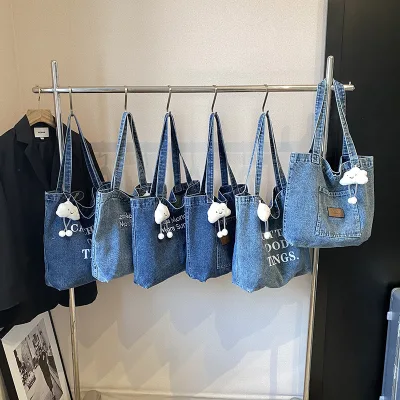

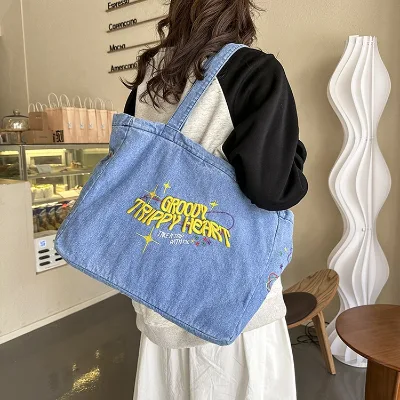


Factory Wholesale Casual Simple High-Capacity Denim One-Shoulder Tote Bag
$5.60 - $6.60
MOQ: 20 Pieces


Old Denim Fashion Large Capacity Crossbody Bag Washed Denim Tote Bag for Girls
$12.85 - $15.20
MOQ: 20 Pieces


Comprehensive Sourcing Guide
Strategic Sourcing Guide for Minimalist Denim One-Shoulder Bags
Understanding Product Specifications and Material Variability
When sourcing a minimalist denim one-shoulder bag, buyers must first navigate the complex landscape of material definitions and construction standards. While the core keyword emphasizes "denim," the actual supply market often presents a broader array of fabric compositions that may be marketed under similar aesthetic umbrellas. In the observed product data, materials range from Polyester and Nylon to Canvas and Cotton Canvas. It is critical to understand that "denim" is a specific type of cotton twill, yet many suppliers may list "Canvas" or "Cotton Canvas" as the primary material, which can be a viable alternative depending on the desired weight and texture.
The internal composition is equally variable. Observed listings indicate that inside materials can be Polyester, Nylon, or general Fabric. For a minimalist design, the interior lining significantly impacts the bag's perceived quality and durability. A Polyester lining offers water resistance and ease of cleaning, while a Nylon lining might provide a lighter weight. Buyers should verify the specific fiber content of the lining rather than assuming a standard. Furthermore, the structural integrity of the bag is often defined by its hardness. The data shows a spectrum from "Medium Soft" to "Soft," suggesting that the denim fabric itself may be treated or blended to achieve a specific drape. A "Soft" hardness is often preferred for a casual, slouchy minimalist look, whereas a "Medium Soft" structure might be required for bags intended to hold heavier loads without losing their shape.
The design language of a minimalist bag is typically characterized by clean lines and a lack of excessive ornamentation. However, the observed market data includes diverse fashion elements such as "Candy Color," "Antique," "European Style," and "Crocodile Grain." A buyer seeking a true minimalist aesthetic must explicitly filter for "Simplicity" as a style attribute. The presence of "Crocodile Grain" or "Antique" finishes might indicate a textured or distressed look that deviates from a strictly minimalist, modern profile. Additionally, the shape is a defining factor; while some listings specify a "Horizontal Square" design, others point to "Bucket Bag" styles or "Sling Backpack" configurations. The "One-Shoulder" requirement is often fulfilled through a "Shoulder Strap" or "Single Strap" configuration, but the strap's adjustability and attachment points must be confirmed to ensure the bag sits correctly on the shoulder as intended.
Compliance, Certification, and Standard Verification
In the B2B procurement of textile accessories, compliance is not merely a formality but a critical risk management strategy. The supplied data indicates that product standards vary significantly, with some items listed under specific dimensions like "23718cm" and others under "customized" standards. This discrepancy highlights the necessity for buyers to define their own technical specifications before engaging with suppliers. Relying on a generic "Standard" label is insufficient for international trade, as it does not guarantee adherence to safety or environmental regulations in the destination market.
Buyers must verify that the denim and lining materials comply with relevant chemical restrictions, such as REACH in Europe or CPSIA in the United States, particularly regarding azo dyes and heavy metals. While the provided facts do not list specific certification statuses, the absence of such data in a product listing should be treated as a red flag. Suppliers who cannot immediately provide test reports for flammability, colorfastness, and chemical content are likely operating with lower compliance standards. The "Quality: Best" attribute found in some listings is a subjective claim and does not substitute for objective third-party testing.
Furthermore, the origin of the product plays a role in compliance. The data confirms that the products originate from China, a major manufacturing hub. However, origin alone does not dictate compliance. Buyers must ensure that the supplier has a robust quality management system in place to maintain consistency. The "OEM: Yes" attribute suggests that suppliers are capable of custom manufacturing, which is essential for branding. However, OEM capability does not automatically imply that the custom designs will meet the buyer's specific compliance requirements. It is the buyer's responsibility to include these compliance clauses in the purchase agreement and to request proof of testing for every production batch.
Cost Drivers and Pricing Dynamics
The pricing structure for minimalist denim one-shoulder bags is influenced by a multitude of factors, including material costs, labor intensity, and order volume. The observed price range in the market spans from $0.79 to $48.00, a variance that is substantial and indicative of significant differences in quality, branding, and production complexity. The lower end of this spectrum likely corresponds to basic canvas or cotton canvas bags with simple stitching and standard packaging, while the higher end may reflect premium denim, specialized hardware, custom dyeing processes, or high-end packaging solutions.
Order quantity is a primary driver of unit cost. The Minimum Order Quantity (MOQ) data reveals a wide range, from as low as 2 pieces to as high as 10,000 pieces. An MOQ of 500 pieces or 10,000 pieces suggests that the supplier is geared towards bulk manufacturing, which typically lowers the per-unit cost but increases the initial capital outlay for the buyer. Conversely, an MOQ of 2 allows for small-batch testing but results in a significantly higher unit price. Buyers must balance their inventory needs with their budget constraints. For a new product launch, starting with a lower MOQ might be prudent to test market response, even if the unit cost is higher.
Packaging also contributes to the final cost. The data shows packaging options ranging from simple "OPP" bags to "Carton" packaging, and even specific configurations like "1 Piece to PP Bag, Then 24 Pieces Per Carton." Customized packaging, which is often required for brand identity, will incur additional costs. The "Standard" packaging mentioned in some listings is likely the most cost-effective option but may not meet the branding requirements of a sophisticated retailer. Additionally, the "Customization: Available" attribute implies that any deviation from the standard design, such as custom logos, specific colors, or unique dimensions, will add to the overall cost. Buyers should request a detailed cost breakdown that separates material, labor, and customization fees to understand where their budget is being allocated.
Typical Applications and Market Segmentation
The versatility of the minimalist denim one-shoulder bag allows it to serve a wide range of applications, from casual daily use to specific outdoor activities. The observed data indicates that these bags are suitable for "Outdoor" use and are designed for "Spring/Autumn" or "All" seasons. This seasonal flexibility is a key selling point, as denim is a durable fabric that can withstand varying weather conditions, provided it is treated or lined appropriately. The "Waterproof" attribute found in some listings suggests that certain models are enhanced for wet conditions, making them suitable for commuters or travelers, while "Non-Waterproof" models are better suited for dry, urban environments.
The target demographic is also diverse. The data lists "Unisex" and "Female" as gender options, indicating that these bags can be marketed to a broad audience. The "Super Capacity" attribute suggests that some models are designed for users who need to carry multiple items, such as laptops, tablets, or books, making them ideal for students or professionals. The "Single Compartment" design aligns with the minimalist aesthetic, offering a streamlined look without the bulk of multiple pockets, though this may limit organization for users with many small items.
Fashion trends play a significant role in the application of these bags. The "Candy Color" and "Antique" styles suggest that these bags can be used as fashion statements, appealing to consumers looking for trendy accessories. The "European Style" and "Simplicity" attributes indicate a market segment that values understated elegance and functionality. Retailers targeting the youth market might focus on the "Candy Color" and "Bucket Bag" styles, while those targeting a more mature, professional demographic might prefer the "Horizontal Square" and "Antique" designs. Understanding these applications is crucial for positioning the product correctly in the market and selecting the right supplier capabilities.
Supplier Evaluation and Quality Control Protocols
Evaluating a supplier for a minimalist denim one-shoulder bag requires a rigorous assessment of their capabilities, consistency, and transparency. The presence of "OEM: Yes" and "Customization: Available" attributes indicates that the supplier has the technical capacity to produce custom orders. However, buyers must verify the supplier's ability to maintain quality across different batches. The "Quality: Best" claim is subjective and should be backed by a history of consistent performance and positive feedback from other clients.
Quality control should be a multi-stage process. First, buyers should request pre-production samples to verify the material quality, stitching, and hardware. The "Inside Material" and "Material" attributes must be confirmed against the sample to ensure there are no discrepancies. Second, during production, in-line inspections should be conducted to check for defects such as uneven dyeing, loose threads, or misaligned straps. The "Hardness" attribute should be measured to ensure the bag maintains its intended shape and structure. Finally, a pre-shipment inspection is essential to verify that the finished products meet all specifications, including dimensions, packaging, and labeling.
The data shows that some products have specific model numbers like "BR-SB050" and "Fabric Shoulder Bags-093W," which can be used to track specific production runs. Buyers should ensure that the supplier maintains accurate records of these models to facilitate traceability. Additionally, the "prod_packing" attribute varies, and buyers must ensure that the packaging protects the product during transit. For example, a "Carton" package is generally more robust than an "OPP" bag for long-distance shipping.
Long-Term Procurement and Relationship Management
Establishing a long-term relationship with a supplier is vital for the stability and growth of a B2B business. The "Customization: Available" and "OEM: Yes" attributes suggest that suppliers are willing to adapt to changing market demands. However, buyers must ensure that the supplier can scale production as order volumes increase. The wide range of MOQs, from 2 to 10,000 pieces, indicates that suppliers have different capacity levels. A supplier that can handle an MOQ of 10,000 pieces may be better suited for long-term contracts, while a supplier with a lower MOQ might be more flexible for initial launches.
Lead times and production capacity are also critical factors. While the specific lead times are not provided in the data, buyers should negotiate clear timelines in the contract. Delays in production can disrupt the supply chain and lead to missed sales opportunities. Buyers should also consider the supplier's ability to handle repeat orders and maintain consistency in quality. The "Standard" and "Customized" product standards highlight the need for clear communication regarding specifications. Any changes in design or material should be documented and agreed upon in writing to avoid disputes.
Finally, buyers should monitor the market for emerging trends and adjust their sourcing strategy accordingly. The "Fashion Element" and "Style" attributes in the data show a dynamic market with various trends. A successful procurement strategy involves staying ahead of these trends and working with suppliers who can quickly adapt to new designs. By maintaining open communication and fostering a collaborative relationship, buyers can ensure a steady supply of high-quality minimalist denim one-shoulder bags that meet the evolving needs of their customers.
Comparative Analysis of Product Attributes
To assist buyers in making informed decisions, the following table summarizes the key attributes observed in the market data, highlighting the variability that must be managed during the sourcing process.
| Attribute Category | Observed Variations | Sourcing Implication |
|---|---|---|
| Material | Polyester, Nylon, Canvas, Cotton Canvas | Verify specific fiber content; "Denim" may be marketed as "Canvas." |
| Lining | Polyester, Nylon, Fabric | Check for durability and water resistance; affects interior feel. |
| Waterproof | Waterproof, Non-Waterproof | Critical for outdoor use; verify treatment or coating. |
| Style | Simplicity, Antique, European Style, Candy Color | Filter for "Simplicity" to match "Minimalist" keyword. |
| Hardness | Medium Soft, Soft | Determines structure; "Soft" for slouchy look, "Medium Soft" for shape. |
| MOQ | 2, 500, 1000, 10000 | Align with budget and inventory strategy; higher MOQ lowers unit cost. |
| Packing | OPP, Carton, Standard, Custom | Ensure packaging protects product and meets branding needs. |
| Capacity | Single Compartment, Super Capacity | Match to user needs; "Super Capacity" for heavy loads. |
| Origin | China | Verify compliance and quality management systems. |
This comparison underscores the importance of detailed specification checks. Buyers cannot rely on generic terms alone; they must define their exact requirements for material, style, and capacity to ensure the final product meets their expectations. By adhering to these rigorous standards, buyers can successfully source high-quality minimalist denim one-shoulder bags that align with their brand values and market demands.
FAQs
What materials are used for minimalist denim one-shoulder bags?
Materials include Polyester, Nylon, Canvas, and Cotton Canvas. While the core keyword suggests denim, actual listings show varied fabric compositions like Polyester or Nylon linings and Canvas exteriors.
Can these bags be customized for specific branding needs?
Yes, customization is available for these bags. Suppliers offer OEM services allowing for custom logos, colors, and designs, though specific dimensions may vary from standard sizes.
What is the typical minimum order quantity for these bags?
The minimum order quantity ranges from 2 to 10,000 pieces depending on the supplier. Some vendors require 500 or 10,000 pieces, while others accept small batches of just two units.
Are these bags waterproof for outdoor use?
Waterproof capabilities vary by model, with some listed as waterproof and others as non-waterproof. Buyers should verify specific product attributes before purchasing for wet or outdoor conditions.
Which styles are available for minimalist one-shoulder bags?
Available styles include Simplicity, European Style, Antique, and Horizontal Square designs. Options also feature Candy Color finishes, Crocodile Grain textures, and Bucket Bag shapes.
Where are these bags typically manufactured?
These bags originate from China. This location is a major manufacturing hub for textile accessories, offering various production capacities and customization options for international buyers.
How are these bags packed for shipping?
Packaging varies from simple OPP bags to standard cartons. Some suppliers use specific configurations like one piece per PP bag with twenty-four pieces per carton.