Source Animal Building Blocks for Toys, Education, and Gifts
Find 30 Animal Building Blocks options from Shantou suppliers. Compare plastic traditional bricks with EN71 and ASTM certifications. Ideal for intellectual toys, promotions, and custom logo printing. These kits feature cartoon styles and full-color logo options for various uses; compare the available evidence and request quotations based on your requirements.
Key considerations
Products List




Comprehensive Sourcing Guide
Animal Building Blocks Sourcing Guide
Sourcing animal-themed building blocks requires a strategic balance between creative design and rigorous safety compliance. Buyers must navigate a market where traditional plastic bricks are customized with cartoon or realistic animal motifs to appeal to specific demographics. The primary focus is on unisex products that serve as intellectual toys, promoting cognitive development through assembly and imaginative play. Procurement teams should prioritize suppliers who offer robust customization options, allowing for brand integration via full-color logo printing or sticker imprints. This flexibility is crucial for promotional campaigns or private-label projects where brand visibility is as important as product functionality.
The supply chain for these items is heavily concentrated in manufacturing hubs like Shantou and broader China regions, known for their plastic toy expertise. Buyers should expect a wide variance in product specifications, from small individual packages to bulk carton shipments. Understanding the distinction between standard models and customized orders is vital for accurate forecasting. Suppliers often provide detailed packing data, including carton dimensions and weight, which directly impacts logistics planning. Establishing clear communication regarding material quality and structural integrity ensures that the final product meets both aesthetic expectations and durability standards required for retail distribution.
Product Scope and Observed Listing Signals
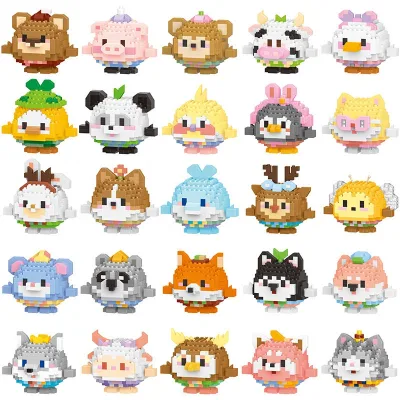
The current market landscape for Animal Building Blocks reveals a diverse range of product configurations, primarily constructed from durable plastic materials. Listings indicate a strong emphasis on traditional building block formats, which are versatile and compatible with existing playsets. Buyers will encounter various packaging types, including color boxes, plastic boxes, and standard carton boxes, each serving different retail and logistical needs. The observed product attributes highlight a focus on unisex appeal, ensuring broad market reach. Additionally, the presence of cartoon toy styles suggests a target audience of younger children, where visual engagement and character recognition play significant roles in purchase decisions.
Commercial signals show a significant variation in minimum order quantities, ranging from small trial orders to large bulk purchases. This flexibility allows buyers to test market response before committing to substantial inventory. The observed price points are generally accessible, reflecting the competitive nature of the plastic toy industry. However, buyers must carefully evaluate the quantity per carton and total gross weight to calculate landed costs accurately. Some listings specify precise piece counts per carton, which aids in inventory management and shelf stocking strategies. Understanding these logistical details is essential for optimizing supply chain efficiency and minimizing storage costs.
Technical Specifications to Verify
Verifying technical specifications is critical to ensuring product consistency and logistical efficiency. Buyers must confirm the exact dimensions of both individual packages and master cartons, as these measurements directly affect shipping volume and storage requirements. For instance, some products are packed in compact color boxes with specific centimeter measurements, while others utilize larger carton sizes for bulk distribution. The material composition, typically plastic, should be verified for durability and resistance to breakage during transit. Additionally, the weight specifications, including gross and net weights, are essential for calculating freight costs and ensuring compliance with carrier weight limits.
Customization capabilities vary among suppliers, so buyers should clarify the extent of available modifications. This includes the ability to print logos in full color or apply logo stickers, which can enhance brand identity. The product models and standard sizes should be cross-referenced with internal inventory systems to avoid discrepancies. Some listings provide detailed carton dimensions and cubic meter calculations, which are vital for container loading optimization. Buyers should also verify the number of pieces per carton to ensure accurate stock counts and prevent fulfillment errors. Clear documentation of these technical details prevents misunderstandings and ensures smooth production and delivery processes.
Compliance and Safety Documentation
Safety compliance is non-negotiable for children’s toys, particularly building blocks that pose potential choking hazards. Buyers must request and verify relevant safety certifications, such as EN71 and ASTM standards, which are commonly cited in the industry. These certifications ensure that the plastic materials used are free from harmful substances and that the product meets rigorous safety testing requirements. The presence of certifications like ENASTM or specific test reports for heavy metals and phthalates is a strong indicator of supplier reliability. Buyers should insist on up-to-date documentation for each production batch to maintain regulatory compliance in their target markets.
Beyond certifications, buyers should assess the supplier’s quality control processes regarding material safety and structural integrity. The use of non-toxic, durable plastic is essential to prevent injury and ensure product longevity. Suppliers should provide evidence of testing for small parts and sharp edges, which are critical for younger age groups. Additionally, the packaging materials should be evaluated for safety and environmental impact. Clear labeling with age recommendations and safety warnings is also required by many regulatory bodies. By prioritizing suppliers with robust compliance frameworks, buyers mitigate legal risks and protect their brand reputation from potential safety recalls.
Cost Drivers and Commercial Terms
Understanding the cost drivers behind Animal Building Blocks helps buyers negotiate better terms and forecast budgets accurately. The primary cost factors include material quality, customization complexity, and order volume. Customized products with full-color printing or unique packaging often carry higher unit costs due to setup fees and additional labor. Conversely, larger order volumes typically result in lower per-unit prices, leveraging economies of scale. Buyers should also consider the packaging costs, as elaborate color boxes or plastic cases add to the overall expense. Transparent pricing structures allow for better comparison between suppliers and prevent hidden costs from eroding profit margins.
Commercial terms, including minimum order quantities and payment conditions, significantly impact procurement strategy. Suppliers may offer flexible MOQs to accommodate new buyers, but larger orders often yield better pricing. Lead times can vary based on customization requirements and production capacity, so buyers should establish clear timelines for order placement and delivery. Payment terms should be negotiated to balance risk and cash flow, with options like letters of credit or secure escrow services providing additional protection. Understanding these commercial dynamics enables buyers to structure deals that align with their financial goals and supply chain capabilities, ensuring sustainable procurement practices.
Supplier Qualification and Quality Control
Supplier qualification is the foundation of a reliable supply chain for Animal Building Blocks. Buyers should conduct thorough due diligence to assess a supplier’s manufacturing capabilities, quality management systems, and ethical practices. Visiting factories or requesting third-party audits can provide insights into production environments and worker conditions. Suppliers with established quality control processes are more likely to deliver consistent products that meet specified standards. Buyers should also evaluate the supplier’s responsiveness and communication skills, as these factors influence problem resolution and project management efficiency. Building strong relationships with qualified suppliers fosters trust and long-term partnership potential.
Quality control measures must be implemented throughout the production process to ensure product consistency. Buyers should define clear acceptance criteria for materials, dimensions, and packaging before production begins. Regular inspections during production and pre-shipment checks help identify and rectify defects early. Suppliers should provide detailed inspection reports and photos of finished goods for buyer approval. Additionally, buyers should establish protocols for handling non-conforming products, including return or replacement procedures. By enforcing strict quality control standards, buyers minimize the risk of receiving subpar goods and maintain high customer satisfaction levels in the retail market.
Long-Term Procurement Checks
Long-term procurement success requires continuous monitoring and evaluation of supplier performance and market trends. Buyers should regularly review supplier metrics, including on-time delivery rates, product quality consistency, and responsiveness to issues. Establishing key performance indicators helps track progress and identify areas for improvement. Additionally, staying informed about changes in safety regulations and consumer preferences ensures that products remain compliant and relevant. Buyers should periodically reassess their supplier base to identify opportunities for cost savings or quality enhancements. Building a resilient supply chain involves diversifying suppliers and maintaining open lines of communication to adapt to market fluctuations.
Sustainability and ethical sourcing are increasingly important considerations for long-term procurement strategies. Buyers should encourage suppliers to adopt eco-friendly practices, such as using recyclable materials and reducing waste. This not only aligns with global sustainability goals but also appeals to environmentally conscious consumers. Regular audits and certifications can verify a supplier’s commitment to ethical labor practices and environmental responsibility. By integrating these considerations into their procurement processes, buyers contribute to a more sustainable industry and enhance their brand’s social responsibility profile. Continuous improvement and strategic planning are essential for maintaining a competitive edge in the dynamic toy market.
FAQs
What materials are used for these Animal Building Blocks?
These Animal Building Blocks are constructed from durable plastic materials suitable for children. The product line includes traditional building blocks designed for intellectual play and promotional use. Each item features a cartoon toy style with full color logo printing options available for customization.
Which certifications do these plastic building blocks hold?
The products hold ENASTM certifications ensuring safety compliance for international markets. Additional certificates include En71, ASTM, 10p, and Hr4040 standards for quality assurance. These verified standards confirm the toys meet rigorous safety requirements for children's intellectual toys and promotional items.
Can I customize the logo on these building block sets?
Yes, customization is available for these Animal Building Blocks with full color logo printing options. Buyers can request logo stickers or other imprint methods to brand the products. This feature supports promotional use and allows for tailored designs on the cartoon toy style sets.
What is the minimum order quantity for these blocks?
The minimum order quantity varies by specific product model, ranging from 80 to 120 pieces per order. Some listings indicate a general MOQ range of 1 to 15000 units depending on the supplier. Buyers should check specific model requirements like RFD658287 or KSL812568 for exact thresholds.
Where are these Animal Building Blocks manufactured?
These building blocks originate from Shantou, China, a known hub for toy manufacturing. The products are packed in color boxes or cartons with specific dimensions provided for each model. This origin ensures access to established supply chains for traditional building blocks and promotional items.
How are these blocks packaged for shipping?
Products are packaged in color boxes or carton boxes with specific packing dimensions listed per model. Each carton contains a set number of pieces, such as 16 or 24 PCS, with defined gross and net weights. Packaging sizes vary, including standard dimensions like 48.8 by 46.3 by 33.8 cm for bulk shipping.