Source Mobile Modular Fresh Air Ventilator for Hotels, Garages, Commercial
Source 30 Mobile Modular Fresh Air Ventilator units with varying air flow and motor power. Compare specifications for ceiling, portable, and commercial applications to find the right solution for your ventilation needs; compare the available evidence and request quotations based on your requirements.
Key considerations
Products List


Fresh Air Ventilation System and Heat Recovery Fresh Air Ventilation
$1100.00 - $1400.00
MOQ: 5 Pieces

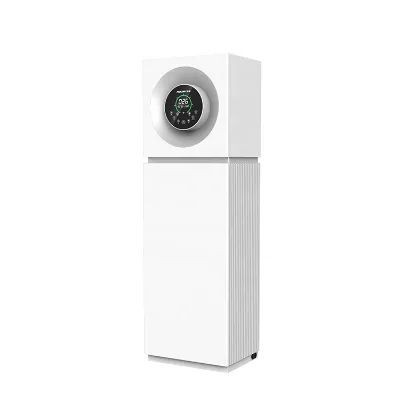


Ventilation Fan Industrial & Commercial Unidirectional Fresh Air Ventilator
$60.00 - $800.00
MOQ: 1 Pieces


Surgery Ventilation Equipment Mobile Air Ventilating System ICU Ventilator
$7299.00 - $7450.00
MOQ: 1 Pieces


Fresh Air Ventilator with Enhanced Sterilization and Disinfection Technology
$118.00 - $125.00
MOQ: 1 Sets


Comprehensive Sourcing Guide
Mobile Modular Fresh Air Ventilator Sourcing Guide
Procuring mobile modular fresh air ventilators requires a strategic approach that balances portability with robust air purification capabilities. Buyers must first define the operational environment, whether it is a temporary construction site, a mobile medical unit, or a flexible commercial space. The core value proposition lies in the ability to provide clean air without permanent ductwork, relying on HEPA filtration and recuperative heat exchange to maintain indoor air quality. Understanding the specific airflow requirements for the intended space is critical, as units range from small ceiling series models to high-capacity industrial systems.
The sourcing process involves evaluating multiple technical parameters, including motor power, static pressure, and noise levels, which directly impact performance and user comfort. Buyers should verify that the selected unit matches the power supply constraints of the deployment site, noting that options may include standard 220V/50Hz or industrial 380V/50Hz configurations. Additionally, the modularity of the system allows for easy installation and relocation, making it suitable for dynamic environments where air quality needs change frequently. This flexibility is a key differentiator from fixed HVAC systems, offering a cost-effective solution for temporary or semi-permanent facilities.
Product Scope and Observed Listing Signals
The current market offers a diverse range of mobile fresh air ventilators, with observed price points spanning from approximately $50 to $7,450 USD, reflecting significant variations in capacity and build quality. Minimum order quantities (MOQ) are generally low, ranging from 1 to 5 units, which facilitates trial purchases and small-scale deployments. Listings frequently highlight features such as low noise operation, customizable logos, and support for various power supplies, indicating a mature supply chain capable of meeting specific branding and technical requirements. Buyers should note that while many products claim ISO certification, this should be verified on a per-supplier basis rather than assumed for the entire category.
Product attributes vary widely, with air flow rates observed from 400 to 10,000 cubic meters per hour, catering to everything from small household rooms to large commercial halls. Motor power also scales accordingly, from 60W for smaller units to 6000W for high-performance industrial models. The inclusion of HEPA filters and cleaning room purifying technology suggests a focus on high-efficiency particulate removal, essential for health-conscious applications. Buyers must carefully match these specifications to their actual ventilation needs, as oversized units may lead to unnecessary energy consumption, while undersized units will fail to maintain adequate air exchange rates.
Technical Specifications to Verify
When evaluating technical specifications, buyers must prioritize airflow consistency and static pressure to ensure effective air distribution. Units with higher static pressure, such as those rated at 240 PA, are better suited for systems with longer duct runs or higher resistance filters. Motor power is a critical indicator of performance, with dual-motor configurations offering redundancy and increased capacity for larger spaces. Buyers should verify the exact dimensions and weight of the unit, as portability is a key feature of mobile ventilators, and ensure that the power source, whether battery or mains, aligns with the deployment site’s infrastructure.
Noise levels are another vital specification, particularly for residential or office environments where quiet operation is essential. Low-noise designs often incorporate sound-dampening materials or optimized fan blades, but buyers should request specific decibel ratings to ensure compliance with local noise regulations. Additionally, the type of installation, whether ceiling-mounted or portable, affects the unit’s footprint and aesthetic integration. Buyers should also check the filter type, ensuring that HEPA filters are replaceable and readily available, as ongoing maintenance costs can significantly impact the total cost of ownership over the product’s lifespan.
Compliance and Safety Documentation
Compliance with international safety and quality standards is non-negotiable for mobile fresh air ventilators, especially when used in sensitive environments like healthcare or education. Buyers must request proof of ISO certification and verify that the manufacturer adheres to relevant electrical safety standards for the target market. Documentation should include detailed test reports for electrical insulation, grounding, and leakage current, ensuring that the unit is safe for continuous operation. Additionally, buyers should confirm that the product meets local ventilation and air quality regulations, which may dictate minimum airflow rates or filtration efficiency standards.
Warranty and after-sales service are critical components of the compliance framework, providing assurance against manufacturing defects and operational failures. A standard one-year warranty with free spare parts is a common offering, but buyers should clarify the scope of coverage and the process for claiming replacements. It is also important to verify that the manufacturer provides clear installation and maintenance manuals in the local language, reducing the risk of improper use that could void the warranty. Buyers should also inquire about the availability of technical support, ensuring that any issues can be resolved promptly to minimize downtime.
Cost Drivers and Commercial Terms
The cost of mobile fresh air ventilators is influenced by several factors, including motor power, filtration efficiency, and build materials. Higher airflow rates and dual-motor configurations typically command premium prices, while basic models with lower capacity are more cost-effective for small spaces. Buyers should also consider the cost of consumables, such as HEPA filters, which need regular replacement and can add to the long-term operational expenses. Packaging and shipping costs are also significant, with wooden packages offering better protection for larger units but incurring higher freight charges.
Commercial terms such as payment methods, lead times, and customization options can impact the overall procurement strategy. Buyers should negotiate for flexible payment terms, such as partial upfront payments, to manage cash flow effectively. Customization options, including logo printing and specific power supply configurations, may incur additional fees but can enhance brand visibility and operational compatibility. It is advisable to request detailed quotations that break down unit costs, shipping fees, and any applicable taxes, ensuring transparency and facilitating accurate budgeting for the procurement project.
Supplier Qualification and Quality Control
Supplier qualification is a critical step in ensuring the reliability and consistency of mobile fresh air ventilators. Buyers should conduct thorough due diligence, verifying the supplier’s manufacturing capabilities, quality control processes, and track record in the industry. Requesting samples for testing is a practical way to assess build quality, airflow performance, and noise levels before committing to a larger order. Buyers should also inquire about the supplier’s ability to provide consistent product quality across multiple batches, as variations in manufacturing can lead to performance inconsistencies.
Quality control measures should include routine inspections of raw materials, assembly processes, and final product testing. Buyers should ask for evidence of these controls, such as inspection reports or third-party audit results, to ensure that the supplier adheres to high standards. Additionally, buyers should verify the supplier’s ability to handle custom orders, including specific dimensions, power supplies, and branding requirements. Establishing a clear communication channel with the supplier’s technical team can help resolve any issues quickly and ensure that the product meets the buyer’s specific requirements.
Long-Term Procurement Checks
Long-term procurement success depends on establishing a sustainable supply chain that can adapt to changing market demands and technological advancements. Buyers should regularly review supplier performance, tracking metrics such as on-time delivery, product quality, and responsiveness to issues. Building a strong relationship with the supplier can lead to better pricing, priority production, and access to new product innovations. Buyers should also stay informed about industry trends, such as improvements in filtration technology or energy-efficient motor designs, to ensure that their procurement strategy remains competitive.
Maintenance and support are key factors in the long-term viability of mobile fresh air ventilators. Buyers should ensure that spare parts are readily available and that the supplier provides comprehensive training for maintenance personnel. Regularly scheduled maintenance checks can prevent unexpected failures and extend the lifespan of the equipment. Additionally, buyers should consider the environmental impact of the product, opting for suppliers who prioritize sustainable manufacturing practices and recyclable materials. By focusing on these long-term factors, buyers can maximize the value and reliability of their mobile fresh air ventilator investments.
FAQs
What is the air flow capacity of the XH-400D model?
The XH-400D model provides an air flow capacity of 400 cubic meters per hour. This unit features a plate type recuperative heat exchanger and operates with a 60W motor power supply for efficient ventilation in small commercial or household spaces.
Can I customize the logo on these ventilators?
Yes, logo customization is available for these mobile modular fresh air ventilators. Buyers can request specific branding on the product, which supports various applications including hotels, garages, and commercial buildings while maintaining low noise levels during operation.
Which certification does the product hold for quality assurance?
The product holds ISO certification to ensure quality assurance and compliance with international standards. This certification applies to the steel construction and HEPA filter technology used in the XH series models for effective room purification and ventilation.
How is the XH-10000D model installed in large spaces?
The XH-10000D model is designed for ceiling easy installation in large commercial or industrial spaces. It features a robust size of 2200 by 2000 by 880 mm and utilizes a 6000W motor power supply to handle high static pressure requirements.
What warranty and after-sales support are provided?
A one-year warranty is provided along with free spare parts for after-sales support. This service ensures long-term reliability for the mobile modular fresh air ventilators used in diverse environments ranging from households to large commercial facilities.
What is the power supply requirement for the XH-700D?
The XH-700D model requires a power supply of 220V/50Hz or other compatible options. It utilizes dual 80W motors to achieve a 700 cubic meter per hour air flow, making it suitable for medium-sized ventilation needs with low noise output.