Find Mobile Trailer Mounted Diesel Generator for Construction, Mining, and Emergency Power
Source 30 Mobile Trailer Mounted Diesel Generator units with varying power ratings from 40 kW to 1000 kW. Buyers can compare specifications including voltage, fuel consumption, and dimensions for land use applications.
Key considerations
Products List


Reliable 40kw Mobile Generator Trailer with Automatic Transfer Switch
$9100.00 - $11110.00
MOQ: 1 Pieces


Mobile Trailer Diesel Generator 200kw 400V 50Hz Silent for Construction Site
$4900.00 - $5100.00
MOQ: 1 Pieces


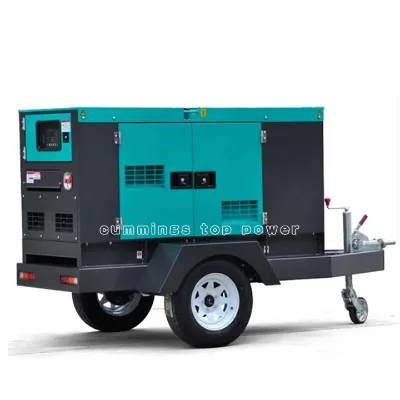


160kw Silent Trailer Generator for Mobile Power Solutions and Efficiency
$2950.00 - $3000.00
MOQ: 1 Pieces


Silent Trailer Mounted Generator with Efficient Power for Mobile Solutions
$2950.00 - $3000.00
MOQ: 1 Sets
Comprehensive Sourcing Guide
Strategic Sourcing Guide for Mobile Trailer Mounted Diesel Generators
Understanding Technical Specifications and Power Ratings
When sourcing mobile trailer mounted diesel generators, the primary objective is to align the unit's technical capabilities with the specific operational demands of the intended site. The market offers a diverse range of configurations, from compact units suitable for small-scale emergency backup to heavy-duty systems designed for continuous industrial load support. A critical observation in the current product landscape is the variation in rated power, which directly dictates the physical footprint and fuel logistics of the equipment. For instance, specific models in the current inventory demonstrate a rated power of 200 kW, operating at a rated voltage of 400V with a rated current of 360A. In contrast, larger capacity units are available with ratings reaching 700 kW and 1000 kW, supporting output currents of 1260A and 1800A respectively.
The electrical output characteristics are fundamental to compatibility with existing infrastructure. Most units in this category provide AC three-phase output, which is the standard for industrial and commercial applications. The rated frequency is typically fixed at 50Hz, a standard requirement for many global markets, though buyers must verify this against local grid standards. The power factor is another vital parameter; observed units often operate with a rated power factor of Cosφ = 0.8 (Lagging), which influences the apparent power (kVA) versus real power (kW) ratio. Buyers must ensure that the generator's kVA capacity, such as the 875 kVA associated with a 700 kW unit, exceeds the total connected load to prevent overload conditions during peak demand.
Performance stability is equally critical for sensitive equipment. The voltage regulation capabilities of these generators are defined by specific metrics. Steady-state voltage regulation rates are observed to be within ±0.5%, ensuring that voltage fluctuations remain minimal during normal operation. For transient events, such as sudden load changes, the transient voltage regulation rate is typically limited to ≤-15%, with a voltage stabilization time of ≤1.5 seconds. Frequency fluctuation is tightly controlled, with observed rates not exceeding 0.25%. These specifications ensure that the power delivered remains clean and stable, protecting downstream machinery from damage. The excitation method is predominantly brushless self-excitation or AC rotating exciter, which eliminates the need for maintenance-heavy slip rings and brushes, thereby enhancing long-term reliability.
Compliance, Certification, and Environmental Standards
Navigating the regulatory landscape is a non-negotiable aspect of sourcing diesel generators, particularly for mobile units that may be deployed across different jurisdictions. The primary certification observed in the current market data includes CE and ISO9001. The CE marking indicates conformity with health, safety, and environmental protection standards for products sold within the European Economic Area, while ISO9001 certifies that the manufacturer adheres to international quality management system standards. Buyers should treat these certifications as baseline requirements rather than optional features, as they provide a verified framework for the manufacturer's production processes.
Environmental compliance is increasingly stringent, especially regarding exhaust emissions. Mobile units are subject to specific emission standards that vary by region. In the observed product data, the exhaust emission standard is listed as China National Stage III. This indicates a specific level of control over pollutants such as nitrogen oxides (NOx) and particulate matter. However, buyers must verify if this standard aligns with local regulations in their target deployment zones, as some regions may require Euro V or EPA Tier 4 equivalent standards. Failure to comply with local emission laws can result in significant fines and operational shutdowns.
The insulation class of the generator is another compliance-related technical specification that affects durability and safety. The observed units utilize H Class insulation, which allows the equipment to operate at higher temperatures without degrading the winding insulation. This is crucial for mobile units that may operate in hot climates or under continuous load. Additionally, the protection class, such as IP22 observed in the data, defines the ingress protection against solid objects and water. While IP22 offers basic protection against fingers and vertically falling water, mobile units operating in harsh environments may require higher IP ratings. Buyers must assess the specific environmental conditions of the deployment site to determine if the standard protection class is sufficient or if additional enclosures are necessary.
Cost Drivers and Financial Considerations
The total cost of ownership for a Mobile Trailer Mounted Diesel Generator extends far beyond the initial purchase price. While the observed listed price range in the market spans from 580 USD to 71,850 USD, this wide variance reflects differences in capacity, fuel efficiency, and build quality. The minimum order quantity (MOQ) for these units is typically 1, allowing for flexible procurement for single-site deployments. However, the unit price is heavily influenced by the rated power and the complexity of the control systems. Larger units, such as the 1000 kW models, command a significantly higher price point due to the increased material costs and engineering required for the engine and alternator.
Fuel consumption is a major operational cost driver that buyers must calculate accurately. The data shows varying fuel consumption rates depending on the unit size and load. For example, a 200 kW unit has a fuel consumption of 215g/Kw·H, while a larger 700 kW unit demonstrates a more efficient rate of ≤195g/Kw·H. Conversely, smaller 40 kW units may have a higher consumption rate of 258g/Kw·H. These figures highlight the importance of matching the generator size to the actual load; oversizing a unit can lead to inefficient fuel burn and higher operating costs. Buyers should request detailed fuel consumption curves from suppliers to model long-term expenses accurately.
Packaging and logistics also contribute to the overall cost. The standard packaging for these units includes wooden packaging and PE film, designed to protect the generator during transit. The physical dimensions of the units, ranging from 2000×1000×1990 mm for smaller models to 4300×1700×2400 mm for larger ones, directly impact shipping costs. Buyers must consider the weight of the units, which ranges from 625 kg for compact models to 5800 kg for heavy-duty units, as this affects the type of transport required. Additionally, the installation method is fixed, meaning the unit is designed to remain stationary once deployed, which simplifies the setup process but requires careful site preparation to accommodate the weight and dimensions.
Typical Applications and Deployment Scenarios
Mobile trailer mounted diesel generators are versatile assets designed for a wide array of applications, primarily driven by the need for reliable, independent power sources. The primary usage categories observed include common units, standby units, and emergency crew support. Common units are typically deployed for general power supply in remote locations where grid access is unavailable or unreliable. Standby units serve as backup power for critical facilities, ensuring continuity of operations during grid outages. Emergency crew units are specifically designed for rapid deployment in disaster relief scenarios, providing immediate power for medical equipment, communication systems, and lighting.
The land use type for these units is generally classified as ordinary, indicating suitability for a broad range of terrains and environments. However, the mobile nature of the trailer-mounted design allows for easy relocation, making them ideal for construction sites, temporary events, and mining operations. The self-starting diesel generator feature, often utilizing a DC24V motor start or DC12V electric start, ensures that the unit can be activated automatically or manually with minimal effort. This is particularly important for emergency applications where time is of the essence.
The cooling method is another factor influencing application suitability. Water cooling is a common method observed in these units, which is effective for maintaining optimal operating temperatures under heavy loads. This makes them suitable for continuous operation in industrial settings. However, buyers must ensure that the deployment site has access to a water supply or a closed-loop cooling system if water cooling is selected. The installation method is fixed, meaning the trailer must be positioned on a stable, level surface to prevent movement during operation. This requirement necessitates careful site selection and preparation, particularly in outdoor environments where ground conditions may vary.
Supplier Evaluation and Quality Assurance
Selecting the right supplier is critical to ensuring the reliability and longevity of the mobile diesel generator. Buyers should prioritize suppliers who can demonstrate a track record of producing units that meet the observed technical specifications, such as the 2M200, 2MYC700, and 2M40 models. The origin of the product, typically China in the current market data, should be verified to ensure that the manufacturing processes adhere to international standards. While the specific supplier names should not be named, buyers should look for evidence of consistent quality control practices, such as the ISO9001 certification mentioned in the product data.
Quality assurance should extend beyond the initial purchase to include comprehensive testing and validation. Buyers should request detailed test reports that verify the steady-state voltage regulation rate, transient voltage regulation rate, and frequency fluctuation rate. These metrics are essential for ensuring that the generator can handle the dynamic load requirements of the intended application. Additionally, the insulation class and protection class should be verified through independent testing to confirm that the unit can withstand the environmental conditions of the deployment site.
Customization is another key factor in supplier evaluation. The observed data indicates that customization is available, allowing buyers to tailor the generator to specific needs. This could include modifications to the fuel tank capacity, the addition of remote monitoring systems, or adjustments to the exhaust emission standards. Buyers should engage with suppliers early in the procurement process to discuss customization options and ensure that the final product meets all operational requirements. The availability of spare parts and technical support is also crucial, as it ensures that the generator can be maintained and repaired efficiently throughout its lifecycle.
Long-Term Procurement and Lifecycle Management
Long-term procurement considerations for mobile trailer mounted diesel generators focus on sustainability, maintenance, and lifecycle management. The fuel consumption rates observed in the market data highlight the importance of selecting units that offer optimal efficiency. Over the lifespan of the generator, fuel costs can far exceed the initial purchase price, making efficiency a key decision factor. Buyers should also consider the weight and dimensions of the units, as these affect the logistics of moving and storing the equipment.
Maintenance is a critical aspect of lifecycle management. The brushless self-excitation and AC rotating exciter systems reduce the need for frequent maintenance, but regular inspections are still necessary to ensure optimal performance. Buyers should establish a maintenance schedule that includes regular checks of the fuel system, cooling system, and electrical connections. The fixed installation method simplifies maintenance access, but the unit must be positioned in a location that allows for easy servicing.
Finally, buyers should consider the end-of-life disposal and recycling of the generator. The use of materials such as steel and copper in the construction of the unit means that recycling is a viable option at the end of the product's life. Buyers should inquire about the supplier's policies regarding recycling and disposal to ensure that the procurement process aligns with environmental sustainability goals. By focusing on these long-term considerations, buyers can ensure that their investment in mobile trailer mounted diesel generators delivers value and reliability over the entire lifecycle of the equipment.
FAQs
What is the rated power range for these mobile generators?
The rated power ranges from 40 kW to 1000 kW across available models. Specific units include a 200 kW model and a 700 kW model, with the largest reaching 1000 kW capacity for heavy industrial demands.
Can these units operate with AC three-phase output?
Yes, the units provide AC three-phase output as a standard configuration. This output type is designed for compatibility with industrial infrastructure and typically operates at a rated frequency of 50Hz.
Which certifications do the manufacturers hold for quality assurance?
The products hold CE and ISO9001 certifications to ensure compliance and quality. These standards verify that the manufacturing processes meet international safety and management system requirements for reliable operation.
How is the voltage regulation performance defined for these units?
Steady-state voltage regulation is maintained within ±0.5% to ensure stable power delivery. Transient events are managed with a stabilization time of 1.5 seconds and a fluctuation rate not exceeding 0.25%.
What starting methods are available for the diesel engines?
Starting methods include DC24V motor start and DC12V electric start options depending on the model. These self-starting capabilities allow for rapid activation in emergency or standby scenarios without manual intervention.
What is the minimum order quantity for purchasing these generators?
The minimum order quantity is one unit, allowing for flexible procurement of single-site deployments. This low MOQ supports buyers who need immediate power solutions for specific projects or emergency crews.