Source Modern Aluminum Floating House Boat for Fishing, Camping, and Leisure
Find a selection of 21 Modern Aluminum Floating House Boat units available for sourcing. Buyers can compare specifications including hull material, deck options, and engine types across models designed for sport fishing, camping, and ocean applications.
Key considerations
Products List

Modern Water Floating House Houseboat Prefab House Floating Boathouse
$59000.00 - $66000.00
MOQ: 1 Pieces

Modern Luxury Prefab Hotel Mobile Home Houseboats Floating House Boat
$80800.00 - $89800.00
MOQ: 1 Pieces

Allhouse Modern Waterfront Living Boathouses Luxury Floating Aluminum Houseboat
$93800.00 - $103800.00
MOQ: 1 Pieces

Luxury Design Modern Floating Water House Prefab Boat Pontoon Houseboat Floating House Boat
$59000.00 - $66000.00
MOQ: 1 Pieces

Allhouse Center Console Boat Aluminum Luxury Modern Style Floating Houseboat
$93800.00 - $103800.00
MOQ: 1 Pieces

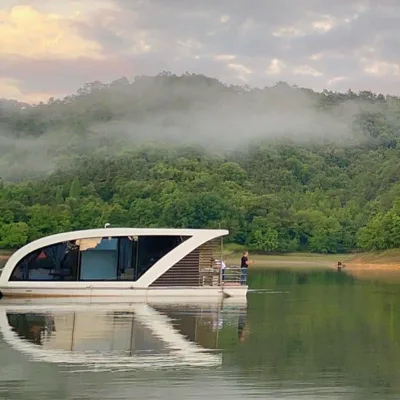
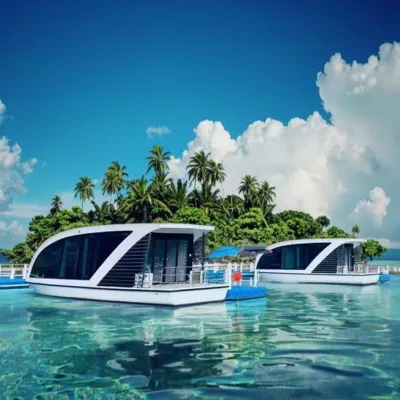
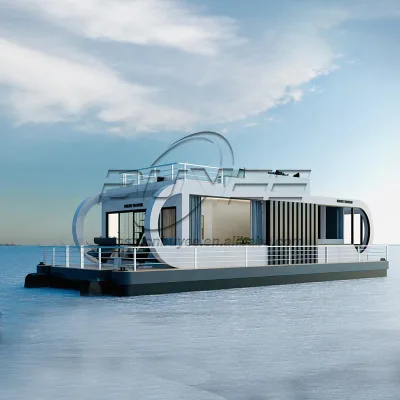
Floating Houseboat Water Building Floating House Boat Water Party Boat Hotel Boat
$81422.44 - $122134.68
MOQ: 1 Minimum
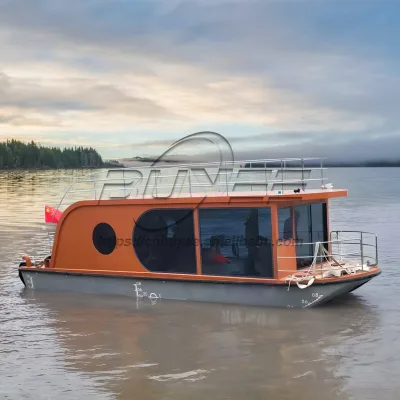
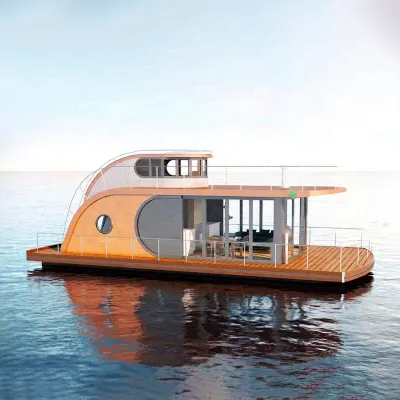
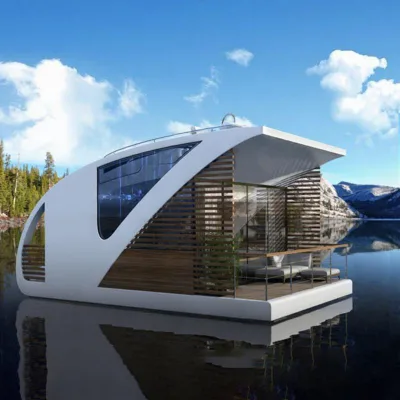


Boat Style Sport Boat Floating House Boat Aluminum Pontoon House Boat for Sale
$36000.00 - $80000.00
MOQ: 1 Pieces

Custom Floating House Boat Miniature Prefabricated Floating Hotel Room
$40000.00 - $45000.00
MOQ: 1 Pieces
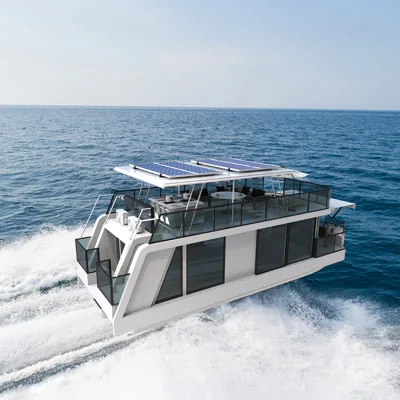
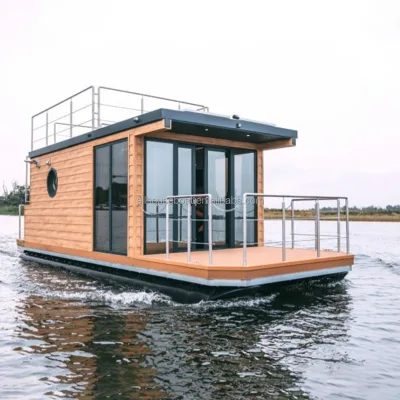
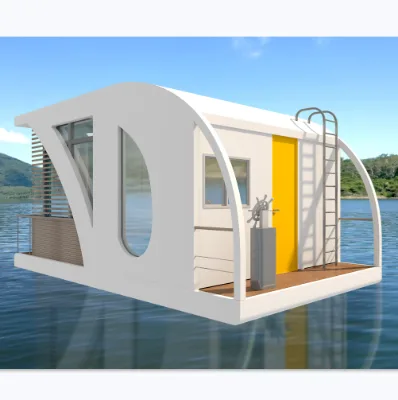
Comprehensive Sourcing Guide
Sourcing Modern Aluminum Floating House Boats: A Strategic Procurement Guide
The global market for modern aluminum floating house boats has expanded significantly, driven by the demand for durable, low-maintenance, and versatile watercraft suitable for diverse applications ranging from luxury yachting to functional river and lake operations. For B2B procurement professionals, navigating this sector requires a disciplined approach to verifying technical specifications, understanding cost structures, and ensuring compliance with international safety standards. This guide synthesizes observed market data to provide a framework for sourcing high-quality aluminum floating structures without relying on unverified claims or speculative data.
Technical Specifications and Material Integrity
The foundation of any reliable floating house boat lies in its material composition and structural engineering. In the modern aluminum sector, the hull material is predominantly aluminum alloy, chosen for its exceptional strength-to-weight ratio and resistance to corrosion in both fresh and saltwater environments. Procurement teams must scrutinize the specific alloy grades used, as these directly impact longevity and structural integrity under load.
A critical observation in the current market is the variation in tube thickness and deck construction. High-performance models often feature tube thicknesses around 4mm, which provides the necessary buoyancy and impact resistance for larger vessels. The deck construction is equally vital; observed specifications indicate deck thicknesses of 20mm, utilizing materials designed to withstand heavy foot traffic and equipment loads. These vessels frequently employ a double-deck configuration to maximize interior volume and stability, though single-deck options exist for more compact applications.
The dimensions of these vessels vary widely to suit different operational needs. Length specifications observed in the market range from compact units under 6 meters to expansive luxury models extending up to 18 meters. For instance, specific model lines indicate standard lengths of 5.8 meters, 9 meters, 11.5 meters, and 12 meters. The beam, or width, is a crucial factor for stability; a standard beam of 4 meters is common for mid-sized units, ensuring a stable platform for living or recreational activities. Furthermore, the tube diameter is a key indicator of buoyancy capacity, with observed values ranging from 0.8 meters to 735mm depending on the vessel's intended displacement and load capacity.
Compliance, Certification, and Safety Standards
Navigating the regulatory landscape is essential for international procurement. While specific certification statuses can vary by manufacturer, the market frequently references adherence to international standards such as CE certification and ISO9001 quality management systems. Buyers must verify that the supplier can provide valid, current certificates rather than relying on general claims. The presence of a CE Certificate indicates compliance with European safety, health, and environmental protection requirements, which is often a prerequisite for entry into many global markets.
Safety standards also extend to the vessel's construction and operational limits. The standard for vessel capacity is often tied to the number of persons the boat can safely carry. Observed data suggests capacities ranging from 6 to 8 persons for specific configurations, though larger vessels will obviously support higher numbers. It is imperative for buyers to confirm that the stated capacity aligns with the vessel's actual displacement and stability calculations. Additionally, the application scope—whether for sea, river, lake, or ocean use—must be explicitly defined in the technical documentation to ensure the vessel is rated for the intended water conditions.
Cost Drivers and Pricing Dynamics
The pricing of modern aluminum floating house boats is influenced by a complex interplay of factors, including size, customization, and propulsion systems. The observed price range in the current market spans from approximately $36,000 to over $122,000 USD. This wide variance reflects the difference between basic utility models and fully customized luxury yachts.
Several specific cost drivers contribute to the final price. First, the engine type and horsepower are significant determinants. Outboard engines are the standard, with power outputs ranging from 60 to 150 HP. Higher horsepower engines not only increase the initial cost but also impact fuel efficiency and maintenance requirements. Second, customization options play a major role. Features such as custom flooring colors, specialized fencing designs, and unique layout configurations add to the base price. The availability of customization is a standard feature in this sector, allowing buyers to tailor the vessel to specific operational needs.
The weight of the vessel is another critical factor, with observed weights around 6 tons for certain models. Heavier vessels require more robust materials and larger engines, driving up costs. Additionally, the packaging and shipping method, such as 40FT Flat Rack High Cube containers or standard containers, will influence the logistics cost. Buyers should anticipate that larger, heavier vessels will incur higher shipping fees and may require specialized transport arrangements.
Typical Applications and Operational Versatility
Modern aluminum floating house boats are designed for a wide array of applications, making them highly versatile assets for various industries. The primary usage categories observed include sport fishing, luxury yachting, and functional houseboat camping. The style of these vessels is predominantly modern, characterized by sleek lines and efficient use of space.
For sport fishing applications, the design often incorporates specific features such as specialized flooring and deck layouts optimized for casting and reeling. In the luxury sector, these vessels serve as floating residences or party platforms, featuring amenities like water tanks and multi-colored finishes. The application scope extends to river, lake, and ocean environments, allowing operators to deploy these assets in diverse geographic locations.
The capacity of these vessels also dictates their use case. Smaller units with capacities of 6-8 persons are ideal for recreational fishing or small group tours. Larger models, with lengths up to 18 meters, are suitable for commercial operations, large-scale events, or extended living arrangements. The ability to customize the layout and interior features allows these vessels to be adapted for specific needs, such as converting a sport fisherman into a luxury yacht or a houseboat into a floating campsite.
Supplier Evaluation and Quality Assurance
Selecting the right supplier is a critical step in the procurement process. Buyers should prioritize suppliers with a proven track record in manufacturing aluminum vessels, particularly those originating from established industrial hubs like Shandong, China, which is a known center for this type of production. When evaluating potential suppliers, procurement teams should request detailed technical dossiers that confirm the material specifications, such as the use of aluminum alloy tubes and the specific thickness of the hull and deck.
Quality control measures should be a primary focus. Buyers must verify that the supplier adheres to strict manufacturing standards, including the use of certified welding techniques and rigorous testing protocols. The warranty period is another important indicator of supplier confidence; a standard warranty of 3 years is observed in the market, suggesting a commitment to product durability. However, buyers should carefully review the terms of the warranty to understand what is covered and what exclusions apply.
The production model number is another key identifier. Models such as HB-40, HB-580, HB-1080, and HB-1250 represent different configurations and sizes. Buyers should ensure that the model number corresponds to the specific requirements of their project. Additionally, the packing method, whether in a standard container or a 40FT Flat Rack High Cube, should be confirmed to ensure safe transport.
Long-Term Procurement and Maintenance Considerations
Long-term ownership of aluminum floating house boats involves ongoing maintenance and operational planning. The aluminum hull material offers significant advantages in terms of corrosion resistance and low maintenance requirements compared to traditional materials like wood or fiberglass. However, regular inspections are necessary to ensure the integrity of the hull and deck, particularly in saltwater environments.
The customization options available, such as floor color choices and fencing designs, should be considered in the context of long-term durability. Buyers should select materials that can withstand UV exposure and harsh weather conditions. The engine type and horsepower should also be evaluated based on the expected usage frequency and load requirements to ensure optimal performance over time.
Procurement teams should also consider the lifecycle of the vessel. With a standard warranty of 3 years, buyers should plan for post-warranty maintenance and potential upgrades. The versatility of these vessels allows for repurposing or expansion, making them a sound long-term investment. By carefully selecting a supplier with a strong reputation and verifying all technical specifications, buyers can ensure a successful procurement experience that meets their operational needs for years to come.
Comparative Analysis of Key Specifications
To assist in decision-making, the following table summarizes key technical specifications observed in the market for modern aluminum floating house boats. This comparison highlights the variability in dimensions, materials, and capacities across different models.
| Specification | Model HB-40 | Model HB-580 | Model HB-1080 | Model HB-1250 |
|---|---|---|---|---|
| Length | < 6m | 5.8m | 9m | 12m |
| Beam | Standard | Standard | 4m | Standard |
| Tube Thickness | Standard | 4mm | Standard | Standard |
| Deck Thickness | Standard | 20mm | Standard | Standard |
| Tube Diameter | 0.8m | 735mm | Standard | Standard |
| Capacity | 6-8 Persons | 6-8 Persons | Standard | Standard |
| Hull Material | Aluminum Alloy | Aluminum | Aluminum | Aluminum |
| Engine Type | Outboard | Outboard | Outboard | Outboard |
| Housepower | 60-150HP | 60-150HP | Standard | Standard |
| Weight | Standard | 6t | Standard | Standard |
| Warranty | 3 Years | 3 Years | 3 Years | 3 Years |
| Certification | CE/ISO9001 | CE Certificate | CE/ISO9001 | CE/ISO9001 |
This table serves as a reference point for buyers to compare the fundamental attributes of different models. It is important to note that specific values may vary based on customization and supplier specifications. Buyers should always request the most up-to-date technical data sheets from their chosen supplier to ensure accuracy before finalizing any procurement decision. By adhering to these guidelines and maintaining a rigorous approach to verification, B2B buyers can successfully navigate the complex market for modern aluminum floating house boats.
FAQs
What customization options are available for modern aluminum floating house boats?
Customization is available for layout, flooring color, and fencing design. Buyers can select standard or customized layouts and choose from multiple floor color options to suit specific operational needs.
Which tube thickness and deck specifications are standard for these vessels?
Standard specifications include a tube thickness of 4mm and a deck thickness of 20mm. These dimensions ensure structural integrity and buoyancy for both single and double-deck configurations.
Can these boats operate in ocean environments as well as rivers?
Yes, these vessels are designed for application in sea, river, lake, and ocean environments. The aluminum alloy hull provides the necessary corrosion resistance for diverse water conditions.
What is the typical capacity and weight for a standard model?
A typical model supports a capacity of 6 to 8 persons and weighs approximately 6 tons. These figures depend on the specific length and tube diameter configuration selected.
Which certifications do manufacturers typically provide for these house boats?
Manufacturers typically provide CE Certificate and ISO9001 certification. These documents verify compliance with international safety and quality management standards required for global procurement.
How does the engine horsepower affect the performance of the boat?
Outboard engines with power ranging from 60 to 150 HP are standard. Higher horsepower options allow for greater speed and load handling capabilities depending on the vessel size.