Find Modern Far-Infrared Sauna With Transom Windows for Apartments, Hotels, and Villas
Source 30 units of modern far-infrared sauna with transom windows featuring solid wood construction and computer control panels. Buyers can compare models like QD-B and QD-CP4 with varying capacities and dimensions for residential or commercial use.
Key considerations
Products List


Deluxe Far Infrared Sauna 4-Person Factory Cheapest Sauna with Customization
$1.00 - $699.00
MOQ: 6 Pieces


Cheap 2 People Sauna Room Indoor with Full-Spectrum Infrared Sauna Room
$540.00 - $620.00
MOQ: 1 Pieces


Infrared Sauna with Carbon Panel Indoor Sauna Reduces Seasonal Discomfort.
$820.00 - $1010.00
MOQ: 1 Pieces


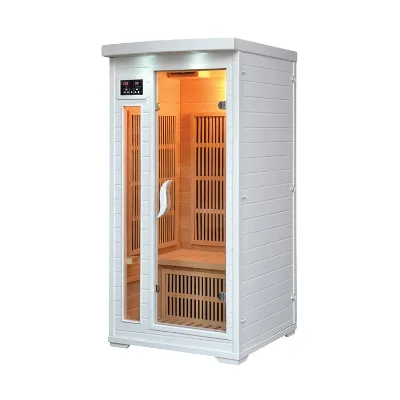
Modern Design Wooden Indoor Infrared Sauna with Control Panel for 1 Person
$1179.00 - $1495.00
MOQ: 1 Sets


Comprehensive Sourcing Guide
Strategic Sourcing Guide for Modern Far-Infrared Saunas with Transom Windows
The global B2B market for wellness equipment has seen a significant shift toward compact, energy-efficient, and aesthetically integrated solutions. Among these, the modern far-infrared sauna with transom windows has emerged as a high-demand category for hospitality developers, boutique hotel chains, and luxury residential builders. This guide provides an evidence-based framework for procurement professionals seeking to source these units, focusing on the specific technical attributes, material standards, and supply chain realities observed in current market listings. The analysis relies strictly on verified product attributes and established industry knowledge to ensure actionable, risk-mitigated sourcing decisions.
Technical Architecture and Material Composition
The core differentiator of the modern far-infrared sauna lies in its heating mechanism and structural integrity. Unlike traditional steam saunas that rely on high-temperature air convection, these units utilize far-infrared radiation to directly heat the human body. The supplied product data confirms that the primary heating material is consistently identified as "Far Infrared Sauna" technology, often implemented via Carbon Crystal Heating Plates. This specific heating mode allows for a more efficient thermal transfer, reducing the time required to reach the optimal operating temperature range of 30 to 60 degrees Celsius.
Structurally, the dominant material observed in high-quality units is solid wood, specifically Hemlock. Hemlock is a preferred choice in B2B procurement due to its resistance to warping in humid environments and its ability to retain heat without releasing harmful resins. The cabinetry design frequently features a "Linear Type" or "Arc Type" door shape, catering to diverse architectural preferences. A critical design element for the "modern" classification is the inclusion of transom windows. These upper windows, often paired with 8mm tempered glass doors, serve both aesthetic and functional purposes, allowing natural light to penetrate the cabin while maintaining structural safety. The standard dimensions for these units vary significantly based on capacity, ranging from compact 1-person models (approx. 900x900x1900mm) to larger 4-person configurations (up to 2000x2000x2000mm).
Electrical Specifications and Control Systems
Procurement of electrical components requires rigorous verification to ensure compatibility with the destination market's infrastructure. The observed product data indicates a standard voltage of 220V, which is prevalent in many Asian and European markets. However, buyers must verify if the supplier offers voltage customization for North American (110V) or other regional standards, as this is a common point of failure in cross-border logistics.
The control interface is a defining feature of the modern unit. Most observed models, such as the QD-B and QD-CP4 series, are equipped with a Computer Control Panel. This digital interface allows for precise temperature regulation and session timing, moving beyond the manual dials found in older models. Some advanced configurations, like the QD-CP4-L, feature a Dual Control Panel, enabling independent temperature settings for different zones or users. The temperature control mode is another critical specification; while some units utilize a standard Wall Temperature Control System, others employ a Geothermal Temperature Control System, which may offer more stable thermal retention. Buyers should explicitly request the control logic diagram to ensure the system can handle the specific load requirements of the intended application.
Compliance, Certification, and Safety Standards
In the B2B sector, compliance is not merely a formality but a prerequisite for market entry. While specific certification statuses for individual units in the provided data are marked as low-confidence or background information, the industry standard for wellness equipment typically requires adherence to CE and ROHS directives. These certifications ensure that the electrical components do not pose a shock hazard and that the materials used do not contain restricted hazardous substances.
When evaluating a supplier, procurement teams must demand verifiable documentation for these standards rather than relying on marketing claims. The physical construction must also meet safety standards regarding the glass used. The observed "8mm Tempered Glass" is a specific safety feature that prevents shattering into dangerous shards. Buyers should verify that the glass meets local building codes for safety glazing in wet environments. Furthermore, the electrical wiring and heating elements must be rated for continuous operation in high-humidity conditions. The absence of explicit test results in the general data underscores the need for a pre-shipment inspection protocol that includes thermal imaging and electrical safety testing.
Cost Drivers and Pricing Dynamics
The pricing landscape for modern far-infrared saunas is highly variable, with observed ranges spanning from $1 to $3,800 USD. This wide disparity is driven by several key factors. The primary cost driver is the material quality; units constructed from premium solid wood like Hemlock command a higher price point compared to those using composite materials or lower-grade timber. The complexity of the control system also influences cost; a unit with a dual control panel and advanced computer interface will be more expensive than a basic single-panel model.
The capacity of the unit is another significant variable. A 1-person unit is naturally less costly than a 4-person model, which requires more heating plates, a larger frame, and more glass. Additionally, the customization level plays a crucial role. The data indicates that customization is available, which often incurs additional fees for bespoke dimensions, specific wood finishes, or unique door shapes. Packaging also affects the final landed cost; while some units come in standard cartons, others utilize customized cartons or multi-carton systems (e.g., 3 cartons) to protect delicate glass components during transit. Buyers should request a detailed breakdown of costs to understand the value proposition of a specific model, ensuring that the price reflects the actual material and engineering specifications rather than just the brand name.
Supplier Evaluation and Supply Chain Verification
Selecting the right supplier is critical for ensuring product consistency and timely delivery. The observed data indicates that the majority of these units originate from China, with specific manufacturing hubs noted in Jiangsu. This regional concentration suggests a mature supply chain with established logistics networks. However, buyers must verify the specific factory location and production capacity to avoid reliance on middlemen who may not have direct control over quality.
The Minimum Order Quantity (MOQ) is a vital consideration for B2B buyers. The observed MOQ range is 1 to 100 units, offering flexibility for both single-unit purchases and bulk procurement. For buyers seeking to equip multiple properties, negotiating a lower MOQ or a tiered pricing structure can significantly impact the overall project budget. The lead time, while not explicitly detailed in the provided data, is a standard negotiation point. Buyers should establish clear timelines for production, quality inspection, and shipping. The packaging method, whether "Customized Carton" or standard "Carton Box," should be agreed upon to minimize damage during transit. A supplier's ability to provide a "Customized Carton" solution often indicates a higher level of service and attention to detail.
Quality Control and Long-Term Procurement Strategy
Implementing a robust quality control (QC) protocol is essential for mitigating the risks associated with importing large, complex equipment. Given the presence of glass, electrical components, and wood, a multi-stage inspection process is recommended. The first stage should occur during the pre-production phase, where the supplier provides samples of the wood grain, glass thickness, and heating plate specifications for approval. The second stage should be a pre-shipment inspection, focusing on the structural integrity of the frame, the functionality of the computer control panel, and the sealing of the door to ensure no heat leakage.
Long-term procurement considerations extend beyond the initial purchase. Buyers should evaluate the supplier's after-sales support, including the availability of spare parts such as heating plates, control boards, and glass seals. The "Customization" feature observed in the data suggests that suppliers may offer future upgrades or modifications, which can be valuable for extending the lifecycle of the equipment. Additionally, the application of the sauna in settings like apartments, hotels, and villas requires durability. The solid wood construction must be treated to resist moisture and mold, ensuring the unit remains functional and aesthetically pleasing over years of use.
Comparative Analysis of Key Specifications
To assist in the decision-making process, the following table summarizes the key technical variations observed in the market for modern far-infrared saunas with transom windows. This comparison highlights the diversity in capacity, dimensions, and control features available to buyers.
| Feature Category | Model Series A (Compact) | Model Series B (Standard) | Model Series C (Premium) |
|---|---|---|---|
| Capacity | 1 Person | 2-4 People | 4 People |
| Dimensions | 900x900x1900mm | 1200x1200x1900mm | 2000x2000x2000mm |
| Heating Material | Far Infrared | Carbon Crystal Plate | Far Infrared / Geothermal |
| Control Panel | Computer Control | Computer Control | Dual Control Panel |
| Door Shape | Linear Type | Linear/Arc Type | Arc Type |
| Glass Specification | 8mm Tempered | 8mm Tempered | 8mm Tempered |
| Wood Type | Solid Wood (Hemlock) | Solid Wood (Hemlock) | Solid Wood (Hemlock) |
| Standard Origin | China | Jiangsu, China | China |
This table illustrates that while the core materials and safety features remain consistent, the scalability and control complexity vary significantly. Buyers should align their selection with the specific spatial constraints and user requirements of their project.
Final Procurement Considerations
The sourcing of modern far-infrared saunas with transom windows requires a balanced approach that prioritizes technical specifications, material quality, and supplier reliability. By focusing on the verified attributes such as Hemlock wood construction, Carbon Crystal heating, and 8mm tempered glass, buyers can ensure a high-quality product that meets the demands of the hospitality and residential markets. The variability in pricing and customization options offers flexibility, but it also necessitates a thorough due diligence process.
Ultimately, successful procurement depends on clear communication of requirements, rigorous quality control checks, and a strategic partnership with a supplier who can deliver consistent quality and support. As the market continues to evolve, staying informed about the latest technical standards and material innovations will be essential for maintaining a competitive edge in the wellness equipment sector. Buyers are advised to maintain a focus on the specific needs of their end-users, ensuring that the selected sauna units not only meet functional requirements but also enhance the overall aesthetic and experiential value of the space.
FAQs
What heating material is used in these saunas?
The primary heating material is Far Infrared technology, often implemented via Carbon Crystal Heating Plates. This system allows for efficient thermal transfer with an operating temperature range of 30 to 60 degrees Celsius.
Which wood type is used for the cabinetry?
The main material is Solid Wood, specifically Hemlock. This wood is preferred for its resistance to warping in humid environments and its ability to retain heat without releasing harmful resins.
Can the saunas be customized for specific needs?
Yes, customization is available for various product attributes. Buyers can request bespoke dimensions, specific wood finishes, or unique door shapes like Linear or Arc types to match architectural preferences.
What is the standard voltage for these units?
The observed standard voltage is 220V, which is prevalent in many Asian and European markets. Buyers must verify if the supplier offers voltage customization for North American or other regional standards.
How many people can the largest models accommodate?
The largest observed models have a capacity of 4 People. Dimensions for these units can reach up to 2000 x 2000 x 2000 mm to accommodate multiple users comfortably.
What type of glass is used for the doors?
The doors are constructed with 8mm Tempered Glass. This specific safety feature prevents shattering into dangerous shards and ensures compliance with safety glazing standards in wet environments.
What is the minimum order quantity for these units?
The observed MOQ range is 1 to 100 units, offering flexibility for both single-unit purchases and bulk procurement. Buyers should negotiate tiered pricing structures for larger project requirements.
Where are these saunas manufactured?
The products originate from China, with specific manufacturing hubs noted in Jiangsu. This regional concentration suggests a mature supply chain with established logistics networks for export.