Source Modern Fabric Reception Chair for Offices Hotels Lounges
Explore 30 listings of Modern Fabric Reception Chair options suitable for offices, hotels, and public lounges. Buyers can compare specifications, prices, and customization features from verified suppliers offering OEM support and various armrest styles.
Key considerations
Products List


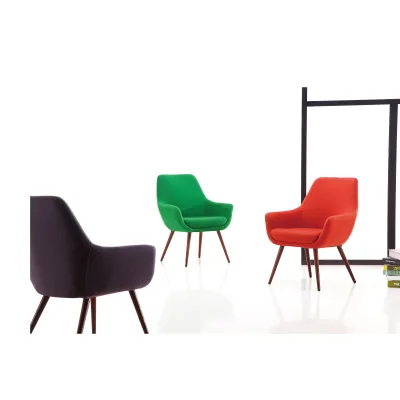


Banquet Design Fabric Upholstered Dining Chair for Hotel Wedding Reception
$10.00 - $18.00
MOQ: 100 Pieces

Popular Banquet Fabric Dining Chair with Comfortable Ergonomic Back for Restaurant
$10.00 - $18.00
MOQ: 100 Pieces


Comfortable Home Computer Chair Visitor Chair with Mesh Back Reception Chair
$53.99 - $55.99
MOQ: 10 Pieces


Comfortable Executive Visitor Chair Luxury Brown Leather Reception Guest Chair
$49.00 - $57.00
MOQ: 1 Pieces

High-End Customized Office Dining Chairs Living Room Leisure Reception Chair
$60.00 - $100.00
MOQ: 10 sets

Comprehensive Sourcing Guide
Strategic Sourcing Guide for Modern Fabric Reception Chairs
The Modern Fabric Reception Chair represents a critical intersection of aesthetic appeal, ergonomic function, and commercial durability. For procurement professionals in the hospitality, corporate, and public sector, selecting the right unit requires a granular understanding of available specifications, material integrity, and supply chain reliability. The current market offers a diverse array of options, ranging from compact waiting chairs to substantial lounge pieces, each with distinct technical profiles. This guide synthesizes observed product attributes and industry standards to provide a disciplined framework for evaluating potential suppliers and products.
Technical Specifications and Material Composition
When evaluating modern fabric reception chairs, the primary technical differentiator lies in the material composition and structural design. The observed market data indicates a clear segmentation between fabric and plastic or metal constructions. For a "modern fabric" focus, the material attribute is paramount. High-quality units typically utilize durable fabric upholstery designed to withstand high-traffic environments. The structural frame often integrates metal components to ensure longevity, while the seat and backrest are upholstered in fabric to provide comfort.
Specific model observations highlight the importance of dimensions and configuration. For instance, certain models feature dimensions such as 5140.589.5cm for the product size, with a seat height (Sh) of 44cm, which is a standard ergonomic measurement for reception areas. Other configurations may offer a size of l66w66h85cm, suggesting a more substantial, lounge-style footprint suitable for hotel lobbies. The presence or absence of armrests is a critical specification; some units are listed as "With Armrest" while others are "Without Armrest," directly impacting the chair's footprint and the density of seating in a reception area.
Furthermore, the structural rigidity is often defined by the "Rotary" attribute. Most observed modern reception chairs are listed as "Fixed," meaning they do not swivel. This is a common design choice for waiting areas where stability and a stationary position are preferred over the mobility found in office task chairs. The "Folded" attribute is also relevant; the majority of these units are "Unfolded" or "No," indicating they are not designed for compact storage but rather for permanent installation. Buyers must verify if the specific model they are sourcing requires assembly or arrives fully assembled, as this impacts labor costs and delivery logistics.
Design Styles and Functional Applications
The aesthetic and functional versatility of modern fabric reception chairs allows them to serve multiple environments. The observed data categorizes these chairs under styles such as "Modern," "Contemporary," and "Design Style: Contemporary." These terms imply clean lines, minimal ornamentation, and a focus on functionality, which aligns with current interior design trends in corporate offices and upscale hotels.
The application scope is broad, with specific attributes listing usage in "Office/Hotel/Public Area," "Home Office," and "Commercial Furniture." The "Item Name" often varies, ranging from "Hotel Lobby Leisure Chair" to "Office Leisure Chair" and "Fabric Waiting Chair." This variation in naming suggests that a single product design might be marketed to different sectors. For example, a chair with a "Square" or "Rectangle" shape and a "Durable" feature is explicitly noted for use in "Dining Rooms, Kitchens, Restaurants, and Cafes," as well as "Hotel,Home."
Buyers should align the chair's design style with the specific brand identity of their facility. A "Modern" style with a "Metal" frame and "Fabric" upholstery offers a sleek, professional look suitable for corporate reception desks. Conversely, a "Leisure" chair with an "Armrest" and a larger footprint might be better suited for a hotel lobby or a waiting area in a medical facility. The "General Use" attribute of "Commercial Furniture" confirms that these units are built to meet the wear-and-tear expectations of public spaces, distinguishing them from residential-only furniture.
Compliance, Certification, and Standards Verification
In the realm of commercial furniture procurement, compliance and certification are non-negotiable for risk management. While the supplied product data does not explicitly confirm that every listed unit holds specific certifications, the market context suggests that buyers must actively verify these credentials. The background information mentions standards such as ISO 9001:2015 and EN 1335, as well as CE certification. However, these should be treated as verification targets rather than guaranteed attributes of every listing.
The EN 1335 standard, for instance, is a European standard for office seating that covers dimensions, stability, and strength. If a buyer intends to source for a European market or a client with strict compliance requirements, they must request proof of EN 1335 compliance from the supplier. Similarly, ISO 9001:2015 indicates a quality management system, ensuring that the manufacturer has consistent processes for production and quality control. The CE mark is a mandatory conformity mark for products sold within the European Economic Area, indicating compliance with health, safety, and environmental protection standards.
Buyers should not assume that a product listing implies these certifications are present. Instead, the procurement process must include a specific request for certification documents. The "Product Standard" attribute in some listings refers to volume (e.g., 0.18CBM), which relates to packaging and shipping efficiency rather than safety or performance standards. Therefore, a distinct verification step is required to ensure the furniture meets the necessary safety and durability benchmarks for the intended application.
Cost Drivers and Pricing Dynamics
Understanding the cost structure of modern fabric reception chairs is essential for budgeting and negotiation. The observed price range in the market spans from $9 to $288 USD. This wide disparity indicates significant variation in quality, material sourcing, and manufacturing complexity. The lower end of the spectrum likely corresponds to simpler designs, perhaps with plastic components or basic fabric, while the higher end suggests premium materials, custom branding, or more complex engineering.
Several factors drive these costs. The "Material" is a primary driver; chairs constructed with a "Metal" frame and high-grade "Fabric" will generally command a higher price than those with plastic frames. The "Packing" method also influences cost; units packed in "Carton" with specific configurations like "4PCS/CT" (4 pieces per carton) optimize shipping volume, potentially reducing freight costs per unit. However, if the "N.W." (Net Weight) is higher, such as 2.0kg per unit, shipping costs will increase accordingly.
The "MOQ" (Minimum Order Quantity) is another critical cost factor. The observed range is 1 to 650 units. Suppliers with an MOQ of 1 are ideal for small-scale projects or sample testing, but they may have higher unit prices. Conversely, suppliers requiring an MOQ of 650 likely offer lower per-unit costs due to economies of scale. Buyers must balance their immediate volume needs against the potential for bulk discounts. Additionally, "Customized" options and "OEM/ODM" support can add to the cost, as they require additional design and production time.
Supplier Evaluation and Supply Chain Reliability
Evaluating suppliers requires a focus on their operational capabilities and transparency. The "Place of Origin" for the observed products is consistently "China," with specific mentions of "Guangdong, China." This region is a major hub for furniture manufacturing, offering a robust supply chain but also requiring careful vetting to ensure quality consistency.
Key evaluation criteria include the supplier's ability to handle "Small Orders," which is listed as "Accepted" for some vendors. This flexibility is valuable for buyers who need to test the market before committing to large volumes. The "Delivery Time" is another crucial metric; observed lead times range from 35 to 40 days after receiving the deposit. Buyers must factor this into their project timelines, especially for urgent deployments.
The "OEM/ODM" attribute indicates that suppliers are willing to customize products, which is a strong indicator of a flexible and capable manufacturing partner. However, buyers should verify the supplier's capacity to maintain quality during customization. The "Condition" of the product is listed as "New," which is a basic requirement, but buyers should also inquire about the supplier's track record for on-time delivery and defect rates.
Quality Control and Long-Term Procurement Considerations
Ensuring the longevity of modern fabric reception chairs involves rigorous quality control (QC) measures. The "Feature" attribute often includes "Durable," but this is a claim that must be validated through testing. Buyers should request test reports for stability, load-bearing capacity, and fabric abrasion resistance. The "Packing" details, such as "Carton" and specific dimensions like "6342118cm," are essential for planning logistics and ensuring the product arrives without damage.
For long-term procurement, the "Customized" aspect allows for branding and specific design requirements, which can enhance the value proposition for the end-user. However, customization introduces complexity in the supply chain. Buyers should establish clear specifications for the "Model Number," "Brand Name," and "Size" to avoid confusion. The "Selling Units" being "Single item" suggests that the product is sold individually, which simplifies inventory management but requires careful calculation of total order quantities.
The "Application" of the chair in "Commercial Furniture" settings implies a need for high durability. Buyers should consider the maintenance requirements of the fabric and the ease of cleaning. The "Usage" in "Hotel,Home" and "Office" suggests that the chair must be versatile enough to handle different user behaviors. Long-term success depends on selecting a supplier who can provide consistent quality over multiple orders and who is responsive to any issues that arise during the product's lifecycle.
Comparative Analysis of Product Attributes
To facilitate decision-making, the following table summarizes key attributes observed in the market for modern fabric reception chairs. This comparison helps buyers quickly identify products that align with their specific requirements.
| Attribute | Observation A | Observation B | Observation C |
|---|---|---|---|
| Material | Fabric | Plastic | Metal |
| Armrest | With Armrest | Without Armrest | With Armrest |
| Shape | Square | Rectangle | Square |
| Style | Modern | Contemporary | Modern |
| Folded | Unfolded | No | Unfolded |
| Usage | Hotel/Office | Home/Hotel | Commercial |
| MOQ Range | 1 - 650 | 1 - 650 | 1 - 650 |
| Price Range | $9 - $288 | $9 - $288 | $9 - $288 |
| Origin | China | Guangdong, China | China |
| Packing | Carton | 4PCS/CT | Carton |
This table highlights the diversity available in the market. While the price and MOQ ranges are consistent across the board, the material and armrest configurations vary significantly. Buyers must prioritize these attributes based on their specific use case. For instance, a hotel lobby might prioritize "With Armrest" and "Fabric" for comfort, while a high-traffic office waiting area might prioritize "Metal" and "Without Armrest" for durability and space efficiency.
In conclusion, sourcing modern fabric reception chairs requires a balanced approach that considers technical specifications, compliance, cost, and supplier reliability. By adhering to the verification steps outlined above and utilizing the provided data as a reference point, buyers can make informed decisions that ensure the acquisition of high-quality, durable, and aesthetically pleasing furniture for their commercial spaces. The key lies in rigorous due diligence, clear communication of requirements, and a strategic approach to supplier selection.
FAQs
What materials are used for modern fabric reception chairs?
Modern fabric reception chairs typically use fabric upholstery combined with metal or plastic frames. Some models feature a metal frame for durability while others utilize plastic components. The specific material depends on the model number and design style selected by the buyer.
Can I find chairs with armrests in this category?
Yes, you can find chairs with armrests as well as models without them. The availability depends on the specific product model and design style. Buyers should check the armrest attribute for each listing to ensure it matches their space requirements.
Which suppliers offer customization for these chairs?
Many suppliers support OEM and ODM services for customization. You can request specific model numbers, sizes, or branding details. Ensure the supplier confirms their capacity for customized orders before placing a bulk request.
How long is the delivery time for these orders?
The standard delivery time is 35 to 40 days after receiving the deposit. This lead time applies to most suppliers in the observed market. Buyers should factor this duration into their project planning and inventory management schedules.
What is the minimum order quantity for these chairs?
The minimum order quantity ranges from 1 to 650 units depending on the supplier. Small orders are accepted by some vendors, while others require larger volumes. Check the specific MOQ for each manufacturer to align with your budget.
Where are these chairs manufactured?
These chairs are manufactured in China, with specific origins in Guangdong. This region is a major hub for furniture production. Buyers should verify the exact place of origin for quality assurance and logistics planning.