Source Modern Fixed Cocktail Table for Bar Hotel and Wedding Events
Explore 30 listings for the Modern Fixed Cocktail Table suitable for bars, hotels, and banquet venues. Buyers can compare specifications like wood or metal materials, square or round shapes, and delivery times ranging from 20 to 25 days.
Key considerations
Products List


Modern Furniture Stainless Steel Bar Wedding Events Furniture Party Bar Table
$240.00 - $290.00
MOQ: 2 Pieces


Customized Hot Sale Wholesale Steel Cocktail Standing Bar Tables for Sale
$30.00 - $290.00
MOQ: 15 Sets


$30.00 - $100.00
MOQ: 10

Comprehensive Sourcing Guide
Sourcing Modern Fixed Cocktail Tables for Commercial Environments
The procurement of modern fixed cocktail tables represents a critical decision point for hospitality operators, event planners, and interior designers seeking to optimize space while maintaining aesthetic coherence. In the current B2B landscape, the term "Modern Fixed Cocktail Table" encompasses a specific subset of furniture characterized by non-adjustable heights, stationary bases, and contemporary design languages. Buyers must navigate a complex supply chain where product attributes vary significantly between manufacturers. This guide synthesizes available market data to provide a structured approach for sourcing these items, focusing on technical specifications, compliance verification, cost structures, and quality assurance protocols.
Technical Specifications and Design Attributes
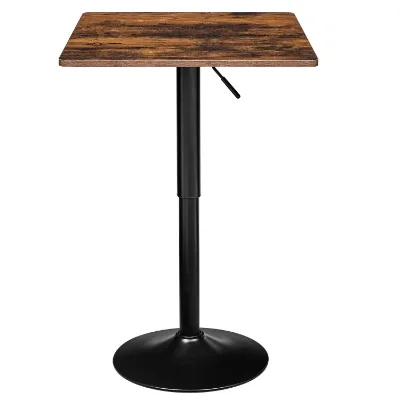
When evaluating modern fixed cocktail tables, the primary technical differentiator is the configuration of the base and the tabletop material. The market data indicates a prevalence of square and round shapes, with the "Square" and "Round" designations appearing as distinct product categories. The "Fixed" attribute is paramount; unlike movable or stackable units, these tables are designed to remain stationary, often requiring a heavy-duty base to prevent tipping. The observed specifications highlight a "Steel" base material paired with "Wooden" or "Wood" tabletops, suggesting a hybrid construction that balances industrial durability with natural aesthetics.
Dimensions are a critical variable in this category. While some listings specify exact measurements such as 20060110hcm, others offer "Customer Size" options, indicating a high degree of customization potential. The height specifications for related bar and cocktail setups often range from 780mm for seating to 1100mm for table surfaces, though buyers must verify these ratios against their specific venue requirements. The "Rotary" feature noted in certain product profiles suggests the inclusion of rotating mechanisms, which, while less common for strictly "fixed" tables, may appear in hybrid designs where the tabletop rotates on a stationary base.
The structural integrity of these units is often described through terms like "Made with Truss Strong," implying a specific engineering approach to load-bearing capacity. For commercial applications, the stability of the base is non-negotiable. The "Fixed" nature of the product means that once placed, the table cannot be easily reconfigured, making the initial footprint and weight distribution vital considerations. Buyers should prioritize models where the base material, such as steel, is explicitly defined to ensure the table can withstand the dynamic loads of a busy bar or hotel environment.
Compliance, Certification, and Safety Standards
Navigating the regulatory landscape is essential for international procurement. The supply chain data reveals a mix of certifications, including CE, ISO, TUV, SGS, and ISOCCC. These certifications are not merely marketing labels but serve as verification of adherence to specific safety and quality standards. The "CE" mark indicates conformity with health, safety, and environmental protection standards for products sold within the European Economic Area. Similarly, "TUV" and "SGS" represent third-party testing and inspection services that validate product safety and quality.
However, buyers must exercise caution when interpreting certification claims. The data shows variations such as "ISOCustomized:Customized," which suggests that certification status may be tied to specific custom orders rather than a universal standard for the entire product line. It is imperative to request valid, current certification documents for the specific batch being purchased. The "ISOCCC" designation, while present in the data, requires verification to ensure it aligns with recognized international standards for the specific region of import.
For products intended for use in hotels, weddings, or banquets, fire safety and structural integrity are paramount. The "Warranty" periods listed, ranging from "3years" to "More Than 5 Years," serve as an indirect indicator of the manufacturer's confidence in their product's longevity and compliance. A longer warranty often correlates with stricter quality control processes and adherence to higher safety standards. Buyers should explicitly ask suppliers to provide test reports for structural load, material flammability, and chemical safety, particularly for wooden components treated with varnishes or sealants.
Cost Drivers and Pricing Dynamics
The pricing for modern fixed cocktail tables is influenced by a complex interplay of material costs, customization levels, and logistical factors. The observed price range spans from $1 to $2800 USD, a disparity that reflects the vast difference between basic entry-level units and high-end, fully custom-designed pieces. The "MOQ" (Minimum Order Quantity) also plays a significant role in unit pricing, with ranges observed from 1 PC to 300 units. Lower MOQs, such as 1 PC, often command a higher per-unit cost due to the inefficiencies of small-batch production, whereas bulk orders of 300 units typically benefit from economies of scale.
Material selection is a primary cost driver. Tables constructed with "Wood" tabletops and "Steel" bases generally fall into a mid-to-high price bracket compared to all-metal or all-wood alternatives. The "Customized" attribute is another significant factor; products labeled as "Customized" or offering "Customer Size" options will inherently cost more than standard off-the-shelf models. The "ODM" (Original Design Manufacturer) capability, marked as "Yes" in the data, suggests that suppliers can modify designs, which adds to the development and tooling costs.
Logistics and packaging also contribute to the final landed cost. The "prod_packing" specifications vary from "Carton" to "Carton Package Wooden Package," with the latter offering superior protection but incurring higher material and shipping costs. The "Standard Export Carton Packing" is common for international shipments, but buyers must consider the "prod_standard" metrics, such as "1.5cbm per pcs" or "0.3CBM," which directly impact freight charges. The "Port of Loading" is another variable; shipments originating from "Qingdao, China" or "Foshan/Guangzhou" may have different freight rates and transit times depending on the destination port.
Typical Applications and Usage Scenarios
Modern fixed cocktail tables are designed for high-traffic commercial environments where space efficiency and durability are key. The "Specific Use" and "Usage" data point to applications in bars, hotels, night bars, and event venues. The "Use for" category explicitly lists "Wedding/Party/Banquet/Hotel," indicating versatility across both permanent installations and temporary event setups. In a bar setting, the "Fixed" nature of the table ensures stability in crowded areas, while the "Modern" style aligns with contemporary interior design trends.
The "Shape" of the table, whether "Square" or "Round," dictates its suitability for different spatial layouts. Square tables are often preferred for maximizing floor space in rectangular rooms or for creating defined seating zones, while round tables facilitate better social interaction in circular or open-plan areas. The "Height" specifications, such as 1100mm for tables and 780mm for chairs, are critical for ensuring ergonomic comfort in bar and cocktail settings. These dimensions must be matched with appropriate seating to create a cohesive dining or drinking experience.
For event planners, the "Rotary" feature and "Customized" options allow for flexible arrangements that can adapt to changing venue layouts. The "Service" attribute, noted as "24hours 7days," suggests that suppliers in this category often provide responsive support for event-based procurement, which is crucial for last-minute adjustments or emergency replacements. The "Delivery Time" of 20 to 25 days indicates that these products are not typically impulse buys but require advance planning and lead time management.
Supplier Evaluation and Sourcing Strategy
Selecting the right supplier requires a rigorous evaluation process that goes beyond price comparisons. The "prod_origin" data indicates that many suppliers are based in "China" or specifically in "Shandong," a region known for its manufacturing capabilities. Buyers should verify the supplier's capacity to handle "ODM" projects if customization is required. The "Customization" availability, marked as "Available" or "Customized," suggests that many manufacturers are willing to tailor products to specific client needs, but this capability must be confirmed through direct communication.
The "Delivery Time" of 20 days or 20-25 days is a standard benchmark, but buyers should confirm this timeline against their project schedule. The "Port of Loading" being "Qingdao, China" or "Foshan/Guangzhou" provides insight into the logistical network of the supplier. Suppliers with multiple port options may offer more flexibility in shipping routes. The "Warranty" terms, ranging from 3 to 5+ years, are a strong indicator of supplier confidence and after-sales support. A supplier offering a longer warranty is likely more committed to product quality and customer satisfaction.
Buyers should also assess the "prod_packing" standards to ensure that products arrive in good condition. The "Standard Export Carton Packing" is a baseline, but for high-value items, "Carton Package Wooden Package" may be necessary to prevent damage during transit. The "Feature" of being "Made with Truss Strong" should be verified through product samples or detailed technical drawings to ensure the structural claims are accurate.
Quality Control and Long-Term Procurement Considerations
Ensuring consistent quality in the procurement of modern fixed cocktail tables requires a proactive approach to quality control. The "Certification" status, including CE, ISO, and TUV, should be validated for each batch. Buyers should request pre-shipment inspections to verify that the "Material" (Wood, Steel) and "Shape" (Square, Round) match the agreed specifications. The "Size" of the product, whether standard or "Customer Size," must be measured precisely to avoid installation issues.
Long-term procurement considerations include the availability of replacement parts and the durability of the finish. The "Warranty" period is a key metric here; a 3-year warranty is standard, but a 5-year warranty indicates superior build quality. The "Service" availability of 24/7 support suggests that suppliers are prepared to handle post-sales issues, which is crucial for maintaining operational continuity in commercial settings.
Buyers should also consider the environmental impact of their procurement choices. The use of "Wood" and "Steel" materials should be sourced responsibly, and the "Certification" status should reflect adherence to environmental standards. The "Standard" metrics, such as "1.5cbm per pcs," can be used to optimize packaging and reduce the carbon footprint of shipping. By focusing on these long-term factors, buyers can build a sustainable and reliable supply chain for their Modern Fixed Cocktail Table needs.
Summary of Key Product Attributes
| Attribute Category | Observed Values | Procurement Implication |
|---|---|---|
| Material | Wood, Steel | Verify grain quality and steel gauge for durability. |
| Shape | Square, Round | Match layout requirements; square for space efficiency, round for interaction. |
| Base Type | Fixed, Steel | Ensure stability; fixed bases are non-adjustable. |
| Customization | Available, Customized | Confirm lead times and costs for bespoke sizes or finishes. |
| Certification | CE, ISO, TUV, SGS | Request valid certificates for the specific batch; verify scope. |
| Warranty | 3 Years, >5 Years | Longer warranty indicates higher confidence in product longevity. |
| MOQ | 1 PC - 300 | Lower MOQs increase unit cost; bulk orders reduce per-unit price. |
| Lead Time | 20-25 Days | Plan procurement schedules accordingly; avoid last-minute orders. |
| Origin | China, Shandong | Verify port of loading (Qingdao, Foshan, Guangzhou) for logistics. |
In conclusion, sourcing modern fixed cocktail tables requires a balanced approach that weighs technical specifications, compliance requirements, and cost factors. By leveraging the observed data and adhering to rigorous quality control standards, buyers can secure high-quality products that meet the demands of commercial hospitality environments. The key lies in verifying every claim, from material composition to certification status, to ensure a successful procurement outcome.
FAQs
What certifications do modern fixed cocktail tables typically have?
These tables often carry CE, ISO, TUV, and SGS certifications to ensure safety and quality. Some listings also mention ISOCCC, though buyers should verify specific batch documents. Always request valid test reports for structural load and material flammability before purchasing.
How long is the delivery time for these custom tables?
The standard delivery time ranges from 20 to 25 days after order confirmation. This timeline applies to both standard and customized units, so buyers must plan their procurement schedule accordingly to avoid delays in venue setup or installation.
Can I order these tables with custom sizes and shapes?
Yes, customization is available for both size and shape, including square and round options. Buyers can request customer-specific dimensions, and the manufacturer supports ODM services to modify designs according to specific venue requirements and aesthetic preferences.
Which materials are used for the table tops and bases?
Table tops are commonly made of wood or wooden materials, while bases are constructed from steel for durability. This hybrid construction balances industrial strength with natural aesthetics, ensuring the tables can withstand heavy use in bars and hotels.
What is the minimum order quantity for these bar tables?
The minimum order quantity can be as low as one piece for some suppliers, while others may require up to 300 units. Lower MOQs often result in higher per-unit costs, whereas bulk orders benefit from economies of scale and better pricing.
Where are these modern fixed cocktail tables manufactured?
Most products originate from China, with specific manufacturing hubs located in Shandong, Qingdao, Foshan, and Guangzhou. Buyers should verify the port of loading, as shipments may depart from different ports depending on the specific supplier and logistics arrangement.
What warranty periods are offered for these commercial tables?
Warranty periods typically range from three years to more than five years depending on the manufacturer. A longer warranty often indicates higher confidence in product longevity and adherence to stricter quality control processes for commercial environments.