Source Modern Foldable Storage Ottoman for Living Room, Bedroom, Entryway
Explore 30 listings for the Modern Foldable Storage Ottoman, comparing features like adjustable designs, leather and fabric materials, and OEM customization options. Buyers can evaluate specifications including stackable capabilities and eco-friendly attributes from verified Chinese manufacturers; compare the available evidence and request quotations based on your requirements.
Key considerations
Products List

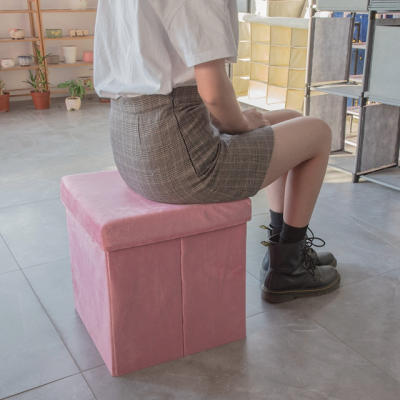
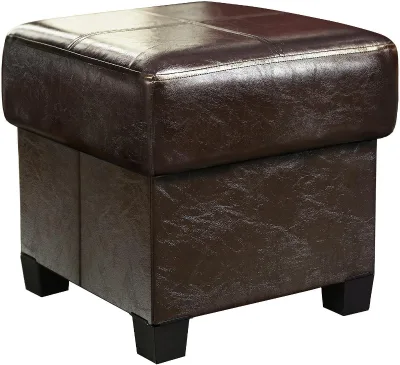
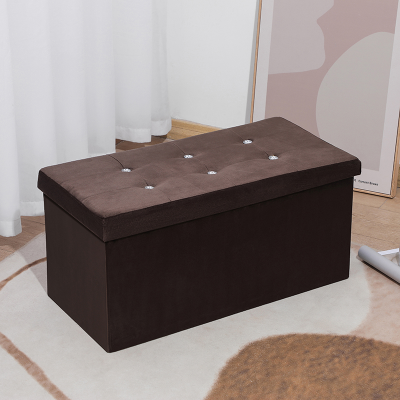
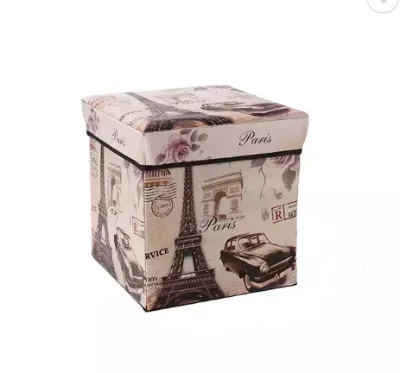
Living Room Folding Box Storages Furnitures Leather Folding Storage Ottoman
$2.90 - $5.50
MOQ: 100 Pieces


Waterproof & Dustproof Design Foldable Leather Storage Ottoman for Home
$5.41 - $6.12
MOQ: 1008 Pieces

Customizable Foldable Storage Ottoman for Home Organization and Seating
$5.41 - $6.12
MOQ: 1008 Pieces


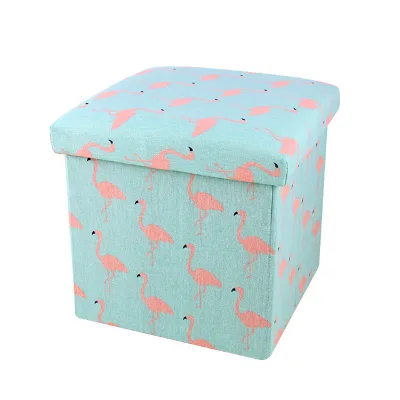
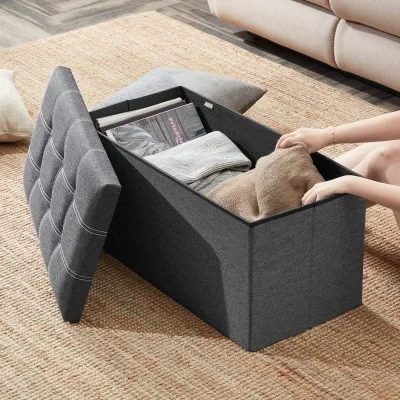
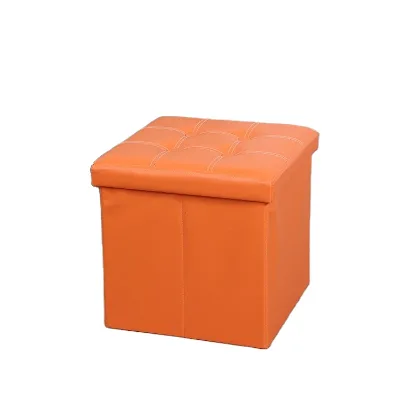

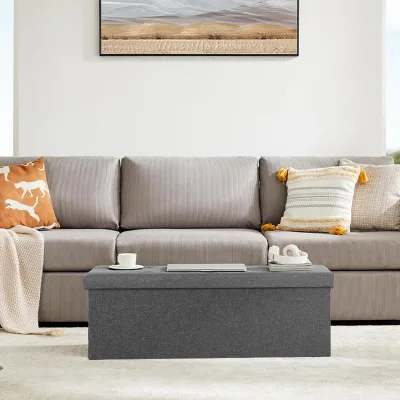

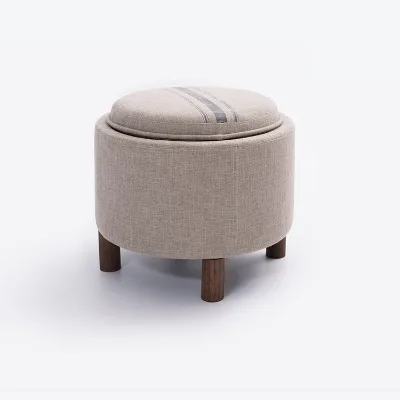
Durable Foldable Portable Round Ottoman for Bedroom or Apartment Leisure Chair
$24.00 - $26.00
MOQ: 50 pieces


Comprehensive Sourcing Guide
Modern Foldable Storage Ottoman Sourcing Guide
A Modern Foldable Storage Ottoman combines seating, storage, and space efficiency in one product, which makes it a recurring category for home-goods importers, e-commerce sellers, and furniture distributors. Because the product folds flat for shipping, logistics costs stay proportionally low relative to its assembled size, and buyers can often justify higher freight class thresholds than with rigid furniture. However, the same folding mechanism that reduces shipping volume introduces structural and durability questions that must be resolved before committing to a program order.
This guide is built entirely on observations from a live category of thirty product listings, including models such as ADF-H8024, ADF-H8027, ADF-FK2653, ADF-H8041, FK2626A, ADF-FK2624B, SSND-008, SSND-002, SSND-001, and SSND-009. Listed attributes include foldable construction, storage functionality, adjustable features, removable components, modern styling, square shapes, leather or fabric upholstery, MDF support boards, and colorful zippers. Use these signals as a screening baseline, then verify every commercially important claim directly with suppliers before sample approval.
Product Scope and Observed Listing Signals
The observed listings consistently describe living room furniture with home stool and ottoman use, and several explicitly target bedroom applications. Common feature sets include eco-friendly, reusable, space-saving positioning; foldable, dust-proof, and moisture-proof construction; stackable variants; and strong, durable, lightweight claims. Shapes are square, sizes range from medium formats to standard dimensions such as 38×38×38 cm, 46×35×35 cm, 38×38×36 cm, and a larger 76×38×38 cm option, with one listing at 29×29×29 cm. Custom size acceptance and OEM/ODM customization appear repeatedly.
Price dispersion across the category is unusually wide, with observed listings from roughly $1.50 to over $2,000, so headline prices alone reveal very little about product tier. Minimum order quantities likewise vary dramatically, from as low as 2 pcs on some listings to 1008 pcs on others, which suggests the category spans both small-batch resellers and volume manufacturers. Buyers should treat each listing as a single observation rather than a category-wide guarantee, and confirm which attributes actually apply to the specific model quoted.
Technical Specifications to Verify
Start verification with structure and materials. Listings reference leather and fabric upholstery, MDF support boards, and zippers as closures, but none of these terms alone defines quality. Ask suppliers to specify upholstery composition (genuine leather, bonded leather, or fabric type), foam density and thickness for the seat cushion, board thickness and grade for the MDF support, and zipper specification including pull strength. For folding models, request the hinge or folding-joint design, cycle-testing expectations, and load ratings for both seating and storage use.
Dimensions and packaging need equal scrutiny. Observed standards such as 38×38×38 cm and 46×35×35 cm should be confirmed as assembled versus folded dimensions, and buyers should request folded-flat thickness to model container utilization. Confirm carton packing versus OPP bag packing per listing, carton strength for stacked transport, and weight per unit. Where customization is offered, require a pre-production sample in the actual material and a dimensioned specification sheet signed off before mass production begins.
Compliance and Safety Documentation
The listings reference ISO certification, but certification claims should be treated as a starting point, not proof. Ask each supplier for the current, scoped certificate and confirm it covers the manufacturing site and the product family you are buying, not just a corporate entity. Because upholstered storage furniture may be subject to flammability, chemical (formaldehyde, azo dyes, phthalates), and heavy-metal requirements in destination markets, request test reports from accredited laboratories relevant to your market rather than assuming coverage from an ISO certificate.
Structural safety matters as much as chemical compliance. Storage ottomans double as seating, so buyers should ask how load capacity is validated, whether lid or hinge designs prevent pinching, and how the folding mechanism behaves under repeated use. If children are plausible end users in your channel, evaluate additional stability and safety expectations with your testing partner. Keep all documentation on file with shipment batches so future audits and retail customer requests can be answered without retesting every season.
Cost Drivers and Commercial Terms
Material selection is the primary cost lever: upholstery type, foam density, board grade, and zipper quality each move unit cost meaningfully, and the wide observed price range reflects this spread. Customization adds tooling, sampling, and small-run premiums, so weigh OEM/ODM work against stock designs when volumes are modest. Size also drives cost, since the category spans roughly 29 cm cubes to 76 cm bench-style pieces with proportionally different material and freight profiles.
Commercial terms to settle in writing include MOQ (observed between 2 and 1008 pcs, so negotiate to your channel's velocity), unit price tiers tied to volume, sample cost and sample lead time (one listing quotes 5–7 days), production lead time, payment terms, Incoterms, and packaging specification. Because folding reduces shipping volume, request quote options at different packed quantities per carton to compare freight economics. Confirm customization fees are amortized or waived at agreed volumes, and define what happens to tooling ownership if the relationship ends.
Supplier Qualification and Quality Control
Qualify suppliers on demonstrated capability rather than listing claims. Request business licenses, factory audit reports or a willingness to host an inspection, photos or video walkthroughs of the folding-ottoman production line, and references from buyers in similar channels. Several listings advertise OEM/ODM customization with new condition and available customization flags; validate that advertised capability by commissioning a small custom sample run before committing program volumes, since customization depth is easy to claim and hard to deliver.
Quality control should span the full cycle. Approve a golden sample covering material, color, stitching, zipper function, and folding behavior; define AQL sampling for pre-shipment inspection including load tests, cycle tests on the folding mechanism, carton drop tests, and dimensional checks against the signed specification. Products ship in cartons or OPP bags per the listings, so verify packed counts and labeling on site. Build in in-line inspection for large orders, since folding-joint and upholstery defects are far cheaper to catch mid-production than at destination.
Long-Term Procurement Checks
Sustain the relationship through periodic requalification rather than one-time vetting. Re-verify certification validity annually, request updated material compliance declarations when suppliers change foam, fabric, or board sources, and track defect rates per shipment in a simple scorecard. Watch for silent specification drift, a common risk in categories with many customizable attributes: re-confirm dimensions, materials, and packing against the original spec sheet on a defined cadence, especially after price renegotiations.
Plan for continuity and growth. Keep a second qualified supplier for best-selling models such as the standard 38 cm cube formats, retain golden samples and tooling records on both sides, and document pricing formulas so material-cost fluctuations can be renegotiated transparently. As your volumes grow, revisit MOQ tiers, consolidated shipping, and deeper customization, since suppliers who accepted low initial MOQs often reward program commitments with better terms. A disciplined file of specs, test reports, and inspection results turns the folding ottoman from a one-off buy into a durable, defensible product line.
FAQs
What materials are used for modern foldable storage ottomans?
These ottomans are typically crafted from leather or fabric, offering distinct aesthetic and tactile options for buyers. Leather versions provide a sleek, modern look, while fabric choices allow for colorful and versatile designs. Both materials are selected for durability and comfort, ensuring the furniture piece remains sturdy during daily use while maintaining its structural integrity over time.
Can modern foldable storage ottomans be customized for branding?
Yes, customization is available for these storage ottomans, allowing buyers to tailor products to specific brand needs. OEM and ODM customization options enable modifications to materials, colors, and potentially branding elements. This flexibility supports unique market positioning, ensuring that the final product aligns with specific design requirements or corporate identity standards for retail or commercial applications.
What are the standard specifications for these storage ottomans?
Standard specifications vary by model, with common dimensions including 38x38x38 cm, 46x35x35 cm, and 76x38x38 cm. Some models offer custom sizes to meet specific spatial requirements. These dimensions ensure the ottoman fits well in living rooms or bedrooms, providing adequate storage space while maintaining a compact footprint when folded, making them ideal for space-saving solutions.
How does the folding mechanism work in these ottomans?
The folding mechanism allows the ottoman to be collapsed flat for easy storage and transport. This feature is highlighted as a key attribute, making the product highly portable and space-efficient. When folded, the ottoman reduces its volume significantly, facilitating convenient shipping and storage. The design ensures that the folding process is smooth and does not compromise the structural strength of the unit.
What certifications do these modern ottomans hold?
These modern foldable storage ottomans are certified under ISO standards, indicating compliance with international quality and management systems. This certification assures buyers of consistent manufacturing processes and product reliability. The ISO certification serves as a trust signal for B2B buyers, ensuring that the production meets recognized benchmarks for quality control, safety, and operational efficiency throughout the supply chain.
What is the typical MOQ for these storage ottomans?
The minimum order quantity varies, with some models requiring as low as 2 pieces, while others may require up to 1008 pieces. This range accommodates both small-scale buyers and large-volume purchasers. Buyers should check specific model requirements to determine the applicable MOQ, ensuring that their order volume aligns with the supplier's production and shipping capabilities for efficient procurement.