Source Modern Frameless Panel Light for Offices, Retail, and Homes
Source Modern Frameless Panel Light from 30 verified listings. Compare LED options with 10W-36W power, IP ratings, and CE/RoHS certifications. Evaluate aluminum or plastic housing, dimmable features, and lumen output to find the right fit for your project; compare the available evidence and request quotations based on your requirements.
Key considerations
Products List


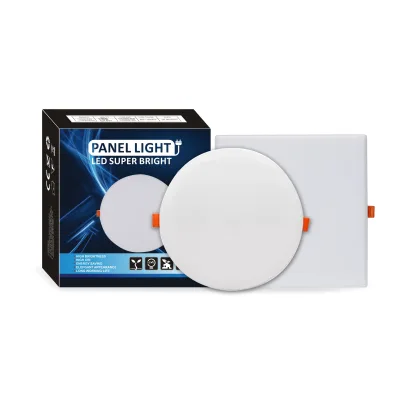
Adjustable Size 18W Round Frameless Recessed LED Panel Light Without Frame
$0.68 - $2.80
MOQ: 3000 Pieces



Comprehensive Sourcing Guide
Modern Frameless Panel Light Sourcing Guide
Modern frameless panel lights are engineered for seamless integration into commercial and residential ceilings, offering a sleek aesthetic that minimizes visual clutter. Based on observed listings, these units frequently utilize LED sources with power ratings ranging from 9W to 48W, ensuring energy efficiency across various room sizes. The design typically features a round or recessed form factor, with housing materials predominantly made of aluminum or plastic to balance durability and weight. Buyers should note that customization is available, allowing for specific beam angles or color temperatures to match distinct interior design requirements.
Procurement decisions must account for the variability in lumen output and efficacy observed across different models. Listings indicate lumen values ranging from 900lm to 3240lm, with some units achieving an efficacy of 100lm/W. The power factor varies significantly, with some products rated at 0.5 while others exceed 0.9, a critical distinction for electrical load management. When selecting a supplier, verify that the specific model supports the required voltage range, typically AC85-265V, to ensure compatibility with local grid standards without requiring additional transformers.
Product Scope and Observed Listing Signals
The product scope for modern frameless panel lights encompasses a diverse range of specifications, including different base materials like iron or metal and various packing options such as color boxes or OEM packaging. Observed signals suggest that while many units are designed for indoor use, the specific application depends heavily on the housing material and ingress protection ratings not always explicitly detailed in standard listings. Buyers must distinguish between models with standard power factors and those with high-performance ratings, as this impacts the overall system efficiency and heat management requirements.
Listing data reveals a wide spectrum of power options, from 10W up to 48W, catering to both small accent lighting and large area illumination needs. The beam angle is consistently observed at 120°, providing broad, uniform light distribution suitable for general office or retail environments. However, the dimmability feature is often absent, with many products listed as non-dimmable, which restricts their use in settings requiring dynamic lighting control. Procurement teams should prioritize models that explicitly state dimmable capabilities if variable lighting scenes are a project requirement.
Technical Specifications to Verify
Technical verification begins with confirming the light source and color rendering index, as these directly influence visual comfort and product quality. Most observed units utilize LED technology with a Color Rendering Index (Ra) greater than 80, ensuring accurate color representation in retail and office spaces. The operating temperature range is typically specified between -20°C and 60°C, which is crucial for installations in unconditioned spaces or regions with extreme climate variations. Buyers must ensure the selected model's thermal management system aligns with the intended installation environment to prevent premature failure.
Electrical specifications require rigorous checking, particularly regarding the power factor and input voltage stability. While some listings indicate a power factor of 0.5, others offer superior performance with values exceeding 0.9, which is essential for compliance with energy regulations in many jurisdictions. The input voltage is generally compatible with global standards at AC85-265V, but the actual power consumption and lumen output must be cross-referenced with the specific wattage selected. Additionally, the lifetime of 30,000 hours and warranty periods of up to three years should be validated against the specific model's datasheet to ensure long-term reliability.
Compliance and Safety Documentation
Compliance documentation is a critical component of the sourcing process, as the market displays a mix of certifications including CE, RoHS, SASO, and SAA. Some products carry additional regional approvals like CCC or ISO standards, which are mandatory for specific export markets. Buyers must verify that the certification list matches the destination country's regulatory requirements, as a lack of specific local certification can lead to customs delays or legal liabilities. The presence of multiple certifications on a single listing does not guarantee that every unit in a batch meets all listed standards.
Safety standards such as prod_standard 175, 225, and 170 are observed in the supply chain, indicating adherence to specific regional safety protocols. However, these standard numbers alone do not define the full scope of safety testing performed. Procurement teams should request detailed test reports that confirm the product meets the relevant IEC or EN standards for electrical safety and electromagnetic compatibility. Relying solely on the certification label without verifying the underlying test data can expose the buyer to significant risk if the product fails to meet actual safety requirements during inspection.
Cost Drivers and Commercial Terms
Cost drivers for modern frameless panel lights are heavily influenced by the power rating, material quality, and the complexity of the certification portfolio. Higher wattage models and those with superior power factors or extended warranty periods typically command a premium price. The observed price range of 0.6 to 130 USD reflects this variability, with lower costs associated with basic plastic housing and standard certifications, while aluminum housing and comprehensive safety approvals increase the unit cost. Buyers should analyze the total cost of ownership, including energy savings and maintenance intervals, rather than focusing solely on the initial purchase price.
Commercial terms such as Minimum Order Quantity (MOQ) and lead times vary significantly, with observed MOQs ranging from 1 to 5000 units. This flexibility allows small buyers to test the market while accommodating large-scale projects with bulk requirements. However, the lead time and production capacity are not explicitly standardized in the provided data, necessitating direct negotiation with the supplier. It is advisable to clarify whether the quoted price includes packaging, such as the observed color boxes or OEM options, and to confirm if volume discounts apply as the order quantity increases beyond the initial MOQ threshold.
Supplier Qualification and Quality Control
Supplier qualification requires a thorough assessment of their manufacturing capabilities and quality control processes, particularly regarding material consistency and assembly precision. The use of aluminum versus plastic housing affects the thermal performance and durability of the final product, making it essential to verify the material specifications for each batch. Buyers should request samples to inspect the finish, the quality of the diffuser, and the integrity of the electrical components before committing to a large order. A supplier's ability to provide consistent product attributes across different production runs is a key indicator of their reliability.
Quality control checks must extend beyond the initial sample to include batch testing for critical parameters like lumen output and power factor consistency. The observed variation in power factor from 0.5 to over 0.9 suggests that not all units from a single supplier may perform identically. Implementing a rigorous incoming inspection protocol is necessary to ensure that the delivered goods match the agreed-upon specifications. Additionally, verifying the supplier's track record for honoring warranty terms, such as the observed three-year warranty, provides insight into their confidence in product longevity and their commitment to after-sales support.
Long-Term Procurement Checks
Long-term procurement success depends on establishing a robust framework for ongoing performance monitoring and supplier relationship management. Buyers should implement periodic audits to ensure that the supplier continues to meet the original quality standards and certification requirements over time. The dynamic nature of the lighting industry means that component availability and manufacturing processes may change, potentially affecting product performance. Regular communication with the supplier regarding any updates to their production lines or material sources helps mitigate the risk of unexpected quality deviations.
Sustainability and end-of-life considerations are increasingly important factors in long-term procurement strategies. While the observed products offer a 30,000-hour lifetime, the recyclability of the aluminum or plastic housing and the disposal of electronic components should be evaluated. Buyers should inquire about the supplier's environmental policies and their ability to support take-back programs or recycling initiatives. Ensuring that the supply chain aligns with corporate sustainability goals will not only reduce environmental impact but also enhance the brand reputation of the end-user in an increasingly eco-conscious market.
FAQs
How does the 120° beam angle benefit Modern Frameless Panel Light installations?
A 120° beam angle spreads light evenly across a wide area, reducing glare and dark corners in offices, shops, and residential rooms. For recessed installations, this wide coverage allows fewer fixtures per square meter while maintaining uniform illumination. Pair the wide beam with a CRI above 80 so colors and finishes appear accurate under the light.
What wattage options are available for Modern Frameless Panel Light models on this page?
The listed Modern Frameless Panel Light models cover 10W, 18W, 24W, and 36W, with some variants offering 9W through 48W. Lumen output ranges from about 900lm up to 3240lm at roughly 100lm/W efficacy. Choose wattage based on ceiling height and room size, and confirm the exact lumen figure for the specific model you intend to source.
Which certifications do the listed Modern Frameless Panel Light products carry?
Listed products carry CE and RoHS certification, and some variants also show CE, CCC, SASO, SAA, and RoHS. Certification requirements depend on your destination market, so confirm which certificates apply before ordering. Ask each factory for current, verifiable certificate documents matching the exact model and wattage rather than relying on generic catalog claims.
Can the Modern Frameless Panel Light be customized for private-label packaging or branding?
Yes, customization is listed as available, and some models ship in OEM color box packing or a standard color box. You can typically request your own logo, artwork, and packaging design subject to factory minimum quantities and artwork approval. Confirm customization scope, sample cost, and the applicable MOQ directly with the factory before placing a trial order.
What voltage range and power factor should buyers expect from these panel lights?
The recessed models operate on a wide input range of AC85-265V, which suits markets with 110V or 220-240V mains without separate versions. Power factor is listed at 0.5 for some models and greater than 0.5 or 0.9 for others. If your project specification requires PF above 0.9, confirm this explicitly, as commercial installations often mandate it.
How long do these modern frameless panel lights last and what warranty is offered?
The listed LED panel lights have a rated lifetime of 30000 hours, and a three-year warranty is shown for these models. Aluminium housing variants generally dissipate heat better, which supports stable long-term output. Verify warranty terms in writing, including coverage of driver failures and the claim process, since drivers typically fail before the LED chips themselves.