Source Modern Golden LED Pendant Light for Restaurant Dining Room
Compare 30 Modern Golden LED Pendant Light options featuring aluminum and steel frames with CE and RoHS certifications. Buyers can evaluate voltage ranges, irradiated areas, and customization availability for restaurant, dining room, and living room applications.
Key considerations
Products List


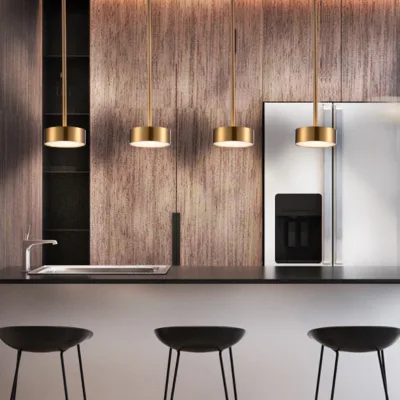
Contemporary Luxury Modern Metal Lighting Indoor Large LED Gold Pendant Light
$29.99 - $49.99
MOQ: 30 Pieces




Comprehensive Sourcing Guide
Strategic Sourcing Guide for Modern Golden LED Pendant Lights
Understanding Product Specifications and Design Attributes
When sourcing modern golden LED pendant lights, buyers must first establish a clear understanding of the specific technical and aesthetic attributes that define this category. The term "modern" in this context typically aligns with contemporary design styles that emphasize clean lines and functional elegance. Based on observed market data, these fixtures frequently feature a "Contemporary" or "Modern" style classification. The color profile is a critical differentiator, with "Golden" and "Silver" being the most prevalent finishes observed in the current inventory. Specifically, the frame color often appears as "Golden," while the structural material for the frame is frequently identified as "Aluminium Alloy" or "Stainless Steel."
The core lighting technology is universally "LED," which offers energy efficiency and longevity compared to traditional incandescent options. A vital specification to verify is the presence of the light source itself. The market presents a bifurcation where some units are sold "With Light Source" included, while others are listed as "Without Light Source," requiring the buyer to source compatible bulbs separately. The irradiated area varies significantly based on the fixture's size and power; observed ranges span from "10-15 Square Meters" for smaller units to "15-30 Square Meters" for larger installations. The beam angle is another technical parameter to note, with specific models exhibiting a "60°" beaming angle, which dictates the spread and intensity of the light.
Voltage compatibility is a primary concern for international procurement. The observed voltage ranges in the supply chain are broad, accommodating "90V-260V" for global flexibility, while other specific models are rated for "220-240V" or "110-130V" regions. Buyers must match these electrical specifications to the local grid infrastructure to prevent equipment failure. Furthermore, the physical dimensions are standardized in some cases, with observed standards such as "D60*H45CM" or "D600+800mm," indicating the diameter and height of the fixture. The quantity of lights per unit can also vary, with some listings specifying a single unit while others offer configurations with "More than" a standard count, often described under style categories like "Style:Modern."
Compliance and Certification Verification Protocols
Navigating the regulatory landscape is essential for importing lighting fixtures, particularly those involving electrical components. The supply chain for modern golden LED pendant lights demonstrates a high prevalence of specific certifications, though buyers must verify these on a per-shipment basis. The most commonly observed certifications include "CE" and "RoHS," which indicate compliance with European safety and environmental standards. Some listings also feature "CCC" (China Compulsory Certification), which is mandatory for products sold within the Chinese market but may serve as a baseline for quality assurance in other regions.
For markets with stricter electrical safety requirements, buyers should look for additional certifications such as "VDE," "SAA," and "ETL." These are often grouped under an "Authentication" category in supplier data, suggesting that high-quality manufacturers may hold multiple credentials to access different global markets. The presence of "CE/VDE/SAA/ETL" in the product description indicates a robust compliance framework, but it is crucial to treat these as observations rather than guaranteed attributes for every unit. Buyers must request valid test reports and certificates of conformity that match the specific model number, such as "WY-1122" or "PD8002," to ensure the batch being purchased is covered.
Packaging and transport standards also play a role in compliance and safety. Observed packing methods include "Paper Box/Wood Box," "Carton + Foam," and "Wooden Frame / Carton / Foam." These packaging types are designed to protect the fragile glass or metal components during transit via "Express / Sea / Freight." The choice of packaging can influence the final cost and the risk of damage upon arrival. Additionally, the "Warranty Period" is a critical indicator of manufacturer confidence and product durability. The market data shows warranty periods ranging from "2 Years" to "3 Years," which should be explicitly stated in the purchase agreement. Buyers should verify that the warranty covers both the LED driver and the light source, as these are the components most prone to failure.
Cost Drivers and Pricing Dynamics
The pricing structure for modern golden LED pendant lights is influenced by a complex interplay of materials, customization, and order volume. The observed price range in the market is substantial, spanning from "5" to "500" USD. This wide variance reflects differences in design complexity, material quality, and brand positioning. Lower-priced items in the "5-500" range often utilize standard aluminum or steel frames with basic LED configurations. In contrast, higher-priced units may feature premium finishes, intricate designs, or specialized certifications that command a premium.
Material costs are a primary driver of price. The use of "Aluminium Alloy" or "Stainless Steel" for the frame adds value compared to cheaper alternatives. The "Golden" finish, whether achieved through powder coating or plating, also impacts the cost. Customization is a significant factor; the attribute "Customization: Available" suggests that buyers can request bespoke colors, dimensions, or branding, which inevitably increases the unit cost. The "Brand: Customized" attribute indicates that many suppliers offer OEM services, allowing buyers to apply their own logos or design specifications, which adds a layer of complexity and cost to the procurement process.
Minimum Order Quantity (MOQ) also plays a pivotal role in the total cost of ownership. The observed MOQ range is "1-100" units, with specific listings showing an MOQ of "1PCS." This flexibility allows small buyers to test the market without significant capital outlay. However, larger orders often benefit from economies of scale, reducing the per-unit cost. Payment terms, such as "T/T /Westem Union/Others," and delivery times, described as "Elaborate," can also influence the final financial arrangement. Buyers should negotiate based on the total landed cost, including shipping, insurance, and potential tariffs, rather than focusing solely on the unit price.
Typical Applications and Spatial Requirements
Modern golden LED pendant lights are versatile fixtures suitable for a variety of commercial and residential environments. The "Applicable Places" attribute highlights several key locations where these lights are commonly installed. "Restaurant" and "Dining Room" are primary applications, where the golden finish adds a touch of warmth and elegance to the dining experience. The lighting in these spaces often requires a specific irradiated area, with observed ranges of "10-15 Square Meters" or "15-30 Square Meters," ensuring adequate illumination without glare.
In addition to dining areas, these fixtures are frequently used in "Lobby" spaces and "Living Room" environments. The "Living Room" application often benefits from the "Contemporary" style, which complements modern interior design trends. Some listings also specify "Bedroom" as an applicable place, suggesting that the light output and color temperature should be adjustable to create a relaxing atmosphere. The "Quantity of Lights" attribute, described as "Style:Modern" or "More than Style:Modern," indicates that these fixtures can be used in clusters or as single statement pieces depending on the spatial requirements.
The physical dimensions of the fixture must align with the ceiling height and room size. Standard dimensions observed include "D60*H45CM" or "D600+800mm," which are suitable for medium to large rooms. Buyers should consider the beam angle, such as the observed "60°," to ensure the light is distributed appropriately for the intended use. For instance, a narrower beam angle might be preferred for accent lighting in a lobby, while a wider spread is necessary for general illumination in a dining room. The "Style:Modern" and "Contemporary" attributes ensure that these fixtures blend seamlessly with current interior design aesthetics, making them a safe choice for various project types.
Supplier Evaluation and Quality Assurance
Selecting the right supplier is critical for ensuring product quality and reliability. Buyers should evaluate suppliers based on their ability to meet the specific technical and compliance requirements outlined in the product specifications. The "prod_model" attribute, such as "6001," "WY-1122," "WY-1129," "PD8002," or "DMJ8246," serves as a unique identifier for each product line. Buyers should verify that the supplier can consistently produce these models with the specified attributes, including the "Material: Steel" or "Aluminium Alloy" frame, and the "Color: Gold" or "Silver" finish.
Quality control measures should be a priority during the supplier evaluation process. Buyers should request samples to inspect the build quality, finish, and electrical safety. The "Warranty Period" of "2 Years" or "3 Years" is a strong indicator of the manufacturer's confidence in their product. Additionally, the "Certification" status, including "CE," "RoHS," and potentially "VDE" or "ETL," should be verified through official documentation. The "Transport" method, listed as "Express / Sea / Freight," and the "Packing" details, such as "Wooden Frame / Carton / Foam," should be reviewed to ensure that the product will arrive in good condition.
The "Delivery Time" is another factor to consider, with some suppliers noting "Elaborate" lead times. This suggests that production may take longer for customized orders or large batches. Buyers should clarify the lead time in the contract to avoid delays. The "Payment Method" options, including "T/T" and "Westem Union," should be evaluated for security and convenience. Finally, the "Brand: Customized" attribute indicates that the supplier is open to OEM partnerships, which can be beneficial for buyers looking to build their own brand identity.
Long-Term Procurement and Maintenance Considerations
Sourcing modern golden LED pendant lights is not just a one-time transaction but a long-term relationship that requires ongoing management. The "Warranty Period" of "2 Years" or "3 Years" provides a baseline for maintenance planning, but buyers should also consider the lifecycle of the LED components. The "With Light Source" attribute is crucial here; if the fixture includes the light source, the buyer should verify the expected lifespan of the LEDs. If the fixture is "Without Light Source," the buyer must source compatible bulbs that match the voltage and beam angle specifications.
Maintenance costs should be factored into the total cost of ownership. The "Material: Steel" or "Aluminium Alloy" frame is durable, but the "Golden" finish may require periodic cleaning to maintain its appearance. The "Irradiated Area" and "Beaming Angle" specifications should be reviewed to ensure that the lighting remains effective over time, as LED efficiency can degrade slightly over the years. The "Standard" attributes, such as "D60*H45CM" or "D600+800mm," should be maintained to ensure that replacement parts or additional fixtures are compatible.
For buyers planning large-scale installations, the "Customization: Available" attribute offers flexibility for future expansions or modifications. However, this also requires careful documentation of the specific design parameters to ensure consistency across all units. The "prod_packing" details, such as "Paper Box/Wood Box" or "Carton + Foam," should be reviewed to ensure that spare parts can be stored and transported efficiently. Finally, the "Location: China" origin should be considered in the context of supply chain resilience and potential geopolitical factors that could affect future procurement.
Comparative Analysis of Key Product Attributes
To facilitate informed decision-making, the following table summarizes the key attributes observed in the market for modern golden LED pendant lights. This comparison helps buyers identify the most suitable options based on their specific project requirements.
| Attribute Category | Observed Values | Key Considerations for Buyers |
|---|---|---|
| Material | Aluminum, Aluminium Alloy, Steel, Stainless Steel | Verify structural integrity and finish durability. |
| Color/Finish | Golden, Silver | Ensure the finish matches the interior design scheme. |
| Voltage | 90V-260V, 220-240V, 110-130V | Match local grid voltage to prevent electrical failure. |
| Certifications | CE, RoHS, CCC, VDE, SAA, ETL | Request valid test reports for the specific model. |
| Warranty | 2 Years, 3 Years | Confirm coverage for driver and light source. |
| MOQ | 1PCS, up to 100 | Negotiate based on order volume and customization needs. |
| Applications | Restaurant, Dining Room, Lobby, Living Room, Bedroom | Assess irradiated area and beam angle for the space. |
| Light Source | With Light Source, Without Light Source | Clarify if bulbs are included or need separate sourcing. |
| Dimensions | D60*H45CM, D600+800mm, D500+800mm | Ensure fit with ceiling height and room size. |
By carefully analyzing these attributes and adhering to the verification protocols outlined in this guide, buyers can effectively navigate the complex landscape of Modern Golden LED Pendant Light procurement. This approach ensures that the final selection meets both aesthetic and technical requirements while minimizing risks associated with quality and compliance.
FAQs
What certifications do modern golden LED pendant lights typically have?
Most units feature CE and RoHS certifications for safety and environmental compliance. Some models also include CCC, VDE, SAA, or ETL authentication to meet stricter regional electrical standards.
Can I customize the brand and design of these lights?
Yes, customization is available for brand and design specifications. Suppliers offer OEM services allowing buyers to apply their own logos or request bespoke colors and dimensions for the golden finish.
What is the minimum order quantity for these fixtures?
The minimum order quantity ranges from 1 to 100 pieces depending on the supplier. Specific listings show an MOQ of just 1 piece, allowing small buyers to test the market easily.
Which materials are used for the frame of these lights?
Frames are commonly constructed from Aluminium Alloy or Stainless Steel. Some models also utilize Steel for the main structure, ensuring durability while maintaining a modern aesthetic.
How long is the warranty period for these products?
Warranty periods typically range from 2 to 3 years for these fixtures. This duration indicates manufacturer confidence in the LED driver and light source longevity.
What voltage ranges are compatible with these pendant lights?
Voltage compatibility spans 90V to 260V for global flexibility. Specific models are also rated for 220-240V or 110-130V regions to match local grid infrastructure.