Source Modern Panel Coffee Table with Hidden Storage for Living Room, Bedroom, Cafe
Explore 30 listings for a Modern Panel Coffee Table with Hidden Storage designed for living rooms, bedrooms, and cafes. Buyers can compare features like metal frames, folding options, and storage capacities to find the right supplier for their needs; compare the available evidence and request quotations based on your requirements.
Key considerations
Products List


Modern Coffee Table for Living Room with Storage Shelf and Hidden Space
$33.00 - $49.00
MOQ: 80 Pieces


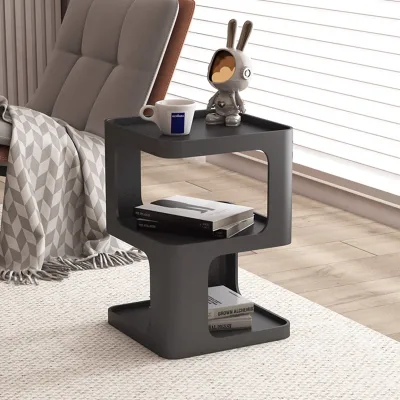


Modern Minimalist Living Room Coffee Table Dual-Use Storage Coffee Table
$100.00 - $300.00
MOQ: 1 Pieces


Rustic Rectangular Coffee Table with Hidden Storage & Adjustable Shelves
$55.99 - $60.99
MOQ: 500 Pieces

Living Room Rectangular Coffee Table with Hidden Storage & Adjustable Shelves
$55.99 - $60.99
MOQ: 500 Pieces


Comprehensive Sourcing Guide
Modern Panel Coffee Table with Hidden Storage Sourcing Guide
Sourcing modern panel coffee tables with hidden storage requires a careful balance of aesthetic appeal and functional utility. Buyers must navigate a market where "panel" construction often refers to engineered wood products like MDF or particle board, rather than solid timber. The observed listings indicate a strong preference for contemporary designs that integrate seamlessly into living rooms and bedrooms. These pieces typically feature clean lines, curved designs, and minimalist aesthetics that prioritize space efficiency. The inclusion of hidden storage compartments addresses the growing consumer demand for clutter-free environments, making these tables ideal for small apartments or multi-purpose spaces.
Procurement teams should recognize that the term "panel" can encompass various material compositions, including particle board, MDF, OSB, and plywood. This variability significantly impacts durability, weight, and environmental impact. Buyers must verify the specific core material and surface finish to ensure the product meets their quality standards. The observed data suggests that customization is widely available, allowing for tailored dimensions and finishes. However, this flexibility often comes with higher minimum order quantities and longer production lead times. Understanding these trade-offs is essential for aligning procurement strategies with inventory goals and budget constraints.
Product Scope and Observed Listing Signals
The current market landscape for modern panel coffee tables reveals a diverse range of options tailored to different commercial and residential needs. Listings frequently highlight features such as metal frames, which provide structural stability and a modern industrial look. These tables are often designed for use in cafes, restaurants, parks, and beaches, indicating a robust construction capable of withstanding varied environments. The observed color options include distinctive choices like purple, suggesting that buyers can request specific aesthetic customizations to match brand identities or interior design schemes. This versatility allows for targeted marketing strategies across different sectors, from hospitality to home furnishings.
Storage functionality is a key differentiator in this product category, with many models offering drawers or concealed compartments. The observed specifications mention door panels with thicknesses of 12mm, 16mm, or 18mm, which directly influence the table's load-bearing capacity and longevity. Buyers should pay close attention to the type of hinges and hardware used, as these components are critical for the smooth operation of hidden storage mechanisms. Additionally, the availability of folded or unfolded configurations suggests that some models may offer space-saving benefits, appealing to buyers with limited storage or shipping constraints. This feature set underscores the importance of verifying mechanical durability during the sampling phase.
Technical Specifications to Verify
When evaluating technical specifications, buyers must prioritize the integrity of the panel construction and the precision of the joinery. The thickness of the door panels, typically ranging from 12mm to 18mm, is a critical factor in determining the table's overall sturdiness. Thicker panels generally offer better resistance to warping and sagging, especially when supporting heavy items or frequent use. Buyers should request detailed cut sheets or material samples to verify the density and composition of the core material, whether it is particle board, MDF, or plywood. This verification step is crucial for ensuring that the product meets the required performance standards for both residential and commercial applications.
Dimensional accuracy and assembly instructions are equally important for a successful procurement outcome. The observed standard dimensions, such as 985242cm or 16"H x 58"L x 15.75"W, provide a baseline for spatial planning, but custom sizes are often available. Buyers should confirm whether the product arrives as a flat package or in a wooden box, as this affects shipping costs and on-site assembly requirements. The presence of assembly instructions inside the package is a positive indicator, but the clarity and completeness of these instructions can vary significantly between suppliers. Requesting a pre-shipment sample allows buyers to test the ease of assembly and the fit of components, reducing the risk of customer complaints and returns.
Compliance and Safety Documentation
Environmental compliance is a growing concern in the furniture industry, particularly for products made from engineered wood panels. Buyers should verify the environmental protection level of the materials used, with options like E0 or ENF indicating lower formaldehyde emissions. These certifications are essential for meeting international safety standards and appealing to environmentally conscious consumers. Documentation such as material safety data sheets (MSDS) and formaldehyde emission test reports should be requested from suppliers to ensure transparency. Without these documents, buyers risk non-compliance with regulations in key markets, potentially leading to product recalls or legal liabilities.
Safety standards for furniture also include structural integrity and stability requirements. Buyers must ensure that the coffee tables meet relevant safety norms, such as those addressing tip-over resistance and load-bearing capacity. While specific certification names may vary by region, the underlying principles of safety remain consistent. Suppliers should provide evidence of testing, such as third-party lab reports, to substantiate their claims. Additionally, buyers should inquire about the finish and coating materials used on the panels, ensuring they are free from harmful substances like lead or phthalates. This comprehensive approach to compliance documentation helps mitigate risks and builds trust with end-users.
Cost Drivers and Commercial Terms
The cost of modern panel coffee tables is influenced by several factors, including material quality, customization level, and order volume. The observed minimum order quantities (MOQ) range from 80 to 500 pieces, with some listings specifying an MOQ of 100 PCS. Higher customization, such as unique dimensions or specific finishes, typically increases the unit price and may raise the MOQ. Buyers should negotiate clearly defined pricing tiers based on volume to optimize costs. Additionally, the choice of packaging, whether flat pack, carton, or wooden box, impacts shipping efficiency and overall landed cost. Understanding these variables allows for more accurate budgeting and cost control throughout the procurement process.
Commercial terms and payment structures are critical components of the sourcing agreement. The observed payment terms often include a 30% TT advance with the balance against the bill of lading, which is a common practice in international trade. Buyers should ensure that these terms are clearly stated in the contract to avoid disputes. Production lead times, typically ranging from 20 to 30 days, must be factored into the supply chain planning. Delays in production can disrupt inventory levels and customer deliveries, so buyers should establish clear communication channels with suppliers. Flexibility in payment terms and lead times can be negotiated, especially for long-term partnerships, providing greater operational stability.
Supplier Qualification and Quality Control
Supplier qualification is the first line of defense against quality issues in the procurement process. Buyers should conduct thorough due diligence, verifying the supplier's manufacturing capabilities, quality management systems, and past performance. Factories with experience in producing panel furniture are more likely to deliver consistent quality. Requesting references from previous clients and visiting the facility, if possible, can provide valuable insights into the supplier's operational standards. Additionally, buyers should assess the supplier's ability to handle customization requests, as this requires flexibility and technical expertise. A qualified supplier will have robust processes in place to manage design changes and production variations.
Quality control measures must be implemented at every stage of production to ensure the final product meets specifications. Buyers should define clear quality acceptance criteria, including dimensional tolerances, surface finish, and hardware functionality. Pre-production samples should be approved before mass production begins, and in-line inspections can catch defects early. Final random inspections (FRI) are essential to verify that the shipped goods match the approved samples. Buyers should also consider hiring third-party inspection agencies to conduct independent quality checks. This proactive approach to quality control reduces the risk of receiving substandard products and ensures customer satisfaction.
Long-Term Procurement Checks
Long-term procurement success depends on continuous monitoring and relationship management with suppliers. Buyers should establish key performance indicators (KPIs) to track supplier performance, including on-time delivery rates, defect rates, and responsiveness to issues. Regular performance reviews help identify areas for improvement and reinforce accountability. Building a strong partnership with suppliers can lead to better pricing, priority production, and collaborative innovation. Buyers should also stay informed about industry trends and technological advancements in panel furniture manufacturing. This knowledge enables proactive adjustments to sourcing strategies and ensures that the product portfolio remains competitive.
Sustainability and ethical sourcing are increasingly important considerations for long-term procurement. Buyers should encourage suppliers to adopt environmentally friendly practices, such as using recycled materials or reducing waste. Verifying the source of raw materials and ensuring compliance with labor standards are also critical. Buyers should periodically audit their supply chain to identify and mitigate risks related to sustainability and ethics. By integrating these considerations into their procurement strategy, buyers can enhance their brand reputation and meet the growing demand for responsible sourcing. This holistic approach ensures that the procurement process aligns with broader corporate social responsibility goals.
FAQs
Can I customize the Modern Panel Coffee Table with Hidden Storage?
Yes, customization is available for this Modern Panel Coffee Table with Hidden Storage. You can select from various door panel thicknesses including 12mm, 16mm, or 18mm. The material options include particle board, MDF, OSB, or plywood. Environmental protection levels such as Enf or E0 are also supported to meet specific project requirements.
What is the minimum order quantity for this coffee table?
The minimum order quantity for this Modern Panel Coffee Table with Hidden Storage is typically 100 pieces. Some listings indicate a range of 80 to 100 units depending on the specific model. This MOQ applies to standard configurations, while custom OEM designs may require verification of production capacity and lead times with the supplier.
How long does production take for this storage table?
Production time for this Modern Panel Coffee Table with Hidden Storage is generally 20 to 30 days. This timeframe allows for the manufacturing of the metal frame and wooden components. Buyers should account for this lead time when planning inventory, especially for customized designs or bulk orders exceeding standard stock levels.
What materials are used in the door panels?
The door panels for this Modern Panel Coffee Table with Hidden Storage are made from particle board, MDF, OSB, or plywood. These materials are selected for durability and ease of customization. The panels are available in thicknesses of 12mm, 16mm, or 18mm, allowing buyers to choose the appropriate strength and finish for their specific use case.
Where are these coffee tables manufactured?
These modern panel coffee tables with hidden storage are manufactured in China, with origins in Hebei and Shandong Province. Specific production locations include Shouguang City and Qingdao. Buyers can expect export-standard packing and flat package options to ensure safe transit. The manufacturing base supports both standard and customized OEM design requests.
What payment terms are accepted for this table?
Standard payment terms for this Modern Panel Coffee Table with Hidden Storage require a 30% TT advance payment. The remaining balance is due against the Bill of Lading. This structure is common for B2B transactions involving furniture with custom specifications. Buyers should confirm the exact payment schedule with the supplier before placing the order.