Source Modern Soaking Freestanding Bathtub for Bathrooms, Spas, and Resorts
Explore 30 listings of modern soaking freestanding bathtubs with varying dimensions and acrylic finishes. Buyers can compare installation types, drainage sizes, and customization options to find the ideal unit for indoor or outdoor use.
Key considerations
Products List


Cupc Approved Bathtub, Free Standing Bath, Acrylic Freestanding Bathtub
$269.50 - $388.00
MOQ: 10 Pieces
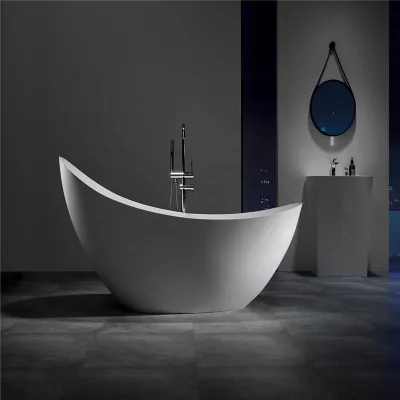


Freestanding Acrylic Freestanding Bathtub with Stainless Stand Support
$40.00 - $220.00
MOQ: 50 Pieces


Chinese Contemporary Design Cheap Soaking Bathtub Freestanding (LT-703)
$170.00 - $180.00
MOQ: 10 Pieces


Comprehensive Sourcing Guide
Strategic Sourcing Guide for Modern Soaking Freestanding Bathtubs
Understanding Technical Specifications and Dimensions
When sourcing a Modern Soaking Freestanding Bathtub, the primary focus must be on precise dimensional compatibility and structural integrity. The market offers a diverse range of sizes, and selecting the correct footprint is critical for both installation feasibility and user comfort. Based on current product data, the typical dimensions for these units vary significantly to accommodate different bathroom layouts. Common specifications include a tub size of 1700800580 mm, which represents a standard configuration for deep soaking experiences. Other observed models feature dimensions such as 1730780710 mm, offering a slightly taller profile, while others are designed with a more compact footprint of 1680840535 mm.
The structural design is predominantly freestanding, allowing the unit to stand independently without the need for surrounding cabinetry or walls. This contrasts with built-in tubs, which require specific framing. The shape of the tub is another defining characteristic, with oval designs being a prevalent choice for modern aesthetics. The internal volume and depth are equally important; some models feature a height of 710 mm, providing a deeper water capacity for full-body immersion, whereas others may sit lower at 430 mm or 510 mm. Buyers must verify the specific tub size against their available floor space, ensuring there is adequate clearance for the faucet and drainage connections.
Drainage is a critical technical component that often dictates the installation complexity. The standard drainage size observed in the market is 50mm, a specification that must align with the building's plumbing infrastructure. The location of the drain is typically centered, which simplifies the plumbing layout compared to off-center configurations. Additionally, the surface finish is a key technical attribute, with glossy surfaces being the standard for acrylic models. This finish not only contributes to the visual appeal but also impacts maintenance requirements. The material composition is almost universally acrylic, a choice driven by its durability, heat retention properties, and ability to be molded into complex shapes. Specific supply chains may utilize branded acrylic sheets, such as those from Jumei, which are known for their high-quality resin content and resistance to yellowing over time.
Compliance, Certification, and Safety Standards
Navigating the regulatory landscape is essential for any B2B procurement process involving bathroom fixtures. Compliance with international standards ensures that the product meets safety requirements and can be legally sold in target markets. The most frequently cited certifications for freestanding bathtubs include CE, ISO9001, and CUPC (IAPMO). The CE mark indicates conformity with health, safety, and environmental protection standards for products sold within the European Economic Area. ISO9001 certification demonstrates that the manufacturer adheres to a robust quality management system, ensuring consistent production processes.
CUPC certification is particularly relevant for the North American market, verifying that the product meets specific plumbing code requirements regarding water efficiency and safety. Some suppliers list these certifications under varying labels, such as "Certi: CE & Cupc" or "Standard: CE, CUPC," but the underlying requirement remains the verification of these specific marks. Buyers should request current, valid certificates from the supplier rather than relying on marketing claims. It is important to note that while some products are certified, others may not carry these specific marks, and the absence of a listed certification does not necessarily imply non-compliance, but it does require a deeper due diligence process.
Safety features are also integral to the product specification. A standard safety feature observed in the market is the overflow drain, which prevents water from spilling over the rim if the drain is left open. Additionally, slip-resistant surfaces are a critical attribute for preventing accidents, especially in wet environments. The presence of these features should be explicitly confirmed in the product data sheet. For products intended for commercial or high-traffic residential use, verifying that the surface treatment meets slip-resistance standards is a non-negotiable step. The structural integrity of the tub, particularly for freestanding models, must also be validated to ensure it can support the weight of water and the user without deformation or failure.
Cost Drivers and Pricing Dynamics
The pricing of modern soaking freestanding bathtubs is influenced by a complex interplay of factors, including material quality, brand reputation, dimensions, and customization options. The observed price range in the current market spans from $20 to $2,688 USD, a variance that reflects the vast difference between entry-level units and premium, high-specification models. Several key drivers contribute to this spread. The thickness and quality of the acrylic material are primary cost factors; higher-grade acrylics, such as those from recognized brands like Jumei, command a premium price due to their superior durability and aesthetic finish.
Customization is another significant cost driver. While many suppliers offer standard models, the availability of customization services, including OEM (Original Equipment Manufacturer) and ODM (Original Design Manufacturer) capabilities, adds to the unit cost. Custom colors, such as black, white, or multi-color options, may incur additional charges compared to standard white finishes. The inclusion of advanced features, such as whirlpool or massage systems, also elevates the price point significantly. A standard soaking tub with a simple hand control will be priced differently than a unit equipped with complex jet systems or integrated lighting.
Minimum Order Quantity (MOQ) requirements also play a role in the effective cost per unit. The observed MOQ range is between 1 and 100 sets. Suppliers with lower MOQs, such as 1 set, may charge a higher unit price to cover the logistics of small-batch production. Conversely, bulk orders of 10 sets or more often benefit from economies of scale, reducing the per-unit cost. Buyers should consider the total landed cost, which includes shipping, insurance, and potential tariffs, rather than focusing solely on the factory gate price. The packaging method, typically standard export cartons, is a minor but necessary cost component that ensures the product arrives without damage.
Typical Applications and Installation Contexts
Modern soaking freestanding bathtubs are versatile fixtures suitable for a wide range of applications, primarily driven by their aesthetic appeal and functional design. The primary application is for indoor tubs, where they serve as a focal point in residential bathrooms, luxury hotels, and spa facilities. The freestanding structure allows for flexible placement, enabling designers to create open, airy bathroom layouts that maximize natural light and spatial flow. The oval shape and glossy finish contribute to a contemporary look that complements modern interior design trends.
However, the application scope extends beyond indoor residential use. Some product specifications indicate suitability for outdoor tubs, suggesting that certain models are engineered to withstand environmental factors such as humidity and temperature fluctuations. This dual-application capability makes them attractive for resort developments, private villas, and outdoor wellness centers. The specific dimensions of the tub must be matched to the intended space; for instance, larger models like the 1800850510 mm unit are ideal for master bathrooms or spa suites, while smaller units like the 1500800590 mm variant are better suited for compact spaces or secondary bathrooms.
Installation requirements vary based on the tub's structure. Freestanding tubs generally require a floor-mounted faucet or a wall-mounted faucet positioned at a specific distance to ensure proper water flow. The center drain location simplifies the plumbing connection, but the floor must be level and capable of supporting the weight of the filled tub. For outdoor applications, additional considerations such as drainage slope and protection from direct sunlight may be necessary. The application also dictates the required features; a soaking tub in a spa setting might prioritize depth and heat retention, while a residential unit might focus on ease of cleaning and slip resistance.
Supplier Evaluation and Quality Assurance
Evaluating suppliers for freestanding bathtubs requires a rigorous assessment of their manufacturing capabilities, quality control processes, and service offerings. A reliable supplier should demonstrate a clear track record of producing high-quality acrylic products with consistent dimensions and finishes. The presence of certifications like ISO9001 is a strong indicator of a supplier's commitment to quality management. Buyers should verify that the supplier has a dedicated quality control team that inspects products at various stages of production, from raw material intake to final packaging.
Service capabilities are another critical evaluation criterion. Suppliers that accept OEM and ODM services offer greater flexibility for buyers looking to brand the product or customize specific features. The ability to provide samples is also essential for verifying product quality before committing to a large order. The observed sample lead time of 15 days is a standard benchmark, and buyers should ensure that the supplier can meet this timeline without compromising on quality. The packaging method, typically standard export cartons, should be robust enough to prevent damage during transit, especially for international shipments.
When evaluating suppliers, buyers should also consider the origin of the product. Many freestanding bathtubs are manufactured in Zhejiang, China, a region known for its extensive bathroom fixture industry. While this location offers competitive pricing and a wide range of options, buyers must ensure that the supplier maintains high standards regardless of the geographic location. Requesting references from previous clients and reviewing case studies can provide valuable insights into the supplier's reliability and performance. Additionally, buyers should assess the supplier's responsiveness to inquiries and their ability to provide technical support throughout the procurement process.
Long-Term Procurement and Maintenance Considerations
Sourcing a freestanding bathtub is not just a one-time transaction but the beginning of a long-term relationship with the supplier. Buyers should consider the long-term implications of their procurement decisions, including warranty coverage, maintenance requirements, and the availability of replacement parts. A common warranty provision for the main body of these tubs is five years, which provides a baseline for the expected lifespan of the product. However, buyers should carefully review the terms of the warranty to understand what is covered and what constitutes a valid claim.
Maintenance is a key factor in the longevity of the bathtub. Acrylic surfaces are generally easy to clean but require specific care to prevent scratching and staining. The glossy finish, while aesthetically pleasing, can show water spots and mineral deposits more readily than matte finishes. Buyers should advise end-users on proper cleaning protocols to maintain the tub's appearance. The slip-resistant surface is a critical feature for safety, and its effectiveness should be maintained over time. Regular inspection of the overflow drain and the structural integrity of the tub is recommended to ensure continued safety and performance.
In the event of damage or defects, the availability of replacement parts and the supplier's willingness to honor the warranty are crucial. Buyers should establish clear communication channels with the supplier to address any issues that may arise post-delivery. The lead time for samples and production should also be factored into the procurement timeline to ensure that the project schedule is not delayed. By considering these long-term factors, buyers can make informed decisions that ensure the satisfaction of their clients and the longevity of the installed products.
FAQs
What is the standard drainage size for these tubs?
The standard drainage size is 50mm, which must align with your building's plumbing infrastructure. This specification ensures proper water flow and simplifies the installation process for most freestanding models.
Can I customize the color and design of the bathtub?
Yes, customization is available including options for white, black, or multi-color finishes. Suppliers also accept OEM and ODM services to tailor the product to your specific branding or design requirements.
What certifications do these acrylic bathtubs typically hold?
Most models carry CE, ISO9001, and CUPC certifications to ensure safety and quality standards. These marks verify compliance with international regulations for health, safety, and plumbing codes in various regions.
How long does it take to receive a sample unit?
The sample lead time is typically 15 days from the order date. This allows you to verify the product quality, dimensions, and finish before committing to a larger bulk purchase order.
Which tub dimensions are commonly available for indoor use?
Common indoor dimensions include 1700*800*580 mm and 1730*780*710 mm for deep soaking. Other sizes like 1680*840*535 mm offer a compact footprint for smaller bathroom layouts.
What is the minimum order quantity for these bathtubs?
The minimum order quantity ranges from 1 to 100 sets depending on the supplier and customization level. Lower MOQs allow for smaller trial orders, while bulk purchases often benefit from reduced unit costs.
What warranty is provided for the main body of the tub?
The main body typically comes with a 5-year warranty to cover manufacturing defects. This warranty ensures long-term durability and protects your investment against structural failures under normal use conditions.