Source Modern Soft Cushion Louis Chair for Hotels, Homes, and Events
Find and compare 30 listings for the Modern Soft Cushion Louis Chair, featuring resin and wood options with medium back heights. Evaluate specifications like dimensions, weight, and customization availability to select suitable commercial or residential seating solutions.
Key considerations
Products List

Modern Design Hollow Backrest Soft Cushion Plastic Resin Louis Dining Chair
$20.00 - $30.00
MOQ: 100 Pieces

Modern Classical Style Louis Dining Chair Upholstered Soft Chair for Living Room
$35.00 - $55.00
MOQ: 50 Pieces

French Style Comfortable Round Back Plastic Louis Chair with Soft Cushion
$20.00 - $30.00
MOQ: 100 Pieces

Plastic Resin Hollow Backrest Soft Cushion Louis Chair for Wedding Banquet Hotel
$20.00 - $30.00
MOQ: 100 Pieces

Comfortable Plastic Resin Hollow Backrest Louis Dining Chair with Soft Cushion
$20.00 - $30.00
MOQ: 100 Pieces

Plastic Silver Color Soft Cushion King Louis Chair for Wedding Banquet Events
$20.00 - $30.00
MOQ: 100 Pieces
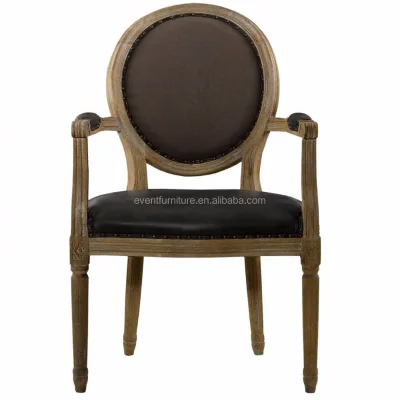
wooden round back louis armrest chair French Louis style solid chair dinning louis chair
$42.89 - $53.11
MOQ: 200 Minimum
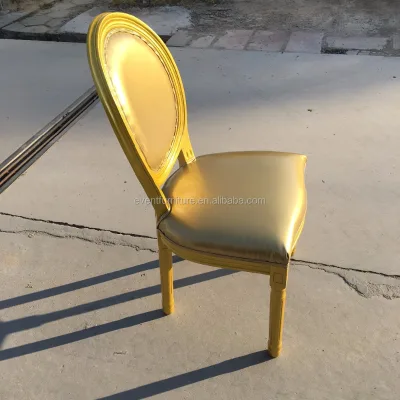
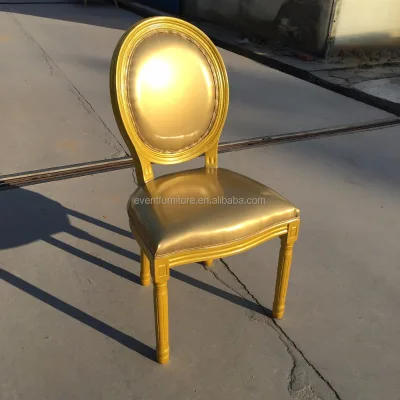


Classical Solid Wood Louis Chair Square Back Hotel Living Room Leisure Chair
$58.00 - $69.00
MOQ: 2 Pieces


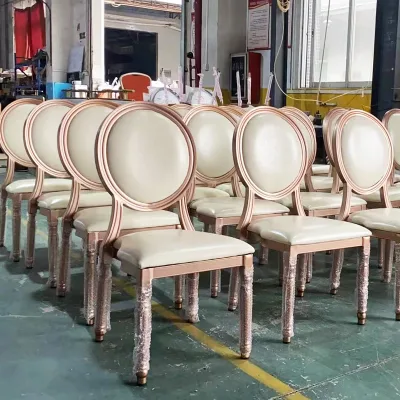


White Cushion Flower Back Hot Selling White Louis Chair for Wedding Banquet Restaurant
$35.00 - $37.00
MOQ: 100 Pieces


Comprehensive Sourcing Guide
Modern Soft Cushion Louis Chair Sourcing Guide
Sourcing modern interpretations of the Louis-style chair requires balancing historical aesthetic cues with contemporary manufacturing capabilities. The core keyword suggests a fusion of classic elegance and modern utility, often seen in hospitality and high-end residential settings. Buyers must navigate a market where "Louis" refers to a silhouette rather than a strict historical reproduction, allowing for variations in materials, cushioning, and structural integrity. This guide provides evidence-based procurement strategies for sourcing these specific furniture pieces, focusing on verified attributes and commercial realities observed in current listings.
The procurement process for this category is heavily influenced by the distinction between solid wood construction and resin or composite alternatives. While traditional Louis chairs are defined by carved wood frames, modern listings frequently feature resin or plastic variants that mimic the aesthetic at a lower cost point. Understanding this material divergence is critical for budgeting and quality assessment. Buyers should prioritize suppliers who clearly disclose material composition, as the term "modern" can imply everything from updated upholstery fabrics to entirely synthetic structural components.
Product Scope and Observed Listing Signals
The observed product landscape reveals a significant divergence in material composition, ranging from natural wood to synthetic resin. Listings indicate that "Resin Chair" and "Louis Dining Chair" are distinct product lines within the same search context, suggesting that buyers may encounter both solid wood frames and molded plastic alternatives marketed under similar stylistic names. The presence of "Wood" and "Plastic" as listed materials highlights the need for precise specification verification. Procurement teams must explicitly define whether the project requires the durability and weight of wood or the cost-efficiency and weather resistance of resin, as these materials dictate entirely different supply chains and quality control protocols.
Visual and stylistic attributes further complicate the scope, with listings noting "Modern," "Antique," and "Silver" or "White/Black/Natural" color options. The "Louis Chair" model, specifically identified by codes such as EF-ADC20022, often features a "Medium Back" height and is available in both customized and non-customized configurations. Buyers should note that while the style is described as modern, some variants carry an "Antique" appearance, indicating that the term "Louis" is being used broadly to describe a curved, elegant silhouette rather than a specific period style. This ambiguity requires clear communication with suppliers to ensure the delivered aesthetic matches the design intent, particularly when ordering in bulk for uniform spaces like hotels or event venues.
Technical Specifications to Verify
Dimensional accuracy is paramount when sourcing Louis-style chairs, as variations in seat height and overall footprint can impact space planning and user comfort. Observed standard dimensions for these products range from 48x57x95cm to 61x51x104cm, with specific models like the Louis Chair measuring 51x61x95cm. These variations suggest that buyers cannot assume interchangeability between different suppliers or even different models from the same supplier. It is essential to request detailed technical drawings or physical samples to verify critical measurements, particularly the seat height and backrest angle, which directly affect ergonomic suitability for dining or lounge applications.
Structural attributes such as armrests, folding mechanisms, and weight capacity also require rigorous verification. The observed data indicates that many modern Louis-style chairs are supplied "Without Armrest" and are "Unfolded" or non-folding, which simplifies stacking and storage but may limit versatility in multi-purpose spaces. Weight observations, such as a 6.5kg unit, provide a baseline for handling and logistics planning, but buyers should confirm if this weight corresponds to the specific material (wood vs. resin) they have selected. Additionally, the "Rotary: Fixed" attribute suggests that swivel mechanisms are not standard for this specific product line, meaning buyers seeking rotational functionality must seek out specialized variants rather than assuming it is included in the base model.
Compliance and Safety Documentation
Safety and durability standards are critical for commercial furniture, particularly when chairs are intended for high-traffic environments like hotels or restaurants. The observed listings reference the EN12520 TEST certificate, which is a recognized standard for seating strength and durability. Buyers should treat this certification as a baseline requirement for any commercial-grade Louis chair, ensuring that the supplier can provide valid, up-to-date test reports from accredited laboratories. While other standards like EN 1335 and EN 1728 are mentioned in background contexts, buyers must verify which specific standard applies to their procurement, as different regions and use cases may mandate different compliance frameworks.
Beyond structural safety, buyers must verify the environmental and material safety of the components, especially if the chairs feature soft cushions or synthetic materials. Although specific chemical certifications are not explicitly listed in the observed data, the presence of "Plastic" and "Wood" materials necessitates inquiries into formaldehyde emissions, flame retardancy, and VOC levels. For projects targeting markets in the USA, Canada, Europe, or South America, compliance with local regulations such as California Proposition 65 or EU REACH may be required. Procurement teams should include these verification steps in their supplier questionnaires to avoid regulatory hurdles during customs clearance or final installation.
Cost Drivers and Commercial Terms
Pricing for modern Louis-style chairs varies significantly based on material, customization, and order volume. The observed price range of $0.52 to $205 USD reflects the disparity between basic resin chairs and high-end, solid wood, or heavily customized variants. Buyers should anticipate that the lower end of this range likely corresponds to non-customized, mass-produced resin models, while the higher end reflects solid wood construction, premium upholstery, or bespoke design elements. Understanding this spectrum is crucial for budget allocation, as mixing materials or styles within a single order can complicate pricing and logistics.
Commercial terms and logistics play a substantial role in the total cost of ownership. Observed data indicates a Minimum Order Quantity (MOQ) of 200 pieces for certain models, with a supply ability of 4000 pieces per month. Delivery times typically range from 15 to 30 days, which buyers must factor into their project schedules. Payment terms often involve a 30% deposit and 70% balance before shipment, a standard structure that requires careful cash flow management. Additionally, packaging details, such as 5 pieces per carton with specific dimensions (e.g., 7171150cm), directly impact shipping costs and warehouse storage efficiency, making it essential to optimize container loading plans during the negotiation phase.
Supplier Qualification and Quality Control
Supplier qualification for Louis-style chairs should focus on production capacity and quality assurance processes. The observed data highlights suppliers based in Qingdao and Shandong, China, regions known for furniture manufacturing. Buyers should verify the supplier's actual production capabilities, including their monthly output and ability to handle custom orders, as indicated by the "Customization: Available" attribute. It is advisable to request references or case studies from previous projects, particularly those involving hotel or commercial furniture, to assess the supplier's reliability and consistency in meeting deadlines and quality expectations.
Quality control measures must be explicitly defined before production begins. Buyers should establish clear acceptance criteria for finish quality, structural integrity, and material consistency. For wooden chairs, this includes checking for grain matching, joint stability, and finish durability. For resin or plastic chairs, it involves inspecting for mold lines, color uniformity, and structural rigidity. Implementing a pre-shipment inspection protocol, potentially through a third-party agency, can mitigate the risk of receiving defective goods. Given the "Sample: Accepted" attribute, buyers should always request and evaluate physical samples before committing to large orders, using the sample as the benchmark for quality in the final production run.
Long-Term Procurement Checks
Long-term procurement success depends on establishing a sustainable supply chain that can adapt to changing market demands and project requirements. Buyers should monitor supplier performance over time, tracking metrics such as on-time delivery rates, defect rates, and responsiveness to issues. Regular audits or periodic quality checks can help maintain standards and identify potential problems before they escalate. Additionally, maintaining open communication with suppliers regarding future design trends and material innovations can provide a competitive advantage, allowing buyers to stay ahead in the modern furniture market.
Sustainability and lifecycle management are increasingly important considerations for modern furniture procurement. Buyers should inquire about the recyclability of materials, particularly for resin and plastic components, and the sourcing practices for wood products. Establishing a clear end-of-life strategy for the chairs, whether through recycling programs or responsible disposal, can enhance the brand's sustainability profile. Furthermore, buyers should consider the availability of spare parts or repair services, especially for high-value wooden chairs, to extend the product's lifespan and reduce long-term replacement costs. By focusing on these long-term factors, buyers can build a resilient and responsible procurement strategy for modern Louis-style chairs.
FAQs
What materials are used for the Modern Soft Cushion Louis Chair?
The product is available in plastic and wood materials. Some listings specify resin construction while others indicate wood. Buyers should verify the specific material composition for each supplier offering the Modern Soft Cushion Louis Chair.
Can I request customization for the Modern Soft Cushion Louis Chair?
Customization is available for this product line. Some suppliers offer customized options while others provide non-customized standard units. Buyers must confirm the specific customization capabilities with the manufacturer before placing an order.
What is the typical delivery time for the Modern Soft Cushion Louis Chair?
The standard delivery time ranges from 15 to 30 days. This lead time applies to most suppliers offering the Modern Soft Cushion Louis Chair. Buyers should confirm exact schedules based on their order quantity and production capacity.
Which certifications apply to the Modern Soft Cushion Louis Chair?
The product meets the EN12520 TEST standard. This certification ensures safety and quality compliance for commercial use. Buyers should request proof of this specific test result when sourcing the Modern Soft Cushion Louis Chair from suppliers.
How much is the minimum order quantity for the Modern Soft Cushion Louis Chair?
The minimum order quantity varies between 1 and 200 pieces depending on the supplier. Some vendors require 200 pieces while others accept smaller orders. Buyers need to check the specific MOQ requirements for their chosen source.
Where are the modern soft cushion louis chairs manufactured?
Production takes place in Qingdao and Shandong, China. These locations serve as the primary origins for the Modern Soft Cushion Louis Chair. Buyers should verify the exact place of production with each potential supplier.
What are the standard dimensions for the Modern Soft Cushion Louis Chair?
Standard sizes include 51x61x95cm, 61x51x104cm, and 48x57x95cm. Multiple dimension specifications exist for the Modern Soft Cushion Louis Chair. Buyers must select the specific size that fits their space requirements.
Can I get samples of the Modern Soft Cushion Louis Chair?
Samples are accepted for this product. Buyers can request samples to verify quality before committing to a bulk order. The sample policy allows for evaluation of the Modern Soft Cushion Louis Chair features.