Source Modern Style Fabric Sofa Bed for Living Room, Hotel, Bedroom
Compare 30 Modern Style Fabric Sofa Bed options from verified factories. Buyers can review specifications including European and modern styles, wood frames, and customization availability for living rooms, hotels, and bedrooms.
Key considerations
Products List


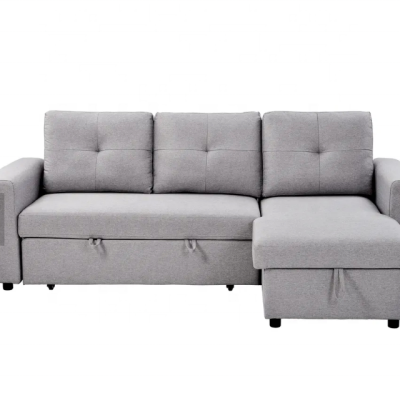


Customized High Softness Modern Furniture Fabric Sofa Bed for Living Room
$110.00 - $115.00
MOQ: 50 Sets

Living Room Furniture Good Breathability and Comfortable Fabric Sofa Bed
$315.00 - $319.00
MOQ: 28 Sets


a Single Fabric Sofa Bed with Customizable Colors in The Living Room and Office
$129.00 - $135.00
MOQ: 84 Sets


Fabric Sofa Bed Modern Seat Low Prices Living Room Furniture Sofa Beds
$119.00 - $399.00
MOQ: 30 pieces




Comprehensive Sourcing Guide
Strategic Sourcing Guide for Modern Style Fabric Sofa Beds
The global market for multi-functional furniture has seen a significant surge in demand, driven by urbanization and the need for space-efficient living solutions. Among these, the Modern Style Fabric Sofa Bed stands out as a critical asset for residential, hospitality, and commercial sectors. This guide provides a disciplined, evidence-based approach to sourcing these units, focusing on the specific attributes observed in current supply chains, including material composition, certification standards, and logistical parameters. Buyers must navigate a landscape where product definitions vary, and technical specifications are not uniform across all listings.
Understanding Technical Specifications and Material Composition
The foundation of a successful procurement strategy lies in a precise understanding of technical specifications. The observed product data indicates a diverse range of configurations, from "Single" and "Triple" types to "Flat Bed" and "Double" size classifications. When sourcing a Modern Style Fabric Sofa Bed, the buyer must first define the intended capacity. The data shows models labeled as "Triple" alongside those marked as "Single," suggesting that the term "sofa bed" encompasses a wide spectrum of seating and sleeping arrangements.
Material selection is equally critical. The supply chain data explicitly identifies "Fabric" as the primary upholstery material and "Wood" as the standard frame material. This combination offers a balance of aesthetic appeal and structural integrity typical of modern designs. However, buyers must verify the specific grade of wood and the weave density of the fabric, as these are not standardized in the general listing data. The "Modern Style" and "European Style" attributes observed suggest a design language that favors clean lines and functional forms, but the physical realization of these styles depends on the manufacturer's execution.
Furthermore, the structural integrity is often defined by the disassembly capabilities. The data presents a dichotomy where some units are marked as "Undisassembly" while others imply customizability. For logistics and shipping, the "Folded" versus "Unfolded" state is a decisive factor. Some listings indicate a "Folded" state, which can significantly reduce shipping volume, while others specify "Unfolded" or "Carton with Wood Frame" packing, which may require more robust handling. The "Size" attribute is frequently listed as "customizable" or adhering to specific dimensions like "W83D85H85cm" or larger configurations such as "233022501710mm." Buyers must align these dimensions with their specific spatial requirements before finalizing orders.
Compliance, Certification, and Quality Standards
In the B2B sector, compliance is not merely a formality but a prerequisite for market entry and liability protection. The supply data highlights specific certifications that serve as markers of quality assurance. Notably, "ISO" certification appears as a recurring attribute, indicating that the manufacturing processes adhere to international management standards. Additionally, "TUV" certification is explicitly mentioned for certain models, such as the one with model number WH301B10. These certifications suggest that the products have undergone rigorous testing for safety and quality, which is essential for commercial deployments in hotels or public spaces.
However, buyers must exercise caution. The presence of a certification in a general listing does not guarantee that every unit of that model possesses the same status. The data shows that while some products are "New" and carry "ISO" or "TUV" marks, others may only list "custom" standards. The "prod_standard" field varies from specific dimensions to "customized" entries, implying that quality benchmarks can be negotiated. Therefore, the procurement process must include a verification step where the buyer requests current, valid certificates for the specific batch being ordered.
Quality is further defined by the "Warranty" period, with "2 Years" being a standard offering in the observed data. This warranty serves as a tangible indicator of the manufacturer's confidence in their product's durability. Additionally, the "Condition" is consistently listed as "New," which is a baseline expectation but must be verified upon delivery. The "Quality" attribute is described as "High Quality" in several listings, but this is a subjective claim. To validate this, buyers should request third-party test results or inspection reports that align with the "TUV" or "ISO" standards mentioned.
Cost Drivers and Pricing Dynamics
The pricing landscape for modern style fabric sofa beds is characterized by significant variance. The observed price range spans from $55.99 to $20,000 USD. This wide disparity is not indicative of a single market tier but rather reflects differences in scale, material quality, customization levels, and order volume. The lower end of the spectrum likely corresponds to standard, single-unit purchases or basic models with minimal customization. In contrast, the upper end suggests large-scale commercial orders, custom-engineered units, or high-end materials that command a premium.
Several factors drive these costs. First, the "MOQ" (Minimum Order Quantity) plays a pivotal role. The data shows an MOQ range from "1 Piece" to "20gp" (20-foot General Purpose container). Orders placed at the lower end of the MOQ spectrum often incur higher per-unit costs due to the fixed costs of production and logistics being amortized over fewer units. Conversely, bulk orders utilizing container loads can leverage economies of scale to reduce the unit price.
Customization is another major cost driver. The data confirms that "Customization" is "Available" and "OEM & ODM" services are "Accepted." While this flexibility allows buyers to tailor products to their brand identity, it inevitably increases the production cost and lead time. The "Payment Term" flexibility, including "T/T" and "Paypal," also influences the financial dynamics, as different terms may carry different risk premiums for the supplier. Buyers must analyze the total cost of ownership, including shipping, duties, and potential rework costs, rather than focusing solely on the listed unit price.
Typical Applications and Usage Scenarios
The versatility of modern style fabric sofa beds makes them suitable for a broad array of applications. The "Usage" attribute explicitly lists "Living Room," "Hotel," "Study," and "Bedroom." This indicates that the product is designed to transition seamlessly between residential and commercial environments. In a residential setting, the "Modern" or "European" style ensures aesthetic compatibility with contemporary interior design trends. The "Suitable for: Adult" attribute confirms that the structural load-bearing capacity is designed for adult users, a critical safety consideration.
In the hospitality sector, specifically for hotels, the durability and space-saving nature of these units are paramount. The "2 Years" warranty and "High Quality" claims are particularly relevant here, as hotels require furniture that can withstand frequent use and maintain its appearance over time. The "Flat Bed" type and "Double" size options are ideal for guest rooms where space is at a premium. Similarly, in office environments or study areas, the "Square" shape and "Medium Back" height provide ergonomic support while maintaining a professional aesthetic.
The "Shape" is predominantly "Square," which facilitates efficient floor planning and stacking in storage or shipping. The "Washable" attribute is listed as "Non-washable" in the data, which is a crucial operational detail for buyers in the hospitality industry. This implies that the fabric requires professional cleaning or spot treatment rather than machine washing, influencing the maintenance protocols that must be established post-delivery.
Supplier Evaluation and Operational Logistics
Selecting the right supplier is as important as selecting the product itself. The data identifies the supplier type as "Factory," which suggests a direct manufacturing relationship rather than a trading intermediary. This can offer benefits in terms of cost control and communication, provided the buyer verifies the factory's actual capacity. The "Location" is consistently noted as "China" or specifically "Guangdong," a major manufacturing hub known for furniture production. The "Port of Loading" is specified as "Shenzhen," which is a strategic advantage for international shipping due to its proximity to major trade routes.
Logistical parameters are critical for supply chain planning. The "Delivery Time" varies between "15-20 Days" and "30-45 Days." This variance likely depends on the order size, customization level, and current production capacity. The "Packing" methods, ranging from "Carton" to "Foam" and "Carton with Wood Frame," must be evaluated based on the fragility of the product and the shipping method. For international shipments, the "Wood Frame" packing offers superior protection but adds weight and volume.
Buyers should also consider the "Aftersale-Service" availability, which is confirmed as "Yes" in the data. This is a vital component of the procurement agreement, ensuring that any issues regarding defects or assembly can be resolved promptly. The "Disassembly" status, whether "Undisassembly" or otherwise, impacts the ease of installation at the destination. For large commercial projects, the ability to disassemble and reassemble the unit can significantly reduce installation time and costs.
Quality Control and Long-Term Procurement Considerations
Implementing a robust quality control (QC) protocol is essential to mitigate risks associated with the observed variability in product attributes. Since the "prod_standard" can be "custom" or specific dimensions, buyers must establish clear acceptance criteria before production begins. This includes verifying the "Frame Material" (Wood) and "Fabric" quality against agreed-upon samples. The "Certification" status should be re-verified for each batch, as the presence of "ISO" or "TUV" in a listing does not automatically extend to every unit produced.
Long-term procurement strategies should focus on building a sustainable relationship with the supplier. The "OEM & ODM" acceptance indicates that suppliers are willing to collaborate on product development, which can lead to exclusive designs and better pricing over time. However, the "MOQ" constraints, ranging from single pieces to full containers, require careful inventory management. Buyers should plan their orders to align with the supplier's production cycles to minimize lead times, which can fluctuate between 15 and 45 days.
Finally, the "Condition" of the product upon arrival must be rigorously inspected. Even with a "2 Years" warranty, initial defects can lead to significant downtime in commercial settings. The "Non-washable" nature of the fabric necessitates a proactive maintenance plan to ensure longevity. By combining technical due diligence, supplier verification, and a clear understanding of the logistical landscape, buyers can successfully source modern style fabric sofa beds that meet their specific operational and aesthetic requirements. The data provided serves as a foundational reference, but the ultimate success of the procurement depends on the buyer's ability to validate these attributes in the context of their specific project needs.
FAQs
What certifications are available for modern style fabric sofa beds?
ISO and TUV certifications are available for these units. Buyers should verify specific batch certificates, as the presence of ISO or TUV in listings does not guarantee every unit possesses the same status without direct verification.
How long is the delivery time for these sofa beds?
Delivery times typically range from 15 to 45 days. The exact duration depends on order size, customization levels, and current production capacity, with some listings specifying 15-20 days and others 30-45 days.
Which materials are used in the frame and upholstery?
The frame is constructed from wood and the upholstery is made of fabric. This combination offers structural integrity and aesthetic appeal, though specific wood grades and fabric weave densities require verification against agreed samples.
Can I customize the size and design of the sofa bed?
Customization is available with OEM and ODM services accepted. Buyers can request specific dimensions like W83*D85*H85cm or larger configurations, but this flexibility will increase production costs and lead times.
What is the minimum order quantity for these products?
Minimum order quantities range from 1 piece to a full 20-foot container. Orders at the lower end often incur higher per-unit costs, while bulk orders utilizing container loads can leverage economies of scale.
Where are the factories located and what is the port of loading?
Factories are located in China, specifically in Guangdong, with Shenzhen as the port of loading. This location offers strategic advantages for international shipping due to proximity to major trade routes.