Source Modular Light Steel Frame Building for Warehouse, Office, and House
Explore 30 listings for Modular Light Steel Frame Building solutions tailored for industrial and residential needs. Compare specifications such as steel type, panel materials, and customization options to find the right fit for your project requirements.
Key considerations
Products List

Modular Building Corrugated Steel Building
$3200.00 - $9999.00
MOQ: 1 Sets
Qingdao Jingdao Credit Construction Steel Structure Co., Ltd.

Prefabricated Building Custom Steel Building
$3200.00 - $9999.00
MOQ: 1 Square Meters
Qingdao Jingdao Credit Construction Steel Structure Co., Ltd.

Low Cost Construction Light Steel Structure Building
$30.00 - $50.00
MOQ: 100 Square Meters
Qingdao Jingdao Credit Construction Steel Structure Co., Ltd.

Modular Steel Frame Structure Building for Prefabricated Warehouse
$40.00 - $55.00
MOQ: 900 Square Meters

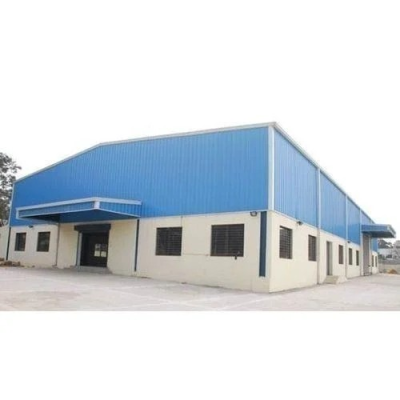


Durable Modular Steel Frame Buildings for Efficient Construction
$35.00 - $70.00
MOQ: 200 Square Meters


Prefabricated High Quality Steel Frame Building / Steel Building
$45.00 - $70.00
MOQ: 500 Square Meters


High Quality Prefabricated Light Steel Structure Building Modern
$30.00 - $55.00
MOQ: 100 Square Meters

Modern Light Steel Frame Prefabricated Steel Structure Building
$45.00 - $50.00
MOQ: 1000 Square Meters


Modular Steel Frame Building: Lightweight, Portable, and Easy to Transport
$59.00 - $99.00
MOQ: 100 Square Meters

Popular Low Cost Modular Prefab Steel Structure Building
$30.00 - $80.00
MOQ: 1 Square Meters
Qingdao Xinguangzheng Huayang Construction Engineering Co., Ltd.

Steel Structure Warehouse Steel Construction Building
$30.00 - $60.00
MOQ: 1000 Square Meters
Qingdao Xinguangzheng Huayang Construction Engineering Co., Ltd.
Comprehensive Sourcing Guide
Modular Light Steel Frame Building Sourcing Guide
Sourcing modular light steel frame buildings requires a disciplined approach to balancing structural integrity, customization flexibility, and logistical efficiency. These structures are increasingly favored for their rapid deployment capabilities and adaptability across diverse commercial and industrial sectors. Buyers must navigate a market where product attributes vary significantly between suppliers, ranging from basic steel halls to complex, multi-functional facilities. The core value proposition lies in the ability to customize dimensions, materials, and finishes while maintaining a service life that often exceeds fifty years. This guide provides a structured framework for evaluating suppliers, verifying technical specifications, and ensuring compliance with international standards.
The procurement process for these buildings is characterized by a wide range of observed listing signals, including price points from $28 to $10,000 and minimum order quantities (MOQs) spanning from 1 to 1,000 units. This variance reflects the spectrum from small-scale prefabricated components to large-scale structural systems. Buyers should recognize that low MOQs often indicate suppliers specializing in customized, small-batch projects, while higher MOQs may suggest manufacturers focused on mass production of standardized units. Understanding these market signals is crucial for aligning procurement strategies with project scale, whether the need is for a single carport or a large-scale warehouse complex.
Product Scope and Observed Listing Signals
The product scope for modular light steel frame buildings encompasses a wide array of applications, including steel workshops, warehouses, carports, hotels, offices, and agricultural structures such as cow sheds and chicken sheds. The observed listings indicate that these structures are often marketed under various names, such as "Light Section Steel" or "Stereoscopic Warehouse," highlighting their versatility in both residential and industrial contexts. The primary material is typically steel structure, with specific types including quality carbon structural steel (such as Q235) and alloy structural steel. Buyers should verify the specific steel grade and forming process, such as hot-rolled steel, to ensure the structural components meet the load-bearing requirements of the intended application.
Observed listing signals also reveal significant customization options, with products available in various colors like white, grey, and blue, and roof styles including triangular or flat designs. Window and door configurations are highly adaptable, with options for PVC or aluminum alloy windows, and sliding, swing, or roller doors. Wall panels often consist of sandwich panels made from EPS, PU, fiberglass, or rockwool, providing essential insulation and thermal performance. Buyers must carefully review these customization options, as they directly impact the building’s functionality, aesthetic appeal, and energy efficiency. The ability to tailor these elements to specific site conditions and operational needs is a key differentiator among suppliers.
Technical Specifications to Verify
Technical verification begins with the structural dimensions and configuration. Observed specifications include widths of 25 meters, lengths of 50 meters, and heights of 8 meters, with steel structure thicknesses ranging from 6 to 20 mm and roof thicknesses of 50 mm. Buyers should confirm that the supplier can accommodate these dimensions or provide custom sizes to match their site constraints. The connection form is typically bolt connection, which facilitates easier assembly and disassembly, a critical feature for modular buildings. It is essential to verify the type of steel used for the building structure, such as high-strength steel, and the specific role of each member, such as steel columns and bottom wall beams, to ensure structural stability.
Further technical due diligence involves examining the window and door materials, as well as the overall product model and standard. Models such as JDCC-CH150206-30 and JDCC-S15125 indicate specific product lines, and buyers should request detailed technical drawings for these models. The standard dimensions of 1000m×2000m×30m mentioned in some listings may refer to production capacity or large-scale project capabilities rather than individual unit size, so clarification is necessary. Buyers should also verify the forming process and the type of carbon structural steel, ensuring it meets the GB standard or other relevant international standards. This level of detail ensures that the structural components are not only dimensionally accurate but also materially sound.
Compliance and Safety Documentation
Compliance with international standards is a critical aspect of sourcing modular light steel frame buildings. Observed certifications include ISO 9001, ISO, CE, SGS, BV, ASTM, and AISC, indicating a range of quality and safety assurances. Buyers should request valid certificates for each relevant standard, particularly ISO 9001 for quality management and CE for European market compliance. The presence of multiple certifications suggests a supplier’s commitment to rigorous quality control, but buyers must verify the authenticity and scope of these certificates. It is also important to check if the supplier adheres to specific national standards, such as the GB standard, which may be required for projects in certain regions.
Safety documentation should also cover the materials used in construction, particularly the wall panels and steel structures. The use of sandwich panels with materials like EPS, PU, or rockwool requires verification of fire resistance and thermal insulation properties. Buyers should ask for material safety data sheets (MSDS) and fire test reports to ensure the building meets local fire safety codes. Additionally, the certification of the steel itself, including its carbon content and structural integrity, should be documented. Ensuring that all materials and construction methods comply with relevant safety standards is essential for protecting the building’s occupants and minimizing liability risks.
Cost Drivers and Commercial Terms
Cost drivers for modular light steel frame buildings include the type and grade of steel, the complexity of customization, and the packaging and shipping requirements. Observed price ranges from $28 to $10,000 reflect the variability in product scale and specification. Buyers should understand that lower prices may correspond to basic structures with minimal customization, while higher prices reflect complex designs, premium materials, or larger dimensions. The MOQ range of 1 to 1,000 units also influences pricing, with bulk orders potentially benefiting from economies of scale. Buyers should request detailed quotations that break down costs by material, labor, and logistics to identify potential savings.
Commercial terms should clearly define the packing and delivery conditions. Observed packing methods include standard sea-worthy packing, standard export packages, and customer-specific requirements. Buyers should ensure that the packing method protects the structural components from damage during transit, especially for long-distance shipments. The origin of the products, such as Qingdao or Foshan, Guangdong, China, can impact shipping costs and lead times. Buyers should negotiate clear terms for delivery, including Incoterms, and verify the supplier’s ability to meet the project timeline. Understanding these commercial terms helps in budgeting accurately and avoiding unexpected costs.
Supplier Qualification and Quality Control
Supplier qualification involves assessing the manufacturer’s production capabilities, quality control processes, and after-sales service. Buyers should verify the supplier’s experience in producing modular light steel frame buildings and their ability to handle customized orders. The availability of customization services is a key indicator of a supplier’s flexibility and technical expertise. Buyers should request references or case studies of previous projects to evaluate the supplier’s track record. Additionally, the supplier’s ability to provide standard sea-worthy packing and adhere to international standards is crucial for ensuring product quality and reliability.
Quality control measures should be integrated into the procurement process, from raw material inspection to final product delivery. Buyers should inquire about the supplier’s quality management system, including ISO 9001 certification, and their procedures for inspecting steel structures and wall panels. Regular factory audits or third-party inspections can provide additional assurance of product quality. Buyers should also establish clear communication channels for addressing any quality issues that may arise during production or after delivery. A robust quality control framework helps minimize defects and ensures that the final product meets the specified requirements.
Long-Term Procurement Checks
Long-term procurement checks focus on the durability, maintenance, and scalability of the modular light steel frame buildings. The observed service life of more than fifty years suggests that these structures are designed for long-term use, but buyers should verify the maintenance requirements and warranty terms. Regular inspections of the steel structure, connections, and wall panels are essential to prevent corrosion and structural degradation. Buyers should establish a maintenance schedule and ensure that the supplier provides adequate support for repairs and replacements. Understanding the long-term costs of ownership helps in making informed procurement decisions.
Scalability is another important consideration for buyers who may need to expand their facilities in the future. Modular light steel frame buildings offer the advantage of easy installation and potential for expansion, but buyers should verify the supplier’s ability to provide additional components and support for future projects. The customization options available, such as different roof styles and window configurations, should be evaluated for their compatibility with future expansions. By planning for scalability, buyers can ensure that their investment in modular light steel frame buildings remains flexible and adaptable to changing business needs.
FAQs
What materials are used for the steel structure?
The structure uses quality carbon structural steel and alloy structural steel, specifically Q235 carbon structural steel. These materials are hot-rolled and formed into high-strength steel columns for durable building applications.
Can the building size be customized to specific needs?
Yes, the product is fully customized with standard dimensions like 25 meters width and 50 meters length. Buyers can request specific sizes to fit their warehouse, workshop, or residential requirements.
Which certifications does the manufacturer hold?
The products hold ISO, CE, EU, ASTM, Aisc, SGS, and BV certifications. These standards ensure the steel structure meets international quality and safety requirements for various industrial and commercial uses.
How long is the expected service life of the building?
The service life is more than 50 years when properly maintained. This longevity is achieved through the use of high-strength steel and robust sandwich panel wall systems.
What types of doors and windows are available?
Available options include sliding, swing, or roller doors and electric or manual shutters. Windows are made from plastic steel or aluminum alloy, with PVC or aluminum alloy materials for the frames.
Where are these steel structure buildings manufactured?
Products originate from Qingdao and Foshan, Guangdong, China. These locations serve as the primary production hubs for exporting standard sea-worthy packed steel structures globally.
What is the minimum order quantity for purchase?
The minimum order quantity ranges from 1 to 1000 units depending on the specific configuration. Buyers can negotiate based on their project scale and customization requirements.