Source Modular HEPA Clean Room for Pharma, Food, Research
Compare 30 listings for Modular HEPA Clean Room systems designed for pharmaceutical, food industry, and research facility applications. These units feature ISO certifications, customizable sizes, and automatic control modes to isolate cleaner areas effectively.
Key considerations
Products List


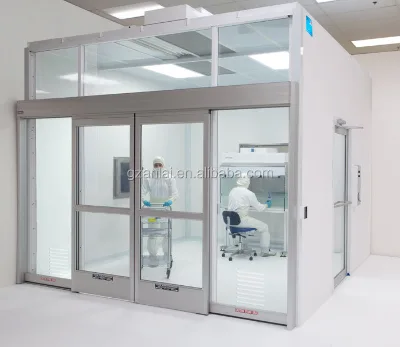
Factory Direct Supply Modular Cleanroom Clean Room With Hepa Filter
$1945.83 - $7578.50
MOQ: 1 Minimum


Modular Clean Room Lab Factory Dust Free Cleanroom ISO 7 8 Level Prefabricated Clean Room
$100.00 - $150.00
MOQ: 50 Square Meters



Comprehensive Sourcing Guide
Strategic Sourcing Guide for Modular HEPA Clean Room Systems
Understanding Modular HEPA Clean Room Architecture
The core keyword "Modular HEPA Clean Room" refers to prefabricated, self-contained environmental control units designed to isolate specific areas from external contaminants. These systems are engineered to provide a controlled atmosphere for sensitive manufacturing, research, and pharmaceutical processes. Unlike traditional construction methods that require on-site building of walls and ceilings, modular systems utilize pre-fabricated panels and components that are assembled on-site, significantly reducing installation time and labor costs. The fundamental architecture relies on a framework that supports HEPA (High-Efficiency Particulate Air) filtration units, which are critical for maintaining the required cleanliness levels.
In the context of current market offerings, these systems are often described as "Clean Booths" or "Clean Room" units, with specific model designations such as "AL-MODULAR CLEAN ROOM" or "AL-Cleanroom Ceiling HEPA." The modularity allows for significant customization regarding dimensions, with some suppliers offering standard sizes like 10000*22000mm while others provide fully customizable dimensions to fit specific facility constraints. The structural integrity of these units is maintained through a combination of materials, often packaged in wooden cases for export, ensuring protection during transit. The systems are typically designed for "New" condition installation and are intended to function as a complete "Air Filtration System" capable of isolating a cleaner area from the surrounding environment.
Technical Specifications and Performance Parameters
When evaluating a Modular HEPA Clean Room, buyers must scrutinize the technical specifications to ensure the unit meets the operational requirements of their specific industry. The filtration efficiency is paramount, with systems often rated to achieve cleanliness levels ranging from ISO8 down to ISO5. This range indicates the system's ability to remove particulate matter from the air, a critical factor for industries such as pharmaceuticals, food processing, and electrostatic workshops. The principle of operation for these units is typically electronic cleaning, utilizing advanced filtration technology to maintain air purity.
Power supply requirements vary significantly across different models, with observed specifications including 220V, 110V, and 380V options. This flexibility is essential for international buyers who must match the unit's electrical needs to their local infrastructure. The control mode is another critical technical aspect, with modern systems offering both "Touch" panel interfaces and "PLC" (Programmable Logic Controller) automation. This automation capability allows for precise monitoring and adjustment of environmental parameters, ensuring consistent performance.
Noise levels are a significant consideration for worker comfort and equipment sensitivity, with observed ranges falling between 60-70db. The physical dimensions of the units can be substantial, with single gross weights observed up to 4000kg and single package sizes reaching 140x300x250 cm. The lighting systems integrated into these units are typically LED-based, providing high-efficiency illumination without generating excessive heat. Furthermore, the systems are designed to be "Automatic" in operation, reducing the need for manual intervention and minimizing the risk of human error in maintaining the clean environment.
Compliance, Certification, and Regulatory Standards
Navigating the regulatory landscape is a critical component of sourcing modular HEPA clean rooms. Buyers must verify that the equipment meets the necessary international and local standards to ensure compliance with safety and quality regulations. In the current market, certifications such as CE, ISO, GMP, and UR are frequently observed. These certifications indicate that the manufacturer has undergone rigorous testing and adheres to specific quality management systems. For instance, the "CE Isogmp" certification suggests compliance with European safety standards and Good Manufacturing Practice guidelines, which are essential for pharmaceutical and food industry applications.
However, it is important to note that certification status can vary between different product listings and manufacturers. While some units may carry "ISOCE" or "CE,UR" marks, buyers should not assume that every listed product possesses the same level of certification. Verification of these documents directly from the supplier is necessary to ensure that the specific unit being purchased is compliant with the regulations of the destination country. The "Standard Export Packing" and "Wooden Case" packaging mentioned in product details often align with international shipping standards, but the internal quality assurance processes must be confirmed separately.
For applications in the "Pharmaceutical, Food Industry," or "Research Facility," adherence to GMP (Good Manufacturing Practice) is non-negotiable. The "Cleanliness" standards, such as ISO8, ISO7, ISO6, and ISO5, must be validated through third-party testing if the buyer's internal quality protocols require it. The "Principle" of electronic cleaning and the "Usage" in specific industries like "Dust-Proof Workshop" or "Electrostatic Workshop" further necessitate that the equipment meets specific industry benchmarks. Buyers should request detailed certification documentation and verify the scope of these certifications to ensure they cover the specific operational parameters of the clean room.
Cost Drivers and Procurement Economics
The pricing of modular HEPA clean rooms is influenced by a complex array of factors, including size, customization, filtration efficiency, and automation levels. The observed price range in the market spans from $11 to $100,000, reflecting the vast difference between small, basic clean booths and large, fully automated industrial clean rooms. This wide range underscores the importance of defining precise requirements before engaging with suppliers. A small, single-item unit with basic filtration will naturally cost significantly less than a multi-layer, customizable system designed for a pharmaceutical production line.
Minimum Order Quantities (MOQ) also play a significant role in the procurement economics, with observed ranges from 1 to 100 units. For buyers requiring a single unit for a pilot project or a small laboratory, an MOQ of 1 is highly advantageous. Conversely, large-scale industrial deployments may benefit from bulk purchasing, potentially negotiating better rates for orders exceeding 100 units. The "Supply Ability" of the manufacturer, observed at 5000 sets per month, indicates that the market can support large-scale orders without significant delays, provided the specifications are standard.
Customization is a major cost driver. While "Customized Size" and "Customized Cleanroom Equipment" are available, these options often incur additional costs and longer lead times compared to standard models. The "Single Gross Weight" of 4000kg for certain models suggests that shipping and logistics costs will be a significant component of the total cost of ownership. Buyers must factor in the "Port of dispatch," such as Guangzhou, and the associated freight charges when calculating the total budget. Additionally, the "Warranty" period, which varies between 1 year and 2 years, impacts the long-term cost of ownership, as extended warranties may reduce future maintenance expenses.
Typical Applications and Industry Use Cases
Modular HEPA clean rooms are versatile solutions designed to meet the stringent requirements of various industries. The primary applications observed include the "Pharmaceutical" and "Food Industry," where contamination control is critical for product safety and regulatory compliance. In these sectors, the clean room serves to isolate the production area from external contaminants, ensuring that the final product meets strict hygiene standards. The "Usage" in "Research Facility" and "Chemical Industry" further highlights the adaptability of these systems for environments where precise environmental control is necessary for experimental accuracy or chemical stability.
Another significant application area is the "Electrostatic Workshop" and "Dust-Proof Workshop." In these environments, even microscopic particles can cause catastrophic failures in electronic components or compromise the integrity of sensitive materials. The "Function" of isolating a cleaner area is particularly vital here, as the clean room prevents static discharge and dust accumulation. The "Multi-Layer" design of some units provides an additional barrier against contamination, making them suitable for high-precision manufacturing processes.
The "Industrial" application category encompasses a broad range of uses, from semiconductor manufacturing to biotechnology. The "Control Mode" and "Automation" features of these systems allow them to be integrated into complex production lines, ensuring that the clean environment is maintained continuously without manual intervention. The "LED Lighting" and "Touch" control interfaces enhance the usability of these systems in various industrial settings, providing a user-friendly experience for operators.
Supplier Evaluation and Quality Assurance
Evaluating suppliers for modular HEPA clean rooms requires a thorough assessment of their capabilities, track record, and support services. The "Brand Name" and "Place of Origin" are initial indicators of the supplier's background, with "Guangdong, China" and "Jiangsu" being common origins for these products. Buyers should verify the supplier's "Supply Ability" to ensure they can meet the required delivery timelines, especially for large orders. The "After-Sales Service Provided" is a critical factor, with options such as "Free Spare Parts" and "Engineers Available to Service Machinery Overseas" being key differentiators.
Quality assurance should be a primary concern during the supplier evaluation process. Buyers must verify the "Condition" of the products, ensuring they are "New" and not refurbished or used. The "Packaging Details," such as "Standard Export Packing" and "Stretch film+foam+Wooden case," are indicators of the supplier's attention to detail in protecting the equipment during transit. However, the physical condition of the product upon arrival should be verified through a rigorous inspection process.
The "Warranty" period is another critical metric for supplier evaluation. While some suppliers offer a 1-year warranty, others provide a 2-year warranty, which may indicate a higher level of confidence in their product quality. The "After Warranty Service," including the availability of "Spare Parts," is essential for long-term maintenance and operational continuity. Buyers should also inquire about the "Control" systems and "Automation" capabilities to ensure they align with their operational needs.
Long-Term Procurement and Maintenance Considerations
Long-term procurement of modular HEPA clean rooms involves more than just the initial purchase; it requires a strategic approach to maintenance, upgrades, and lifecycle management. The "After-Sales Service" and "Warranty" terms are crucial for minimizing downtime and ensuring the longevity of the equipment. Buyers should prioritize suppliers who offer comprehensive support, including "Engineers Available to Service Machinery Overseas," to address any issues that may arise during the operational phase.
The "Customization" aspect of the clean room allows for future scalability and adaptability. As operational needs change, the ability to modify the "Clean Type" or "Layers" of the system can extend the useful life of the equipment. The "Fuel" source, typically "Electric," ensures that the system can be integrated into existing power grids without the need for complex fuel storage or handling infrastructure.
Maintenance costs should be factored into the total cost of ownership. The "Noise" levels and "Power Supply" requirements can impact energy consumption and operational costs over time. Buyers should also consider the "Standard" and "Certification" requirements, as these may change over the lifespan of the equipment, necessitating upgrades or modifications to remain compliant. By selecting a supplier with a strong track record and robust support services, buyers can ensure that their Modular HEPA Clean Room remains a reliable and efficient asset for years to come.
Comparative Analysis of Key Product Attributes
To facilitate informed decision-making, the following table summarizes the key attributes observed in the market for modular HEPA clean rooms. This comparison highlights the variability in specifications and helps buyers identify the features most relevant to their specific needs.
| Attribute Category | Observed Options | Relevance to Buyer |
|---|---|---|
| Cleanliness Standard | ISO8, ISO7, ISO6, ISO5 | Determines suitability for Pharma, Food, or Electronics |
| Power Supply | 220V, 110V, 380V | Must match local electrical infrastructure |
| Control Mode | Touch, PLC, Manual | Affects ease of use and automation level |
| Warranty Period | 1 Year, 2 Years | Indicates manufacturer confidence and support |
| Packaging | Standard Export, Wooden Case | Impacts shipping safety and logistics costs |
| Origin | Guangdong, Jiangsu, China | Influences shipping time and potential tariffs |
| Customization | Available, Customized Size | Essential for fitting specific facility constraints |
| Application | Pharma, Food, Research, Industrial | Aligns with specific industry regulatory needs |
This comparative analysis underscores the importance of aligning product specifications with operational requirements. By carefully evaluating these attributes, buyers can select a Modular HEPA Clean Room that not only meets their immediate needs but also supports their long-term strategic goals.
FAQs
What certifications do modular HEPA clean rooms typically hold?
These units often carry CE, ISO, GMP, and UR certifications to ensure regulatory compliance. Buyers must verify specific documents for their destination country as certification status varies between listings.
How much does a Modular HEPA Clean Room cost?
Prices range from 11 to 100000 USD depending on size and automation. Small basic booths cost less while large industrial systems with customization require higher investment.
Which cleanliness levels can these systems achieve?
Systems are rated to achieve cleanliness levels from ISO8 down to ISO5. This filtration efficiency is critical for pharmaceutical, food, and electrostatic workshop applications.
Can I customize the size of the clean room?
Yes, customized sizes and equipment are available to fit specific facility constraints. Standard options exist like 10000*22000mm but full customization incurs additional costs.
What after-sales services are provided for these units?
Services include free spare parts and engineers available to service machinery overseas. A warranty of 1 or 2 years is typically offered with spare parts support after the warranty expires.
How heavy is a single package of this equipment?
Single gross weights can reach up to 4000kg for certain models. Packaging details include standard export packing with wooden cases to protect the unit during transit.
What power supply options are available for these systems?
Power supply requirements vary with options including 220V, 110V, and 380V. This flexibility allows international buyers to match the unit's electrical needs to local infrastructure.