Source Moisture Absorption Bentonite Clay Desiccant for Garments, Wood, Electronics
Find 30 Moisture Absorption Bentonite Clay Desiccant options for garments, wood, and electronics. Compare specifications like 2g to 100g weights, 15-30 day delivery, and polymer or kaolin compositions to select the right static drying solution for your supply chain; compare the available evidence and request quotations based on your requirements.
Key considerations
Products List


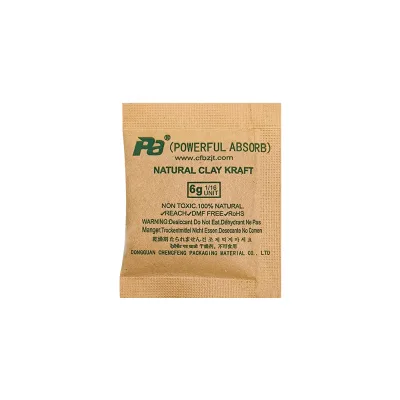
1/6u 6g Low Dust Natural Bentonite Clay Desiccant with DIN Certificate
$0.01 - $0.01
MOQ: 100000 Pieces


No Pollution Water Absorbent Super Dry Catalyst Montmorillonite Desiccant
$600.00 - $1500.00
MOQ: 1 Tons

Industrial Use Water Absorbent Super Dry Catalyst Montmorillonite Desiccant
$600.00 - $1500.00
MOQ: 1 Tons




Comprehensive Sourcing Guide
Moisture Absorption Bentonite Clay Desiccant Sourcing Guide
Buyers must first distinguish between the specific clay types available, as the market lists both Kaolin Clay and Montmorillonite Desiccant under the same core keyword. While some listings explicitly identify the product as Montmorillonite Desiccant with a bead shape, others describe the composition as a mix of polymer, calcium chloride, and mineral salt. This variation requires careful verification of the raw material source to ensure the selected desiccant matches the specific humidity control needs of the intended cargo or storage environment.
The physical form of the desiccant is equally critical, with observed listings offering both bead shapes and standard sachet configurations. Buyers should verify if the product utilizes a breathable waterproof material combined with non-woven fabric, as this affects the rate of moisture exchange. Understanding whether the supplier provides a static drying method or a more active absorption system is essential before placing an order, as the working temperature range of -10ºC to 80ºC dictates the environmental limits for effective performance.
Product Scope and Observed Listing Signals
Procurement teams should analyze the observed price range of 0 to 1500 USD to understand the variance in product tiers and packaging configurations. The wide spectrum suggests that costs are heavily influenced by the specific weight, such as the 3g or 5g options, and the complexity of the packaging, which ranges from simple composite paper to robust carton shipments. Buyers must correlate the unit price with the stated absorption capacity, which varies significantly from 24% to 300%, to determine the true value of the moisture control solution.
Listing signals also reveal a diverse range of minimum order quantities, spanning from 1 unit up to 100,000 units, indicating flexibility for both trial runs and large-scale industrial contracts. The delivery dates fluctuate between approximately 15 days and 30 days, which buyers must factor into their supply chain planning to avoid stockouts. Additionally, the availability of samples allows for practical testing of the absorption rate, which is observed between 20% and 33% depending on the specific model and wrapper material used.
Technical Specifications to Verify
Verification of the working humidity range is a primary technical requirement, as the desiccants are rated to function effectively between 10% and 99% relative humidity. Buyers must confirm that the specific model selected maintains its structural integrity and absorption efficiency across this broad spectrum, particularly for applications involving electronic packaging or leather goods where humidity spikes can cause significant damage. The sustainable working hours of 90 days provide a benchmark for replacement schedules, but this duration is contingent on the ambient conditions and the specific moisture load of the environment.
The physical specifications of the desiccant beads and sachets require precise measurement to ensure compatibility with existing packaging lines. Observed bead sizes range from 1-3mm to 2-4mm, and sachet dimensions are standardized at 45*65mm for many models. Buyers should verify the weight standards, which include options from 2g to 100g, and ensure the chosen weight aligns with the volume of the package being protected. The wrapper material, whether plastic paper, composite paper, or Tyvek, must be selected based on the required breathability and barrier properties.
Compliance and Safety Documentation
Safety documentation is paramount when sourcing desiccants for sensitive applications like garments, wood, and electronics. The observed advantages of being eco-friendly and non-toxic must be substantiated by the supplier through appropriate safety data sheets and material composition declarations. Buyers should request evidence that the polymer, calcium chloride, and mineral salt components meet international safety standards for non-hazardous materials, ensuring no risk of contamination to the final product or the end-user.
Quality control documentation should also address the manufacturing environment, with some listings indicating a GMP (Good Manufacturing Practice) workshop. This certification implies a controlled production process that minimizes the risk of foreign material contamination, which is critical for industries with strict hygiene requirements. Buyers must verify that the supplier maintains consistent quality across batches, as the absorption rate and physical properties can vary if the manufacturing standards are not rigorously enforced during the production of the kaolin clay or montmorillonite base.
Cost Drivers and Commercial Terms
The cost of moisture absorption bentonite clay desiccants is driven primarily by the raw material composition and the complexity of the packaging materials. Products utilizing a combination of polymer and mineral salts may carry a different price point compared to pure kaolin clay variants, and the choice of wrapper material, such as breathable waterproof material versus standard composite paper, directly impacts the final unit cost. Buyers should analyze the trade-off between the absorption capacity, which can reach up to 300%, and the price per unit to optimize their procurement budget.
Commercial terms regarding delivery and customization are significant factors in the total cost of ownership. While the standard delivery date is about 15 days, custom orders may extend this to 30 days, affecting inventory planning and potential rush fees. The ability to customize the product weight, ranging from 2g to 100g, and the packaging format allows buyers to tailor solutions to specific needs, but this flexibility often comes with a higher MOQ or a premium price. Understanding these variables is essential for negotiating favorable terms with suppliers.
Supplier Qualification and Quality Control
Supplier qualification should begin with verifying the origin of the product, as the majority of observed listings indicate production in China, specifically in regions like Foshan and Guangdong Province. Buyers must assess the logistical capabilities of these suppliers to ensure they can meet the required lead times and handle the volume of orders, which can range from small samples to massive bulk shipments. The presence of a GMP workshop is a strong indicator of a supplier's commitment to quality, but it should be validated through recent audit reports or third-party certifications.
Quality control processes must be robust enough to handle the variability in absorption rates, which are observed between 20% and 28% for some models and up to 33% for others. Buyers should implement a sampling protocol to test the moisture absorption capacity of incoming batches against the stated specifications. The supplier's ability to provide samples for pre-shipment testing is a critical step in this process, allowing the buyer to confirm that the desiccant beads or sachets perform as expected before committing to a large-scale purchase.
Long-Term Procurement Checks
Long-term procurement strategies should focus on the consistency of the product's performance over the sustainable working hours of 90 days. Buyers need to establish a monitoring system to track the actual moisture absorption in their specific applications, comparing real-world data against the observed capacity ranges of 170% to 300%. This data-driven approach helps in identifying any degradation in product quality or shifts in supplier performance that could compromise the protection of sensitive goods over time.
Regular re-evaluation of the supplier's ability to meet changing market demands is also essential for maintaining a resilient supply chain. As the product range includes various models with different weights and packaging, buyers should ensure the supplier can scale production up or down without compromising quality or lead times. The availability of customization options provides a strategic advantage, but it requires ongoing communication to ensure that the specific requirements for garments, wood, or electronic packaging are consistently met with high reliability.
FAQs
What is the composition of the desiccant?
The desiccant is composed of polymer, calcium chloride, mineral salt, and kaolin. It functions as a physical desiccant using static drying methods. This combination ensures effective moisture absorption across a wide range of environmental conditions for various industrial applications.
How much moisture can the desiccant absorb?
The product demonstrates an absorbing capacity ranging from 170% to 300%. Specific models may show absorption rates between 20% and 33%. This high capacity allows the desiccant to effectively protect goods from humidity damage during storage and transportation.
What are the working temperature and humidity limits?
The desiccant operates effectively within a working temperature range of -10ºC to 80ºC. It maintains functionality in environments with working humidity levels from 10% to 99%. These parameters ensure reliable performance in diverse climatic conditions for packaged goods.
Can you provide samples for quality testing?
Yes, samples can be provided for evaluation purposes. This allows buyers to verify the product's physical properties and absorption performance before placing bulk orders. The availability of samples supports informed decision-making and ensures the desiccant meets specific quality requirements.
What is the typical delivery lead time?
The delivery date is approximately 15 days for standard orders. Some production runs may require 15 to 30 days depending on order volume and specifications. This timeline helps buyers plan their supply chain logistics and inventory management effectively.
What packaging materials are used for the sachets?
The desiccant is packed in breathable waterproof material combined with non-woven fabric. Other options include composite paper, plastic paper, or Tyvek paper. These materials ensure moisture permeability while maintaining structural integrity and preventing leakage of the absorbed contents.