Source Motorcycle Kick Starter Lever for Bikes, Scooters, and ATVs
Compare 30 verified motorcycle kick starter lever options from Chinese manufacturers. Buyers can evaluate models like CG125 and YBR125, check certifications such as ISO9001, and review specifications including inner diameter and width before requesting quotes; compare the available evidence and request quotations based on your requirements.
Key considerations
Products List


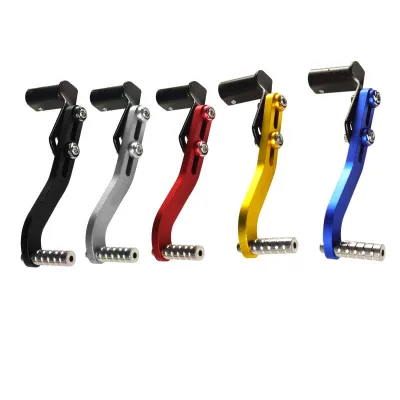
Comprehensive Sourcing Guide
Motorcycle Kick Starter Lever Sourcing Guide
Sourcing a motorcycle kick starter lever requires careful attention to the specific mechanical interface and material durability required for reliable engine engagement. The available market data indicates a diverse range of models, including CG125, YBR125, and Italika CS-125 variants, suggesting that compatibility is the primary constraint for buyers. Procurement teams must verify that the selected lever matches the exact transmission input shaft geometry of the target motorcycle to prevent operational failure during the starting sequence.
Buyers should also prioritize suppliers who offer customization options, as the standard catalog often includes generic models that may not fit specific regional bike configurations. The observed product attributes highlight that surface treatments like polishing are common, which directly impacts the tactile feel and corrosion resistance of the lever. Understanding these variations allows procurement professionals to select components that balance aesthetic finish with the robust mechanical performance needed for daily use in varied environments.
Product Scope and Observed Listing Signals
The current market listings reveal a wide spectrum of product models, ranging from the CG125 and CG150 to specialized units like the ARSEN II and SKUA. This variety signals that the kick starter lever is not a monolithic component but a highly model-specific part where even minor dimensional differences can render a unit incompatible. Buyers must cross-reference the specific motorcycle model against the listed product codes to ensure a precise fit, as the data shows distinct entries for similar displacement bikes like the CS125 and DS125.
Listing signals also indicate significant variation in packaging and origin, with products shipping from Zhejiang, Ningbo, and Hebei regions using methods from neutral bags to branded color boxes. This diversity in logistics and presentation suggests that buyers should not assume uniform quality or handling standards across all suppliers. Instead, procurement strategies must focus on verifying the physical attributes of the sample, such as the inner diameter and width, which are explicitly listed as critical specifications for ensuring the lever fits the crankshaft assembly correctly.
Technical Specifications to Verify
Dimensional accuracy is the most critical technical factor, with observed listings specifying inner diameters ranging from 20-22.5mm to 31.1-32.5mm and widths between 300-400mm and 701-800mm. These wide ranges confirm that a single universal part does not exist for all motorcycles, and buyers must strictly verify the internal bore and overall width against the manufacturer's service manual. Failure to match these precise measurements will result in an inability to mount the lever or cause excessive play that compromises the starting mechanism's efficiency.
Material composition and manufacturing processes further define the functional longevity of the kick starter lever, with data pointing to iron and 45# steel as primary raw materials. The production methods listed include forging and machining, which are essential for achieving the tensile strength required to withstand the high torque generated during engine starting. Buyers should request material certificates to confirm the steel grade and ensure that the forging process has been executed correctly to eliminate internal defects that could lead to sudden fracture under load.
Compliance and Safety Documentation
Safety and regulatory compliance are paramount, as the observed product data lists certifications such as CCC, CE, and DOT alongside ISO9001 standards. These certifications indicate that the supplier has met specific regional safety requirements and quality management benchmarks, which is crucial for importing components into markets with strict vehicle safety laws. Procurement teams must verify that the specific batch of kick starter levers carries the valid certification marks corresponding to the destination country to avoid customs delays or legal liabilities.
Beyond regulatory marks, the presence of ISO9001 certification suggests a structured approach to quality control throughout the manufacturing process. Buyers should request evidence of this certification's validity and ensure it covers the specific production facility where the levers are forged and machined. This documentation serves as a proxy for the supplier's ability to maintain consistent quality, reducing the risk of receiving defective units that could fail during critical operation or cause injury to the rider.
Cost Drivers and Commercial Terms
The observed price range of 0.1 to 15 USD reflects significant variation based on material quality, manufacturing complexity, and order volume. Lower-priced items often utilize standard iron or basic steel with minimal surface treatment, while higher-cost units may feature premium polishing, specialized alloys, or OEM branding. Buyers must analyze the total cost of ownership rather than just the unit price, considering that a cheaper lever with inferior forging quality may lead to higher replacement costs and potential downtime for the end user.
Minimum Order Quantities (MOQ) observed in the market range from 1 to 500 units, offering flexibility for small-scale retailers while encouraging bulk purchasing for larger distributors. This wide MOQ range allows buyers to test the market with small orders before committing to larger volumes, though they should be aware that unit costs typically decrease as order volume increases. Negotiating favorable terms requires balancing the need for inventory flexibility with the economic benefits of bulk purchasing, ensuring that the commercial agreement aligns with the buyer's cash flow and storage capabilities.
Supplier Qualification and Quality Control
Supplier qualification should focus on verifying the origin and production capabilities, as the data indicates manufacturing hubs in Zhejiang, Ningbo, and Hebei, China. These regions are known for their automotive parts industries, but buyers must confirm that the specific supplier possesses the necessary forging and machining equipment to produce high-tolerance components. Relying on the general reputation of a region is insufficient; direct verification of the factory's machinery and process controls is essential to ensure the kick starter levers meet the required mechanical standards.
Quality control protocols must be explicitly defined, with a focus on the "a Class" quality rating and the specific surface treatment processes like polishing. Buyers should implement a rigorous inspection regime that checks for dimensional accuracy, material integrity, and surface finish consistency before accepting a shipment. Establishing clear acceptance criteria based on the observed specifications, such as the exact inner diameter and width, ensures that only components meeting the strict performance requirements are integrated into the supply chain.
Long-Term Procurement Checks
Sustaining a reliable supply chain requires ongoing monitoring of supplier performance and product consistency over time. Buyers should establish a schedule for periodic audits and sample testing to ensure that the kick starter levers continue to meet the original specifications and certification standards. This proactive approach helps identify any drift in quality or changes in manufacturing processes that could compromise the product's reliability, allowing for corrective actions before significant issues arise in the market.
Long-term success also depends on maintaining strong communication channels with suppliers regarding customization needs and market feedback. As motorcycle models evolve, the demand for specific lever configurations may shift, requiring suppliers to adapt their production lines accordingly. By fostering a collaborative relationship, buyers can ensure that their suppliers remain agile and capable of delivering updated components that match the latest motorcycle designs, securing a competitive advantage in the aftermarket parts sector.
FAQs
What materials are used for motorcycle kick starter levers?
Kick starter levers are typically manufactured from iron or 45# steel to ensure durability and resistance to wear. These materials provide the necessary structural integrity for repeated use. The components often undergo forging and machining processes to achieve precise dimensions. Surface treatments like polishing enhance their appearance and corrosion resistance, ensuring long-term reliability in various operating conditions.
Which certifications do motorcycle kick starter lever suppliers hold?
Reputable suppliers often hold ISO9001 certification to demonstrate quality management system compliance. Additional certifications such as CCC, CE, and DOT may be available depending on the target market and specific product requirements. These credentials indicate adherence to international standards for manufacturing and safety. Buyers should verify specific certification documents to ensure the products meet their regional regulatory requirements and quality expectations.
Can motorcycle kick starter levers be customized for specific models?
Yes, customization is available for various motorcycle models including CG125, CG150, and YBR125. Suppliers offer tailored solutions to fit specific inner diameters, widths, and model requirements. This flexibility allows buyers to source parts that match their inventory needs precisely. Customization options extend to packaging, such as neutral or OEM packing, to support brand identity and distribution strategies effectively.
What is the typical packaging for motorcycle kick starter levers?
Packaging options include cartons, boxes, and neutral or OEM bags to protect the components during transit. Some suppliers use color bags or specific carton boxes for better visibility and organization. Neutral packing is often available for buyers who prefer unbranded products. Proper packaging ensures the levers arrive in pristine condition, minimizing damage risks and maintaining product quality throughout the supply chain.
Where are motorcycle kick starter levers primarily manufactured?
These components are primarily manufactured in regions such as Zhejiang, Ningbo, and Hebei in China. These areas are known for their robust manufacturing infrastructure and expertise in motorcycle parts production. Sourcing from these locations allows buyers to access a wide range of suppliers with varying capabilities. The concentration of factories in these regions facilitates efficient logistics and competitive pricing for bulk orders.
What specifications are available for motorcycle kick starter levers?
Available specifications include inner diameters ranging from 20-22.5mm to 31.1-32.5mm and widths from 300-400mm to 701-800mm. These dimensions cater to different motorcycle models and engine types. Buyers can select the exact specifications required for their specific applications. The variety of sizes ensures compatibility with a broad spectrum of motorcycle kick starter systems, providing flexibility in sourcing and assembly.