Source Precise Adjustment Cold Heading Parts for Industry
Find 30 listings for precise adjustment cold heading parts sourced from China. Compare specifications for ductile iron and steel components used in forklifts, automotive, and machinery applications. Evaluate OEM/ODM capabilities and CNC machining options for your supply chain needs.
Key considerations
Products List
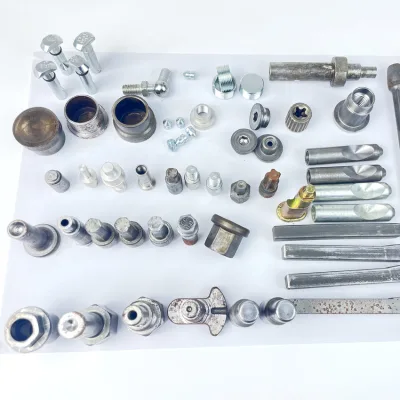


Metal Cold Heading Parts, Multiple Sizes Available, Customization Supported
$0.40 - $10.00
MOQ: 1000 Pieces


High-Quality Performance Parts for Maximum Reliability and Durability
$1.00 - $999999.00
MOQ: 1 Pieces


$0.50 - $20.00
MOQ: 5000 Pieces


Comprehensive Sourcing Guide
Precise Adjustment Cold Heading Part Sourcing Guide
Sourcing precise adjustment cold heading parts requires a nuanced understanding of both the manufacturing process and the specific mechanical tolerances demanded by your assembly. Cold heading is a high-speed forming process that shapes metal wire or rod at room temperature, making it ideal for producing high volumes of fasteners, pins, and complex geometric components with excellent surface finishes and material strength. When you require "precise adjustment," you are typically looking for parts that allow for fine-tuning in mechanical assemblies, such as valves, actuators, or calibration mechanisms, where micron-level accuracy is critical for functionality.
The procurement landscape for these components is dominated by specialized manufacturers in industrial hubs like Guangdong and Ningbo in China, where advanced CNC machining and forging capabilities converge. Buyers often encounter listings that combine cold heading with secondary operations like CNC turning, milling, or drilling to achieve the final dimensional accuracy. It is essential to distinguish between standard mass-produced fasteners and bespoke adjustment components, as the latter require tighter quality control, custom tooling, and often involve hybrid processes like forging followed by precision machining to meet specific load-bearing or dimensional requirements.
Product Scope and Observed Listing Signals
Market listings for cold heading parts frequently highlight a broad range of materials, including ductile iron, grey iron, stainless steel, carbon steel, and various alloy steels. While cold heading typically utilizes steel wire, some suppliers offer hybrid solutions where the initial forming is followed by casting or forging processes to create more complex geometries. You should carefully review the "Casting Material" and "Forging Forming Method" attributes, as these indicate whether the part is purely cold-formed or involves additional thermal or mechanical treatments. The presence of terms like "Investment/Die/Sand Casting" alongside cold heading suggests a supplier capable of handling diverse manufacturing needs, but it may also indicate a lack of specialization in pure cold heading precision.
Observed product specifications often include detailed dimensional data, such as diameters ranging from 4-15 mm and lengths up to 300 mm, which are typical for small to medium-sized adjustment components. Listings may also reference specific models like SN24051403 or YR10, which could represent internal part numbers or standard series. Buyers should note that "Custom-Size: Supported" is a common claim, implying that suppliers can adapt tooling for non-standard dimensions. However, the variability in listed attributes, such as "Product Name: Metal Forging Machinery" versus specific part descriptions, requires careful verification to ensure the supplier is providing the actual component rather than the machinery used to produce it.
Technical Specifications to Verify
When evaluating technical specifications, the most critical factor is the tolerance class and surface finish requirements. Cold heading parts often require secondary CNC machining to achieve the precise adjustments needed for their application. Verify that the supplier explicitly states their capability in CNC machining, milling, drilling, and turning, as these processes are essential for refining the features that cold heading alone cannot produce. Look for details on surface treatments such as shot blasting, polishing, or electrophoretic coating, which can affect both the aesthetic quality and the corrosion resistance of the final part.
Dimensional accuracy is paramount for adjustment parts, so you must confirm the specific tolerances for diameter, length, and critical features like threads or grooves. While some listings provide ranges for diameter and length, they rarely specify the tolerance band (e.g., ISO 286 or DIN standards) without further inquiry. Additionally, check for information on heat treatment processes such as normalizing, annealing, quenching, and tempering, which are crucial for achieving the desired hardness and mechanical properties. Ensure that the supplier can provide proof of these treatments, as they directly impact the part's durability and performance in high-stress applications.
Compliance and Safety Documentation
Compliance with international quality management standards is a baseline expectation for reputable suppliers. Many listings mention ISO 9001:2015 and IATF 16949 certifications, which indicate a structured approach to quality control and process consistency. IATF 16949 is particularly relevant if your application is in the automotive sector, as it imposes stricter requirements on defect prevention and supply chain management. Buyers should request valid certification copies and verify their status with the issuing body to ensure they are current and cover the specific manufacturing sites involved in your order.
Beyond quality certifications, safety and material compliance documentation is essential, especially for parts used in critical industries like shipbuilding, mining, or marine applications. You should inquire about material test reports (MTRs) that confirm the chemical composition and mechanical properties of the steel or alloy used. Additionally, check if the supplier adheres to specific industry standards for fasteners or mechanical components, such as ISO 898 for mechanical properties of fasteners. While some listings mention "Standard: customized," this does not exempt the supplier from adhering to relevant safety regulations or industry-specific codes that may apply to your end-use application.
Cost Drivers and Commercial Terms
The cost of precise adjustment cold heading parts is influenced by several factors, including material costs, tooling complexity, and the extent of secondary machining required. Custom-sized parts or those with complex geometries will incur higher tooling and setup costs, which may be amortized over larger order quantities. The observed MOQ ranges from 1 to 5000 units, indicating that some suppliers offer low-volume prototyping services, while others focus on high-volume production. Buyers should clarify whether tooling costs are one-time charges or if they can be credited against future orders, and understand the lead times associated with tooling fabrication.
Pricing structures can vary significantly based on the level of customization and quality control required. Listings may show a wide price range, reflecting differences in material grades, surface finishes, and certification levels. It is important to request detailed quotations that break down costs for material, processing, machining, and packaging. Additionally, consider the packaging methods, such as wooden cases or strong cartons, which can impact shipping costs and protection during transit. Ensure that the commercial terms include clear definitions of warranty periods, such as the 24-month warranty mentioned in some listings, and specify the responsibilities for handling defective parts.
Supplier Qualification and Quality Control
Supplier qualification should begin with a thorough assessment of their manufacturing capabilities and quality control processes. Look for suppliers that explicitly mention professional OEM/ODM services and bespoke manufacturing, as these indicate a willingness to work closely with buyers to meet specific requirements. Verify their experience with the specific materials and processes relevant to your parts, such as mold forging or CNC machining. Request samples to evaluate the quality of the cold heading and subsequent machining, paying close attention to surface finish, dimensional accuracy, and consistency across multiple units.
Quality control measures should be clearly defined and documented. Inquire about the supplier's inspection protocols, including in-process inspections and final quality checks. Ask for details on their testing equipment and procedures for verifying dimensions, hardness, and material properties. Suppliers that emphasize "Super High Quality Control" or "High Quality" should be able to provide evidence of these claims, such as statistical process control (SPC) data or detailed inspection reports. Additionally, consider the supplier's ability to handle customizations, as their flexibility and responsiveness can be indicative of their overall commitment to quality and customer satisfaction.
Long-Term Procurement Checks
Establishing a long-term procurement relationship requires ongoing monitoring of supplier performance and adaptability. Regularly review the supplier's ability to maintain consistent quality and meet delivery schedules, especially as order volumes increase or specifications change. Stay informed about any updates to their certifications or manufacturing processes that might impact your supply chain. Build a strong communication channel with the supplier to address any issues promptly and to discuss potential improvements or innovations in the cold heading process that could benefit your products.
Consider the supplier's capacity for scaling production and handling future customization needs. As your product line evolves, you may require new part designs or adjustments to existing ones. A supplier with robust design software capabilities, such as AutoCAD, SolidWorks, or Rhino, can assist in optimizing part designs for manufacturability and cost-efficiency. Additionally, evaluate their supply chain resilience, including their ability to source raw materials reliably and manage risks associated with geopolitical or logistical disruptions. A proactive approach to supplier management will help ensure a stable and efficient supply of precise adjustment cold heading parts over the long term.
FAQs
How can I customize precise adjustment cold heading parts?
You can obtain customized parts through professional OEM and ODM services. The manufacturer supports bespoke designs with custom sizes and specifications. This allows you to tailor the product to your specific machinery needs while maintaining high quality control standards.
What materials are used for these metal forging parts?
These parts are cast from ductile iron, grey iron, or stainless, carbon, and alloy steel. The process involves investment, die, or sand casting followed by heat treatment. This ensures the final product meets the rigorous demands of industrial and automotive applications.
Which certifications do the manufacturers hold for quality?
Manufacturers typically hold ISO 9001:2015 and IATF 16949 certifications. These standards verify their quality management systems and commitment to producing reliable components. Such credentials are essential for sourcing parts used in critical automotive and heavy machinery applications.
Can I find suppliers with specific packaging requirements?
Yes, suppliers offer various packaging options including wooden cases and strong cartons. You can request specific packing methods to ensure safe transport of your precision parts. This flexibility helps protect the components during shipping to your facility.
What is the lead time for custom orders?
Lead times vary based on order volume and customization complexity. While specific durations are not listed, the manufacturer supports professional OEM services for bespoke needs. You should contact the supplier directly to confirm the exact timeline for your specific project requirements.
How is the quality of these forging parts ensured?
Quality is maintained through super high quality control measures and advanced CNC machining. The production process combines forging with precision machining to achieve tight tolerances. This ensures the parts meet the strict performance standards required for industrial and automotive machinery.
What are the main applications for these metal parts?
These parts are primarily used in forklifts, agricultural machinery, and construction equipment. They also serve the automotive, truck, and rail industries as casting components. Their versatility makes them suitable for various heavy-duty industrial applications requiring durable metal solutions.