Find Multi-Layer Cosmetic Dresser Organizer for Skincare, Makeup, and Lipstick
Explore 30 Multi-Layer Cosmetic Dresser Organizer options to compare materials, dimensions, and capacity. This selection supports buyers sourcing durable plastic storage solutions for efficient desktop organization and household cosmetic management; compare the available evidence and request quotations based on your requirements.
Key considerations
Products List
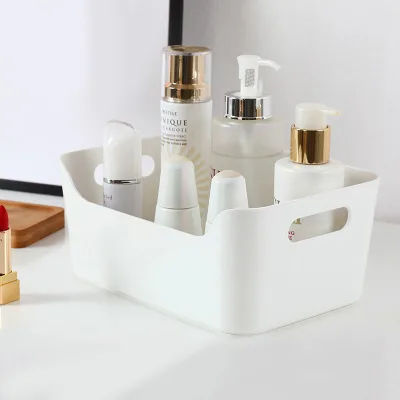
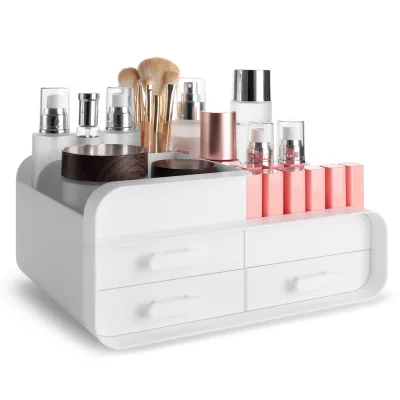
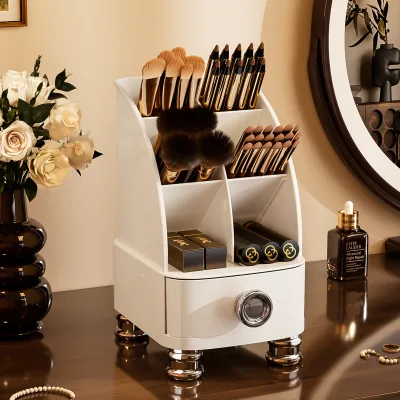

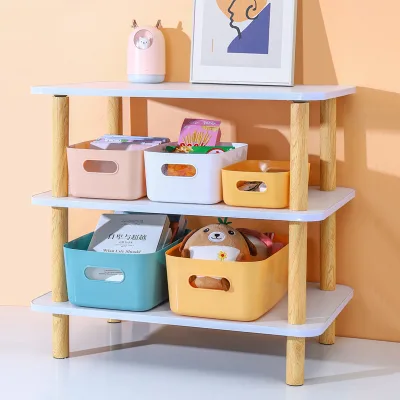


Acrylic Cosmetic Storage Box Multi-Layer Organizer for Bedroom Dressing Table Mi27039
$6.45 - $7.74
MOQ: 100 Pieces


Table Makeup Storage Skincare Set Essential Cosmetic Storage Box Organizer
$3.34 - $3.36
MOQ: 500 Pieces


Clear Makeup Organizer Clear Cosmetic Storage Organizer Makeup Organizer
$1.50 - $2.50
MOQ: 100 Pieces

Desktop Cosmetic Plastic Storage Box Makeup Organizer Plastic Storage Box
$1.50 - $2.50
MOQ: 1000 Pieces


Comprehensive Sourcing Guide
Multi-Layer Cosmetic Dresser Organizer Sourcing Guide
A Multi-Layer Cosmetic Dresser Organizer is a desktop storage product designed to sort skincare bottles, cosmetics, and lipstick into stacked or tiered compartments, keeping vanity surfaces tidy while keeping daily items accessible. Buyers sourcing this category typically encounter injection-molded plastic designs in white or pastel colors, with models ranging from small countertop trays to larger drawer-style units that sit within a 0–11 liter capacity band. The category sits at the intersection of household storage and beauty accessories, so purchase decisions are shaped as much by appearance and finish quality as by load capacity and durability.
For B2B buyers, this guide frames the sourcing process around the evidence available in typical product listings: unbranded or house-branded items, modern styling, eco-friendly positioning, and single-item selling units. The observed price spread in the category is wide, from a few cents for simple components up to premium assembled units, so the central task is matching specification depth to intended retail positioning. Use the sections below to structure supplier conversations, verification checklists, and ongoing quality controls.
Product Scope and Observed Listing Signals
Listings in this category cluster around plastic construction, most commonly polypropylene (PP), produced by injection molding with modern or multi-functional styling. Observed product names such as "Cosmetic Storage Box" and "Makeup Organizer," along with usage labels covering skincare, cosmetics, lipstick, and makeup, confirm the core application set. Color options observed include white in small and large variants, plus pink and green, and some listings offer single-pack and two-pack configurations. Shapes include both rectangular tiered designs and round rotating formats, including a multi-function rotating makeup brush organizer variant.
Buyers should treat listing attributes as observations rather than guarantees. Brand fields range from "no brand" to named sellers such as "xingyou," model numbers vary freely (for example TR911-625, DF-3669, or simply "04"), and capacity fields sometimes read "other" instead of a value. Features advertised—eco-friendly, durable, large capacity, multifunction—should each be mapped to a verifiable specification before shortlisting. Listing discipline itself is a useful signal: sellers who document dimensional tolerance (<±1cm), weight tolerance (<±5%), packing format, and load limits (≤5kg) tend to manage production consistency better than those leaving fields vague.
Technical Specifications to Verify
Begin with dimensions and capacity. Observed sizes in this category include 28.5×17.5×12.5cm within a 0–11L capacity band, but many listings state "other," so request exact external and internal dimensions, layer count, and per-compartment dimensions for every SKU. Confirm which bottle heights and lipstick formats fit each tier, since cosmetic packaging varies widely and a mismatch discovered after shipment is costly. Verify weight (one observed unit is 0.4kg) and stated load capacity—one listing specifies ≤5kg—against the heaviest items the organizer will realistically hold.
Material and process details matter equally. Confirm the polymer grade (polypropylene is common), whether the part is virgin or recycled resin, and that the process is injection molding with consistent wall thickness at corners and layer joints. Ask about finishing quality: flash, sink marks, and gate marks on visible white surfaces are the most common rejection reasons in this category. Check dimensional tolerance (<±1cm appears in listings) and weight tolerance (<±5%) contractually, and request a golden sample approved in writing before mass production begins.
Compliance and Safety Documentation
Because these organizers contact cosmetics and sit in bedroom and bathroom environments, buyers should verify material safety documentation even when listings do not mention certifications. Do not assume "Eco-Friendly" labeling implies any tested standard; instead, request the material safety data sheet for the PP resin, confirmation that no restricted plasticizers or heavy-metal colorants are used, and any food-contact-grade or equivalent material declarations the factory can legitimately provide for the specific resin lot. Treat every claim as unverified until documented.
For destination markets, determine which consumer product safety requirements apply to plastic household goods and ask the supplier which tests they can support. If units are sold with rotating mechanisms or stacked layers, verify mechanical stability and that no sharp edges or pinch points exist at layer junctions. Buyers importing under their own brand should also confirm that "Customized" logo and design claims are backed by the factory's tooling capability, and that any eco-friendly marketing language used on retail packaging can be substantiated with the same documentation collected here.
Cost Drivers and Commercial Terms
Observed pricing in the category spans from roughly $0.06 to $100, reflecting everything from simple single-tier trays to large multi-drawer systems, so first normalize quotes by comparing identical dimensions, layer counts, and material grades. Main cost drivers include resin price and colorant, tooling amortization for customized designs, the number of injection molds per unit, packaging weight (carton packing is standard), and color complexity. Two-pack configurations and mixed-size sets change per-unit economics, so request separate quotes for each configuration in the observed color range: white small, white large, pink, and green.
Commercial terms to nail down include minimum order quantity—observed MOQs range from 10 to 10,000 pieces, so a 10-piece MOQ listing may indicate stock or sample-friendly supply rather than production-scale pricing—and selling units, which listings confirm as single items. Confirm sample lead time (one listing cites 3–5 days) and whether sample fees are credited against bulk orders. Clarify OEM/ODM acceptance in writing—several listings state OEM "Yes" and customization "Available"—including who owns the mold after tooling.
Supplier Qualification and Quality Control
Qualify suppliers by verifying that listed capabilities match audited reality. Confirm place of origin—listings point to Zhejiang and Guangdong, China's main plastic-housewares clusters—and ask for the factory's injection molding machine inventory, mold-making capacity, and in-house vs outsourced decoration processes. A supplier accepting OEM/ODM should demonstrate prior custom-logo work with photographs or retained samples. Review packing documentation: observed listings specify carton packing and polybag-per-unit packing, and both should be quoted with carton dimensions, units per carton, and gross weight.
Build a QC plan proportionate to order size. For production runs, define an inspection sampling level, and specify checkpoints for: dimensional conformity against the approved golden sample (holding the ±1cm tolerance), surface quality on visible white surfaces, layer fit and stack stability under the stated ≤5kg load, color consistency across the production batch, and polybag seal integrity. Define how nonconforming units are handled—rework, replacement, or credit—before the purchase order is signed, and require inspection reports with photos at mid-production and pre-shipment stages.
Long-Term Procurement Checks
For repeat purchasing, track batch-to-batch consistency rather than re-evaluating from scratch each cycle. Maintain a specification sheet per SKU recording dimensions, weight, resin grade, color references, tolerance limits, and packing configuration, and require the supplier to confirm this sheet with each order. Monitor whether observed tolerances (<±1cm dimensional, <±5% weight) hold across consecutive lots; drift here usually signals mold wear or resin substitution. Rotate production among approved suppliers only when the specification sheet travels with the order.
Also review the commercial relationship annually. Confirm that MOQ, pricing tiers, and sample terms remain aligned as volumes grow, and revisit mold ownership and exclusivity if you invested in customized tooling. Keep documented evidence of material declarations and any safety testing current, since regulatory expectations for household plastics can tighten. Finally, watch listing-level signals on an ongoing basis—changes in model numbers, capacity fields, or feature claims often indicate a changed production source, which should trigger requalification before the next replenishment order.
FAQs
What material is used for the Multi-Layer Cosmetic Dresser Organizer?
The organizer is constructed from durable plastic, specifically polypropylene. This material ensures safety and eco-friendly properties while providing the necessary strength for desktop storage organization of cosmetics and skincare items.
Which dimensions are available for the cosmetic storage box?
Standard dimensions include 28.5 by 17.5 by 12.5 centimeters. Other sizes are available as options, allowing buyers to select the specific footprint that best fits their vanity space or storage requirements.
Can I customize the logo and design of the organizer?
Yes, customization is available for both logos and designs. Buyers can request specific styles such as modern or multi-functional layouts, with OEM and ODM services accepted to meet unique branding needs.
What is the minimum order quantity for this product?
The minimum order quantity starts at 10 pieces. This low entry point allows buyers to test the product quality before committing to larger bulk orders for their retail or wholesale inventory needs.
How long does it take to receive a sample?
Sample preparation typically requires three to five days. This lead time allows buyers to evaluate the product features, such as the round shape or white color options, before proceeding with a full production order.
What is the maximum load capacity of the organizer?
The unit supports a maximum load of up to 5 kilograms. This capacity ensures stability when storing heavier items like multiple bottles of skincare, lipsticks, or other cosmetic tools on the desktop surface.
Where are these cosmetic organizers manufactured?
Manufacturing takes place in China, specifically in the Zhejiang and Guangdong provinces. These regions are known for their plastic injection molding capabilities and efficient production of household cosmetic storage boxes.