Source Breathable Cow Slides for Schools, Parks, and Play Areas
Find 30 breathable cow slides designed for outdoor playgrounds, schools, and amusement parks. Compare specifications including rotational molding and steel construction, check certifications like CE and TUV, and review customization options for ages 3-12.
Key considerations
Products List



5% Discount Rotary Platform Anti Slip Rubber Dairy Cow Horse Walking Ways Mat
$36.00 - $40.00
MOQ: 200 Square Meters


Premium Horse Jumps Combining Barrier Standards and Outdoor Durability
$100.00 - $130.00
MOQ: 10 Pieces



Shock-Absorbing Cushion Seat Brings Cozy Riding on Bumpy Wild Farmland Roads
$2099.00 - $2209.00
MOQ: 1 Pieces

Steady Climbing Capacity Keeps Balance on Steep Sloped Reclamation Farmland
$2099.00 - $2209.00
MOQ: 1 Pieces

$13.50 - $18.00
MOQ: 1 Pieces


Comprehensive Sourcing Guide
Breathable Cowslides Sourcing Guide
When evaluating the procurement landscape for children’s playground equipment, buyers often encounter a wide array of product types that may be loosely categorized under broad terms like "cowslides" or spring riders. In the context of commercial sourcing, it is critical to distinguish between inflatable structures, rigid plastic slides, and mechanical spring riders. The supplied data indicates a market presence for various playground components, including rotational molded steel structures, PVC-based inflatable slides, and specific spring rider models. Buyers must carefully align their search with the specific functional requirements of their project, whether that involves static outdoor play, water park integration, or indoor amusement facilities.
The observed product listings reveal a diverse range of materials and manufacturing processes, primarily focusing on steel, PVC, and rotational molding techniques. These materials dictate the durability, maintenance requirements, and safety profiles of the final installation. For instance, steel structures offer robustness for high-traffic areas like schools and supermarkets, while PVC inflatables provide versatility for temporary or semi-permanent setups. Understanding these material distinctions is the first step in defining a precise technical specification that prevents miscommunication with suppliers and ensures the selected equipment meets the intended usage environment.
Product Scope and Observed Listing Signals
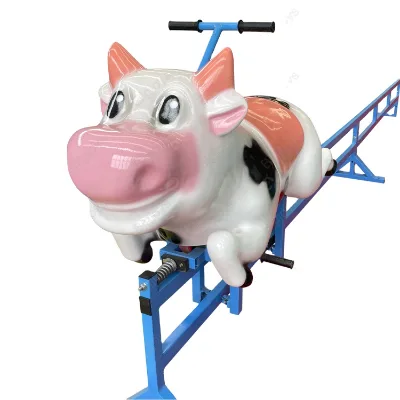
The current market signals indicate a strong presence of outdoor playground equipment designed for specific age groups, particularly children aged 3 to 12 years. Listings highlight products such as the HD13-066A, a steel-based outdoor playground unit, and the HD-YYL044-26343, a PVC-based spring rider. These items are marketed for use in diverse settings including schools, supermarkets, amusement parks, and family entertainment centers. The presence of "Customization" and "Color" options suggests that buyers can tailor the aesthetic and functional aspects of these units to match specific branding or environmental themes, which is a common requirement for commercial playground installations.
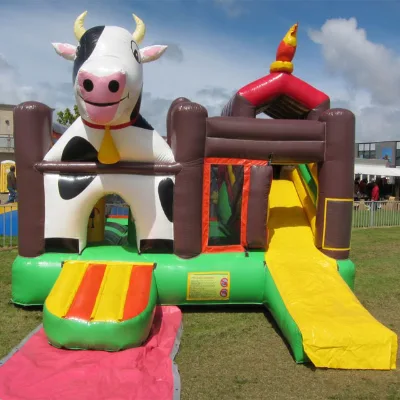
Further analysis of the product scope reveals distinct categories based on technology and application. There are rotational molded steel slides suitable for permanent outdoor installation, as well as PVC inflatable slides with dimensions such as 12.5x6.5 meters, which are often used in water parks or large-scale events. Additionally, specific models like the Combo-01 and Combo-02 appear to be inflatable combo units, potentially including air blowers and repair kits. This variety implies that the term "cowslides" may refer to a subset of spring riders or themed slides, and buyers should verify the exact mechanical nature of the product, whether it is a static slide, an inflatable structure, or a kinetic spring rider, before proceeding with procurement.
Technical Specifications to Verify
Technical verification begins with confirming the material composition and manufacturing process. For rigid structures, the presence of steel and rotational molding technology, as seen in the HD13-066A model, suggests high durability and weather resistance. Buyers should verify the thickness of the steel and the quality of the rotational molding to ensure structural integrity under dynamic loads. For inflatable or PVC-based products like the HD-YYL044-26343, the focus shifts to the quality of the PVC material, seam strength, and the specific technical construction, such as double-line or four-line stitching, which impacts air retention and tear resistance.
Dimensional accuracy and packaging details are also critical technical parameters. The supplied data lists specific standard sizes, such as 880605400cm for steel units and 733085cm for spring riders, alongside larger inflatable dimensions of 12.5x6.5 meters. Buyers must ensure that the ordered model number corresponds exactly to these dimensions to fit the designated installation area. Furthermore, packaging methods vary significantly, ranging from cotton and PVC film for smaller items to plastic film with foam membranes for larger units. Understanding the packing method is essential for calculating logistics costs, storage requirements, and ensuring the product arrives without damage.
Compliance and Safety Documentation
Safety compliance is paramount in the playground equipment industry, and buyers must rigorously verify the certification status of any supplier. The observed listings mention a wide array of certifications, including TUV, ISO, CE, CCC, GS, UL, EN14960, and SGS. It is crucial to distinguish between certifications for different product types; for example, EN14960 is specific to amusement devices, while CE and UL are common for electrical components like air blowers. Buyers should request valid, current certificates for the specific model being purchased, rather than accepting generic certification claims, to ensure the equipment meets the legal safety standards of the destination country.
In addition to product-specific certifications, buyers should inquire about the quality control processes and warranty terms offered by the supplier. The data indicates that some suppliers have professional QC departments and offer warranties ranging from 3 to 5 years. This suggests a commitment to long-term product performance. Buyers should also verify the inclusion of safety accessories, such as repair kits, safe rules, and packing bags, which are often listed as standard accessories. These items are not merely add-ons but are essential for ongoing maintenance and safe operation, reducing the risk of accidents and extending the lifespan of the equipment.
Cost Drivers and Commercial Terms
Several factors influence the final cost of playground equipment, with material type, size, and customization being primary drivers. Steel rotational molded units and large PVC inflatables typically command higher prices due to material costs and complex manufacturing processes. The observed price range of 1-5000 USD suggests a wide variance, likely reflecting differences between small spring riders and large inflatable combo units. Buyers should request detailed quotations that break down costs by material, labor, and packaging to understand the value proposition and avoid hidden fees associated with customization or expedited shipping.
Commercial terms such as MOQ, lead time, and payment conditions are also significant cost drivers. The observed MOQ ranges from 1 to 1000 pieces, indicating flexibility for both small-scale and large-scale procurement. Lead times are typically cited as 7-15 days after deposit payment, which allows for relatively quick turnaround but requires careful project planning. Buyers should negotiate clear terms regarding delivery time, ensuring that the 15-day window is realistic for their specific order volume and customization requirements. Additionally, understanding the payment structure, particularly the deposit percentage, is essential for cash flow management and risk mitigation.
Supplier Qualification and Quality Control
Supplier qualification involves verifying the manufacturer's origin and production capabilities. The supplied data points to manufacturers located in Zhejiang and Gz, China, which are known hubs for playground equipment and inflatable manufacturing. Buyers should confirm the supplier's ability to handle OEM requests and provide customized designs, as indicated by the "Customization: Available" and "OEM: Yes" attributes. This capability is often crucial for commercial clients who need equipment that aligns with specific brand identities or unique site constraints.
Quality control extends beyond initial certification to include ongoing production monitoring and post-sale support. Buyers should inquire about the supplier's quality control protocols, such as the involvement of professional QC departments and the inclusion of repair kits in the shipment. The presence of digital and silk printing options for logos suggests that suppliers can handle branding requirements, but buyers should verify the durability of these prints against weather and wear. Establishing a clear communication channel for after-sales support, including warranty claims and technical assistance, is essential for maintaining the safety and functionality of the installed equipment over its lifespan.
Long-Term Procurement Checks
Long-term procurement success depends on establishing a reliable supply chain for maintenance and replacement parts. Buyers should verify the availability of spare parts, such as repair kits for PVC inflatables or replacement components for steel structures, to minimize downtime in case of damage. The inclusion of safe rules and packing bags in the standard accessories list is a positive indicator, but buyers should confirm if additional parts can be ordered separately in the future. This foresight ensures that the initial investment is protected by a sustainable maintenance strategy.
Finally, buyers should regularly review the supplier's compliance with evolving safety standards and market trends. The playground equipment industry is subject to frequent updates in safety regulations, such as changes to EN14960 or local building codes. Maintaining a relationship with a supplier who is actively engaged in certification renewals and product improvements ensures that the installed equipment remains compliant and competitive. Regular audits of the supplier's quality control processes and feedback on product performance can help identify potential issues early and foster a partnership that supports the long-term success of the playground or amusement facility.
FAQs
What materials are used for these outdoor rides?
The products are constructed from Steel and PVC materials depending on the specific model. Steel is used for structural components while PVC is utilized for inflatable or flexible parts to ensure durability and safety for children aged 3 to 12 years.
Can the color of the playground equipment be customized?
Yes, the color can be changed according to your specific request or designed to match your brand. Manufacturers offer customization options allowing buyers to select from yellow, pink, blue, or other custom colors to suit their venue needs.
Which certifications do these products typically hold?
Products often carry certifications such as CE, TUV, ISO, CCC, and SGS to ensure safety compliance. These standards verify that the equipment meets international safety requirements for use in schools, supermarkets, and amusement parks.
How long is the delivery time after payment?
Delivery usually takes 15 days after the deposit payment is received. Some specific items may have a shorter lead time of 7 to 15 days depending on the order volume and production schedule of the factory.
What is the minimum order quantity for these items?
The minimum order quantity can be as low as 1 piece for certain models. However, standard orders may range up to 1000 pieces depending on the supplier and the specific product type selected for purchase.
Where are these products manufactured?
These products originate from manufacturing locations in Zhejiang and Guangzhou, China. The factories are situated in the mainland region of China, which is a known hub for producing outdoor playground equipment and rides.
What is the warranty period for the equipment?
The warranty period typically ranges from 3 to 5 years for the purchased items. This coverage ensures that buyers receive support for potential defects or issues arising during the specified operational timeframe.