Source Multi-layer Indoor Farming Growing Bench for Seedlings, Herbs, Vegetables
Compare 30 multi-layer indoor farming growing bench options from verified manufacturers. These units support seedling cultivation, herbal medicine, and vegetable production with customizable dimensions and automated rolling systems.
Key considerations
Products List

Hydroponics Indoor Growing Farming Double Rolling Bench Table Multi Layers Rolling Bench
$80.00 - $95.00
MOQ: 30 Square Meters

Agricultural Production Greenhouse Multi-Layer Rolling Grow Bench.
$80.00 - $95.00
MOQ: 30 Square Meters

High Quality Grow Table Plastic Multi-Layers Greenhouse Rolling Bench
$25.00 - $33.00
MOQ: 120 Square Meters

Multi Tier Rolling Bench Indoor Plant Cultivation Movable Vertical Farming Grow Rack
$40.00 - $85.00
MOQ: 30 Square Meters

Custom Multi Tier Indoor Cultivation System Vertical Farming Mobile Grow Rack
$40.00 - $69.00
MOQ: 30 Square Meters

70mm Tray Height Rolling Bench for Greenhouse Agriculture Indoor Grow Table
$15.00 - $29.50
MOQ: 120 Square Meters

Hydroponics Multi Layers Vertical Nursery Seedbed Table Farming Rolling Bench Grow Rack
$14.29 - $31.07
MOQ: 100 Square Meters
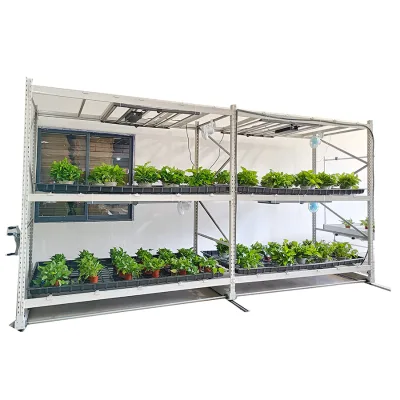
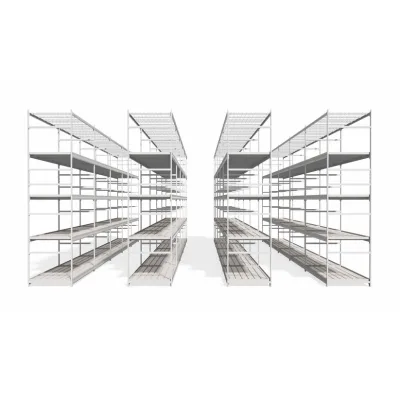
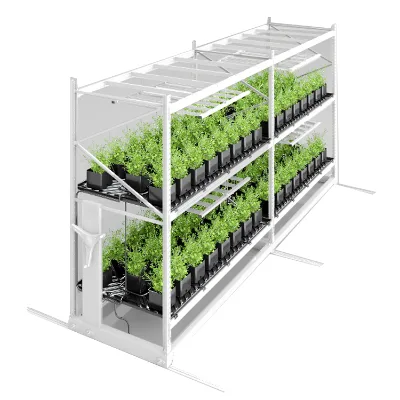


Grow Rack Vertical Farming Indoor Plant Grow Hydroponic Rolling Benches Tables
$16.00 - $42.00
MOQ: 10 Square Meters

2 Layers 4X8 FT Vertical Grow Rack Rolling Bench for Indoor Farming
$16.00 - $42.00
MOQ: 10 Square Meters

Factory Price Agriculture Nursery Growing Tray Rolling Benches for Indoor Plants
$16.00 - $42.00
MOQ: 10 Square Meters

Multi Layer Growing Rolling Bench Table Grow Rack for Growing Plants
$16.00 - $42.00
MOQ: 10 Square Meters

Hydroponic Rolling Bench Table Grow Rack System Greenhouse Indoor Vegetable Farming
$16.00 - $42.00
MOQ: 10 Square Meters


Efficient Mobile Growing Bench for Commercial Greenhouse Farming
$13.00 - $15.00
MOQ: 100 Square Meters

Professional Rolling Growing Bench for Indoor Agricultural Projects
$13.00 - $15.00
MOQ: 100 Square Meters
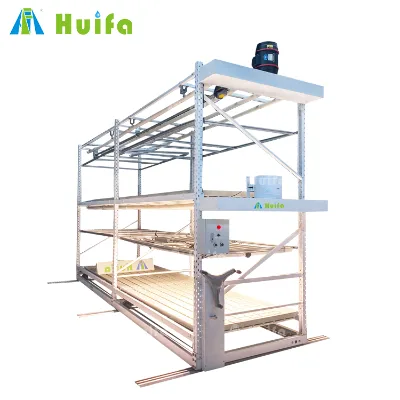


Vertical Farm Equipment Indoor Planting Grow Rack Multi-Tiers Farming Racks
$50.00 - $100.00
MOQ: 10 Square Meters

Cultivation Rack Systems with Lights for Plants Indoor Vertical Farming Grow Racks
$50.00 - $100.00
MOQ: 10 Square Meters

Vertical Hydroponic Grow Rack Mobile with Adjustable Layers for Indoor Farming
$50.00 - $100.00
MOQ: 10 Square Meters


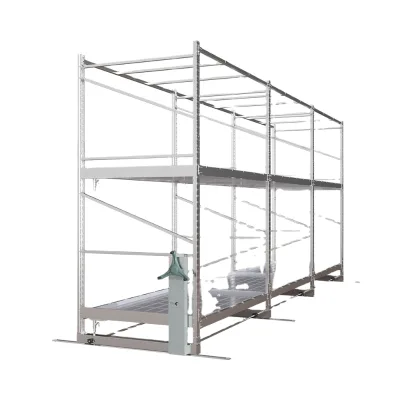

Intelligent Vertical Farming Bench\ Vertical Grow Rack \Greenhouse Indoor Racks
$150.00 - $450.00
MOQ: 1 Pieces
Comprehensive Sourcing Guide
Strategic Sourcing Guide for Multi-Layer Indoor Farming Growing Benches
Understanding the Technical Architecture of Rolling Bench Systems
The core keyword "multi-layer indoor farming growing bench" refers to a sophisticated class of agricultural infrastructure designed to maximize vertical space efficiency in controlled environments. These systems, often categorized as rolling benches or mobile grow racks, are engineered to support high-density cultivation of flowers, herbal medicines, seedlings, and vegetables. The fundamental architecture typically involves a series of trays mounted on a mobile frame that can be compacted or expanded to optimize floor space utilization.
A critical technical observation from available market data indicates that these systems are frequently constructed using a combination of hot-dip galvanized steel and aluminum for the stand, ensuring resistance to corrosion in humid greenhouse environments. The trays themselves are often fabricated from food-grade ABS or HIPS materials, which are selected for their durability, chemical resistance, and suitability for direct contact with growing media. The frame type is predominantly aluminum alloy, providing a lightweight yet robust structure that facilitates smooth movement along tracks.
The dimensions of these units vary significantly to accommodate different facility layouts. Observed specifications include tray heights of 70mm and table heights that can be standardized at 150cm or 70cm, with customization options available to fit specific ceiling clearances. The length of the rolling benches can range from 4 feet to 200 feet, while widths are commonly available in 3FT, 4FT, 5FT, 5.5FT, and 6FT configurations. This modularity allows buyers to design systems that fit precise spatial constraints, whether in a standard warehouse or a specialized vertical farming facility.
Compliance, Certification, and Material Standards
When sourcing multi-layer growing benches, verifying compliance with international standards is paramount for ensuring long-term safety and operational reliability. The market data highlights that reputable suppliers often provide certifications such as CE, ROSH, and ISO 9001. These certifications serve as indicators that the manufacturing process adheres to specific quality management systems and safety regulations. Buyers should explicitly request proof of these certifications rather than relying on general claims, as the presence of a certification mark does not automatically guarantee that every specific unit in a batch meets the standard.
Material selection is another critical compliance factor. The use of hot-dip galvanizing technology is a standard process for steel components to prevent rust, which is essential in the high-humidity conditions typical of hydroponic and greenhouse settings. The specification of "Food Grade" ABS or HIPS for trays is a significant differentiator, as it ensures that the materials do not leach harmful substances into the water or soil used for cultivation. This is particularly important for applications involving edible crops like vegetables and herbal medicines.
Buyers must also verify the "Standard" of the product, which is often listed as "As Request." This implies that the manufacturing process is flexible, but it places the onus on the buyer to define the specific technical requirements in the purchase order. Whether the standard relates to load-bearing capacity, fire resistance, or chemical stability, the absence of a universally mandated standard for this specific equipment type means that the buyer's specifications become the binding contract. Therefore, detailed technical drawings and material data sheets should be required before finalizing any procurement agreement.
Cost Drivers and Economic Factors in Procurement
The cost of multi-layer indoor farming growing benches is influenced by a complex interplay of factors, including material composition, customization levels, and the scale of the order. The observed price range in the market spans from approximately $2.10 to $1,321.81 USD, a wide variance that reflects differences in system complexity, material quality, and included features. Lower-cost options may represent basic, fixed-frame structures or smaller unit sizes, while higher-priced items likely encompass fully automated rolling systems with advanced control mechanisms and larger dimensions.
Material costs are a primary driver. Aluminum and stainless steel components are generally more expensive than standard carbon steel, but they offer superior longevity and corrosion resistance. The choice between a fixed system and a mobile, rolling system also impacts cost; the latter requires precision-engineered tracks, wheels, and locking mechanisms, which increase the overall price. Additionally, the number of layers is a significant cost variable. Systems offering 1 to 4 layers or more allow for greater vertical density but require more robust structural support and potentially more complex assembly, driving up the unit price.
Minimum Order Quantity (MOQ) is another economic factor that buyers must consider. The observed MOQ range spans from 1 to 1,000 units. For small-scale operations or pilot projects, suppliers with lower MOQs are essential, though they may carry a higher per-unit cost. Conversely, large-scale commercial farms can leverage economies of scale by ordering in bulk, potentially negotiating better pricing and reduced shipping costs per unit. Buyers should also account for packaging costs, as the "Water-Proof Packing" and "Pallets" mentioned in product data are necessary to protect the equipment during transit, especially for international shipments from origins like Henan or Zhejiang in China.
Typical Applications and Operational Versatility
Multi-layer growing benches are designed to support a diverse range of agricultural applications, making them a versatile investment for various types of farming operations. The primary applications identified include seeding and growing, flower cultivation, vegetable production, and the cultivation of herbal medicines. The ability to customize the system allows it to be tailored to the specific needs of these different crops. For instance, seedling cultivation may require lower table heights and specific tray configurations, while mature vegetable production might demand higher load-bearing capacities and larger surface areas.
The operational versatility of these benches is further enhanced by their integration with supporting systems. Many units are designed to work in conjunction with vertical ventilation systems, drip irrigation systems, and automated control systems. This integration is crucial for modern indoor farming, where environmental control is key to maximizing yield. The "Ebb and Flow" or tidal features mentioned in product keywords suggest that these benches can be part of a hydroponic nutrient delivery system, allowing for efficient water usage and root aeration.
The feature set of these systems includes options for tidal, semi-automatic, mobile, fixed, automatic, and multi-layer configurations. This variety allows buyers to select a system that matches their labor availability and automation goals. A fully automatic system with mobile benches can significantly reduce labor costs by allowing a single operator to manage a large area by compacting the benches to access different sections. In contrast, a fixed system might be more suitable for facilities where space is not a constraint and manual labor is readily available.
Supplier Evaluation and Manufacturer Verification
Evaluating potential suppliers requires a rigorous approach to verifying their capabilities and reputation. The market data indicates that manufacturers such as "Dorisun" and "Sunshine Garden" are active in this sector, with the latter offering OEM (Original Equipment Manufacturer) services. This suggests that buyers have the option to customize branding and specifications, which is valuable for large commercial operations looking to integrate the equipment into their existing brand identity.
When assessing a supplier, buyers should look for evidence of their manufacturing location. The data points to origins in Henan and Zhejiang, China, which are known industrial hubs for agricultural equipment. However, the specific location should be verified to ensure it aligns with the buyer's logistics and shipping preferences. Furthermore, the "Instruction for Use" being provided as "All Provided" or "Yes" is a critical indicator of supplier support. A reputable manufacturer should offer comprehensive documentation, including assembly guides, maintenance manuals, and safety protocols.
The customization capability is another key evaluation metric. The fact that "Customization: Available" is a standard attribute means that suppliers should be willing to adapt the product to specific needs. Buyers should inquire about the lead times for custom orders and the flexibility of the supplier to accommodate changes in design or material specifications. Additionally, the "Single gross weight" and "Single package size" data (e.g., 20.000 kg and 200X160X50 cm) provide insight into the logistics complexity. Suppliers who can provide accurate packaging details help buyers plan their shipping and warehousing strategies more effectively.
Quality Control and Long-Term Procurement Considerations
Ensuring the quality of multi-layer growing benches is essential for minimizing downtime and maximizing the lifespan of the equipment. Quality control should begin with the verification of the manufacturing process, specifically the hot-dip galvanizing technology used for steel components. Buyers should request samples or test reports to confirm the thickness of the galvanization layer, as this directly impacts the resistance to corrosion. Similarly, the integrity of the aluminum alloy frame and the durability of the ABS or HIPS trays should be assessed through material specifications and, if possible, physical testing.
Long-term procurement considerations extend beyond the initial purchase price. Buyers should evaluate the availability of spare parts, such as wheels, tracks, and locking mechanisms, to ensure that the system can be maintained over its operational life. The "Product Name" variations, such as "Hydroponics Racks" or "Agriculture Rolling Bench," suggest that the equipment may be part of a larger ecosystem. Ensuring compatibility with existing irrigation and lighting systems is crucial for seamless integration.
The "Applicable Industries" listed, including farms, manufacturing plants, and indoor farming facilities, highlight the broad applicability of these systems. However, buyers should verify that the specific model they choose is suitable for their intended industry. For example, a system designed for a manufacturing plant might have different load requirements compared to one for a commercial farm. The "Feature" set, including multi-layer and mobile capabilities, should be matched against the specific operational needs of the facility to ensure that the investment delivers the expected return.
In conclusion, sourcing multi-layer indoor farming growing benches requires a balanced approach that considers technical specifications, compliance, cost, and supplier reliability. By carefully evaluating the available data and verifying claims through direct communication with suppliers, buyers can make informed decisions that support the long-term success of their indoor farming operations. The flexibility of these systems, combined with the potential for customization and integration with advanced agricultural technologies, makes them a valuable asset for modern, efficient, and sustainable food production.
FAQs
What materials are used for the stand and trays?
The stand is constructed from hot galvanized steel and aluminum, while trays are made of food-grade ABS or HIPS. This combination ensures corrosion resistance and safety for edible crops like vegetables and herbal medicines.
Can the table height be customized for my facility?
Yes, the table height is available as 150cm, 70cm, or fully customized to fit your specific ceiling clearance. Buyers should request specific dimensions during the procurement process to ensure proper fit.
Which certifications do the rolling benches typically hold?
Reputable units often carry CE, ROSH, and ISO 9001 certifications. These indicate adherence to quality management systems and safety regulations, though buyers should verify proof for specific batches.
How does the MOQ vary for these growing systems?
The minimum order quantity ranges from 1 to 1000 units depending on the supplier and customization level. Small-scale operations can start with single items, while bulk orders may secure better pricing.
What applications are suitable for these multi-layer benches?
These benches support seeding, growing, flower cultivation, vegetable production, and herbal medicine. The modular design allows adaptation for different crops and vertical farming environments.
Are instructions provided for assembly and use?
Yes, all necessary instructions for use and assembly are provided with the product. This ensures that buyers can correctly install the rolling benches and operate the system safely.