Source Multi Layer Suction Cup Palletizer for Pharma, Logistics, Food
Source 28 Multi Layer Suction Cup Palletizer models with varying speeds, payloads, and customization options for pharmaceutical, logistics, and food and beverage applications. Compare specifications like loading capability and working radius to find the right automation solution.
Key considerations
Products List

Multi Gripper Heavy Duty Suction Cup Palletizer for Bag CE 150kg 380V
$13500.00 - $15000.00
MOQ: 1 Sets

Multi Gripper Automatic Suction Cup Palletizer for Carton Bag CE 100kg
$16500.00 - $18500.00
MOQ: 1 Sets


Suction Cup Multi-Layer Palletizing Machine for Automatic Carton CE 50kg
$18000.00 - $19000.00
MOQ: 1 Sets

High Capacity Multi Gripper Suction Cup Palletizer for Barrel CE 150kg 380V
$20000.00 - $21500.00
MOQ: 1 Sets


Advanced Articulated Palletizer Featuring Innovative Suction Cup Technology
$9000.00 - $17000.00
MOQ: 1 Pieces


Automated Palletizer with Quick Change Suction Cup Tooling for Versatile Handling
$26000.00 - $32000.00
MOQ: 1 Sets

Six-Axis Efficient Palletizing Robot Arm Can Be Added with Suction Cups
$6000.00 - $70000.00
MOQ: 1 Sets


Automatic Magnetic Suction Palletizer Widely Used in Metal Packaging Machine
$12000.00 - $35000.00
MOQ: 1 Pieces
Comprehensive Sourcing Guide
Strategic Sourcing Guide for Multi-Layer Suction Cup Palletizers
The industrial landscape for automated material handling has increasingly shifted toward high-efficiency robotic solutions, with the multi-layer suction cup palletizer emerging as a critical asset for modern logistics and manufacturing floors. This specialized equipment is designed to handle diverse packaging formats, ranging from cartons and film bags to woven bags and large barrels, by utilizing advanced suction mechanisms to stack products onto pallets with precision. For procurement professionals, understanding the nuanced specifications, operational capabilities, and evaluation criteria of these machines is essential to ensuring a return on investment that aligns with production goals. The following guide provides a comprehensive, evidence-based framework for sourcing these systems, grounded in observed market data and technical realities.
Technical Architecture and Operational Specifications
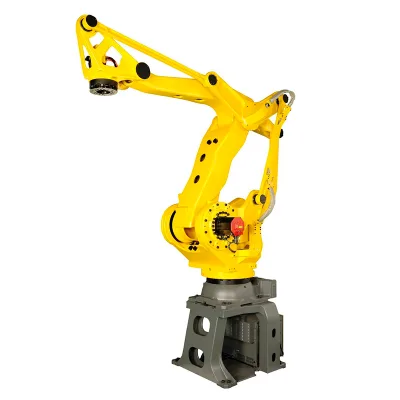
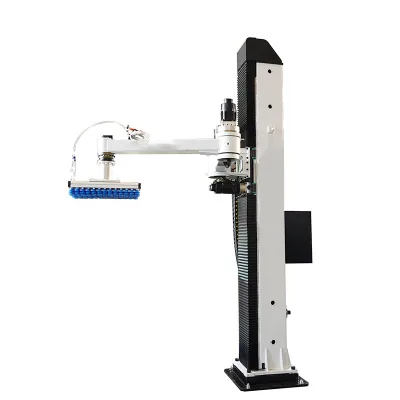
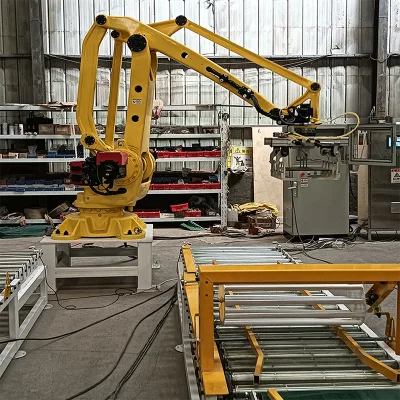
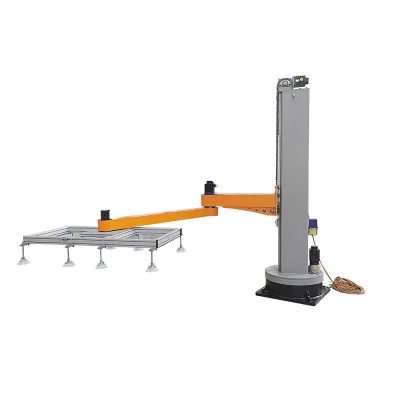
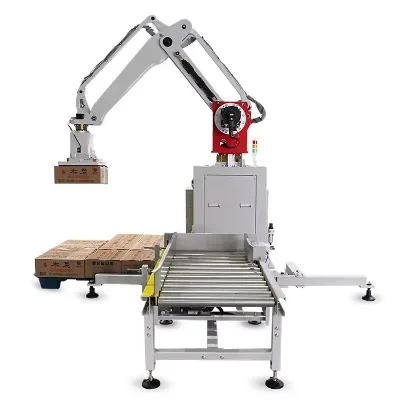
The core functionality of a multi-layer suction cup palletizer relies on a sophisticated combination of mechanical design and control logic. These units are typically classified as automatic grade machinery, featuring a multi-layer palletizing capability that allows for the stacking of multiple product layers in a single cycle or sequence. The mechanical structure often utilizes carbon steel with baking paint finishes to ensure durability against industrial wear and tear. A key differentiator in these systems is the degrees of freedom; many observed models operate on a 4-axis configuration, providing the necessary flexibility to navigate complex palletizing patterns while maintaining stability.
The control mode is a critical factor in operational smoothness. Systems employing continuous path control offer superior trajectory planning, ensuring that the robotic arm moves fluidly between pick and place points without unnecessary stops. This is particularly vital when handling fragile items or varying load weights. The loading capability of these units varies significantly based on the specific model configuration. Market observations indicate a range from 30 kg to 150 kg per cycle, with specific models engineered for 50 kg, 100 kg, and 150 kg payloads. This variability allows buyers to match the machine's capacity precisely to their product weight, avoiding the inefficiencies of over-specifying or under-specifying the equipment.
Speed is another paramount specification. The palletizing speed for these automated units typically ranges between 6 to 15 times per minute, depending on the load weight and the complexity of the stacking pattern. Lighter loads, such as those around 30 kg, can often achieve speeds of 10 to 15 cycles per minute, whereas heavier loads near 150 kg may operate at a more conservative 6 to 8 cycles per minute. It is important to note that actual production capacity is contingent upon the specific production environment and the nature of the items being handled. The working radius also varies, with some models offering a radius of 1800 mm while others extend to 2125 mm, influencing the footprint required for installation.
Application Versatility and Product Compatibility
One of the primary advantages of the multi-layer suction cup palletizer is its adaptability across various industries. The technology is not limited to a single sector but is applicable in pharmaceutical, logistics, food and beverage, electronics, and automotive manufacturing. This versatility stems from the ability of the suction gripper system to handle a wide array of packaging types. The system is designed to manage cartons, film bags, woven bags, and large barrels, making it a robust solution for facilities that process mixed SKUs or have diverse product lines.
The physical dimensions of the pallets being handled are also a critical consideration. Standard pallet dimensions often observed in this context include 12001200140 mm, though the system must be configured to accommodate specific pallet sizes. The palletizing height is adjustable, typically ranging from 300 mm to 2400 mm, inclusive of the pallet itself. This range allows the machine to stack products to various heights, optimizing warehouse space utilization. The total height of the machine itself can vary from approximately 2200 mm to 3200 mm, depending on the model and the required reach. Buyers must ensure that their facility ceiling height and clearance can accommodate these dimensions, particularly for taller models that may reach up to 3130 mm or 3200 mm.
Cost Drivers and Economic Considerations
When evaluating the total cost of ownership for a multi-layer suction cup palletizer, several factors influence the final price point. The observed price range in the market spans from 300 USD to 70,000 USD, reflecting the vast differences in capacity, automation level, and customization options. The primary cost drivers include the loading capability, the complexity of the control system, and the degree of customization required. A unit capable of handling 150 kg with a 4-axis continuous path control system will naturally command a higher price than a basic 30 kg unit.
Customization is a significant variable in pricing. While standard models are available, many buyers require specific modifications to fit their unique production lines. Customization options may include specific structural styles, such as vertical joints, or tailored color schemes to match corporate branding. The air supply requirements also contribute to operational costs; systems typically require an air supply of 0.5-0.6 kg/M³ with a flow rate of 1.5 m³/Min. The drive mode is predominantly electric, which offers energy efficiency and lower maintenance costs compared to pneumatic-only systems, though the integration of pneumatic suction cups remains standard.
The minimum order quantity (MOQ) for these industrial machines is typically 1 unit, allowing for flexible procurement strategies where a single machine can be purchased to pilot a new line or replace an aging unit. However, the lead time and shipping costs, often packaged in wooden cases or wood cases for protection, should be factored into the budget. The origin of the equipment, frequently noted as Guangdong or China, can influence logistics costs and lead times, though these are subject to current supply chain conditions.
Compliance, Certification, and Safety Standards
Ensuring compliance with safety and quality standards is a non-negotiable aspect of sourcing industrial automation. While specific certification statuses can vary by manufacturer, buyers should verify that the equipment meets relevant international safety standards. The presence of CE certification is a common benchmark for machinery sold in the European market and is often a prerequisite for global trade. However, buyers must treat certification claims as observations that require verification rather than automatic guarantees for every listed product.
The structural integrity of the machine is paramount. The use of carbon steel with baking paint provides a standard level of corrosion resistance and durability, but the specific standard color or customized finish should be confirmed to ensure it meets facility requirements. The warranty period is another critical compliance metric, with a standard offering of 1 year being common in the market. This warranty typically covers defects in materials and workmanship, providing a safety net for the initial period of operation. Buyers should carefully review the terms of the warranty to understand what is covered, including the scope of parts and labor, and whether it includes on-site support.
Supplier Evaluation and Quality Assurance
Selecting the right supplier is as important as selecting the right machine. When evaluating potential vendors, buyers should focus on the supplier's ability to provide detailed technical documentation and support. The supplier should be able to demonstrate a clear understanding of the buyer's specific application needs, including the types of products being palletized and the required throughput. The ability to offer customization is a strong indicator of a supplier's technical capability and flexibility.
Quality control processes should be transparent and rigorous. Buyers should inquire about the manufacturing standards employed, such as the use of standard or customized production standards. The packaging method, often a wooden case, is a reflection of the supplier's attention to detail during shipping and should be verified to ensure the machine arrives in pristine condition. Additionally, the supplier's location, often in regions like Guangdong, can impact the ease of communication and the speed of technical support.
It is essential to avoid relying solely on marketing claims. Instead, buyers should request test results, performance data, and references from similar applications. The supplier should be able to provide evidence of the machine's reliability in handling the specific products mentioned, such as film bags or large barrels. The drive mode and control system should be tested for smooth operation, and the suction cup mechanism should be evaluated for its ability to handle various surface textures and weights without slippage.
Long-Term Procurement and Maintenance Strategy
Investing in a multi-layer suction cup palletizer is a long-term decision that requires a strategic approach to maintenance and lifecycle management. The warranty period of 1 year is a starting point, but buyers should plan for ongoing maintenance costs beyond this period. Regular inspection of the suction cups, air supply lines, and mechanical joints is necessary to prevent downtime. The air supply requirements, specifically the flow rate and pressure, must be maintained to ensure optimal performance.
The modular nature of these machines, with components like the 4-axis arm and suction gripper, allows for easier replacement of worn parts. However, buyers should ensure that the supplier offers a reliable supply chain for spare parts. The customization options, while beneficial for initial integration, should not complicate future maintenance. Standardized components are preferable to proprietary parts that may be difficult to source later.
Furthermore, the scalability of the system should be considered. As production volumes increase, the ability to upgrade the control system or add additional axes may be necessary. The working radius and palletizing height should be evaluated to ensure they remain sufficient for future product lines. By adopting a proactive maintenance strategy and selecting a supplier with a strong support network, buyers can maximize the lifespan and efficiency of their multi-layer suction cup palletizer, ensuring a sustainable return on investment in an increasingly competitive industrial environment.
FAQs
What is the loading capability range for these palletizers?
The loading capability ranges from 30 kg to 150 kg depending on the specific model configuration. Units are available for lighter loads like 30 kg or heavier loads up to 150 kg to match your product weight requirements.
How fast can the multi-layer suction cup palletizer operate?
Palletizing speed typically ranges from 6 to 15 times per minute based on the load weight. Lighter loads around 30 kg may reach 10 to 15 cycles per minute while heavier loads near 150 kg operate at 6 to 8 cycles.
Which industries can utilize this automated palletizing equipment?
This equipment is applicable in pharmaceutical, logistics, food and beverage, electronics, and automotive sectors. The suction mechanism handles diverse packaging formats including cartons, film bags, woven bags, and large barrels.
Can the machine handle different pallet dimensions and heights?
Yes, the system accommodates pallet dimensions like 1200*1200*140 mm with adjustable palletizing heights from 300 mm to 2400 mm. The total machine height varies between 2200 mm and 3200 mm depending on the model.
What warranty is provided for the automatic grade machinery?
A standard warranty of 1 year is typically provided for these automatic grade machines. This coverage generally includes defects in materials and workmanship to ensure initial operational reliability.
How is the product packed for shipping from the factory?
Products are packed in wooden cases or wood cases to ensure protection during transit. This packaging method reflects attention to detail and helps prevent damage while the machine is being shipped from the origin.