Source Nema 17 Captive Linear Actuator for Printing, Appliances, and Power Tools
Find and compare 30 Nema 17 Captive Linear Actuator options for printing equipment, household appliances, and power tools. These hybrid stepper motors offer low speed driving control with customizable screw lengths and voltages to suit industrial and universal applications.
Key considerations
Products List

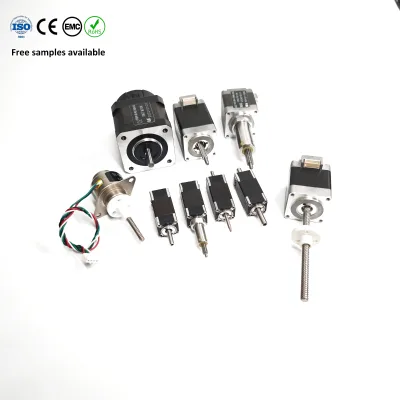
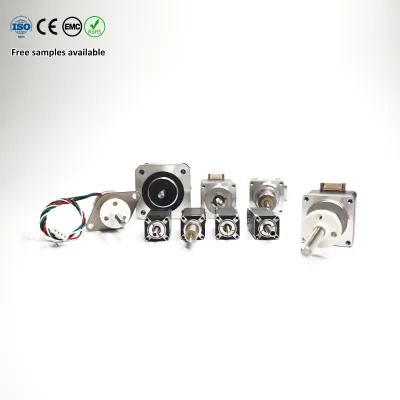
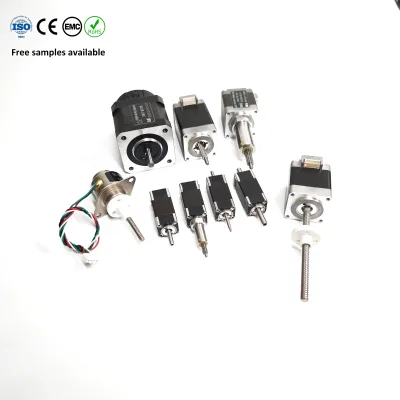


$25.00 - $28.00
MOQ: 10 Pieces


2000n Electric Linear Motor Linear Actuator Hydralic Cylinder Actuator
$100.00 - $1250.00
MOQ: 1 Pieces

Electric Linear Actuator/Motor Actuator Cylinder, Motor Drive Reciprocating Actuator
$100.00 - $1000.00
MOQ: 1 Pieces
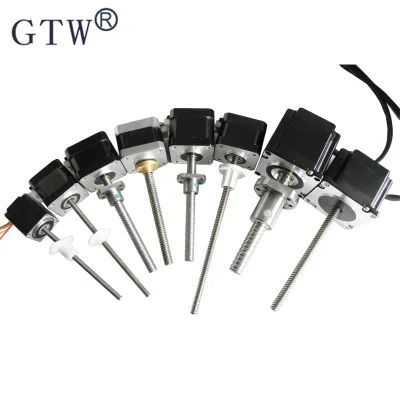


Comprehensive Sourcing Guide
Nema 17 Captive Linear Actuator Sourcing Guide
Product Scope and Observed Listing Signals
The market for NEMA 17 captive linear actuators presents a diverse array of configurations tailored to specific mechanical and electrical requirements. Observed listings indicate a broad price range, extending from approximately $1 to $15,000 USD, which reflects the variance in component quality, motor type, and customization levels. Buyers should note that the minimum order quantity (MOQ) typically ranges from 1 to 10 units, suggesting that suppliers are flexible with small-batch procurement, which is advantageous for prototyping and low-volume production runs. This flexibility allows procurement teams to test samples without committing to large inventory holdings, reducing initial capital expenditure risks.
Product attributes observed in current listings highlight a strong emphasis on hybrid stepper technology, with many units featuring a two-phase stator and a step angle of 1.8 degrees. These technical characteristics are consistent with high-precision positioning needs found in applications such as printing equipment, household appliances, and power tools. The observed models often include specific frame sizes, such as NEMA 11 and NEMA 8, alongside the more common NEMA 17, indicating that buyers must carefully verify the physical footprint and mounting compatibility of the actuator. Additionally, customization is frequently available, allowing for adjustments in screw diameter, lead, and motor length to fit unique mechanical constraints.
Technical Specifications to Verify
When evaluating technical specifications, the voltage and current requirements are critical for ensuring compatibility with existing power systems. Observed data points to DC 24V as a common operating voltage, with current ratings ranging from 1.3A to 2.3A depending on the motor length and torque requirements. Buyers must verify whether the actuator supports constant speed or adjustable speed operation, as this impacts the control system design. The holding torque is another vital parameter, with observed values ranging from 0.06 Nm to 0.6 Nm, which directly influences the actuator's ability to maintain position under load without power.
The mechanical configuration of the linear actuator, including the screw type and lead, determines the speed and force output. Common screw diameters observed include M5, Tr5.56, Tr6.35, and Tr6.5, with leads varying from 0.8mm to 6.35mm. These variations allow for fine-tuning between high-speed movement and high-force application. Motor body lengths are often customizable, with standard options including 34mm, 40mm, and 48mm, affecting the overall stroke length and weight of the assembly. Buyers should also check the wiring configuration, as options typically include 6 or 8 wires, which impacts the complexity of the driver integration.
Compliance and Safety Documentation
Compliance with international standards is essential for ensuring the safety and reliability of linear actuators in various industrial and consumer applications. Observed certifications include CCC and ISO, which indicate adherence to specific quality and safety management systems. Buyers should verify that the supplier provides valid certification documents, particularly if the end product is destined for markets with strict regulatory requirements, such as the European Union or North America. The presence of ISO certification suggests that the manufacturer follows standardized processes for quality control, which can reduce the risk of defects in mass production.
Safety documentation should also cover the electrical and mechanical protection features of the actuator. Observed listings mention closed-type casing protection, which helps prevent dust and debris from entering the mechanism, thereby extending the lifespan of the actuator. Buyers must ensure that the voltage ratings and insulation levels meet the safety standards of the intended application environment. Additionally, warranty terms, such as the observed one-year warranty, provide a layer of protection against manufacturing defects, but buyers should clarify the scope of coverage and the process for claims.
Cost Drivers and Commercial Terms
The cost of NEMA 17 captive linear actuators is influenced by several factors, including the motor type, customization options, and packaging requirements. Hybrid stepper motors, which offer a balance of torque and precision, are commonly observed and may carry a premium compared to simpler stepper designs. Customization, such as specific screw lengths or leads, can also increase the unit price due to the additional manufacturing steps involved. Buyers should request detailed quotes that break down the costs of standard components versus custom features to understand the true cost drivers.
Packaging and logistics are additional commercial considerations that affect the total cost of ownership. Observed packaging includes standard corrugated carton boxes and custom cartons, with dimensions such as 41x27x25cm noted for certain models. Proper packaging is crucial to prevent damage during transit, especially for delicate components like stepper motors and lead screws. Buyers should negotiate clear terms regarding shipping responsibilities, insurance, and handling of damaged goods. The selling unit is typically listed as a single item, which simplifies inventory management but may require bulk ordering to achieve economies of scale.
Supplier Qualification and Quality Control
Supplier qualification is a critical step in the procurement process to ensure that the linear actuators meet the required quality standards. Buyers should verify the supplier's origin, with many observed listings indicating production in China, particularly in regions like Zhejiang. This geographic concentration can offer advantages in terms of supply chain efficiency and cost competitiveness, but it also requires diligent due diligence to assess the supplier's manufacturing capabilities. Buyers should request evidence of the supplier's production capacity, quality control processes, and past performance with similar products.
Quality control measures should be explicitly defined in the procurement agreement. Buyers should inquire about the testing procedures used to verify torque, speed, and electrical performance before shipment. Observations of product attributes such as weight (0.22-0.58kg) and motor length (34-60mm) can serve as baseline checks for incoming inspections. Establishing clear acceptance criteria and sampling plans helps mitigate the risk of receiving substandard products. Additionally, buyers should consider conducting factory audits or third-party inspections to verify the supplier's claims regarding quality management systems and production consistency.
Long-Term Procurement Checks
Long-term procurement success depends on the ability to maintain consistent quality and supply stability over time. Buyers should establish a regular review process to monitor supplier performance, including on-time delivery rates, defect rates, and responsiveness to issues. The availability of spare parts and technical support is also crucial for maintaining the operational efficiency of equipment using these actuators. Buyers should confirm that the supplier can provide ongoing support for troubleshooting and replacement parts, especially for customized models that may not have readily available alternatives.
As technology evolves, buyers should stay informed about advancements in stepper motor technology and control systems that may offer improved performance or cost savings. Regularly updating technical specifications and requirements ensures that the procured actuators remain compatible with evolving product designs. Building a strong relationship with the supplier can facilitate better communication and collaboration on future projects. Buyers should also consider diversifying their supplier base to reduce dependency on a single source and mitigate supply chain risks.
FAQs
What certifications do these motors have?
These motors carry CCC and ISO certifications. The product data confirms specific compliance standards for the hybrid excitation mode and driving functions, ensuring they meet required safety and quality benchmarks for industrial applications.
Which NEMA frame sizes are available?
Available frame sizes include NEMA 11 and NEMA 8. The product listings specify these distinct sizes with corresponding model numbers like 11-2105 and 8-2105, offering options for different torque and space requirements in equipment.
Can I customize the voltage and screw length?
Yes, voltage and screw length are available for customization. Buyers can request specific voltage levels and screw lengths to match their unique application needs, ensuring the linear actuator integrates seamlessly into their specific machinery setup.
What is the holding torque range?
Holding torque ranges from 0.06N m to 0.25N m depending on the model. Specific variants offer 0.06N m or 0.25N m, while others provide a range of 0.24-0.6N m, allowing selection based on required load capacity.
Where are these motors manufactured?
These motors originate from China, specifically Zhejiang province. The product facts indicate the manufacturing location, which helps buyers assess logistics, lead times, and supply chain reliability when sourcing these hybrid stepper motors for their projects.
What is the step angle for these motors?
The step angle is consistently 1.8 degrees across the listed models. This standard angle ensures precise control for driving and control applications, making them suitable for printing equipment and household appliances requiring accurate positioning.