Source NMC Electrode Lithium Battery Materials for EVs, Storage, and Power Tools
Find 26 listings for NMC Electrode Lithium Battery Materials suitable for electric vehicles, energy storage systems, and power tools. Buyers can compare specifications like particle size, tap density, and chemical composition to select the right cathode precursor for their production needs.
Key considerations
Products List


Lithium Ion Battery Materials Ncm 622 Lithium Nickel Manganese Cobalt Oxide Nmc Powder
$26.40 - $30.00
MOQ: 1 kilograms


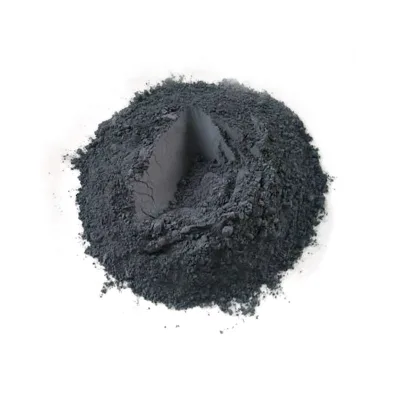
EV Battery Researching Material NMC Ni83 Nickel Nickel Manganese Cobalt Oxide
$56.00 - $66.00
MOQ: 1 kilograms


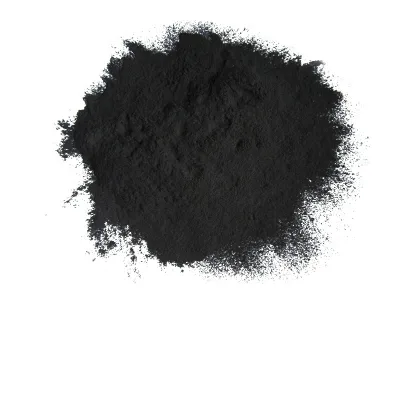
Popular Lithium Ion Battery Materials Nmc Nca-N8-L Battery Cathode Materials
$69.00 - $120.00
MOQ: 1 Bags




Comprehensive Sourcing Guide
NMC Electrode Lithium Battery Materials Sourcing Guide
Sourcing high-performance cathode materials for lithium-ion batteries requires a disciplined approach to technical verification and supply chain stability. The market for NMC (Nickel Manganese Cobalt) and NCM (Nickel Cobalt Manganese) materials is characterized by a wide variance in particle morphology, chemical composition, and electrochemical performance. Buyers must navigate a landscape where product names often overlap, with terms like "Precursor," "Electrode," and specific model codes such as SS-N532B50 or NCM 622 appearing across different listings. This guide provides a structured framework for evaluating these materials, ensuring that procurement decisions are grounded in observable data and rigorous technical due diligence rather than marketing claims.
The following sections outline the critical steps for validating product scope, verifying technical specifications, and assessing supplier reliability. By focusing on concrete attributes such as particle size distribution (D10, D50, D90), tap density, and residual moisture levels, buyers can mitigate the risk of receiving materials that do not meet their battery cell manufacturing requirements. This guide emphasizes the importance of cross-referencing observed listing signals with trusted industry knowledge to build a robust and defensible sourcing strategy.
Product Scope and Observed Listing Signals
The current market listing signals indicate a diverse range of product classifications, including "Precursor Nmc Powder," "Ncmoh532 811," and generic "Electrode" materials. Observed data points to a price range of $8 to $450 USD, with minimum order quantities (MOQs) typically ranging from 1 to 5 units, suggesting flexibility for both sample testing and bulk procurement. It is crucial to distinguish between the raw precursor powder and the final calcined cathode material, as the chemical structure and processing requirements differ significantly. Listings often use model numbers like "N8-L" or "532 622 811 111" to denote the nickel-manganese-cobalt ratio, which directly impacts energy density and thermal stability.
Buyers should carefully examine the "Production Name" and "Classification" fields to understand the exact nature of the material. For instance, some listings identify the product as "Precursor Ncm622," while others label it simply as "NMC" or "NCM." The presence of attributes such as "Customization: Available" and "Supply: Lithium Battery Equipments" suggests that some suppliers may offer tailored solutions or integrated services. However, the term "Rechargeable: No" in some listings likely refers to the raw material itself rather than the final battery, highlighting the need for clear communication with suppliers to avoid misinterpretation of product capabilities.
Technical Specifications to Verify
Particle size distribution is a critical parameter that influences the packing density and electrochemical performance of the cathode. Buyers should verify the D10, D50, D90, and D99 values to ensure the material meets their specific coating and pressing requirements. Observed data suggests a D50 range of 9.5±2.5 µm, with D90 values ≤25.0 µm and D99 ≤30.0 µm. These metrics are essential for optimizing the slurry viscosity and ensuring uniform electrode coating. Deviations from these ranges can lead to issues such as poor adhesion, uneven thickness, or reduced cell capacity.
Tap density and compaction density are equally important for maximizing the energy density of the final battery cell. Listings indicate tap density values ranging from ≥1.80 g/cm³ to ≥2.30 g/cm³, with some specifications citing compaction densities ≥3.30 g/cm³. Buyers must confirm which density metric is being reported, as tap density and compaction density measure different physical properties. Additionally, residual moisture (H2O) levels should be strictly controlled, with observed limits of ≤0.05%, to prevent degradation of the electrolyte and ensure long-term battery stability.
Compliance and Safety Documentation
Chemical composition verification is paramount for ensuring the consistency and safety of the cathode material. Buyers should request detailed analysis reports for key elements, including Nickel (Ni), Cobalt (Co), Manganese (Mn), and Lithium (Li). Observed data indicates a Ni+Co+Mn content of 59.6±3.0% and a Li content of 7.3±0.5%. These values must be cross-checked against the specific stoichiometry required for the target battery chemistry, such as NCM 622 or NCM 811. Any significant deviation from these ratios can affect the cell's voltage profile and cycle life.
pH levels and specific surface area (Bet) are also critical safety and performance indicators. Listings show pH values ranging from ≤11.00 to 11.2±0.5, and Bet values between 0.30-0.80 m²/g. These parameters influence the material's reactivity and handling characteristics. Buyers should verify that the supplier provides comprehensive safety data sheets (SDS) and compliance certificates, such as REACH or RoHS, to ensure the material meets international regulatory standards. The presence of an "Einecs No.: 215-222-5" in some listings suggests a specific chemical identity that should be validated against official registries.
Cost Drivers and Commercial Terms
The cost of NMC/NCM materials is heavily influenced by the prices of raw nickel, cobalt, and manganese, as well as the complexity of the synthesis process. Buyers should analyze the price range of $8 to $450 USD in the context of the material's purity, particle size control, and batch consistency. Higher-priced items may offer tighter tolerances on chemical composition or superior electrochemical performance, while lower-priced options might be suitable for less demanding applications. It is essential to request detailed cost breakdowns to understand the value proposition of each supplier.
Commercial terms, including MOQs and packaging, play a significant role in the total cost of ownership. Observed MOQs of 1-5 units allow for flexible testing and small-batch production, while "Standard Package" or "Standard Exported Package" options ensure safe transportation. Buyers should negotiate terms that align with their production schedule, considering factors such as lead times and storage requirements. The "Internal Anticollisio" packaging mentioned in some listings highlights the need for robust protection against physical damage during transit, which can affect material quality.
Supplier Qualification and Quality Control
Supplier qualification involves a thorough assessment of their manufacturing capabilities, quality management systems, and track record. Buyers should verify the supplier's origin, with many listings indicating "China" or "Guangdong, China," and inquire about their production facilities and testing laboratories. The availability of "Customization" services suggests that some suppliers can tailor materials to specific customer requirements, but this should be accompanied by clear technical agreements and quality assurance protocols.
Quality control processes should include rigorous incoming material inspection, in-process monitoring, and final product testing. Buyers should request certificates of analysis (CoA) for each batch, verifying key parameters such as particle size, chemical composition, and moisture content. The mention of "ISO 9001" in background data suggests that some suppliers may adhere to international quality management standards, but buyers should independently verify this certification. Establishing a clear communication channel for addressing quality issues is essential for maintaining a reliable supply chain.
Long-Term Procurement Checks
Long-term procurement success depends on the ability to monitor supplier performance and adapt to market changes. Buyers should establish key performance indicators (KPIs) for quality, delivery, and responsiveness, and conduct regular audits to ensure compliance. The dynamic nature of the lithium battery market requires continuous evaluation of material performance in actual cell applications, with feedback loops to suppliers for continuous improvement.
Supply chain resilience is critical for mitigating risks associated with raw material shortages or geopolitical disruptions. Buyers should diversify their supplier base and maintain strategic inventory levels to ensure continuity of supply. Regular review of technical specifications and market trends will help buyers stay ahead of industry developments and make informed procurement decisions. By maintaining a disciplined and evidence-based approach, buyers can secure high-quality NMC/NCM materials that support the long-term success of their battery manufacturing operations.
FAQs
What is the typical particle size distribution for NMC electrode materials?
The typical particle size distribution features a D50 of 9.5±2.5um, with D10 at least 4.0um and D90 no more than 25.0um. This grading ensures optimal packing density and electrochemical performance for lithium-ion battery cathodes, supporting consistent manufacturing processes.
Can NMC cathode materials be customized for specific battery applications?
Yes, customization is available for NMC cathode materials to meet specific battery requirements. Manufacturers offer various models like NMC 622, 532, and 811, allowing buyers to select compositions that align with their energy density and power output needs for different device types.
What is the minimum order quantity for NMC precursor powder?
The minimum order quantity ranges from 1 to 5 units, providing flexibility for both trial orders and larger production runs. This low MOQ allows buyers to test material performance before committing to bulk purchases, reducing initial sourcing risks and inventory costs.
Which specifications define the NMC 622 precursor material?
NMC 622 precursor is defined by a Ni+Co+Mn content of 59.6±3.0% and a Li content of 7.3±0.5%. It typically exhibits a tap density of at least 1.80 g/cm3 and a pH value around 11.2±0.5, ensuring stability for battery synthesis.
How is NMC electrode material packaged for international shipping?
NMC electrode material is packaged in standard export packages, often featuring internal anticollision protection to prevent damage during transit. This ensures the material remains pure and free from contamination, maintaining its high-grade electron specifications upon arrival at the manufacturing facility.
What is the operating temperature range for NMC battery materials?
NMC battery materials are designed for room temperature operation during handling and storage. This stability simplifies logistics and manufacturing processes, as no special climate control is required for the raw materials before they are integrated into the battery cell assembly lines.