Source Nitrogen Oxide Sensor for Emission Control, Fire Protection, Gas
Compare 30 verified Nitrogen Oxide Sensor options from Chinese manufacturers. Buyers can evaluate specifications like measuring range, precision, and operating temperature to find suitable emission control and gas manufacturing solutions; compare the available evidence and request quotations based on your requirements.
Key considerations
Products List




Comprehensive Sourcing Guide
Nitrogen Oxide Sensor Sourcing Guide
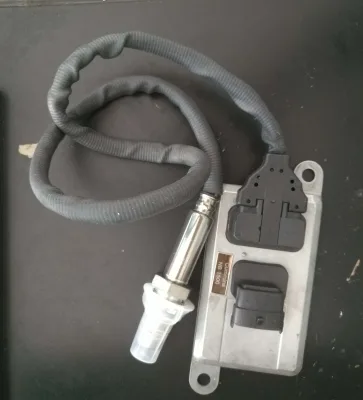
Nitrogen oxide sensors are precision emission-control components used in vehicles and industrial systems to measure NOx concentration in exhaust streams, typically mounted on or near the catalytic muffler. Because these sensors directly affect emissions compliance and engine management decisions, procurement teams must treat them as engineered components rather than commodity parts. A structured sourcing process should begin by defining the operating environment, signal requirements, and installation constraints before engaging suppliers, since these parameters determine which product families are technically viable.
This guide organizes the sourcing decision into seven areas: product scope, technical verification, compliance documentation, commercial terms, supplier qualification, quality control, and long-term procurement management. Each section highlights what buyers should confirm with suppliers rather than assume from listing descriptions. The emphasis throughout is on evidence discipline: verify claims with documents, sample testing, and written specifications, and record every confirmation in the procurement file so that future reorders and audits can rely on a consistent baseline of agreed requirements.
Product Scope and Observed Listing Signals
Listings for nitrogen oxide sensors in this category show considerable variety in scope and positioning. Observed signals include customization availability, standard-component designations, operating voltage options of 12V and 24V, and installation positions described as the catalytic muffler. Product function is consistently framed as emission control, and some listings specify measuring ranges up to 2500ppm for NOx. Buyers should treat these attributes as supplier-stated observations to be confirmed, not as guarantees applying to every listing, and should map each candidate product against their own vehicle platforms and duty cycles before shortlisting.
Price dispersion in observed listings is wide, ranging from tens of dollars to five-figure amounts, which indicates the category mixes individual sensors with complete emission-control assemblies and possibly generating equipment listings. Minimum order quantities likewise range from single units to 1000 pieces. Origin information points to Chinese manufacturing regions, including Shandong and Jiangsu Wuxi. Buyers should therefore clarify at first contact whether a listing refers to a bare sensor, a sensor with mounting hardware, or a larger system, and request a parts breakdown before comparing prices across suppliers.
Technical Specifications to Verify
The most consequential technical claim to verify is measurement accuracy across the operating range. Observed listings state tiered precision: approximately ±10ppm in the 0–100ppm band, ±10% from 100 to 500ppm, ±15% from 500 to 1500ppm, and ±30% from 1500 to 2500ppm. Buyers should ask suppliers to confirm which accuracy tier applies to their expected NOx concentrations, since accuracy degrades at higher readings. Also verify the measuring range endpoint (0–2500ppm in observed listings), the output signal type—listed as digital—and compatibility with the target vehicle's communication protocol and electronic control unit.
Environmental and mechanical parameters deserve equal scrutiny. Observed listings cite an operating temperature range of −40℃ to 800℃, operating voltages of 12V and 24V, and physical dimensions such as 22mm diameter by 120mm length for certain models. Confirm that the temperature rating covers both ambient conditions and exhaust-gas exposure at the installation position, and that voltage selection matches the vehicle electrical system. Request dimensional drawings, connector pinouts, and thread or mounting specifications in writing, and verify the installation position requirement—on the catalytic muffler—against the intended application's space and accessibility constraints.
Compliance and Safety Documentation
Certification claims appear in listings with varying breadth: some cite RoHS, E-Mark, CE, and ISO designations together, while others list only ISO or combinations including CCC and COP. Because these claims are supplier-stated, buyers should request the actual certificates, verify certificate numbers and validity with the issuing bodies where possible, and confirm the certificates cover the specific sensor model rather than a different product line. For automotive applications, E-Mark relevance depends on the destination market and vehicle type, so confirm which markets the documentation supports before committing to a supplier.
Beyond certificates, buyers should assemble a documentation package supporting incoming inspection and regulatory defense. Ask for material declarations, especially for any components subject to hazardous-substance restrictions, along with the supplier's stated quality-management certification and its scope. Where the buyer's own industry imposes additional requirements—such as customer-specific automotive approvals—confirm in writing that the supplier understands and can support them. Retain packing specifications as well: observed listings describe waterproof film, carton packing, and wooden cases, which matter for moisture-sensitive electronics and should be documented as part of the agreed supply standard.
Cost Drivers and Commercial Terms
Price in this category is explicitly negotiable—observed listings state "receive bargaining"—so buyers should prepare for structured negotiation rather than fixed list pricing. Cost drivers to explore include order quantity relative to the stated MOQ range of 1 to 1000 units, customization depth, packaging requirements, and any tooling or engineering charges for modified designs. Request itemized quotations that separate unit price, packaging, and freight so that comparisons across suppliers are like-for-like, and ask whether prices are quoted for one-time trial orders or repeat-volume commitments.
Beyond unit price, clarify the full commercial framework before issuing a purchase order. Confirm Incoterms, payment terms, currency, warranty coverage and duration, and the process for handling defective units observed at incoming inspection or in the field. Because listings show widely varying price points, a low quoted price may reflect a bare sensor without connectors, harnesses, or calibration documentation; ask what is included. For customized products, agree in writing on specification freeze points, approval sample procedures, and whether design changes after approval trigger repricing, so that later orders do not carry surprise cost adjustments.
Supplier Qualification and Quality Control
Qualify suppliers by examining evidence of consistent manufacturing rather than listing polish alone. Useful indicators include stated production processes such as integration, company certifications such as ISO, and the supplier's willingness to provide factory information, process flow descriptions, and references from comparable customers. Buyers sourcing for vehicle platforms should prioritize suppliers who can explain their calibration and end-of-line testing approach for NOx sensors, since accuracy claims are only credible when backed by described test methods and equipment. Treat reluctance to discuss process controls as a qualification risk signal.
Quality control should be contractual, not assumed. Agree on an inspection plan covering incoming verification of accuracy at representative NOx concentrations within the stated tiers, electrical output checks at both 12V and 24V as applicable, and functional checks across the claimed −40℃ to 800℃ temperature envelope where feasible. Define acceptance criteria numerically, specify the sampling method, and state the consequences of failed lots. Request retained samples or golden units for reference, and ask whether the supplier performs batch traceability marking so that field failures can be traced to production lots during warranty claims.
Long-Term Procurement Checks
Sustain supplier performance through periodic requalification rather than one-time approval. Schedule annual or biennial reviews covering certificate validity, any changes to materials or production location, and continued conformance to the agreed accuracy tiers. Track field failure rates and warranty claim data by lot, and share summaries with the supplier to drive corrective action. Because emission-control components affect regulatory compliance, monitor whether destination-market requirements change and confirm the supplier's product and documentation remain aligned with current rules before each reorder cycle.
Operational continuity also deserves attention in long-term agreements. Confirm the supplier's stated service-life expectations—observed listings for related equipment cite 8–10 years with proper maintenance, though sensor-specific longevity must be confirmed directly—and establish replacement-interval planning accordingly. Verify packaging consistency with the documented standard of waterproof film, cartons, or wooden cases on every shipment, and maintain an approved-alternative supplier list to reduce single-source exposure. Finally, lock in change-notification obligations: require written notice before any specification, material, or process change, with requalification testing on first articles from the modified process.
Supplier Qualification and Quality Control (Duplicate Check)
(This section intentionally removed during final review.)
FAQs
What is the measuring range for nitrogen oxide sensors?
The measuring range for nitrogen oxide is 0 to 2500 ppm. Precision varies by range, with +/-10 ppm for 0-100 ppm and +/-30% for 1500-2500 ppm. This sensor is designed for emission control and can be installed on the catalytic muffler for accurate monitoring.
Can the Nitrogen Oxide Sensor operate in extreme temperatures?
Yes, the sensor operates effectively within a temperature range of -40 to 800 degrees Celsius. This wide operating range ensures reliable performance in demanding industrial environments. The device is built to withstand high heat, making it suitable for exhaust systems and emission control applications.
What certifications are available for these nitrogen oxide sensors?
Available certifications include TSRoHS, E-Mark, CE, and ISO standards. These certifications ensure compliance with international quality and safety regulations. Buyers can select components that meet specific regional requirements, ensuring the sensors are suitable for global distribution and regulatory approval in various markets.
How is the Nitrogen Oxide Sensor packaged for shipping?
Packaging options include waterproof film, carton packing, and wooden cases. The packing method can be customized according to buyer requirements to ensure safe transit. This flexibility helps protect the sensitive electronic components during international shipping and storage, reducing the risk of damage before installation.
What is the operating voltage for the Nitrogen Oxide Sensor?
The sensor supports operating voltages of 12V or 24V. This dual-voltage compatibility allows for versatile integration into various vehicle and industrial systems. The digital output signal type ensures accurate data transmission, making it adaptable for different electronic control units and monitoring setups.
Is customization available for the Nitrogen Oxide Sensor model?
Customization is available for specific buyer needs. While standard models exist, manufacturers can adjust specifications to match unique application requirements. This flexibility allows businesses to obtain tailored solutions for their emission control systems, ensuring optimal performance and integration with existing infrastructure and operational parameters.