Source Non Asbestos Refractory Fiber Paper for insulation sealing
Find 30 listings for Non Asbestos Refractory Fiber Paper with varying temperature ratings and thickness options. Buyers can compare specifications from Chinese manufacturers to select the right material for industrial applications.
Key considerations
Products List




Comprehensive Sourcing Guide
Strategic Sourcing Guide for Non-Asbestos Refractory Fiber Paper
Understanding Product Specifications and Technical Variability
When sourcing non-asbestos refractory fiber paper, buyers must navigate a landscape of diverse technical specifications that define the material's performance in high-temperature environments. The core product is identified as a ceramic fiber paper, typically composed of alumina and silica (Al2O3 and SiO2). The chemical composition is a critical differentiator, with market offerings ranging from "High Purity Ceramic Fiber" to "Ordinary Ceramic Fiber." High-purity variants generally offer superior thermal stability and chemical resistance, while ordinary grades may serve less demanding applications. The manufacturing technique often cited for these materials involves a "Jilt Silk Rug" process, which contributes to the paper's fibrous structure and flexibility.
Temperature classification is perhaps the most vital technical parameter for procurement. Available temperature ratings observed in the market include 1050℃, 1260℃, 1400℃, and 1500℃. Buyers must align their specific operational temperature requirements with the correct classification to ensure safety and longevity. For instance, an application requiring continuous exposure near 1400℃ necessitates a product explicitly rated for that threshold, rather than one rated only for 1260℃. The density of the material is another key specification, with observed ranges falling between 200-250 Kg/M³ (13-16 Lb/FT³). This density directly impacts the material's insulation efficiency and mechanical strength.
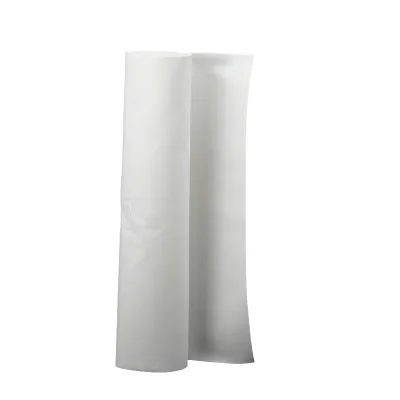
Physical dimensions vary significantly based on customer needs and manufacturer capabilities. Thickness is a primary specification, with observed ranges extending from 0.5mm up to 12mm, covering specific model numbers like SJ-PAPER and DK-cfp. Width options are frequently standardized at 610mm or 1220mm, though OEM requests for custom widths are common. Length is typically flexible, often provided "as Your Request" or based on roll configurations. The product is consistently described as white in color and is 100% non-asbestos, a critical safety feature for modern industrial applications. The raw materials are derived from ceramic fiber bulk, processed into a form that serves as a high-temperature insulating material, often utilized in conjunction with thermal insulation coatings or iron voltage electric materials.
Compliance, Certification, and Safety Standards
Ensuring compliance with international safety and quality standards is paramount when sourcing refractory materials. The primary safety requirement for this category is the absolute absence of asbestos. The supplied data explicitly confirms that these products are "100% Non Asbestos," a standard that is now a baseline expectation for industrial procurement in most developed markets. This non-asbestos status is often listed as a product standard itself, distinguishing it from older, hazardous insulation materials.
Beyond the material composition, buyers should verify the presence of recognized quality certifications. The market data indicates that suppliers may hold CE, ISO, and TUV certifications. These certifications suggest that the manufacturing processes and final products have undergone rigorous testing for safety, quality management, and environmental compliance. Specifically, the ISO standard ISO 1182 is mentioned in background contexts, which relates to the determination of the ignition temperature of non-combustible materials, a relevant test for refractory papers. However, buyers must verify if specific products carry these certifications rather than assuming they are universal.
The "OEM" standard is frequently cited, indicating that many manufacturers operate under Original Equipment Manufacturer agreements, allowing for customization of standards to meet specific client requirements. This flexibility is beneficial for specialized industrial applications but requires clear communication to ensure that the customized standard still meets the buyer's internal safety protocols. Additionally, the product origin is noted as China, with specific locations including Shanghai and Beijing. While the country of origin is a logistical fact, the presence of international certifications like CE and TUV is the stronger indicator of compliance with Western safety regulations. Buyers should request current certification documents for the specific batch or model number being purchased to ensure validity.
Cost Drivers and Procurement Economics
The cost of non-asbestos refractory fiber paper is influenced by several distinct factors, primarily driven by material purity, temperature rating, and customization levels. The distinction between "High Purity" and "Ordinary" ceramic fiber is a significant cost driver. High-purity variants, which contain higher concentrations of Al2O3 and fewer impurities, command a premium price due to the more complex refining processes required to achieve the 1400℃ or 1500℃ temperature classifications. Conversely, ordinary fiber grades, suitable for lower temperature applications like 1050℃, generally present a more economical option.
Customization is another major economic variable. While the base product is available in standard widths of 610mm and 1220mm, the ability to request specific lengths and thicknesses (ranging from 0.5mm to 12mm) introduces variable costs. Custom treatments, such as specific surface coatings or density adjustments, are noted as "as Requested," which implies a bespoke manufacturing process that can increase the unit price. The "Model Number" variations, such as BC, SJ-PAPER, or DK-cfp, often correlate with these custom specifications and associated pricing tiers.
Minimum Order Quantity (MOQ) policies also play a crucial role in the total cost of ownership. The observed data shows a wide range in MOQ, from as low as 1PC to as high as 200 units. For small-scale projects or prototyping, a supplier with a 1PC MOQ offers significant flexibility, potentially reducing inventory holding costs. However, larger orders may benefit from economies of scale, though the specific price per unit is not provided in the source data. Buyers should negotiate based on their volume requirements, keeping in mind that the "Selling Units" are often listed as "Single item," suggesting that even small quantities can be purchased, but bulk discounts may apply for larger palletized orders.
Typical Industrial Applications and Usage Scenarios
Non-asbestos refractory fiber paper is designed for a broad spectrum of high-temperature industrial applications. Its primary function is categorized as "Refractory & Heat Insulation & Sealing." This triad of functions makes it indispensable in industries where thermal management is critical. The material is explicitly used as a "High Temperature Insulating Material," serving as a barrier against extreme heat in furnaces, kilns, and reactors.
In the context of electrical systems, the product is utilized in "Iron Voltage Electric Material" applications, suggesting its use in electrical insulation where high thermal resistance is required to prevent short circuits or component failure. The inclusion of "Thermal Insulation Coatings" in the usage description indicates that the paper can be integrated into composite systems to enhance overall thermal efficiency.
The versatility of the product is further evidenced by its application in "Industrial Ceramic" manufacturing. Here, the paper likely serves as a gasketing material or a separator in high-temperature processing equipment. The "Jilt Silk Rug" manufacturing technique provides the necessary flexibility for sealing irregular surfaces, a common requirement in industrial machinery. Whether used in the "Refractory" sector for lining furnaces or in "High Temperature Insulating Material" roles for piping and ductwork, the material's ability to withstand temperatures up to 1500℃ makes it a robust solution for demanding environments. The specific density of 200-250 Kg/M³ ensures that the material provides adequate insulation without adding excessive weight to the equipment, a balance that is crucial for structural integrity.
Supplier Evaluation and Quality Assurance
Evaluating suppliers for non-asbestos refractory fiber paper requires a multi-faceted approach that goes beyond simple price comparison. Buyers should prioritize suppliers who can demonstrate a clear understanding of the material's technical nuances, such as the difference between high-purity and ordinary fiber grades. The ability to provide "as Requested" treatments and custom dimensions is a strong indicator of a supplier's manufacturing capability and flexibility.
Quality assurance should be a central component of the supplier evaluation process. Buyers must verify the consistency of the "Chemical Composition" and ensure that the "Temperature Classification" matches the product data sheet. The presence of a "Warranty" period, such as the 12 Months observed in the data, can serve as a proxy for supplier confidence in their product's durability. However, buyers should scrutinize the terms of this warranty to understand what specific performance metrics are covered.
Packaging standards are also a critical quality indicator. The data lists various packaging methods, including "One Roll with One Carton," "Carton/Bag/Pallet," and "Standard Export Carton." Consistent and robust packaging is essential to prevent damage during transit, especially given the delicate nature of fiber paper. A supplier that offers palletized shipping for larger orders demonstrates a commitment to logistics efficiency and product protection. Furthermore, the "Brand Name" and "Model Number" consistency across orders should be verified to ensure traceability and quality control.
Long-Term Procurement Considerations and Lifecycle Management
Sourcing refractory fiber paper is not merely a transactional event but a long-term partnership that impacts operational efficiency and safety. Buyers should consider the lifecycle of the product, including its installation, maintenance, and eventual replacement. The "12 Months" warranty period suggests a defined service life, but actual performance depends heavily on the operating conditions, such as thermal cycling and chemical exposure.
Future-proofing the procurement strategy involves selecting suppliers who can support ongoing customization needs. As industrial processes evolve, the requirements for insulation thickness, width, and temperature resistance may change. A supplier with a flexible "OEM" standard and the ability to produce "as Your Request" dimensions will be better positioned to support these changes without the need to switch vendors.
Inventory management is another long-term consideration. With MOQs ranging from 1PC to 200, buyers can adopt a just-in-time inventory strategy to minimize storage costs, provided the supplier can maintain reliable lead times. The "Place of Origin" being in China, specifically Shanghai and Beijing, implies specific logistical considerations regarding shipping times and import regulations. Buyers should factor these logistical realities into their supply chain planning to avoid production delays.
Finally, the environmental and safety implications of the product must be monitored. The "100% Non Asbestos" status is a permanent attribute, but buyers should ensure that the supplier maintains this standard through consistent quality control. Regular audits of the supplier's manufacturing practices and certification renewals (such as CE, ISO, and TUV) are essential to maintain compliance and ensure the continued safety of the workforce and the environment. By focusing on these long-term factors, buyers can secure a reliable supply of high-performance refractory fiber paper that supports their operational goals for years to come.
Comparative Analysis of Product Attributes
To facilitate decision-making, the following table summarizes the key attributes observed in the market for non-asbestos refractory fiber paper. This comparison highlights the variability in specifications that buyers must navigate.
| Attribute Category | High-Purity Variant | Ordinary Variant | Common Specifications |
|---|---|---|---|
| Chemical Composition | Al2O3.SiO2 (High Purity) | Al2O3.SiO2 (Ordinary) | Al2O3 + SiO2 |
| Temperature Classification | 1400℃, 1500℃ | 1050℃, 1260℃ | 1050℃, 1260℃, 1400℃, 1500℃ |
| Density | 200-250 Kg/M³ | 200-250 Kg/M³ | 13-16 Lb/FT³ |
| Thickness Range | 1-12mm | 0.5-6mm | 0.5mm-10mm |
| Width Options | 610mm, 1220mm, OEM | 610mm, 1220mm, OEM | 610mm / 1220mm |
| Certifications | CE, ISO, TUV | CE, ISO, TUV | CE & ISO & TUV |
| Warranty | 12 Months | 12 Months | 12 Months |
| Asbestos Content | 100% Non Asbestos | 100% Non Asbestos | 100% Non Asbestos |
| Origin | China (Shanghai/Beijing) | China (Shanghai/Beijing) | China |
This table underscores the importance of specifying the exact grade and temperature rating required for a project. While the physical dimensions and certifications may appear similar across variants, the chemical purity and temperature limits are the decisive factors in performance and cost. Buyers should use this framework to clearly define their requirements when engaging with potential suppliers.
FAQs
What temperature classifications are available for this paper?
Available temperature classifications include 1050℃, 1260℃, 1400℃, and 1500℃. Buyers must select the specific rating that matches their operational requirements to ensure safety and material longevity in high-temperature environments.
Can I request custom thickness and width dimensions?
Yes, customization is available for thickness ranging from 0.5mm to 12mm and widths like 610mm or 1220mm. Length is typically provided as requested, allowing for flexible procurement based on specific project needs.
Which certifications do the manufacturers typically hold?
Suppliers often hold CE, ISO, and TUV certifications for quality and safety compliance. Buyers should verify specific batch documents to ensure the product meets international safety standards for non-asbestos materials.
How is the product packaged for shipping?
Packaging options include one roll with one carton, carton plus pallet, or standard export cartons. Robust packaging is essential to protect the delicate fiber structure during transit and storage.
What is the minimum order quantity for this item?
The minimum order quantity can be as low as 1 piece for small projects. However, some suppliers may have higher MOQs up to 200 units, so buyers should confirm specific vendor policies.
Is the material confirmed to be asbestos-free?
Yes, the product is explicitly stated to be 100% non-asbestos. This is a critical safety standard for modern industrial applications and distinguishes it from older hazardous insulation materials.