Source HP Molded Graphite Sintered Box for Electronics and Metallurgy
Find 23 HP Molded Graphite Sintered Box options for electronic industry, metallurgy powder processing, and vacuum sintering applications. Compare densities, thermal shock resistance, and customization features to select the right graphite box for your manufacturing needs; compare the available evidence and request quotations based on your requirements.
Key considerations
Products List


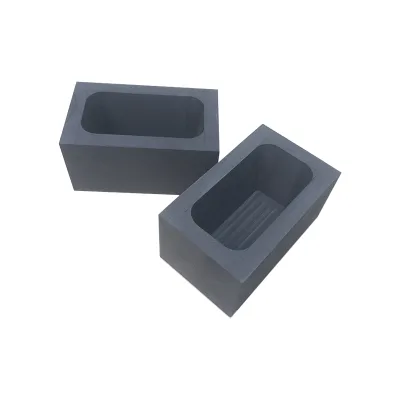


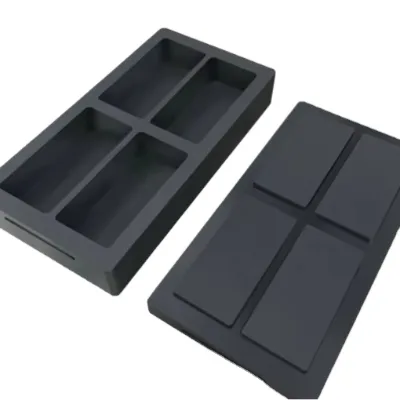
$8.34 - $30.24
MOQ: 1 Minimum


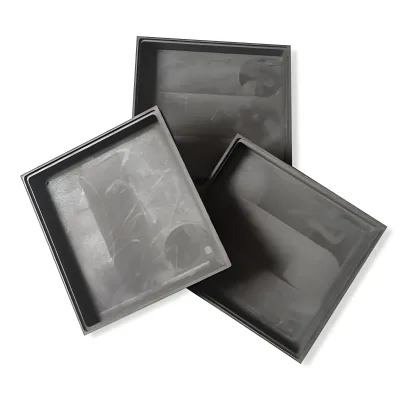
Comprehensive Sourcing Guide
HP Molded Graphite Sintered Box Sourcing Guide
Procuring high-performance molded graphite components requires a nuanced understanding of material grades and manufacturing processes. The term "HP" typically denotes a high-grade classification, often associated with industrial or specialized applications where structural integrity and thermal stability are paramount. Buyers must distinguish between generic industrial grades and those specified for high-purity or high-strength requirements, as the performance characteristics vary significantly. This distinction is critical for applications involving vacuum sintering, metallurgical powder processing, or hard alloy production, where contamination or structural failure can lead to costly production losses.
The sourcing landscape for these components is diverse, with suppliers offering various forms such as boxes, boats, crucibles, and plates. Observed listings indicate a wide range of models, including MSS80, NX603, and MSL80, each potentially tailored to specific customer drawings or standard sizes. Understanding the specific model designation is essential for ensuring compatibility with existing furnace equipment. Buyers should verify whether the "HP" label corresponds to a specific density, resistivity, or flexural strength threshold, as these metrics directly impact the component's lifespan and thermal efficiency in high-temperature environments.
Product Scope and Observed Listing Signals
Market observations reveal a broad spectrum of graphite products, including sintered boxes, boats, and crucibles, primarily intended for the electronic and metallurgical industries. Key features frequently highlighted include thermal shock resistance, high thermal conductivity, and corrosion resistance, which are vital for maintaining product integrity during rapid temperature changes. The composition is consistently identified as graphite, with carbon content ranging from high-carbon to 99.9% high purity, depending on the specific grade and application. Buyers should note that while "HP" suggests a premium tier, the actual specifications must be confirmed through detailed technical datasheets rather than relying solely on marketing labels.
Density is a critical differentiator among these products, with observed values ranging from above 1.82 g/cm³ to 1.91-1.95 g/cm³. Higher density generally correlates with improved mechanical strength and reduced porosity, which is beneficial for vacuum sintering applications. The forming methods also vary, with molded graphite and isostatic graphite being common techniques. Isostatic pressing often yields more uniform density and mechanical properties, making it suitable for high-stress applications. Buyers must align their selection with the specific thermal and mechanical demands of their process, ensuring that the chosen product's density and forming method meet their operational requirements.
Technical Specifications to Verify
When evaluating technical specifications, buyers should prioritize mechanical strength metrics such as flexural and compressive strength. Observed data indicates flexural strength of no less than 60 MPa and compressive strength exceeding 135 MPa for certain high-performance grades. These values are crucial for ensuring that the graphite components can withstand the mechanical stresses associated with loading and unloading in industrial furnaces. Additionally, electrical resistivity is a key parameter, with some listings specifying ranges between 11-13 microhm-meters. This property influences the heating efficiency and uniformity in resistance heating applications, making it a vital consideration for process optimization.
Thermal conductivity is another essential specification, with observed values around 85 W/m·K for certain grades. High thermal conductivity ensures efficient heat transfer, reducing energy consumption and improving process consistency. Buyers should also verify the crystal morphology, which can be artificial, aphanitic, or compact crystalline, as this affects the material's thermal and mechanical behavior. Furthermore, dimensions are often customizable based on customer drawings, allowing for precise integration into existing equipment. It is imperative to confirm that the supplier can accurately reproduce the required dimensions and tolerances to ensure a proper fit and optimal performance in the final application.
Compliance and Safety Documentation
While specific certification standards are not universally listed, buyers should inquire about the supplier's quality management systems and adherence to international standards. Customization is a common feature, implying that suppliers may tailor products to meet specific regulatory or industry requirements. Buyers must ensure that the graphite material does not introduce contaminants into sensitive processes, particularly in electronic or high-purity metallurgical applications. Verifying the purity level, such as 99.9% high purity graphite, is essential for applications where trace elements could compromise product quality.
Safety documentation should include material safety data sheets (MSDS) that outline handling, storage, and disposal guidelines. Graphite dust can be a respiratory hazard, so proper handling procedures must be established. Additionally, buyers should confirm that the packaging, whether wooden boxes or pallets, meets international shipping standards to prevent damage during transit. Ensuring that the supplier provides comprehensive documentation helps mitigate risks associated with material handling and regulatory compliance. It is also advisable to request test reports for key properties like density and strength to validate the supplier's claims and ensure consistency in supply.
Cost Drivers and Commercial Terms
Several factors influence the cost of HP molded graphite sintered boxes, including material grade, density, and manufacturing complexity. Higher density and purity levels typically command premium prices due to the increased raw material costs and more rigorous processing requirements. Customization also adds to the cost, as it involves additional engineering and tooling expenses. Buyers should be aware that minimum order quantities (MOQ) can vary, with some listings indicating MOQs as low as 50 pieces, while others may require larger volumes. Understanding these commercial terms is crucial for budgeting and supply chain planning.
Lead times and payment terms are also significant considerations. Suppliers may offer different lead times based on the complexity of the order and current production capacity. Buyers should negotiate clear delivery schedules to avoid production delays. Additionally, payment terms can range from partial advances to full payment upon delivery, depending on the supplier's policies and the buyer's credit history. It is advisable to establish a long-term partnership with a reliable supplier to secure better pricing and more favorable terms. Transparent communication regarding cost drivers helps buyers make informed decisions and manage their procurement budgets effectively.
Supplier Qualification and Quality Control
Selecting a qualified supplier is critical for ensuring the quality and reliability of HP molded graphite sintered boxes. Buyers should assess the supplier's manufacturing capabilities, including their experience with molded and isostatic graphite processes. A robust quality control system should be in place to monitor key parameters such as density, strength, and dimensions. Suppliers who offer customization should demonstrate their ability to interpret and execute customer drawings accurately. It is also beneficial to review the supplier's track record in the industry, including their experience with similar applications and their reputation for delivering consistent quality.
Regular audits and inspections can help verify the supplier's quality control practices. Buyers may request sample batches for testing before committing to larger orders. Establishing clear quality acceptance criteria, including tolerances for dimensions and performance metrics, is essential for maintaining consistency. Additionally, suppliers should provide traceability for their materials, allowing buyers to verify the origin and grade of the graphite used. Building a strong relationship with a qualified supplier ensures that any issues are addressed promptly and that the supply chain remains resilient. Continuous feedback and collaboration can further enhance the quality of the products and the overall procurement experience.
Long-Term Procurement Checks
Long-term procurement success depends on continuous monitoring of supplier performance and product quality. Buyers should establish key performance indicators (KPIs) to track metrics such as delivery times, defect rates, and customer service responsiveness. Regular reviews of these metrics help identify potential issues early and allow for corrective actions. Additionally, staying informed about industry trends and technological advancements can help buyers optimize their procurement strategies. Engaging with suppliers to discuss future needs and potential improvements fosters a collaborative relationship that benefits both parties.
It is also important to periodically reassess the total cost of ownership, including factors such as maintenance, replacement frequency, and energy efficiency. High-quality graphite components may have a higher upfront cost but can offer significant savings in the long run through improved durability and performance. Buyers should also consider diversifying their supplier base to mitigate risks associated with supply chain disruptions. By maintaining a proactive approach to procurement, buyers can ensure a steady supply of high-quality HP molded graphite sintered boxes that meet their evolving operational requirements.
FAQs
What is the density of the graphite sintered box?
The density is above 1.83 g/cm3 for the standard HP grade molded graphite box. Some specific models like the GM-1 variant reach a density range of 1.91 to 1.95 g/cm3. This high density ensures structural integrity during high-temperature vacuum sintering processes for tungsten carbide and hard alloys.
Can the graphite sintered box be customized?
Yes, customization is available for the graphite sintered box to meet specific client requirements. Dimensions are determined according to customer drawings and requested sizes. The product standard is listed as customized, allowing for tailored forms such as boxes, boats, or molds for various metallurgy applications.
Which forming way is used for the graphite box?
The primary forming way for this product is molded graphite, specifically using isostatic graphite for certain high-purity grades. This process creates artificial graphite with compact crystalline morphology. The resulting material offers high thermal conductivity and excellent thermal shock resistance for demanding industrial applications.
What is the minimum order quantity for the graphite box?
The minimum order quantity is 50 pieces for the graphite sintered box. However, observed MOQ ranges across similar listings vary from 1 to 300 units depending on the specific supplier and model. Buyers should verify the exact MOQ for their selected model like MSS80 or NX603 before placing an order.
How is the graphite sintered box packed for shipping?
The product is typically packed in wooden boxes or on pallets for safe transport. Specific packing methods depend on the supplier and the model ordered. This packaging ensures the graphite components remain protected during international shipping from the origin location in China to the destination market.
What are the key features of the graphite sintered box?
Key features include thermal shock resistance, high thermal conductivity, and corrosion resistance. The material composition is high-carbon artificial graphite with a purity up to 99.9% for specific grades. These properties make it ideal for vacuum sintering applications involving tungsten carbide and other hard alloys in the electronic industry.
What is the electrical resistivity of the graphite material?
The electrical resistivity ranges from 11 to 13 micro-ohm meters for the specified high-purity graphite tube and box variants. This low resistivity supports efficient electrical performance during sintering processes. Combined with a flexural strength of no less than 60 MPa, the material ensures reliable operation under mechanical stress.