Source Non-Slip Vitrified Terrazzo Floor Tile for Interior, Exterior, Commercial
Compare 30 listings for Non-Slip Vitrified Terrazzo Floor Tile suitable for interior, exterior, and commercial applications. Buyers can review specifications like water absorption, flexural strength, and customization options to find the right fit; compare the available evidence and request quotations based on your requirements.
Key considerations
Products List


Airfield Engineered Floors Paved Used Durable, Non-Skid Terrazzo Tile Floor
$20.00 - $35.00
MOQ: 50 Square Meters


Hot Sale Floor Stone Granite Pattern Terrazzo Tile Anti Slip Tiles
$4.00 - $4.70
MOQ: 600 Square Meters

Customize White Terrazzo Design Matte Surface Floor Tile Non-Slip Floor Tile
$3.50 - $4.00
MOQ: 600 Square Meters


Color Terrazzo Design Ceramic Floor Tile Anti Slip Tiles Made in China
$4.00 - $4.70
MOQ: 600 Square Meters

Customize Tile 600*600mm Antique Matte Terrazzo Look Floor Tiles Non Slip Rustic Tile
$3.50 - $4.00
MOQ: 600 Square Meters

Anti Slip Beige Terrazzo Look Vitrified Porcelain Tile for Floor and Wall
$9.50 - $14.50
MOQ: 200 Square Meters


High Quality Terrazzo Series Ceramic Floor Tile for Home Decoration
$3.60 - $5.00
MOQ: 100 Square Meters

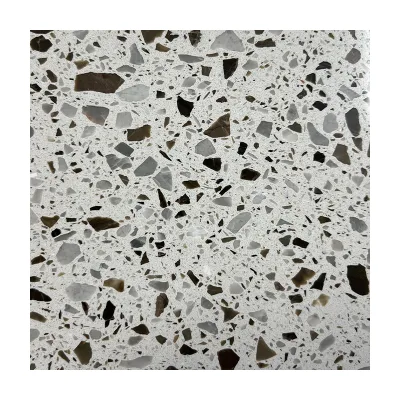


Colorful Terrazzo Design Rustic Matte Anti-Slip Porcelain Floor Tiles
$2.50 - $5.30
MOQ: 100 Square Meters


Versatile Terrazzo Floor Tiles for Elegant Indoor and Outdoor Design
$5.90 - $6.80
MOQ: 100 Square Meters


Comprehensive Sourcing Guide
Non-Slip Vitrified Terrazzo Floor Tile Sourcing Guide
Procuring non-slip vitrified terrazzo floor tiles requires distinguishing between finished ceramic products and the machinery used to manufacture them, as listings often conflate the two. Buyers must verify whether a supplier offers the actual tile or the hydraulic press equipment, noting that specific models like HY-6053 and LT-1 refer to distinct product lines or manufacturing tools. Understanding this distinction prevents confusion regarding delivery timelines and technical capabilities, ensuring the procurement team targets the correct inventory for their specific construction or renovation needs.
The observed market signals indicate a wide variance in product attributes, ranging from standard 600x600mm polished tiles to specialized terrazzo options with thicknesses between 20mm and 60mm. While some listings highlight a water absorption rate as low as 0.5%, others report figures around 3.47%, necessitating careful selection based on the intended environment. Buyers should prioritize suppliers who explicitly define the surface treatment, such as dull surfaced finishes for enhanced traction, to ensure the final installation meets the safety requirements of high-traffic commercial or outdoor spaces.
Product Scope and Observed Listing Signals
The product scope encompasses a diverse array of vitrified tiles designed for both interior and exterior applications, including household, hotel, and commercial settings. Listings frequently specify usage for floors and walls, with some products featuring a rustic tile style or square shape to suit various aesthetic preferences. The availability of customization allows buyers to tailor dimensions and finishes, though some entries explicitly state non-customized options, requiring clear communication to align supplier output with project specifications.
Commercial signals reveal significant variability in packaging and logistics, with options ranging from wooden cases to standard export wooden pallets and cartons. The observed price range spans from $2.50 to $35,000, reflecting the difference between individual tile units and heavy machinery like the Terrazzo Tile Making Machine. Buyers must scrutinize the "Name" and "Purpose" fields to confirm they are purchasing the finished flooring material rather than the production equipment, as the latter involves different technical parameters such as voltage and transmission methods.
Technical Specifications to Verify
Technical verification begins with confirming the material composition and physical density, as vitrified tiles typically exhibit a density around 2373kg/M3 and high compressive strength. Buyers should demand test reports for flexural strength, noting that dry condition values around 8.7MPa are common benchmarks for structural integrity. It is critical to validate the water absorption rate, as values below 1% indicate superior vitrification suitable for wet areas, whereas higher rates may limit the tile's suitability for exterior or freeze-thaw environments.
Dimensional consistency and surface texture are equally vital, with standard sizes including 600x600mm and 400x600mm, while terrazzo variants may reach 1200x600mm. The thickness of the tile, often observed between 9.8mm for standard porcelain and up to 60mm for heavy-duty terrazzo, directly impacts load-bearing capacity and installation methods. Procurement teams must ensure the listed surface treatment, such as dull surfaced or polished, matches the required slip resistance, as the non-slip function is a primary performance attribute for safety compliance in public and industrial zones.
Compliance and Safety Documentation
Compliance documentation must include valid certifications such as CE and ISO, which serve as baseline indicators of manufacturing quality and adherence to international safety standards. While some listings mention personalized customized standards, buyers should insist on verifiable third-party test results for mechanical properties like compressive strength and flexural strength. The presence of a machinery test report for production equipment is also essential if the buyer is sourcing manufacturing tools, ensuring the hydraulic pressure systems meet operational safety requirements.
Safety verification extends to the functional attributes of the tile, specifically its non-slip, wear-resistant, and antibacterial properties. Buyers should request data sheets that explicitly confirm these functions, as they are critical for environments prone to moisture or heavy foot traffic. Additionally, the guarantee period, often cited as more than 15 years, should be backed by written warranty terms that cover material defects and performance degradation, providing long-term protection against premature failure in demanding applications.
Cost Drivers and Commercial Terms
Cost drivers in this category are heavily influenced by the complexity of the surface treatment, the thickness of the tile, and the extent of customization required. Standard polished tiles may fall within a lower price bracket, while specialized terrazzo options with custom dimensions or enhanced anti-static properties command higher premiums. The observed MOQ range of 1 to 3800 units further dictates the unit economics, with larger orders typically yielding better per-square-meter pricing but requiring significant upfront capital and storage capacity.
Commercial terms must clearly define the delivery timeline, which typically ranges from 7 to 20 days after payment receipt, and the specific packaging requirements to prevent transit damage. Buyers should negotiate Incoterms that account for the heavy nature of vitrified tiles, ensuring that freight costs and insurance are allocated correctly between the supplier and the buyer. Clarifying the payment schedule and the conditions for the guarantee is essential to mitigate financial risk and ensure that the supplier remains accountable for the product's performance over the agreed warranty period.
Supplier Qualification and Quality Control
Supplier qualification requires verifying the origin of the goods, with many listings indicating production in Guangdong, China, a major hub for ceramic manufacturing. Buyers should assess the supplier's capacity to maintain consistent quality across batches, particularly when dealing with customized orders that deviate from standard models like HY-6009 or HF6601. The condition of the product, listed as new, should be confirmed through recent production dates to avoid purchasing aged inventory that may have degraded during storage.
Quality control protocols must include a rigorous inspection of the packing materials, such as wooden cases or crates, to ensure they provide adequate protection during international shipping. Buyers should implement a pre-shipment inspection process that checks for dimensional accuracy, surface defects, and the integrity of the non-slip coating. Establishing a clear communication channel for resolving discrepancies regarding the number of pieces per box or the total square meters per shipment is crucial for maintaining project schedules and minimizing logistical disruptions.
Long-Term Procurement Checks
Long-term procurement checks focus on the durability and maintenance requirements of the installed tiles, ensuring they withstand the specific stresses of their application environment. Buyers should monitor the performance of the anti-static and waterproof features over time, as these attributes are critical for maintaining safety and hygiene in commercial and industrial settings. Regular audits of the tile's condition can help identify early signs of wear, allowing for proactive maintenance before minor issues escalate into costly replacements.
Sustainability and supply chain resilience are also key considerations for long-term partnerships, requiring suppliers to demonstrate consistent adherence to their stated standards and certifications. Buyers should maintain a relationship with the supplier to ensure a steady supply of replacement tiles that match the original batch in color and texture, which is vital for large-scale projects. Establishing a feedback loop regarding the tile's performance in real-world conditions will provide valuable data for future procurement decisions and help refine the selection criteria for subsequent orders.
FAQs
What certifications are available for Non-Slip Vitrified Terrazzo Floor Tile?
CE certification is available for these tiles. Some listings also indicate ISO certification. These credentials help verify compliance with international quality and safety standards. Buyers should request specific certificates from suppliers to ensure the products meet their regional regulatory requirements and project specifications.
Can Non-Slip Vitrified Terrazzo Floor Tile be customized?
Yes, customization is available for these tiles. Buyers can request personalized designs or specific dimensions. Some models are listed as non-customized, so it is essential to confirm the customization policy with the supplier before ordering. This ensures the final product matches the exact design requirements of the project.
What is the typical delivery time for these tiles?
The delivery time is typically 7-20 days after receiving payment. This timeframe allows for production and quality checks. Buyers should confirm the exact lead time with the supplier, as it may vary based on order volume and current production schedules. Planning ahead ensures timely project completion.
What are the key functional features of these tiles?
These tiles offer wear-resistant, non-slip, antibacterial, and waterproof properties. They also provide thermal insulation and anti-static benefits. Some variants include acid resistance. These features make them suitable for high-traffic interior and exterior applications, ensuring durability and safety in various commercial and household environments.
What is the water absorption rate of these porcelain tiles?
The water absorption rate is approximately 0.5% to 3.47% by weight. This low absorption rate indicates high density and durability. It makes the tiles suitable for both interior and exterior use, as they resist moisture damage. Buyers should verify the specific absorption rate for their chosen model.
How are these tiles packaged for shipping?
Tiles are packaged in wooden cases, crates, or standard export wooden pallets with carton packing. This robust packaging protects the tiles during transit. Buyers should ensure the packaging meets their shipping requirements to prevent damage. The packing method helps maintain the integrity of the tiles upon arrival.