Source non-toxic wooden kids acoustic guitar for schools, lessons, and gifts
Compare 30 listings of non-toxic wooden kids acoustic guitar featuring various sizes from 30 to 41 inches and materials like spruce, basswood, and rosewood. Buyers can evaluate OEM options, customization availability, and electronic setups for educational or recreational use.
Key considerations
Products List
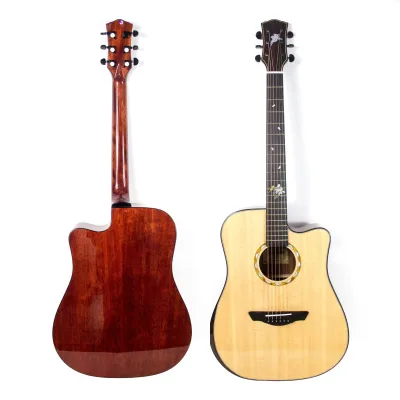
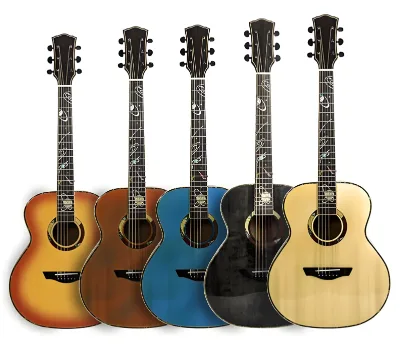
Inventory Small Guitar Clearance Special Offer 30/34/36inch Children's Acoustic Guitar
$32.71 - $91.99
MOQ: 1 Minimum


Comprehensive Sourcing Guide
Sourcing Non-Toxic Wooden Kids Acoustic Guitars: A B2B Procurement Guide
The global demand for musical instruments designed specifically for children has driven a significant shift in B2B procurement strategies. Buyers seeking non-toxic wooden kids' acoustic guitars must navigate a complex supply chain where material safety, dimensional accuracy, and manufacturing consistency are paramount. This guide provides a structured approach to sourcing these instruments, focusing on the technical realities of the market, the verification of safety standards, and the evaluation of suppliers based on observable product attributes. The objective is to equip procurement professionals with the evidence-based knowledge required to make informed decisions without relying on unverified marketing claims.
Understanding Material Composition and Structural Integrity
The foundation of a safe and durable children's guitar lies in the selection of raw materials. In the context of the current market, particularly within the Guangdong and Guangzhou manufacturing hubs, suppliers offer a variety of wood types that define the instrument's acoustic properties and safety profile. When sourcing non-toxic options, the primary focus must be on the body, neck, and fingerboard materials.
Market observations indicate a prevalence of Spruce and Basswood for guitar bodies. Spruce is often cited for its acoustic resonance and light weight, making it suitable for smaller instruments where playability is critical for young users. Basswood is another common choice, valued for its uniform grain and ease of machining. However, the presence of Plywood in certain listings suggests a need for careful verification of layering and adhesive quality. For the neck, Mahogany is a frequently observed material, offering structural stability. The fingerboard material is equally critical; Rosewood and Purple Heart are documented options in the supply chain. While these woods are traditional, the "non-toxic" requirement necessitates that the finish applied to these surfaces be free of harmful solvents and heavy metals.
Buyers must distinguish between solid wood and plywood constructions. Plywood, while cost-effective and stable, relies heavily on the adhesives used in its lamination. The sourcing strategy should prioritize suppliers who can demonstrate the use of low-VOC (Volatile Organic Compound) adhesives. Furthermore, the "Style" attribute in supplier data ranges from "Acoustic Guitar" to "Bass Wood Guitar" and "Electric Guitar," indicating that a buyer must be precise in their specification to avoid receiving instruments with electronic components that may introduce non-compliant materials or require different safety certifications.
Dimensional Standards and Age-Appropriate Specifications
Children's instruments differ significantly from adult models in terms of scale length and body depth. Sourcing the correct size is not merely a matter of aesthetics but of ergonomic suitability. The observed market data reveals a wide range of sizes, including 30-inch, 34-inch, 36-inch, 38-inch, 39-inch, 40-inch, and 41-inch models. For a "kids" acoustic guitar, the 30-inch to 36-inch range is typically the most relevant, as these dimensions accommodate smaller hand spans and shorter arm lengths.
The "Single package size" of 110x58x18 cm observed in the data suggests that even smaller instruments require substantial packaging, likely due to the fragility of the wooden components. Procurement teams must verify that the listed "Size" corresponds to the actual scale length and not just the overall body length. For instance, a "39 inch classical guitar" and a "41 inch guitar" represent different acoustic profiles and may be too large for younger children.
When evaluating product listings, buyers should look for specific model numbers that correlate with these sizes. Models such as "GA-391," "CGM-10-39 N," and "M-D10S-BL" are associated with specific inch measurements. The "prod_standard" field often reiterates these dimensions, such as "39inch" or "41 inches." It is crucial to cross-reference the "Size" attribute with the "prod_standard" to ensure consistency. A discrepancy here could indicate a mislabeled product or a variation in manufacturing that affects the instrument's playability.
Safety Compliance and Non-Toxic Verification Protocols
The core requirement of "non-toxic" cannot be assumed based on the wood type alone; it must be verified through rigorous compliance checks. While the supplied data does not explicitly list certification bodies or test results, the procurement process must include a mandate for third-party testing. Buyers should request documentation proving that the finishes, glues, and hardware meet international safety standards for children's products.
In the context of wooden instruments, the primary concerns are the presence of lead, phthalates, and formaldehyde in the finishes and adhesives. The "OEM" and "ODM" capabilities observed in the supplier attributes suggest that many manufacturers are willing to customize materials. This is a critical leverage point for buyers. Instead of accepting standard finishes, procurement teams should specify the use of water-based, non-toxic lacquers or oils that are certified safe for children.
The "Customization: Available" and "Custom: OEM or ODM Are Welcome" attributes indicate that suppliers are flexible. Buyers should utilize this flexibility to request specific material certifications. For example, if a supplier lists "Rosewood" as the fingerboard material, the buyer must verify that the wood was harvested and processed according to sustainable and safe guidelines, and that the finish applied does not contain toxic heavy metals. The "Tuner: Closed Knob" and "Bridge: Rosewood" attributes are specific hardware details that should also be checked for lead content in the plating or coating.
Cost Drivers and Economic Considerations in Sourcing
The price range observed in the market, spanning from 11.2 to 100 USD, reflects significant variability in quality, materials, and customization levels. Several factors drive these costs. First, the choice of wood is a primary determinant. Solid Spruce or Mahogany necks generally command a higher price than Plywood bodies or Basswood alternatives. Second, the complexity of the finish plays a role; non-toxic, multi-layer water-based finishes are more expensive to apply than standard solvent-based coatings.
The "MOQ" (Minimum Order Quantity) range of 1 to 120 units offers flexibility for different buyer profiles. Smaller retailers or educational institutions may benefit from the lower MOQs, while larger distributors might negotiate better unit economics at the higher end of the range. The "Selling Units: Single item" attribute suggests that some suppliers are willing to sell individual units, which can be useful for sampling or small-batch testing.
Packaging costs also influence the final price. The "prod_packing" attributes, such as "Carton Box," "Inner Box + Carton," and "6PCS/Carton," indicate that packaging is a variable cost. Bulk packaging (e.g., 6 pieces per carton) often reduces the per-unit shipping cost but requires careful inventory management. Buyers should calculate the total landed cost, including freight, duties, and packaging, rather than focusing solely on the unit price. The "Single gross weight" of 5.000 kg for a single item highlights the density of the materials and the potential impact on shipping logistics.
Supplier Evaluation and Operational Capabilities
Evaluating suppliers for children's instruments requires a focus on their operational transparency and quality control systems. The data indicates that production is concentrated in Guangdong and Guangzhou, China. This regional concentration offers the advantage of a mature supply chain but also necessitates due diligence regarding the specific factory's capabilities.
Key evaluation criteria include the supplier's ability to handle customization requests. The "Brand Name: OEM" and "Guitar Brand: Smiger Guitar" attributes show a mix of private label and branded options. Buyers seeking their own brand should verify the supplier's experience with OEM processes, including the ability to apply custom logos and packaging. The "Electronic: EQ/Pick up Installed as Request" attribute suggests that some suppliers can add electronic components, but for a pure acoustic kids' guitar, this feature may be unnecessary and could introduce additional safety risks if not properly insulated.
Quality control is another critical factor. The presence of specific model numbers like "JF77," "QAG62P," and "qag81s" suggests a structured product line. Buyers should request samples of these specific models to assess build quality, finish consistency, and the absence of sharp edges or splinters. The "Style: Bass Wood Guitar" and "Style: Electric Guitar" distinctions indicate that suppliers may produce a wide variety of instruments; buyers must ensure the supplier has dedicated lines or expertise in acoustic guitars to avoid cross-contamination of production standards.
Quality Control and Long-Term Procurement Strategy
Implementing a robust quality control (QC) plan is essential for maintaining the integrity of the "non-toxic" claim. The QC process should begin with raw material inspection, verifying the wood species and the chemical composition of any finishes. During production, random sampling should be conducted to check for structural defects, such as cracks in the Spruce body or misalignment in the Mahogany neck.
For long-term procurement, building a relationship with a supplier who offers "Customization: Available" is advantageous. This allows for continuous improvement of the product based on user feedback. For example, if initial tests reveal that the "Tuner: Closed Knob" mechanism is difficult for small hands to operate, the supplier can be asked to adjust the design in future batches. The "prod_packing: Inner Box +Carton" suggests a two-tier packaging system that can be optimized to reduce damage during transit, ensuring that the instruments arrive in perfect condition.
Buyers should also consider the "prod_standard" consistency. Variations in standards, such as "39inch" versus "39 inch classical guitar," can lead to confusion. A standardized specification sheet should be developed for each order, clearly defining the wood types, dimensions, and safety requirements. This document serves as a legal and technical reference point for both the buyer and the supplier, ensuring that all parties are aligned on the definition of a "non-toxic wooden kids acoustic guitar."
Strategic Recommendations for Procurement Teams
To successfully source non-toxic wooden kids' acoustic guitars, procurement teams must adopt a proactive and evidence-based approach. The following recommendations synthesize the technical, economic, and operational insights discussed:
- Prioritize Material Verification: Do not rely on generic descriptions. Request specific data sheets for Spruce, Basswood, Mahogany, and Rosewood, including finish composition and adhesive safety certifications.
- Validate Dimensions: Cross-reference "Size" and "prod_standard" attributes to ensure the instrument is appropriate for the target age group. Focus on the 30-36 inch range for younger children.
- Leverage Customization: Utilize the "OEM/ODM" capabilities to request non-toxic finishes and child-safe hardware modifications.
- Conduct Rigorous Sampling: Before placing large orders, order samples of specific models (e.g., "GA-391," "M-D10S-BL") to test for safety, playability, and durability.
- Monitor Packaging and Logistics: Ensure that the "Single gross weight" and "prod_packing" specifications align with your logistics capabilities to minimize damage and cost.
By adhering to these guidelines, buyers can navigate the complexities of the B2B market and secure high-quality, safe, and durable instruments for children. The focus must remain on verifiable facts and rigorous testing, ensuring that the final product meets the highest standards of safety and performance.
FAQs
What wood types are used for non-toxic wooden kids acoustic guitars?
Spruce and Basswood are commonly used for bodies, while Mahogany is frequent for necks. Rosewood and Purple Heart appear for fingerboards. Buyers must verify that adhesives and finishes are low-VOC to ensure the instrument remains non-toxic for children.
Which sizes are appropriate for children's acoustic guitars?
Sizes ranging from 30 inches to 36 inches are typically suitable for young users due to smaller hand spans. Listings also show 38, 39, 40, and 41-inch models, which may be too large for younger children and require careful ergonomic assessment before purchase.
Can suppliers customize materials for non-toxic wooden kids acoustic guitars?
Yes, customization is available with OEM and ODM options welcome. Buyers can request specific non-toxic finishes or wood types. This flexibility allows procurement teams to specify water-based lacquers and verify material safety standards directly with the manufacturer.
How does the MOQ affect sourcing non-toxic wooden kids acoustic guitars?
The Minimum Order Quantity ranges from 1 to 120 units, offering flexibility for different buyer profiles. Smaller retailers can start with single items, while larger distributors may negotiate better unit economics at higher volumes. This range supports both sampling and bulk procurement strategies.
Where are non-toxic wooden kids acoustic guitars manufactured?
Production is concentrated in Guangdong and Guangzhou, China. These hubs offer a mature supply chain for wooden instruments. Buyers should verify specific factory capabilities and quality control systems within these regions to ensure consistent safety and build quality for children's products.
What packaging options exist for non-toxic wooden kids acoustic guitars?
Options include single carton boxes, inner boxes with cartons, and bulk packs of six pieces per carton. Packaging dimensions vary, with some single items weighing up to 5 kg. Bulk packaging often reduces shipping costs but requires careful inventory management to prevent damage.
Are electronic components available for non-toxic wooden kids acoustic guitars?
EQ and pickup installations are available as requested. However, for pure acoustic models, these components may be unnecessary. Buyers should confirm if electronic parts are required, as they introduce additional safety considerations regarding insulation and material compliance for children's instruments.