Source Projection Drawing Board for Kids for Art, Education, and Play
Explore 30 options for a Projection Drawing Board for Kids designed for early education, art creation, and interactive play. Buyers can compare features like adjustable focus, material types, and age ranges to find the best fit for their needs; compare the available evidence and request quotations based on your requirements.
Key considerations
Products List


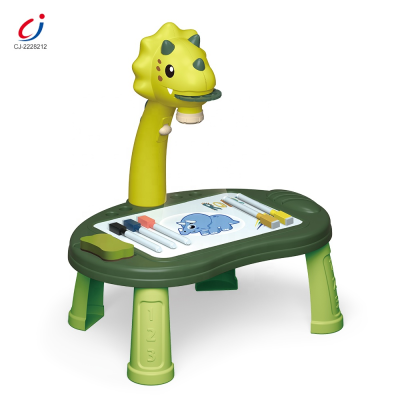


OEM Customized Kids Drawing Writing Painting Board for Educational Practice
$10.00 - $21.00
MOQ: 100 Pieces


Comprehensive Sourcing Guide
Projection Drawing Board for Kids Sourcing Guide
Procuring a Projection Drawing Board for Kids requires distinguishing between simple drawing tables and multifunctional educational toys that integrate projection capabilities. The market offers distinct variations, ranging from basic plastic easels to advanced units featuring focus-adjustable lenses and erasable surfaces. Buyers must carefully evaluate whether the product is designed primarily for early education or general office use, as the intended application dictates the necessary feature set and durability requirements.
Sourcing decisions should prioritize products that explicitly list projection functions alongside writing and drawing capabilities. Evidence suggests that viable options often include specific battery requirements, such as 3*AA units, and are constructed from durable ABS plastic to withstand active play. It is critical to verify that the selected model supports the specific age range of the target demographic, ensuring the complexity of the projection mechanism matches the child's developmental stage.
Product Scope and Observed Listing Signals
The available product landscape includes diverse configurations such as drawing boards, multifunction blackboards, and specialized projection tables. Listings indicate a wide range of materials, including plastic, wood, and magnetic blackboard surfaces, each offering different tactile experiences and durability profiles. Buyers should note that some units are marketed specifically for children aged 3 to 8 years, while others target broader age groups or office environments, necessitating a clear definition of the end-user before selection.
Observed listing signals reveal significant variation in packaging and shipping standards, with options ranging from individual color boxes to bulk carton packing. Some suppliers offer customization services, allowing for tailored branding or specific feature adjustments, while others provide standard OEM services. The presence of specific model numbers like RFD421598 or HY-032165 helps in tracking inventory, but buyers must confirm that the physical dimensions and color options, such as yellow or pink, align with the intended aesthetic and spatial constraints of the classroom or home setting.
Technical Specifications to Verify
Technical verification must begin with the physical dimensions and structural integrity of the unit. Listings show standard sizes varying from compact 1612.5cm units to larger 8933103cm structures, with some models featuring combination push-pull blackboard designs. Buyers should confirm that the specified dimensions, such as 6644.5*61.5cm, are suitable for the available floor space and that the structure supports the weight of the projection mechanism without tipping.
Functional specifications are equally critical, particularly regarding the projection lens and power requirements. Products must explicitly state features like focus adjustment and erasability to ensure usability in an educational context. Verification should include checking the battery type, as some units require 3*AA batteries which are not included, and confirming the plastic type, typically ABS, to ensure resistance to impact and wear during daily classroom activities.
Compliance and Safety Documentation
Safety compliance is non-negotiable for children's educational toys, requiring verification of multiple international and regional certifications. The market data indicates that compliant products often carry CE, ISO, RoHS, and CCC certifications, which validate adherence to strict safety and environmental standards. Buyers must request current test reports to ensure that the materials used, including plastics and paints, do not contain harmful substances that could pose a risk to young children.
Documentation should also address the specific age ranges for which the product is certified. Listings frequently specify age groups such as 3-7 years or 5 to 7 years, which must align with the developmental capabilities of the intended users. It is essential to confirm that the product condition is listed as new and that any third-party inspections have been accepted by the supplier, providing an additional layer of assurance regarding the safety and quality of the finished goods.
Cost Drivers and Commercial Terms
Cost structures for projection drawing boards are influenced by material composition, customization levels, and packaging requirements. Units made from wood or featuring complex magnetic blackboard structures may command different price points compared to standard plastic models. Buyers should analyze the observed price range of 0.22 to 791 USD to understand the variance between basic components and fully featured educational systems, ensuring the budget aligns with the desired quality and feature set.
Commercial terms such as Minimum Order Quantity (MOQ) and supply ability significantly impact procurement strategy. The market shows MOQs ranging from 1 to 1000 units, with some suppliers offering a supply ability of 5000 pieces per day. Buyers must negotiate clear terms regarding lead times and shipping methods, noting that some products are packed for sea transport while others use color boxes for direct retail, which affects the final landed cost and inventory management planning.
Supplier Qualification and Quality Control
Supplier qualification relies on verifying their capacity for customization and their track record with third-party inspections. The availability of OEM services and customized options suggests that suppliers can adapt products to specific branding needs, but buyers must confirm the extent of these capabilities. It is advisable to request samples to assess the quality of the plastic type and the precision of the projection mechanism before committing to a larger order.
Quality control processes should be rigorously defined, including acceptance criteria for third-party inspections. Suppliers who explicitly state that third-party inspections are accepted demonstrate a commitment to maintaining consistent product standards. Buyers should establish clear protocols for pre-shipment inspections to verify that the product condition is new, the packaging is intact, and the specifications match the agreed-upon model numbers and dimensions.
Long-Term Procurement Checks
Long-term procurement success depends on establishing a reliable supply chain that can maintain consistent quality over time. Buyers should monitor the supplier's ability to meet the stated supply ability of 5000 pieces per day during peak demand periods without compromising on the quality of the projection drawing boards. Regular audits of the production process and material sourcing will help ensure that the products continue to meet safety and performance standards.
Continuous evaluation of product performance in the field is essential for identifying any recurring issues or areas for improvement. Buyers should gather feedback from end-users regarding the durability of the ABS plastic and the functionality of the focus-adjustable lenses. Maintaining open communication with the supplier regarding any changes in standards or certifications will help ensure that the procurement strategy remains aligned with evolving safety regulations and market expectations.
FAQs
What certifications do these projection drawing boards have?
The products carry CE, ISO, RoHS, and CCC certifications. These standards ensure safety and compliance for children's educational toys. Some models also meet specific regional requirements. Buyers should verify the exact certification list for each model number before placing orders.
Can I request custom designs for these drawing boards?
Yes, customization is available for these products. Suppliers offer OEM services to tailor designs according to buyer specifications. The material options include plastic and wood, allowing for varied customization. Buyers must confirm specific customization details with the manufacturer directly.
What is the typical packaging method for these items?
Packaging varies by product type, often using cartons or color boxes. Some items are shipped by sea for bulk orders. The packing method depends on the specific model and quantity ordered. Buyers should check the product details for the exact packing configuration required.
Which age groups are suitable for these educational toys?
These toys are designed for children aged 3 to 8 years. Specific models target age ranges like 3-7 years or 5-7 years. The features focus on early education and drawing activities. Parents should select the model that best matches their child's developmental stage.
How is the supply capacity for these drawing boards?
The supply ability is listed as 5000 pieces per day for certain models. This capacity supports regular bulk orders from international buyers. Third-party inspections are accepted to ensure quality during production. Buyers can rely on this capacity for consistent supply needs.
What materials are used to make these drawing boards?
Materials include plastic, wood, and magnetic blackboard surfaces. Specific models use ABS plastic for durability and safety. The choice of material affects the product's weight and functionality. Buyers should review the material specifications for each model number.
Where are these products manufactured and shipped from?
Products originate from locations such as Shantou, Guangdong, and China. Shipping methods include sea freight for large quantities. The origin location influences lead times and logistics costs. Buyers should confirm the specific shipping port based on the supplier's location.