Source PVC Drainage Valve for Building, Bath Tub, Hot Tub
Find and compare 30 PVC drainage valve options from suppliers in China. Buyers can review specifications like size, material, and certifications for applications in building, floor, and bathroom systems.
Key considerations
Products List




Comprehensive Sourcing Guide
Strategic Sourcing Guide for PVC Drainage Valves and Fittings
The procurement of PVC drainage components requires a disciplined approach that distinguishes between general plastic fittings and specialized valve assemblies. While the market often groups these items under broad plumbing categories, the specific requirements for drainage systems differ significantly from pressure-rated water supply lines. Buyers must navigate a landscape where product attributes vary widely, from standard tees to specialized check valves and pump connectors. This guide provides a framework for evaluating PVC drainage solutions based on verified technical specifications, compliance standards, and supplier capabilities, ensuring that procurement decisions are grounded in observable data rather than marketing assertions.
Technical Specifications and Material Verification
The foundation of any successful procurement strategy lies in the precise definition of technical specifications. For PVC drainage systems, the material composition is the primary differentiator. The supply data indicates that the core product material is consistently identified as PVC or generic plastic. However, buyers must verify that the specific grade of PVC meets the demands of drainage applications, which often involve waste water, varying temperatures, and chemical exposure. The observed product models, such as UDD030, UDD006, and UDD056, suggest a range of configurations, but the physical attributes must be confirmed for each lot.
Dimensions and pressure ratings are critical variables. The available data lists sizes ranging from 1/2" to 6", covering a broad spectrum of residential and light commercial needs. However, the wall thickness specification "XXS" (Extra Extra Small) presents a unique constraint. In standard plumbing contexts, XXS is less common than Schedule 40 or Schedule 80, and its presence requires careful validation to ensure it aligns with the specific drainage load and flow requirements of the project. Buyers should not assume that a "1/2"-6"" range implies uniform wall thickness across all sizes; rather, this range likely represents the available nominal diameters, with wall thickness varying by pressure class or application type.
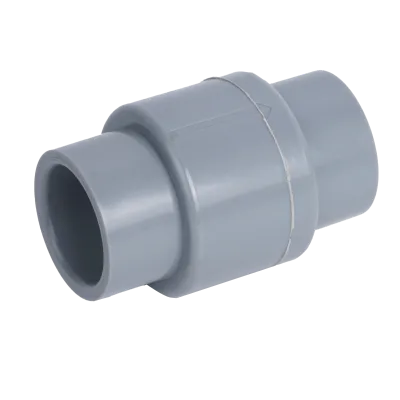
Connection types also demand scrutiny. The observed attributes include "Female" connections and "Push Down Pop-up" styles, indicating a mix of threaded and mechanical fittings. The "Swing Check Valve" keyword highlights the existence of specific valve types within the PVC drainage category, distinct from simple tees or reducers. When sourcing, procurement teams must match the connection style (e.g., Female, Push Down) to the existing infrastructure. Mismatched connection types can lead to installation failures or the need for costly adapters. Furthermore, the "Lateral 30° Tee" and "Reducing Tee" attributes point to specific geometric configurations that affect flow dynamics. These are not generic fittings but specialized components designed for specific pipe routing scenarios.
Compliance and Certification Standards
Navigating the regulatory landscape is essential for ensuring that PVC drainage components meet international and local safety requirements. The supply data references several standards, including "PVC DIN," "CE," "DIN," and "ISO." These designations indicate that the products are manufactured to align with European and international norms, which is crucial for export markets. The "DIN" standard specifically refers to German Institute for Standardization norms, which are often adopted as benchmarks for plastic piping systems globally.
However, the presence of a standard label does not guarantee compliance for every specific transaction. Buyers must verify that the specific model number, such as "UDD030" or "Uda016," carries the active certification for the intended application. The data lists "Certification: DIN, ISO, CE," suggesting a high level of compliance, but this should be treated as a general capability of the supplier rather than a blanket guarantee for every SKU. For drainage applications, specific standards regarding chemical resistance and fire safety may apply, which are not explicitly detailed in the general product attributes.
The "ASTM 2846" and "ASTM F441" standards appear in the background context but are marked as low-confidence. This distinction is vital; buyers should not assume these American standards are met unless explicitly confirmed by the supplier for the specific order. Instead, the procurement process should include a request for current test reports or certificates of conformity that explicitly reference the applicable standard for the product batch. Relying on the general "CE" mark without verifying the specific directive (e.g., Construction Products Regulation) can lead to compliance gaps in European markets. Therefore, the verification process must focus on obtaining documented proof that the specific product model meets the required standard for the target jurisdiction.
Cost Drivers and Pricing Dynamics
Understanding the cost structure of PVC drainage components requires an analysis of the observed price and order volume data. The listed price range spans from $0.10 to $130.46 USD, a variance that reflects the diversity of the product catalog. The lower end of the spectrum likely corresponds to small, standard fittings like 1/2" tees or simple connectors, while the higher end may represent specialized valves, larger diameter components, or complex assemblies like the "Water Pump Connectors" with extensive after-sale support.
The Minimum Order Quantity (MOQ) is another significant cost driver. The observed MOQ range is 1 to 10,000 units. This wide range indicates a flexible supply chain capable of serving both small contractors and large industrial projects. For buyers with small volume needs, the ability to order single units (MOQ 1) reduces inventory risk and upfront capital expenditure. Conversely, large-scale projects can leverage the higher MOQ tiers to negotiate better unit economics. The specific MOQ of "100pcs" mentioned for certain items suggests a threshold where the supplier transitions from retail-style pricing to wholesale pricing structures.
Beyond the unit price, logistics and packaging contribute to the total cost of ownership. The product is packed in "Carton" or "Standard Export Cartons," with a single package size of 56x37x30 cm and a gross weight of 1.0 kg. These dimensions and weights are critical for calculating freight costs, especially for international shipments where volumetric weight often dictates shipping fees. Buyers should factor in the "Single gross weight" and package dimensions when budgeting for logistics, as inefficient packing can significantly inflate the landed cost of the goods. Additionally, the "Delivery Time" of 5-7 days for certain items suggests a rapid turnaround capability, which can reduce the need for large safety stock inventories, thereby lowering holding costs.
Typical Applications and Performance Context
The application scope for PVC drainage components is broad, ranging from residential plumbing to specialized industrial uses. The data highlights applications in "Building," "Floor," "Hot Tub," "Bath Tub," and "Bathroom" settings. This indicates that the products are suitable for a wide array of sanitary and drainage systems. The "Swing Check Valve" and "Water Pump Connectors" specifically point to applications involving fluid dynamics control, such as preventing backflow in drainage lines or integrating with pump systems in hot tubs and bathtubs.
The "Style: Push Down Pop-up" attribute is particularly relevant for bathroom and bathtub applications, where user interaction and aesthetic design are paramount. These components are not merely functional but also serve a design function, requiring a "Modern" design style that aligns with contemporary architectural trends. The "Color: White, Gray, Black" options further support this, allowing buyers to match the fittings to the surrounding fixtures and interior design schemes.
However, the application data also includes "Buliding" (likely a typo for Building) and "Floor," which implies structural drainage systems. In these contexts, the performance of the PVC material under load and its resistance to environmental factors become critical. The "Function: For water pump accessories" suggests that some components are part of a larger mechanical system, requiring precise engineering to ensure compatibility with pumps and other equipment. Buyers must ensure that the selected components are not only compatible with the drainage pipe but also with the specific mechanical systems they serve. The "Project Solution Capability" offered by suppliers, including "graphic design" and "3D model design," further supports complex applications where custom integration is required.
Supplier Evaluation and Operational Capabilities
Evaluating suppliers for PVC drainage components requires looking beyond the product specifications to the operational capabilities of the manufacturer. The data indicates that the products originate from "Huangyan" and "Zhejiang, China (Mainland)," a region known for its manufacturing density in plastic fittings. The "Export Markets: Gloal" (likely Global) attribute suggests that the suppliers have experience in international trade, which is a positive indicator of reliability and logistical competence.
Supplier evaluation should focus on their "After-sale Service" offerings. The data lists "Online Technical Support," "Onsite Installation," "Free Spare Parts," and "Onsite Training." These services are critical for large-scale projects where technical expertise is required during installation and maintenance. The availability of "Free Spare Parts" can significantly reduce long-term maintenance costs and downtime. Buyers should verify the scope of these services, ensuring that they cover the specific geographic region of the project and the technical complexity of the installation.
The "Project Solution Capability" is another key differentiator. Suppliers offering "Cross Categories Consolidation" and "total solution for projects" can streamline the procurement process by providing a single source for diverse components. This capability reduces the administrative burden of managing multiple vendors and ensures compatibility across different product lines. The ability to provide "graphic design" and "3D model design" further enhances this value proposition, allowing for better planning and visualization of the drainage system before installation begins.
Quality Control and Long-Term Procurement Considerations
Quality control in PVC drainage procurement involves a multi-layered approach, starting with material verification and extending to long-term performance monitoring. The "Surface Treatment: Polished" attribute suggests a focus on finish quality, which can affect flow characteristics and resistance to clogging. Buyers should implement incoming quality checks to verify that the surface treatment meets the specified standards and that the "Polished" finish is consistent across the batch.
Long-term procurement considerations include the durability of the PVC material and its resistance to environmental degradation. While the data confirms the material as PVC, the specific formulation (e.g., rigid vs. flexible, UV resistant) is not detailed. Buyers should request material safety data sheets (MSDS) and long-term performance data to ensure the components will withstand the specific conditions of the application environment. The "Standard: PVC DIN" and "CE" certifications provide a baseline for quality, but ongoing verification is necessary to maintain compliance.
Finally, the "Delivery Time" of 5-7 days and the flexible MOQ structure offer significant advantages for supply chain resilience. Buyers can adopt a just-in-time inventory strategy, reducing storage costs and the risk of obsolescence. However, this requires close coordination with the supplier to ensure that lead times remain consistent during peak demand periods. The "Total solution for projects" capability further supports this by allowing for rapid scaling of orders as project needs evolve. By integrating these operational factors into the procurement strategy, buyers can ensure a reliable supply of high-quality PVC drainage components that meet both immediate and long-term project requirements.
FAQs
What materials are used for these PVC drainage valves?
The products are manufactured from PVC or generic plastic materials. This composition ensures durability for drainage applications while meeting specific DIN standards for plastic piping systems.
Which connection types are available for these fittings?
Available connection types include female threads and push down pop-up styles. Buyers must verify the specific connection style matches their existing infrastructure to prevent installation failures.
Can I find these valves with DIN and CE certifications?
Yes, the supplier offers products certified under DIN, ISO, and CE standards. However, buyers should request specific test reports to confirm compliance for their target jurisdiction rather than assuming blanket coverage.
How does the MOQ vary for different product models?
The minimum order quantity ranges from 1 unit up to 10,000 units depending on the specific item. Some specialized items like water pump connectors may require a minimum of 100 pieces.
What is the typical delivery time for these products?
The delivery time is typically 5 to 7 days for available items. This rapid turnaround supports projects needing quick replenishment without maintaining large safety stock inventories.
Which sizes are available for the PVC drainage components?
The product sizes range from 1/2 inch to 6 inches in diameter. Buyers should note that wall thickness varies, with some specifications listed as XXS, requiring validation for specific load requirements.