Source Nonrechargeable Plastic LED COB Flashlight for Park, Square, Garden
Compare 30 listings for Nonrechargeable Plastic LED COB Flashlight suitable for park, square, and garden applications. Review specifications including IP ratings, power sources, and materials to find the right supplier for your emergency or general lighting needs.
Key considerations
Products List
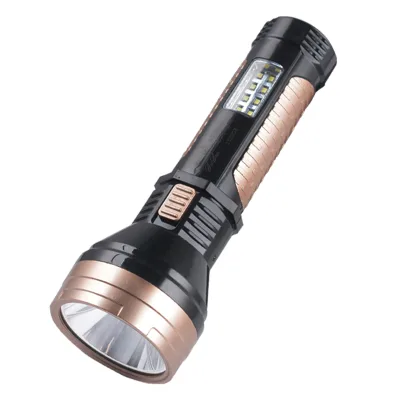


LED Portable USB Rechargeable Flashlight COB Strong Light Multi-Functional Flashlight
$1.00 - $2.50
MOQ: 200 Pieces


Bright LED Handheld COB Side Lights Portable Emergency USB Rechargeable Flashlight
$0.89 - $0.95
MOQ: 1100 Pieces
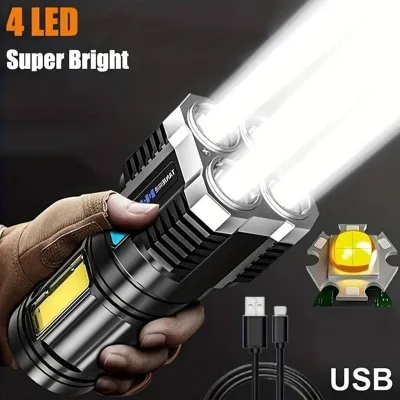


Comprehensive Sourcing Guide
Strategic Sourcing Guide for Nonrechargeable Plastic LED COB Flashlights
The procurement landscape for portable lighting solutions has shifted significantly toward specialized configurations that balance durability, cost-efficiency, and specific operational requirements. When sourcing a Nonrechargeable Plastic LED COB Flashlight, buyers must navigate a complex array of technical specifications and supply chain variables. While the core keyword suggests a specific product category, the actual market data reveals a diverse range of offerings that may or may not align perfectly with the "nonrechargeable" descriptor. This guide provides a disciplined framework for evaluating suppliers, verifying technical claims, and ensuring that the final procurement aligns with operational needs without relying on unverified assertions.
Technical Specification Analysis and Material Verification
The foundation of a successful procurement strategy lies in a rigorous analysis of technical specifications. The term "plastic" in the product description typically refers to the lamp body material, which is often cited as ABS Plastic or ABS in supplier catalogs. This material choice offers significant advantages in terms of weight reduction and impact resistance compared to metal alternatives. However, the supplied data presents a dichotomy where some entries list the material as ABS Plastic while others specify Aluminium Alloy. This inconsistency highlights the critical need for buyers to verify the exact material composition of the specific unit being ordered.
The light source technology is another pivotal area of focus. The keyword specifies "LED COB" (Chip on Board), which implies a high-density light source designed for uniform illumination. The observed data confirms the use of LED technology with a Color Temperature (CCT) of 6000K, described as "Daylight Alert" or "Pure White." This spectral output is ideal for tasks requiring high visibility and color accuracy, supported by a Color Rendering Index (Ra) of 90 in some configurations. Buyers must ensure that the "COB" designation is explicitly confirmed, as standard LED arrays may differ significantly in beam pattern and intensity.
Furthermore, the power source is a point of contention in the provided dataset. While the core keyword specifies "nonrechargeable," the observed facts include attributes such as "Rechargeable Flashlight," "Battery: 1200mAh," and "Charging time: 15 hours." This suggests that the market contains a mix of rechargeable and non-rechargeable units under similar branding or model numbers. A procurement specialist must explicitly request confirmation that the specific model ordered utilizes disposable batteries (e.g., AA or AAA) rather than an integrated lithium battery, as the presence of a "Rechargeable Battery" attribute contradicts the "nonrechargeable" requirement. The power consumption varies, with observed lamp powers ranging from 5W to 10W, directly influencing the battery life and luminous flux, which is observed between 100 and 1000 Lumens.
Compliance, Certification, and Safety Standards
In the global B2B market, compliance is not merely a formality but a prerequisite for market access and liability protection. The supplied product data indicates that certain units carry CE and RoHS certifications. These are essential for selling in the European Union and other regions with strict environmental and safety regulations. CE certification confirms that the product meets health, safety, and environmental protection standards, while RoHS (Restriction of Hazardous Substances) ensures that the product does not contain specific hazardous materials like lead or mercury.
However, the presence of these certifications in the general data does not guarantee that every unit in a specific order is compliant. Buyers must verify that the certification applies to the specific model number, such as "6808" or "XY-F007," and that the documentation provided by the supplier is current and valid. Additionally, the IP Rating is a critical safety and durability metric. The data shows an IP54 rating, which indicates protection against dust and water splashes from any direction. Some entries also mention "Life waterproof," a term that requires clarification, as it is not a standard IP classification. Buyers should insist on a standard IP rating (e.g., IP65 or IP67) if the flashlight is intended for harsh outdoor environments, rather than relying on vague descriptors.
The input voltage is listed as AC 220V (± 10%) in some contexts, which is unusual for a handheld flashlight and may indicate a misunderstanding of the product type or a specific charging base requirement. For a truly nonrechargeable unit, the input voltage should not be a primary specification unless it refers to the charging mechanism of a separate component. Buyers must scrutinize the electrical specifications to ensure they match the intended use case, particularly regarding the battery type, which is identified as a Lithium battery in some records but may differ in non-rechargeable variants.
Cost Drivers and Pricing Structure Evaluation
Understanding the cost drivers is essential for negotiating favorable terms and managing the total cost of ownership. The observed price range in the dataset is 0.89 to 6.9 USD, a wide variance that reflects differences in material quality, battery capacity, and brand positioning. The Minimum Order Quantity (MOQ) ranges from 1 to 3000 units, offering flexibility for both small-scale testing and large-volume deployments.
Several factors influence the final price. The choice of material is a primary driver; while ABS plastic is generally more cost-effective than Aluminium Alloy, the specific grade of plastic and the complexity of the molding process can affect costs. The battery type and capacity also play a significant role. A unit with a 1200mAh battery will inherently cost more than one using standard disposable cells, although the "nonrechargeable" requirement might shift the cost structure toward high-quality disposable battery holders. The luminous efficiency, observed at 100 lm/W, is a key performance indicator that correlates with the quality of the LED chips used. Higher efficiency chips often command a premium but offer better long-term value.
Additionally, customization services, such as logo printing or specific packaging details, can increase the unit cost. The data mentions "Customization: Available," which implies that buyers can tailor the product to their brand requirements. However, customization often comes with a higher MOQ or a setup fee. Buyers should also consider the packaging details, listed as "Carton," and how bulk packaging affects shipping costs. The weight of the product, observed at 214g, is a critical factor for logistics, as heavier units incur higher freight charges.
Typical Applications and Usage Scenarios
The versatility of LED COB flashlights makes them suitable for a wide range of applications, from emergency lighting to industrial use. The observed data lists applications such as "Park, Square, Factory, Garden," as well as "Camping, Car, Boat, Emergency Lighting." This broad applicability suggests that the product can serve both permanent installation needs and portable scenarios.
For emergency applications, the lighting period is a crucial metric. The data indicates a lighting time of 4 to 6 hours, with a lifespan of up to 50,000 hours. This longevity ensures that the flashlight remains a reliable tool during power outages or disaster scenarios. The "Emergency" usage tag is reinforced by the "Life waterproof" claim, suggesting robustness against the elements. However, for camping or outdoor activities, the weight and size (21.2cm) must be considered to ensure portability.
In industrial settings, such as factories or workshops, the high Color Rendering Index (Ra 90) and bright white light (6000K) are advantageous for safety and precision tasks. The ability to support dimming, as noted in the data, adds another layer of utility, allowing users to adjust brightness based on ambient conditions. Buyers should match the specific application requirements with the technical specifications, ensuring that the flashlight's IP rating and battery life align with the environmental challenges of the intended use.
Supplier Evaluation and Quality Control Protocols
Selecting the right supplier is as important as selecting the right product. The data indicates that products originate from locations such as Guangdong and Ningbo, China, which are major manufacturing hubs. While these regions offer competitive pricing and extensive supply chains, buyers must conduct thorough due diligence. The "Lighting And Circuitry Design" service suggests that some suppliers offer more than just manufacturing; they provide engineering support. This capability can be valuable for customizing the product to specific needs.
Quality control is paramount, especially given the inconsistencies observed in the data regarding material and power sources. Buyers should implement a rigorous inspection process that includes verifying the material composition, checking the IP rating through independent testing, and confirming the battery type. The "Warranty(Year): Other" entry in the data is vague and requires clarification. Buyers should negotiate a clear warranty period that covers defects in materials and workmanship, ensuring that the supplier stands behind their product.
Furthermore, the "Packaging Details" should be verified to ensure that the products are protected during transit. The use of carton packaging is standard, but the quality of the carton and the internal padding can prevent damage. Buyers should also consider the supplier's ability to handle customization requests, as this often requires a higher level of coordination and quality assurance.
Long-Term Procurement Considerations and Sustainability
Long-term procurement strategies must account for sustainability and total cost of ownership. While the "nonrechargeable" requirement implies the use of disposable batteries, buyers should evaluate the environmental impact of battery disposal. Some suppliers may offer eco-friendly packaging or take-back programs for used batteries, which can enhance the brand's sustainability profile.
The lifespan of the LED, observed at 50,000 hours, is a significant long-term benefit. This longevity reduces the frequency of replacements and minimizes waste. However, the battery life, typically 4 to 6 hours of continuous use, means that batteries will need to be replaced regularly. Buyers should consider the availability and cost of replacement batteries, as this is an ongoing expense.
Finally, the "Customization" option allows for brand alignment, which can be a strategic advantage in competitive markets. By investing in a customized product, buyers can differentiate their offering and build brand loyalty. However, this requires careful planning and a clear understanding of the customization process to avoid delays or quality issues.
Conclusion
Sourcing a Nonrechargeable Plastic LED COB Flashlight requires a meticulous approach that balances technical specifications, compliance, cost, and supplier reliability. The observed data provides a foundation for understanding the market, but buyers must verify every claim to ensure the product meets their specific needs. By focusing on material quality, certification validity, and long-term operational costs, buyers can make informed decisions that deliver value and reliability. The diversity of the market offers numerous options, but success lies in the ability to navigate the complexities and select the right partner for the job.
FAQs
What is the typical material used for the lamp body?
The lamp body is typically made of ABS plastic, though some models use aluminum alloy. Buyers must verify the specific material composition for each unit to ensure it matches the durability requirements for their intended application.
How long does the battery last during continuous use?
The lighting period ranges from 4 to 6 hours on a single charge or battery set. This duration supports emergency scenarios, but users should confirm if the specific model uses a rechargeable lithium battery or disposable cells.
Which certifications are available for this flashlight product?
Available certifications include CE and RoHS, ensuring compliance with safety and environmental standards. Buyers should verify that these certifications apply to the specific model number being ordered to guarantee market access and liability protection.
Can the product be customized for specific branding needs?
Customization is available for logo printing and packaging details. However, this service often requires a higher minimum order quantity and may involve additional setup fees, so buyers should confirm the exact terms before placing an order.
What is the waterproof rating of the flashlight?
The product features an IP54 rating, offering protection against dust and water splashes. Some listings mention life waterproof claims, but buyers should insist on standard IP classifications for harsh outdoor environments to ensure reliability.
How much does the unit weigh for shipping calculations?
The observed product weight is approximately 214 grams. This weight is a critical factor for logistics planning, as heavier units may incur higher freight charges compared to lighter alternatives in the same category.