Source Offset Printing Custom Spiral Notebook for School, Gift, Promotion
Find 30 options for Offset Printing Custom Spiral Notebook with spiral binding, hard paper or PP covers, and customized page counts. Compare specifications, pricing, and customization features for school, gift, and promotion needs.
Key considerations
Products List


Hardcover Customized Logo Notebook Promotion Multi Color Spiral Paper Notebook
$1.20 - $3.00
MOQ: 250 pieces


Custom Practical Offset Printing Iron Ring Coil Spiral Printing Notebooks
$2.15 - $10.73
MOQ: 500 Pieces


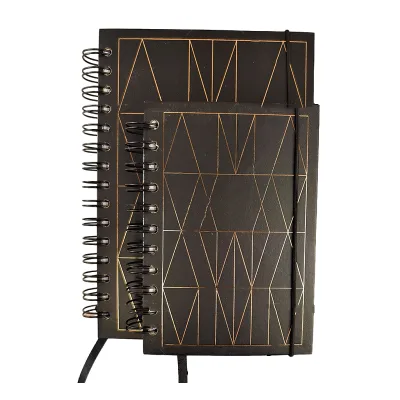


Spiral Notebook Printing Spiral Notebook Personalised Journals Note Book
$0.50 - $2.50
MOQ: 500 Pieces


Comprehensive Sourcing Guide
Strategic Sourcing Guide for Offset Printing Custom Spiral Notebooks
Navigating the global market for offset printing custom spiral notebooks requires a disciplined approach that balances technical specifications with commercial realities. The product category is defined by a specific manufacturing process where ink is transferred from a plate to a rubber blanket and then to the paper, allowing for high-volume, high-quality reproduction of custom designs. This guide synthesizes observed market data and technical attributes to provide a framework for procurement professionals seeking to source these items efficiently. The focus remains on verifying facts rather than assuming universal performance, ensuring that buyers make decisions based on concrete evidence rather than marketing generalizations.
Technical Specifications and Material Composition
The foundation of a successful procurement order lies in a precise understanding of the product's physical and technical attributes. In the observed market, spiral notebooks are characterized by distinct variations in binding, cover materials, and paper types. The binding mechanism is consistently identified as spiral binding, which allows the notebook to lay flat and rotate 360 degrees, a critical feature for usability in educational and professional settings. However, buyers must verify the specific construction of the spiral wire, as this affects durability and the ability to write on the edge of the page.
Cover materials vary significantly between listings, presenting a choice between hard paper and polypropylene (PP). Hard paper covers offer a traditional, rigid feel often associated with premium stationery, while PP covers provide enhanced water resistance and durability. The inner material is predominantly offset paper, a standard choice for its smooth surface and excellent ink absorption, which is essential for the offset printing process. The paper weight and finish are equally critical; some specifications mention 55g inner paper, while others indicate uncoated surfaces or film lamination finishes.
The printing capabilities are a central feature of this category. The market data confirms the availability of CYMK (Cyan, Yellow, Magenta, Black) cover printing, which enables full-color, photorealistic designs. Inside pages typically feature ruling lines, double lines, or square grids, with customization options available for other page layouts. The number of pages is another variable, with observed ranges extending from 160 to 300 pages, or fully customized counts based on order volume. Buyers should explicitly confirm the page count and line style in their purchase orders to avoid discrepancies between the prototype and the final shipment.
Design Customization and Branding Options
Customization is a primary driver for purchasing spiral notebooks in the B2B sector. The observed data indicates that customization is widely available, encompassing logos, cover designs, and internal layouts. Suppliers often offer free design services, allowing buyers to submit their artwork for professional refinement before production begins. This service is particularly valuable for companies seeking to create branded promotional items or corporate gifts.
The branding process typically involves placing a customized logo on the cover, which can be printed using the aforementioned CYMK offset process. The ability to offer free designs suggests a collaborative approach where the supplier assists in optimizing artwork for print, ensuring color accuracy and proper placement. Furthermore, the product style can range from standard printed covers to hardcover editions, with some models offering specific dimensions such as 1721cm or 12.717.7cm. Customized sizes are also a common offering, allowing buyers to tailor the notebook to specific ergonomic needs or branding requirements.
When evaluating design options, buyers must consider the limitations of the offset printing process. While offset printing excels at high-volume runs with consistent color reproduction, the setup costs can be higher for very small batches. Therefore, the decision to pursue full customization should be weighed against the order quantity. Additionally, the surface finish, such as film lamination, can be applied to the cover to enhance durability and visual appeal, though this should be confirmed as a specific option during the design phase.
Cost Drivers and Pricing Dynamics
Understanding the cost structure of offset printing custom spiral notebooks is essential for budgeting and negotiation. The pricing model is not static; it is highly dependent on the order quantity, a factor explicitly noted in the market data where prices are "subject to order quantity." This implies a tiered pricing structure where the unit cost decreases as the volume increases, a standard economic principle in manufacturing.
The observed price range in the market spans from $0.15 to $10.73 USD. This wide variance reflects differences in materials, complexity of design, page count, and order volume. A notebook with a simple hard paper cover and 160 pages will naturally cost less than a premium version with a PP cover, film lamination, and 300 customized pages. Buyers should not assume that a lower price point guarantees a lower quality product, but rather that the price reflects the specific combination of attributes selected.
Other cost drivers include the complexity of the binding and the finishing processes. Spiral binding is a standard process, but the quality of the wire and the precision of the punching can affect the final cost. Similarly, additional processes such as film lamination or special coating can add to the unit price. The packaging method, whether shrink bag and out carton or corrugated box, also influences the total cost, especially for large shipments where packaging materials and labor are significant factors.
Typical Applications and Usage Scenarios
The versatility of offset printing custom spiral notebooks makes them suitable for a diverse range of applications. The observed usage categories include gifts, promotion, school, and pocket use. This broad applicability stems from the ability to customize the notebook for specific audiences and purposes.
In the educational sector, these notebooks are frequently used as school supplies. The availability of ruling lines, square grids, and various page counts makes them ideal for students and teachers. The spiral binding ensures ease of use in classrooms, while the durable covers protect the contents during daily transport. For promotional campaigns, the notebooks serve as effective branding tools. Companies can print their logos and marketing messages on the cover, creating a useful item that recipients are likely to keep and use regularly.
The gift market also represents a significant application area. Customized notebooks can be tailored for corporate events, conferences, or personal gifts, with options for hardcover finishes and premium materials. The pocket-sized variants are particularly useful for professionals who need a compact solution for note-taking on the go. Additionally, the "organizer/planner" type suggests that these notebooks can be configured with functional layouts for scheduling and task management, expanding their utility beyond simple notepads.
Supplier Evaluation and Geographic Considerations
When selecting a supplier for offset printing custom spiral notebooks, buyers must evaluate several key factors beyond just price. The geographic origin of the product is a relevant consideration, with observed data indicating production in locations such as Heifei, China, and Fujian, China. These regions are known for their manufacturing capabilities in the stationery sector, but buyers should verify the specific factory capabilities and quality control measures in place.
Supplier evaluation should include a review of their customization capabilities, specifically their ability to handle the requested design complexity and material choices. The availability of OEM (Original Equipment Manufacturer) and ODM (Original Design Manufacturer) services is a strong indicator of a supplier's flexibility and willingness to collaborate. Buyers should also assess the supplier's sample policy, as the ability to accept samples allows for physical verification of quality before committing to a large order.
The export history of the supplier can also provide insights into their reliability. Data indicates that some suppliers have experience exporting to regions such as Western Africa and South America. While this does not guarantee performance in other markets, it suggests a level of logistical competence and familiarity with international shipping requirements. Buyers should request references or case studies from similar projects to validate the supplier's track record.
Quality Control and Compliance Verification
Ensuring the quality of the final product requires a robust quality control (QC) strategy. Buyers must verify that the supplier adheres to specific standards regarding paper weight, binding strength, and print quality. For instance, the standard paper weight of 55g should be confirmed for all inner pages, and the binding should be tested for durability to ensure the spiral does not break or detach under normal use.
Compliance and certification checks are also critical, although specific certification data in the provided context is limited. While FSC (Forest Stewardship Council) certification is mentioned in background information, buyers should not assume all products are certified without verification. Instead, buyers should explicitly request proof of certification if sustainability is a priority for their organization. Similarly, any claims regarding safety standards or material composition should be backed by documentation from the supplier.
The production standards, such as specific dimensions (e.g., 1721cm or 12.717.7cm), must be strictly adhered to. Deviations in size can affect the usability of the notebook and the fit of any custom packaging. Buyers should include tolerance limits in their specifications and conduct random sampling inspections upon receipt of the goods to ensure compliance.
Long-Term Procurement Considerations
Sourcing offset printing custom spiral notebooks is not a one-time transaction but part of a long-term procurement strategy. Buyers should consider the scalability of their orders and the supplier's ability to handle volume fluctuations. The observed MOQ (Minimum Order Quantity) ranges from 1 to 100,000 units, indicating flexibility for both small and large buyers. However, the lead time and production capacity should be discussed to ensure timely delivery, especially for time-sensitive promotional campaigns.
Packaging is another long-term consideration. The observed packaging methods, such as shrink bags with outer cartons or corrugated boxes, should be evaluated for their ability to protect the products during transit. For international shipments, the packaging must meet specific requirements to prevent damage and ensure compliance with customs regulations.
Finally, buyers should establish a clear communication channel with the supplier for future orders. This includes agreeing on design file formats, color proofing processes, and quality assurance protocols. By building a strong relationship with a reliable supplier, buyers can ensure consistency in product quality and streamline the procurement process for future needs.
| Attribute | Observed Range/Option | Verification Requirement |
|---|---|---|
| Binding Type | Spiral Binding | Confirm wire gauge and durability |
| Cover Material | Hard Paper, PP | Verify material thickness and finish |
| Inner Material | Offset Paper | Check paper weight (e.g., 55g) |
| Printing Type | Offset Printing (CYMK) | Confirm color accuracy and proofing |
| Page Count | 160, 192, 300, Custom | Specify exact count in PO |
| Size | 1721cm, 12.717.7cm, Custom | Verify tolerance limits |
| Origin | Heifei, China; Fujian, China | Confirm factory location and capacity |
| Packaging | Shrink Bag & Carton, Corrugated Box | Ensure transit protection standards |
By adhering to these guidelines and focusing on verified facts, buyers can navigate the complexities of sourcing offset printing custom spiral notebooks with confidence and precision. The key lies in detailed specification, rigorous supplier evaluation, and a commitment to quality control throughout the procurement lifecycle.
FAQs
What customization options are available for the notebook cover?
Customization is available for logos, cover designs, and page layouts. Suppliers offer free design services and allow CYMK printing on hard paper or PP covers to meet specific branding needs.
Which binding type is used for these spiral notebooks?
The notebooks feature spiral binding that allows the pages to lay flat and rotate 360 degrees. This construction ensures durability and ease of use for students and professionals in various settings.
Can I order notebooks with a customized number of pages?
Yes, the page count can be customized or selected from options like 160, 192, or 300 pages. The inner material is typically offset paper with ruling lines, double lines, or square grids.
What is the price range for offset printing custom spiral notebooks?
The observed price range spans from 0.15 to 10.73 USD per unit. Prices are subject to order quantity, meaning larger volumes generally result in lower unit costs due to economies of scale.
How are these notebooks packaged for shipping?
Packaging options include shrink bags with outer cartons or corrugated boxes depending on the specific model. This ensures protection during transit while maintaining the integrity of the custom printed covers.
Where are these notebooks manufactured?
Manufacturing locations include Heifei and Fujian in China. These regions are known for stationery production capabilities, offering various models like SN-013 and SN-001 with specific size standards.
What are the typical usage scenarios for these notebooks?
These notebooks are suitable for gifts, promotions, school supplies, and pocket use. They can also function as organizers or planners with customized layouts for scheduling and task management.