Source Oil Filter Production Line for Chips, Popcorn, and Cooking Oil
Explore 30 listings for the Oil Filter Production Line designed for industrial food processing. Buyers can compare specifications like power supply, dimensions, and sealing diameter across models such as JR-ZXG-5 and DYG-50 to find suitable equipment for deep fryers.
Key considerations
Products List


Full Auto Spin on Oil Filter Automatic Sealing Machine Oil Filter Production Line
$10000.00 - $11000.00
MOQ: 1 set


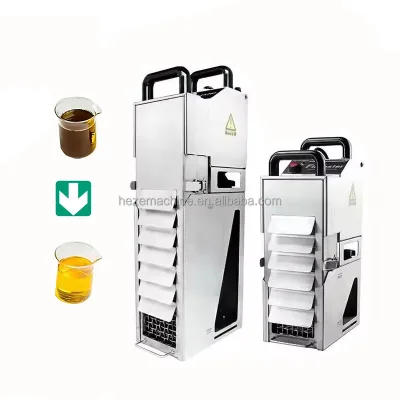


Hot Selling Oil Filters Processing Equipment
$1250.00 - $1300.00
MOQ: 1 Pieces
Sichuan Guangxin Machinery of Grain & Oil Processing Co., Ltd.

Comprehensive Sourcing Guide
Strategic Sourcing Guide for Oil Filter Production Lines
Procuring an Oil Filter Production Line requires a rigorous approach that balances technical precision with supply chain reliability. The market offers a diverse array of machinery, ranging from compact units to large-scale automated systems. Buyers must navigate a landscape where specifications vary significantly between models, and where the distinction between a standalone filter and a complete production line is critical. This guide outlines the essential factors for evaluating potential suppliers and equipment, ensuring that the selected machinery aligns with operational goals and safety standards.
Technical Specifications and Machine Variability
The first step in sourcing an Oil Filter Production Line is a detailed analysis of technical specifications. Data indicates that the market contains distinct models with varying capabilities, such as the JR-ZXG-5, JR-PYJ-1, and JR-FGJ-01. These models differ in physical dimensions, power requirements, and operational parameters. For instance, one observed configuration lists dimensions of 12409301350mm, while another presents a larger footprint of 15509701600mm. A third model, the JR-GYJ-5, is associated with a standard dimension of 240010001500mm. These variations suggest that the physical space available in the buyer's facility will dictate the feasible machine size.
Power supply requirements are another critical variable. Some units operate on a 380V/50Hz supply, which is common for industrial heavy machinery, while others are designed for 220 Volts/Hertz. The total power consumption can range from 1.5kw for smaller auxiliary units to 10kw for more robust production lines. Air pressure requirements also play a role in the setup; a specific threshold of 0.6MPa is noted for certain configurations. Buyers must verify that their facility's utility infrastructure can support these specific electrical and pneumatic demands before finalizing a purchase.
Furthermore, the physical construction of the equipment is paramount. The material composition is frequently cited as 304 Stainless Steel, which is essential for food-grade applications to prevent corrosion and ensure hygiene. The steel plate width is observed at 45mm, with thicknesses ranging from 0.25mm to 0.5mm. For filtration efficiency, the internal structure may be designed as a 3-Segment Style, and the sealing diameter for the shell can vary between 50mm and 100mm. The effective height of the product processing area is also a key metric, with ranges observed from 60mm to 180mm. Understanding these granular details ensures that the machinery will fit the intended process flow.
Compliance, Certification, and Safety Standards
Verifying compliance and certification is a non-negotiable step in the procurement process. While general industry knowledge often references ISO 9001 or ISO 14001, specific product data must be the primary source of truth for any claim. In the observed market data, the CE certification is explicitly listed for certain models, such as the DYG-50. Additionally, an ISOCE certification is noted for specific units. It is crucial for buyers to request and validate these certificates directly from the supplier rather than relying on general marketing materials.
Safety and operational standards are often tied to the electrical components used. The presence of reputable electrical appliance brands, such as Chint, in the supply chain can be an indicator of quality control, though this should be verified per unit. The equipment weight is another factor that influences installation and compliance; weights observed range from 955kg to 2000kg. Heavier units may require reinforced flooring or specialized lifting equipment, which impacts the overall site preparation costs. Buyers should ensure that the machinery meets the safety regulations of their specific region, particularly regarding electrical safety and pressure vessel standards, as the air pressure requirements indicate the presence of pressurized systems.
Cost Drivers and Pricing Dynamics
The cost of an Oil Filter Production Line is influenced by a complex matrix of factors, including capacity, automation level, and material quality. The observed price range in the market is extensive, spanning from 267 USD to 42,000 USD. This wide disparity suggests that the "production line" keyword covers everything from small, manual or semi-automatic units to fully automated, high-capacity systems. The lower end of the spectrum likely corresponds to smaller, single-function filters, while the higher end represents comprehensive lines with advanced features like digital displays and automatic grading.
Capacity is a primary driver of cost. Units with a capacity of 9000L/H are significantly more expensive than those with lower throughput. The automation level also dictates price; models described as "Automatic" or "Customized" often command a premium over standard configurations. The packaging method, whether a wooden box, wooden crate, or plywood case, adds to the final cost and affects shipping logistics. Buyers should be wary of prices that seem unusually low, as they may indicate compromises in material quality, such as the use of non-stainless steel or lower-grade electrical components.
Typical Applications and Process Integration
Understanding the intended application is vital for selecting the right equipment. The data indicates that these machines are used in conjunction with deep fryers, specifically for processing chips and popcorn. This suggests a primary application in the snack food industry, where oil filtration is essential for maintaining product quality and extending oil life. The process involved is thermal processing, which requires the machinery to withstand high temperatures and potential oil degradation.
The scope of application extends beyond just filtering; it includes the return of filtered oil to the fryer system. The internal structure, such as the 3-Segment Style, is designed to handle the specific viscosity and particulate load associated with frying oils. The size of the main board, ranging from 3mm to 6mm, may influence the filtration surface area and efficiency. Buyers should ensure that the machine's design aligns with the specific type of oil and food product they are processing. For example, a machine optimized for popcorn oil may not be ideal for heavy-duty industrial frying without specific adjustments.
Supplier Evaluation and Origin Verification
When evaluating suppliers, the origin of the product is a significant data point. The observed production origins include China and specifically Shandong, China. While the origin itself does not guarantee quality, it provides context for the supply chain and logistics. Buyers should verify the supplier's ability to support the equipment after the sale, including the availability of spare parts and technical support. The customization options available, such as the ability to tailor the machine to specific needs, are a strong indicator of a supplier's flexibility and engineering capability.
The packaging details, such as "Wooden Box Packaging" or "Plywood Case Outside," also reflect the supplier's attention to shipping safety. Heavy equipment like these filters requires robust packaging to prevent damage during transit. Buyers should inquire about the supplier's track record with international shipping and their ability to handle customs documentation. The model numbers, such as HZ-Y45 for a cooking oil filter machine or LY-650, serve as unique identifiers that should be cross-referenced with the supplier's official catalog to ensure authenticity.
Quality Control and Long-Term Procurement Considerations
Quality control extends beyond the initial purchase to the long-term performance of the equipment. The use of 304 Stainless Steel is a baseline requirement for food safety, but buyers should verify the thickness and finish of the steel plates. The dimensions of the equipment, such as the 1100mmx800mmx2100mm configuration, must be precise to ensure proper integration into the production line. Digital displays on the control panels, as seen in some models, facilitate easier monitoring and troubleshooting, which is crucial for maintaining uptime.
Long-term procurement considerations include the availability of maintenance services and the lifecycle of the machine. The equipment weight, ranging from 955kg to 2000kg, implies that the machine is a significant capital investment. Buyers should plan for the necessary infrastructure, such as reinforced floors and dedicated power lines, to support the machine's operation. The customization options allow for future upgrades, but the base model should be robust enough to handle the expected volume. Regular maintenance schedules should be established to ensure the sealing diameter and internal structures remain effective over time.
Comparative Analysis of Key Models
To assist in decision-making, the following table summarizes the key technical differences observed among the various models. This comparison highlights the diversity in specifications and helps buyers identify the most suitable option for their specific needs.
| Model Number | Dimensions (mm) | Power Supply | Equipment Weight (kg) | Material | Certification |
|---|---|---|---|---|---|
| JR-ZXG-5 | 12409301350 / 15509701600 | 380V/50Hz | 955 | 304 Stainless Steel | CE |
| JR-PYJ-1 | 11008002100 | 220 Volts/Hertz | 2000 | 304 Stainless Steel | ISOCE |
| JR-FGJ-01 | 11008002100 | 220 Volts/Hertz | 2000 | 304 Stainless Steel | CE |
| JR-GYJ-5 | 240010001500 | 380V/50Hz | 2000 | 304 Stainless Steel | CE |
| HZ-Y45 | N/A | Electric | N/A | 304 Stainless Steel | N/A |
| DYG-50 | N/A | N/A | N/A | 304 Stainless Steel | CE |
| DGL-150 | N/A | N/A | N/A | 304 Stainless Steel | N/A |
Note: Data is derived from observed product listings and may vary by specific configuration. Not all models listed in the source data have complete specifications for every column.
Final Procurement Recommendations
Selecting an Oil Filter Production Line is a strategic decision that impacts the efficiency and safety of the entire production process. Buyers must prioritize technical compatibility, ensuring that power, dimensions, and material specifications match their facility's capabilities. Compliance with certifications like CE and ISOCE is essential for legal and safety reasons. The wide price range necessitates a clear definition of budget and required capacity to avoid overspending on unnecessary features or underspending on critical components.
By focusing on verified data rather than marketing claims, buyers can make informed decisions that lead to successful long-term operations. The availability of customization and the robustness of the construction materials are key indicators of a high-quality machine. Ultimately, the goal is to secure a production line that not only meets current production needs but also offers the flexibility to adapt to future demands in the food processing industry.
FAQs
What certifications are available for oil filter production lines?
Some models carry CE and ISOCE certifications for safety compliance. Buyers must verify specific certificates directly from the supplier rather than relying on general marketing claims to ensure legal and operational safety.
Which power supply options are supported by these machines?
Units operate on either 380V/50Hz or 220 Volts/Hertz depending on the model. Facility infrastructure must be verified to support the specific electrical and pneumatic demands before finalizing a purchase.
How does the equipment weight affect installation requirements?
Weights range from 955kg to 2000kg, influencing installation needs significantly. Heavier units may require reinforced flooring or specialized lifting equipment, impacting overall site preparation costs and logistics planning.
Can the production line be customized for specific needs?
Customization is available to tailor machines to specific operational requirements. This flexibility indicates a supplier's engineering capability, allowing buyers to adapt the equipment for unique process flows or product types.
What materials are used in the construction of these filters?
304 Stainless Steel is the standard material used for food-grade applications. This ensures corrosion resistance and hygiene, with steel plate thicknesses observed between 0.25mm and 0.5mm for durability.
Where are these oil filter production lines manufactured?
Products originate from China, with specific mentions of Shandong as a production hub. This origin provides context for the supply chain and logistics, though quality must be verified per unit.