Source Oil Free Diaphragm Vacuum Pump for Lab, School, and Industrial Use
Find and compare 30 Oil Free Diaphragm Vacuum Pump models from Chinese manufacturers. Evaluate specifications like pumping speed, vacuum degree, and material composition to select the right unit for laboratory, school, or industrial applications.
Key considerations
Products List




Comprehensive Sourcing Guide
Oil Free Diaphragm Vacuum Pump Sourcing Guide
Procuring oil-free diaphragm vacuum pumps requires a nuanced understanding of the trade-offs between maintenance-free operation and pumping speed limitations. These pumps are engineered to deliver clean, oil-free vacuum environments, making them indispensable for applications where contamination from lubricants is unacceptable. Buyers must recognize that while the absence of oil eliminates the need for regular oil changes and reduces the risk of product contamination, it often comes with constraints on ultimate vacuum levels and continuous duty cycles compared to rotary vane or liquid ring alternatives. The decision to source this specific technology hinges on the criticality of air quality and the specific vacuum requirements of the end-use process.
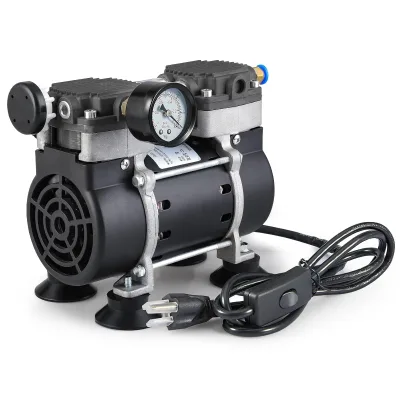
The market for these devices is diverse, ranging from small-scale laboratory units to robust industrial fore-pumps. Sourcing guides must account for the wide variance in specifications, including pumping speeds that can range from low-volume laboratory needs to higher-capacity industrial applications. Buyers should focus on verifying the pump head configuration, membrane material, and valve construction, as these components directly dictate the pump’s chemical compatibility and longevity. Understanding the structural differences between desktop models and larger industrial units is essential for aligning the procurement with the physical and operational constraints of the facility.
Product Scope and Observed Listing Signals
The current market landscape for oil-free diaphragm vacuum pumps reveals a broad spectrum of product offerings, with observed price points ranging significantly from approximately $54 to $55,000 USD. This wide variance reflects the difference between small, low-capacity units suitable for educational or light laboratory use and heavy-duty industrial systems designed for continuous operation. The minimum order quantities (MOQ) observed typically range from 1 to 10 units, indicating that suppliers are flexible in accommodating both single-unit pilot purchases and small batch orders. Buyers should interpret these price and MOQ signals as indicators of the product tier, with lower prices generally correlating to smaller pumping speeds and simpler constructions.
Listing signals also highlight the prevalence of customization options, with many suppliers offering tailored solutions for specific industrial needs. The observed product attributes indicate a strong focus on desktop structures for smaller units, while larger models may feature different structural designs. Applications are frequently cited as laboratory and school environments, suggesting a significant portion of the market is geared toward academic and research institutions. However, the presence of higher-capacity models with greater pumping speeds and robust materials suggests that industrial applications are also well-served. Buyers must carefully cross-reference these listing signals with their specific technical requirements to avoid over-specifying or under-specifying their procurement needs.
Technical Specifications to Verify
When evaluating technical specifications, the pumping speed is a primary differentiator, with observed values ranging from 12 L/min to 120 L/min. Buyers must verify the specific pumping speed required for their application, as this metric directly impacts the cycle time and throughput of their processes. The pump head configuration is another critical factor, with some models featuring dual pump heads to enhance performance or redundancy. Additionally, the ultimate pressure vacuum capability, observed to be larger than 0.08 MPa (200 mbar), provides a baseline for the vacuum level achievable. It is essential to confirm whether the observed specifications meet the absolute vacuum requirements of the intended application, as exceeding these limits may result in inefficient operation or equipment damage.
Material composition and structural design are equally important for ensuring durability and chemical resistance. The membrane material, often specified as PTFE, offers excellent chemical inertness and longevity, making it suitable for handling corrosive gases. Valve construction, typically made from stainless steel, contributes to the pump’s ability to withstand high-pressure differentials and resist wear. Buyers should also consider the motor power, which can vary significantly, with some models operating at 300W, to ensure compatibility with available power supplies. The overall dimensions and weight, such as a 20kg unit with dimensions of 390150250mm, are crucial for planning installation space and handling logistics. Verifying these physical attributes ensures that the selected pump fits within the designated footprint and can be safely installed.
Compliance and Safety Documentation
Compliance with international standards is a non-negotiable aspect of sourcing industrial vacuum pumps. Certifications such as ISO and CE are commonly observed, indicating that the products meet specific safety, health, and environmental protection requirements. Buyers must verify the validity and scope of these certifications, ensuring that they apply to the specific model being purchased. The presence of SGS certification in some listings further suggests adherence to rigorous quality and safety benchmarks. It is advisable to request copies of these certificates and confirm their authenticity with the issuing bodies to mitigate compliance risks.
Safety documentation should also include detailed information on operating conditions and maintenance requirements. Some models are designed for wet working conditions, while others are intended for dry environments, which affects their suitability for different applications. The distinction between oil-free and oil-lubricated pumps is critical for safety and environmental compliance, particularly in industries with strict emissions regulations. Buyers should ensure that the pump’s design aligns with their facility’s safety protocols and that all necessary safety manuals and warning labels are provided. Verifying these documentation requirements helps prevent operational hazards and ensures regulatory compliance.
Cost Drivers and Commercial Terms
The cost of oil-free diaphragm vacuum pumps is influenced by several key factors, including pumping speed, material quality, and customization options. Higher pumping speeds and more robust materials, such as PTFE membranes and stainless steel valves, typically command higher prices. Customization services, which are widely available, can also add to the overall cost, depending on the complexity and extent of the modifications required. Buyers should request detailed quotations that break down these cost components to understand the value proposition of each supplier. Comparing prices across different suppliers while considering the specific technical specifications will help in identifying the most cost-effective solution.
Commercial terms, including packaging and warranty, play a significant role in the total cost of ownership. Packaging options vary from hard paper boxes to wooden packages, with the latter often providing better protection for larger or more delicate units. The choice of packaging can impact shipping costs and the risk of damage during transit. Warranty terms, such as a one-year warranty observed in some listings, provide a safety net against manufacturing defects. Buyers should negotiate clear warranty terms and understand the process for claiming repairs or replacements. Additionally, considering the lead times and payment terms can help in managing cash flow and ensuring timely delivery.
Supplier Qualification and Quality Control
Supplier qualification is a critical step in the procurement process, requiring a thorough assessment of the supplier’s capabilities and reputation. Buyers should verify the supplier’s manufacturing location, with origins such as Shaanxi, Xi'an, Zhengzhou, and Jiangsu being common in the observed data. Understanding the supplier’s geographic location can provide insights into their supply chain efficiency and logistical capabilities. It is also important to assess the supplier’s quality control processes, including their adherence to standards like ISO and CE. Requesting information about their quality management systems and inspection procedures can help ensure that the products meet the required quality standards.
Quality control should extend to the pre-shipment inspection phase, where buyers can verify that the delivered products match the agreed-upon specifications. This includes checking the physical dimensions, weight, and material composition of the pumps. Buyers may also consider conducting third-party inspections to provide an independent verification of quality. Establishing a clear communication channel with the supplier for addressing any quality issues is essential for maintaining a productive relationship. By prioritizing supplier qualification and rigorous quality control, buyers can minimize the risk of receiving substandard products and ensure the reliability of their vacuum pump systems.
Long-Term Procurement Checks
Long-term procurement success depends on establishing a framework for ongoing performance monitoring and supplier relationship management. Buyers should implement a system for tracking the performance of the vacuum pumps in their operations, including metrics such as pumping speed consistency, maintenance frequency, and energy consumption. Regularly reviewing these performance data points can help identify potential issues early and inform future procurement decisions. It is also important to maintain open lines of communication with the supplier for feedback and continuous improvement. This collaborative approach can lead to better product designs and more responsive service support.
Additionally, buyers should periodically reassess their technical requirements and market conditions to ensure that their procurement strategy remains aligned with their business goals. Technological advancements in vacuum pump technology may offer new opportunities for improved efficiency or cost savings. Staying informed about industry trends and emerging technologies can help buyers make proactive decisions. Furthermore, evaluating the supplier’s ability to provide long-term support, including spare parts availability and technical assistance, is crucial for minimizing downtime and ensuring the longevity of the equipment. By focusing on these long-term checks, buyers can build a resilient and efficient procurement process for oil-free diaphragm vacuum pumps.
FAQs
What certifications do these oil free diaphragm vacuum pumps have?
These pumps hold ISO and CE certifications for quality and safety compliance. The listed products also meet SGS standards, ensuring they adhere to international manufacturing requirements for laboratory and school applications.
Can I get customized oil free diaphragm vacuum pumps for my lab?
Yes, customization is available for these oil free diaphragm vacuum pumps to meet specific needs. Buyers can request tailored specifications while maintaining the core structure and material integrity required for wet or dry working conditions.
Which Oil Free Diaphragm Vacuum Pump model offers the highest pumping speed?
The GM-2 model offers a pumping speed of 120 liters per minute, which is the highest among the listed options. This capacity makes it suitable for applications requiring rapid air evacuation in laboratory settings.
How much does an Oil Free Diaphragm Vacuum Pump cost?
The observed price range for these pumps is between 54 and 55,000 USD depending on the model and specifications. Pricing varies significantly based on features like motor power, vacuum degree, and overall dimensions.
What is the minimum order quantity for these oil free diaphragm vacuum pumps?
The minimum order quantity ranges from 1 to 10 units for these oil free diaphragm vacuum pumps. This flexibility allows buyers to purchase small batches for testing or larger quantities for immediate deployment in schools.
Are these oil free diaphragm vacuum pumps suitable for wet working conditions?
Yes, certain models are designed to operate in wet working conditions without oil contamination. These pumps utilize PTFE membranes and stainless steel valves to ensure durability and performance in demanding environments.
Where are these oil free diaphragm vacuum pumps manufactured?
These pumps originate from various locations in China, including Shaanxi, Xi'an, Zhengzhou, and Jiangsu. The diverse manufacturing bases support different production standards and packaging requirements for global export.