Source Online Guidance Transfer Vehicles for Hospital, Warehouse, and Sanitation
Find 30 Online Guidance Transfer Vehicles suitable for hospital, warehouse, and sanitation applications. Compare specifications such as drive mode, navigation precision, and loading capacity to identify the right solution for your logistics needs; compare the available evidence and request quotations based on your requirements.
Key considerations
Products List


Motorized Rail Guided Vehicle Rgv Warehouse Cargo Transfer Vehicles
$13000.00 - $13300.00
MOQ: 1 Pieces


Automatic Guided Material Transport Robot Platform Transfer Cart Vehicle Agv
$25000.00 - $60050.00
MOQ: 1 Sets


Automated Guided Vehicle Heavy Duty Roller Transfer Cart Trolley Agv
$25000.00 - $60050.00
MOQ: 1 Sets

Automated Guided Vehicle Agv Roller Transportation Trolley Transfer Cart in Warehouse
$25000.00 - $60050.00
MOQ: 1 Sets


Electric Transfer Trolley and Die Transfer Vehicle for Factory Transportation
$3000.00 - $3500.00
MOQ: 1 Pieces


Heavy Duty Motorized Factory Use Transfer Vehicle for Material Handling
$3000.00 - $3500.00
MOQ: 1 Pieces

Wireless Remote Control Agv 300kg Transfer Vehicle for Material Handling Equipment
$4000.00 - $70000.00
MOQ: 1 Pieces


Agv Automated Guided Vehicle - High-Precision Navigation and Stable Operation Guarantee
$4000.00 - $70000.00
MOQ: 1 Pieces


Industrial Cable Powered Transfer Vehicle for Factory Logistics System
$5500.00 - $23000.00
MOQ: 1 Sets


Trackless 30t Transfer Vehicle with Steering and Wireless Remote Control System
$2500.00 - $11000.00
MOQ: 1 Sets

Trackless 35t Transfer Vehicle with Steering and Wireless Remote Control System
$2500.00 - $9000.00
MOQ: 1 Sets

Trackless 12t Transfer Vehicle with Remote Control and Rubber Wheel Steering System
$3500.00 - $15000.00
MOQ: 1 Sets

Advanced Trackless Mining Transport Vehicle for Secure Personnel Transfer
$41000.00 - $45000.00
MOQ: 1 unit

Comprehensive Sourcing Guide
Online Guidance Transfer Vehicles Sourcing Guide
Transfer vehicles span a wide spectrum in medical and industrial supply chains, from hospital sanitation and patient transfer trolleys to automated rail-guided vehicles (RGV) used in warehouses and production lines. Buyers searching online encounter listings that blend these categories, so the first sourcing decision is defining which transfer function you actually need: manual conveying, electric drive transport, or automated guided movement. Each carries different verification burdens, compliance pathways, and lifecycle costs, and conflating them during early inquiry stages commonly leads to mismatched quotations and wasted evaluation cycles.
This guide walks procurement teams through the decisions that matter when evaluating transfer vehicles found through online channels. It covers how to read listing signals, which technical attributes to confirm before sampling, what documentation separates credible manufacturers from resellers, how commercial terms shape total cost, and what long-term checks protect your investment after the first order. Throughout, treat listed attributes as observations requiring confirmation, not guarantees that every listing satisfies them.
Product Scope and Observed Listing Signals
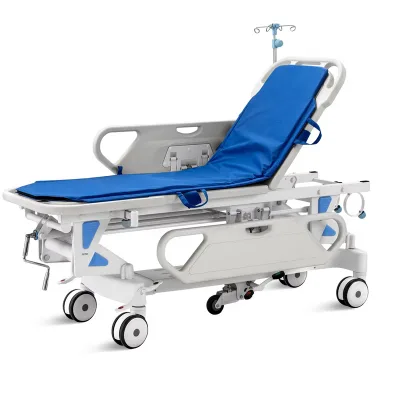
Observed listings in this category include a Class II medical transfer vehicle (model ZF-TV01) from Hebei, positioned for hospital use with a 250 kg maximum loading capacity, 125 mm castors, ABS metal construction, and white finish. Alongside these sit industrial entries such as an RGV electric rail transfer cart with 380 V power, 200–1000 kg loading capacity or customized, speeds around 45 m/min, and automatic or manual charging. A stainless steel medical transport car (model FY-3) from Jiangsu and a sanitation-oriented vehicle standard of 2820×930×1170 mm also appear, showing genuine category breadth.
Read these signals as category markers rather than universal specifications. Listing prices ranging from roughly 100 to 70,000 USD confirm that "transfer vehicle" covers everything from simple trolleys to engineered automated systems. Note consistent signals worth probing: MOQ of a single piece on several listings, an 8-day delivery claim, 1-year warranties, CE/ISO and FDA references, and packaging choices spanning wooden cases to carton with inner plastic. Each should be confirmed against your own requirements in writing.
Technical Specifications to Verify
Begin with load and structure. Confirm rated loading capacity against your heaviest real-world payload with margin—medical listings cite 250 kg maximum while RGV entries state 200–1000 kg or customized—then verify frame material (stainless steel versus ABS-clad metal), wheel or castor diameter (125 mm appears in listings), and overall footprint against corridors, lifts, and doorways. The listed 2820×930×1170 mm sanitation vehicle standard illustrates why dimension verification matters: hospital and warehouse layouts rarely tolerate assumptions.
For powered units, pin down electrical and control parameters. Listings reference 380 V power, electric drive mode, continuous path control, speeds of 45 m/min or customized, and automatic or manual charging—each must match your facility's supply, floor conditions, and traffic pattern. Ask for navigation precision data, charging cycle behavior, and whether control modes are field-configurable. Finally, confirm model numbers (ZF-TV01, RGV001, FY-3, FYSV-G04-9401001) map to a current datasheet, since online listings often mix legacy and current configurations.
Compliance and Safety Documentation
Medical transfer vehicles sit in a regulated space, and one observed listing identifies Class II instrument classification with CE ISO certificates, while another references FDA, ISO, and CE markings. Do not accept certificate keywords at face value. Request the actual certificate documents, verify the certificate holder matches the selling entity, check scope covers the specific model you are buying, and confirm validity periods. For Class II devices in your destination market, clarify whether registration or listing obligations fall on the importer or the manufacturer.
Industrial RGV and electric transfer carts follow different expectations: buyers should ask for machinery safety documentation, electrical schematics, emergency-stop behavior, and operator training materials, without assuming medical certifications apply. Regardless of category, request material declarations—particularly for stainless steel contact surfaces in medical transport—and packaging compliance if goods ship regulated. A supplier that cannot produce consistent documentation across product, certificate, and invoice identity is a qualification risk regardless of price.
Cost Drivers and Commercial Terms
The observed price spread from 100 to 70,000 USD reflects fundamentally different product classes, so benchmark only within your defined category. For medical trolleys, cost drivers include stainless versus ABS construction, castor quality, load rating, and accessories; for RGV systems, track engineering, payload class, speed, navigation precision, and charging infrastructure dominate. Customization—loading capacity "or customize" appears in listings—almost always moves price and lead time, so quantify exactly which parameters you need customized before comparing quotations.
Commercial terms require equal discipline. Observed listings show MOQ of 1 piece, an 8-day delivery claim, and online technical support with free spare parts as after-sale offerings—confirm each in a written order agreement, including what "delivery time" measures (production start, ex-works, or arrival). Packaging choices (wooden case, carton with inner plastic) affect freight protection for 76 kg single-gross-weight units and oversized packages like 193×640×540 cm. Clarify Incoterms, warranty scope under the 1-year listings, and spare parts pricing before committing.
Supplier Qualification and Quality Control
Qualify suppliers by verifying entity identity and manufacturing depth. Check whether the listed place of origin (Hebei, Anhui, Jiangsu, or general China) corresponds to actual production facilities or a trading intermediary, and ask which processes are in-house versus outsourced. OEM availability appears in the observed data—useful if you need branded units, but also a signal to confirm design ownership and whether the supplier can support your specification changes over time. Request factory audit reports or a video walkthrough focused on welding, assembly, and final inspection areas.
Structure quality control around pre-shipment verification. For each order, define inspection points: dimensional check against the stated standard, load testing appropriate to the rated capacity, castor or drive function checks, and surface finish review. For powered vehicles, request factory acceptance testing of speed, charging, and control behavior with a documented protocol. Tie payment milestones to inspection completion, and require that the units shipped match the serial numbers and model numbers on the inspection report to prevent substitution.
Long-Term Procurement Checks
Plan for the ownership period, not just delivery. A 1-year warranty is the observed norm, so map your expected service life against warranty coverage and negotiate extended terms or spare parts kits for high-utilization vehicles. Confirm the after-sale model—online technical support and free spare parts appear in listings—in concrete terms: response time, whether remote diagnosis is available for electric and RGV units, and how replacement parts ship internationally. Consumables such as castors, batteries, and drive components should have defined part numbers and reorder channels.
Institutionalize supplier performance review after each order cycle. Track on-time delivery against the claimed 8-day or agreed schedule, defect rates at incoming inspection, documentation accuracy, and responsiveness during warranty claims. Requalify annually for critical-use vehicles, especially medical transfer units where Class II compliance status must remain current across production revisions. Maintain a specification file linking your purchase orders to model numbers and tested configurations so future reorders, audits, and incident investigations can trace exactly what was procured and verified.
FAQs
What is the MOQ for Online Guidance Transfer Vehicles?
The minimum order quantity is 1 piece. This low entry point allows buyers to test the product quality and operational fit before committing to larger bulk orders for their facility needs.
Can these vehicles be customized for specific hospital loads?
Yes, customization is available for load capacity. Buyers can specify requirements ranging from 200 to 1000kg or request fully customized solutions to match their specific medical transport and sanitation vehicle applications.
What certifications do these transfer vehicles hold?
These vehicles typically hold CE, ISO, and FDA certifications. These credentials ensure compliance with international safety and quality standards, making them suitable for regulated environments like hospitals and medical warehouses.
How fast do electric transfer vehicles operate?
The standard operating speed is 45 meters per minute. This rate can be customized to suit specific workflow requirements, ensuring efficient material handling and patient transport within hospital or warehouse settings.
What is the delivery time for these vehicles?
The standard delivery time is 8 days. This rapid turnaround supports urgent procurement needs, allowing facilities to quickly integrate new transfer vehicles into their existing logistics and sanitation operations.
What warranty is provided for these medical transport cars?
A 1-year warranty is provided for these units. This coverage ensures reliability and supports long-term operational stability, with online technical support available to assist with any maintenance or troubleshooting needs.