Source Outdoor ADSS Fiber Optic Cable for Telecom, Power, and Data
Find 30 verified options for Outdoor ADSS Fiber Optic Cable designed for aerial and overhead installations. Buyers can compare fiber counts, certifications, and tensile strength specifications to select the right solution for communication networks.
Key considerations
Products List




Comprehensive Sourcing Guide
Strategic Sourcing Guide for Outdoor ADSS Fiber Optic Cables
Understanding ADSS Cable Architecture and Technical Specifications
When sourcing outdoor ADSS (All-Dielectric Self-Supporting) fiber optic cables, buyers must first distinguish between the structural variations that define performance in aerial environments. The product data indicates a clear segmentation between Single Jacket and Double Jacket configurations, each serving specific mechanical and environmental needs. The Single Jacket ADSS Cable is often utilized in scenarios where the mechanical load is moderate, while the Double Jacket variant provides enhanced protection against external abrasion and environmental stressors. A critical observation from the available product attributes is the "Multi Loose Tube" structure, which is the industry standard for housing fiber strands while allowing them to move freely within the cable core. This design mitigates stress on the fibers during thermal expansion or contraction and when the cable is subjected to wind-induced oscillation.
The fiber count is a primary variable in the procurement process, with observed specifications ranging from 1 to 288 cores. This wide range allows for scalability, from small last-mile connections to high-capacity backbone networks. The fiber types supported include both Single Mode and Multimode options, with specific references to G652D and G657A standards for single-mode fibers, which are essential for long-distance transmission and tight bending radius applications, respectively. Multimode options such as OM1, OM2, OM3, and OM4 are also listed, catering to shorter-distance data center interconnects or local area networks. The conductor material is noted as plastic, which is consistent with the all-dielectric nature of the cable, ensuring no electrical conductivity and eliminating the risk of lightning strikes or induced currents. The outer sheath is typically composed of PE (Polyethylene) or LSZH (Low Smoke Zero Halogen), with the latter being a preferred choice for indoor-to-outdoor transitions or environments where fire safety is paramount.
Compliance Verification and Certification Standards
Navigating the compliance landscape is a non-negotiable aspect of sourcing industrial-grade fiber optics. The product attributes highlight a consistent presence of RoHS (Restriction of Hazardous Substances) and ISO certifications across multiple listings. Specifically, ISOCore:Multicore and ISO9001 are mentioned, indicating adherence to quality management systems and core manufacturing standards. Buyers must verify that the specific supplier holds valid ISO9001 certification, as this is a baseline requirement for consistent manufacturing quality. Additionally, the CE marking is frequently observed, which is mandatory for products entering the European market, confirming compliance with health, safety, and environmental protection standards.
Beyond general certifications, the technical standards governing the cable's performance are critical. The data references Yd/T 769-2003 and IEC 60794-1 as applicable standards. Yd/T 769-2003 is a Chinese industry standard specifically for optical cables, while IEC 60794-1 is the international standard for optical fiber cables. When evaluating a supplier, procurement teams should request test reports that explicitly reference these standards to ensure the cable has undergone rigorous testing for tensile strength, compression resistance, and temperature cycling. The "Allowed Lateral Pressure" is observed in the range of 100 to 1000 N/100mm, a metric that buyers must verify against their specific installation requirements to prevent fiber crushing during the laying process. Similarly, the "Allowed Tensile Strength" falls between 1000N and 10000N, a crucial parameter for aerial installations where the cable must support its own weight and withstand wind loads without breaking.
Cost Drivers and Economic Factors in Procurement
The pricing for ADSS fiber optic cables is highly dynamic, influenced by a complex interplay of fiber count, jacket material, and mechanical specifications. The observed price range in the market spans from $0.03 to $729, a disparity that reflects the difference between a single fiber unit and a high-core-count, heavy-duty cable assembly. The primary cost driver is the fiber count; a cable with 288 cores will naturally command a significantly higher price than a 12-core cable due to the volume of glass and the complexity of the stranding process. The choice of sheath material also impacts cost; LSZH compounds are generally more expensive than standard PE due to the specialized additives required to achieve low smoke and zero halogen properties.
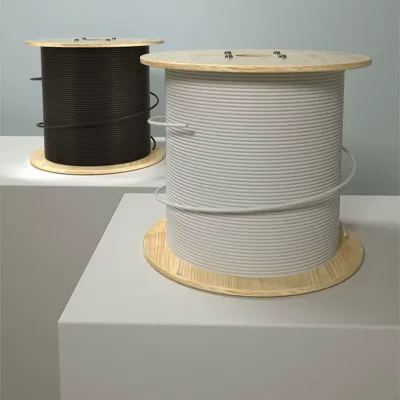
Minimum Order Quantities (MOQ) vary widely, ranging from 1 unit to 30,000 units. This flexibility allows buyers to source small quantities for pilot projects or emergency repairs while accommodating large-scale infrastructure deployments. However, buyers should be aware that unit prices often decrease as the order volume increases, particularly when approaching the higher end of the MOQ spectrum. Lead times are another economic factor, with observed delivery windows of 3-7 days for standard configurations. This short lead time suggests a robust supply chain for common SKUs, but buyers must confirm if customizations, such as specific packing requirements or non-standard fiber counts, will extend the production schedule. The packaging method, whether on a wooden drum or in cartons, also influences shipping costs and logistics planning, especially for international buyers.
Typical Applications and Installation Considerations
ADSS cables are uniquely designed for aerial installation, eliminating the need for a separate support wire or messenger strand. The "Installation" attribute explicitly lists "Aerial" and "Overhead" as the primary methods, making these cables ideal for utility companies, telecommunications providers, and municipal networks. The "Allowed Lateral Pressure" and "Allowed Tensile Strength" parameters are specifically engineered to handle the mechanical stresses of hanging between poles or towers. The operating temperature range of -40°C to +70°C ensures reliability in extreme climates, from freezing winters to scorching summers, which is a common requirement for outdoor infrastructure.
The "Bending Radius" is specified as 20 times the external diameter of the cable, a critical constraint for installers to observe during the routing of the cable around corners or through tension clamps. Exceeding this limit can cause micro-bends in the fiber, leading to signal attenuation or complete failure. The cable's color is typically black, which helps in UV resistance and visual identification on utility poles. The "Laying Method" of overhead installation requires careful tension control to prevent sagging or excessive stress on the cable. The "Fiber Count" of 1-288 cores allows for versatile applications, from connecting remote rural areas to establishing high-bandwidth backbones in urban centers. The "Structure" of multi-loose tubes ensures that the fibers remain protected even if the cable is subjected to significant movement or vibration.
Supplier Evaluation and Quality Control Protocols
Evaluating a supplier for ADSS cables requires a rigorous assessment of their manufacturing capabilities and quality assurance processes. The "Brand" attribute is listed as OEM, indicating that many suppliers operate as original equipment manufacturers, offering custom solutions rather than just branded products. Buyers should verify the supplier's ability to provide "Customization" for attributes such as packing, fiber count, and jacket material. The "Product Origin" is noted as China, with specific mentions of Guangdong, a major hub for telecommunications manufacturing. While this indicates access to a mature supply chain, buyers must conduct due diligence to ensure the supplier adheres to international quality standards rather than relying solely on local production capabilities.
Quality control should focus on the verification of the "Certification" documents, ensuring they are current and issued by recognized bodies. The "Warranty" period of 25 years is a significant indicator of the supplier's confidence in their product's longevity. However, buyers should scrutinize the terms of this warranty, including what specific failures are covered and the process for claims. The "Standard" for the product is listed as 2-288 fibers or 1-288 CORE, and buyers must ensure that the specific order matches these specifications exactly. The "Model Name" and "Product Model" variations, such as "Single Jacket ADSS Cable" versus "Double Jacket ADSS Cable," must be clearly defined in the purchase order to avoid confusion.
Long-Term Procurement and Lifecycle Management
Sourcing ADSS cables is not merely a transactional activity but a strategic decision that impacts the long-term reliability of the network. The "Warranty" of 25 years suggests a product lifecycle that aligns with the typical lifespan of telecommunications infrastructure. Buyers should consider the "Delivery Time" of 3-7 days as a baseline for inventory planning, but also account for potential delays in custom orders or during peak demand periods. The "Packing" options, including wooden drums and cartons, should be selected based on the destination's handling capabilities and environmental conditions during transit.
The "Fiber Type" selection, such as G652D or G657A, has long-term implications for network performance and upgradeability. G657A fibers, with their improved bending performance, are increasingly preferred for dense urban deployments where space is limited. The "Sheath" material choice between PE and LSZH should be made based on the specific environmental risks of the installation site. For example, LSZH is essential for indoor-to-outdoor transitions or areas with high fire risk. The "Number of Conductors" being greater than or equal to 10 indicates that the cable is designed for robust applications, but buyers should verify this against their actual network design to avoid over-specification.
Comparative Analysis of Cable Configurations
To assist buyers in making informed decisions, the following table summarizes the key differences between the observed ADSS cable configurations based on the provided product attributes.
| Feature | Single Jacket ADSS Cable | Double Jacket ADSS Cable |
|---|---|---|
| Primary Structure | Multi Loose Tube | Multi Loose Tube |
| Sheath Material | PE or LSZH | PE or LSZH (Enhanced) |
| Mechanical Protection | Standard | High (Abrasion/Impact) |
| Typical Application | Moderate load, clear spans | High load, harsh environments |
| Fiber Count Range | 1-288 Cores | 1-288 Cores |
| Certifications | RoHS, ISO, CE | RoHS, ISO, CE |
| Packing | Wooden Drum or Custom | Wooden Drum or Carton |
| Standard | Yd/T 769-2003, IEC 60794-1 | Yd/T 769-2003, IEC 60794-1 |
This comparison highlights that while both configurations share core technical specifications like fiber count and certifications, the Double Jacket variant offers superior mechanical protection, making it the preferred choice for challenging installation environments. Buyers should weigh the additional cost of the double jacket against the potential savings in maintenance and replacement costs over the 25-year warranty period.
Final Procurement Recommendations
In conclusion, sourcing outdoor ADSS fiber optic cables requires a meticulous approach that balances technical specifications, compliance requirements, and economic factors. Buyers must verify that the selected cable meets the specific mechanical and environmental demands of their project, ensuring that the tensile strength, lateral pressure, and temperature ratings align with the installation site conditions. The presence of recognized certifications like RoHS, ISO, and CE is a prerequisite, and the adherence to standards such as Yd/T 769-2003 and IEC 60794-1 must be confirmed through documentation. By carefully evaluating the supplier's customization capabilities, warranty terms, and delivery timelines, buyers can secure a reliable supply of high-quality ADSS cables that will support their network infrastructure for decades. The flexibility in fiber count and jacket material allows for tailored solutions, but the ultimate success of the procurement lies in the rigorous verification of all product attributes against the project's specific requirements.
FAQs
What certifications do outdoor adss fiber optic cables typically have?
These cables typically hold RoHS, ISO, and CE certifications. Specific listings also confirm ISO9001 and compliance with Yd/T 769-2003 and IEC 60794-1 standards for quality and safety.
How many fiber cores are available in outdoor adss fiber optic cables?
Available fiber counts range from 1 to 288 cores. This scalability supports applications from small last-mile connections to high-capacity backbone networks depending on the specific model selected.
Which installation methods are supported by outdoor adss fiber optic cables?
These cables are designed for aerial and overhead installation methods. They eliminate the need for separate support wires and feature tensile strength ratings suitable for hanging between poles.
Can buyers request customization for Outdoor ADSS Fiber Optic Cable packaging?
Yes, customization is available for packaging requirements. Options include wooden drums, cartons, or specific requests tailored to the customer's logistical needs and destination handling capabilities.
What is the typical delivery time for outdoor adss fiber optic cables?
The standard delivery time is 3 to 7 days for common configurations. Custom orders or specific non-standard specifications may require extended production schedules beyond this baseline window.
Which materials are used for the sheath of outdoor adss fiber optic cables?
Sheath materials include Polyethylene (PE) and Low Smoke Zero Halogen (LSZH). The choice depends on fire safety requirements and environmental conditions at the installation site.
What is the operating temperature range for outdoor adss fiber optic cables?
The operating temperature range is from -40 degrees Celsius to +70 degrees Celsius. This ensures reliable performance in extreme climates ranging from freezing winters to hot summers.