Source Outdoor 3D Neon Strip Light for festivals, landscaping, and home decor
Explore 30 listings for Outdoor 3D Neon Strip Light featuring CE and GS certifications. Buyers can compare customizable options with varying lengths, IP ratings for commercial and home use, and packing details to find suitable solutions for festivals and landscaping projects.
Key considerations
Products List


LED Strip Light/Neon Light/LED Strip/LED Outdoor Lighting for Christmas Lights
$1.00 - $1.99
MOQ: 100 Pieces


Waterproof IP67 Neon Lights/LED Neon Strip/Event Light for LED Outdoor Lighting
$1.00 - $1.99
MOQ: 100 Pieces


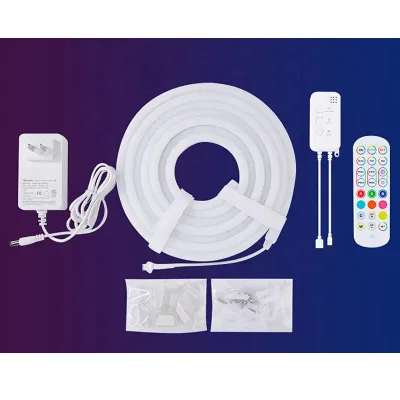
Comprehensive Sourcing Guide
Strategic Sourcing Guide for Outdoor 3D Neon Strip Light
Procuring outdoor 3D neon strip lights requires a nuanced understanding of product attributes, regulatory compliance, and supply chain logistics. The market for flexible LED neon solutions has expanded significantly, driven by demand for durable, energy-efficient, and aesthetically versatile lighting for commercial and residential facades. This guide synthesizes verified product facts and industry standards to assist buyers in navigating the procurement landscape without relying on unverified claims or speculative data.
Technical Specifications and Physical Attributes
When evaluating outdoor 3D neon strip lights, the physical dimensions and construction materials are paramount. Based on observed product data, buyers must distinguish between various packaging and standard configurations. A critical observation in the current market is the variance in roll standards; products are frequently listed with specific length standards such as 5 meters per roll or 10 meters per roll. This distinction directly impacts the total quantity required for a project and the subsequent shipping logistics.
Packaging specifications also vary significantly between suppliers. Some units are packed in color boxes with dimensions of 24524 cm, while others may utilize different carton configurations. The master carton sizes observed range from 42.525.526 cm to 34.532.534.5 cm. These dimensions are essential for calculating freight costs and warehouse storage requirements. Furthermore, weight is a decisive factor in shipping calculations. Net weights observed in the market include figures such as 9.9 kg and 13.7 kg, with corresponding gross weights of 10.8 kg and 15.0 kg respectively. Buyers should verify the exact weight per unit for their specific order to avoid unexpected freight surcharges.
Another technical consideration is the linkability of the strips. Data indicates that certain models support a maximum of 2 pieces linked together. This limitation is crucial for long-run installations where continuous lighting is required. If a project demands a longer continuous run than the specified linkable limit, the buyer must plan for power injection points or segment the design to prevent voltage drop and uneven brightness.
Compliance and Certification Verification
For outdoor applications, compliance with international safety and quality standards is non-negotiable. The product data confirms that CE certification is a prevalent attribute among listed items. Additionally, some products in the market carry GS certification. While these certifications are observed in the supply, buyers must treat them as observations of specific listings rather than universal guarantees for all available stock.
The CE mark indicates conformity with health, safety, and environmental protection standards for products sold within the European Economic Area. The GS mark (Geprüfte Sicherheit) represents a German safety certification that is often recognized globally for its rigorous testing protocols. When sourcing, procurement teams should request valid certification documents for the specific batch or model number, such as the model identified as 1090003 or GP-NE-09. Relying solely on the presence of a certification label on a product page without verifying the supporting documentation can lead to compliance risks, especially for projects requiring strict adherence to local building codes.
Furthermore, the origin of the product plays a role in compliance. The observed data points to manufacturing locations in Dongguan, China, and Shenzhen, China. While these are established manufacturing hubs, the specific factory's quality management system and its ability to maintain consistent certification standards should be verified during the supplier evaluation phase.
Cost Drivers and Pricing Dynamics
The pricing for outdoor 3D neon strip lights is influenced by several variables, including material composition, customization levels, and packaging efficiency. The observed price range in the market spans from 0.45 USD to 33.07 USD. This wide disparity suggests that the unit price is highly dependent on the specific configuration, such as the length of the roll, the color temperature, the degree of customization, and the included accessories like controllers.
Customization is listed as an available attribute, which typically introduces a cost premium. Custom shapes, specific color temperatures, or unique packaging requirements will likely push the price toward the higher end of the observed spectrum. Conversely, standard configurations may be available at the lower end. Buyers should also consider the Minimum Order Quantity (MOQ) as a cost driver. The observed MOQ range is 1 to 1000 units. Suppliers accepting small orders (MOQ of 1) may charge a higher unit price to cover setup and handling costs, whereas bulk orders approaching the 1000-unit threshold often benefit from economies of scale.
The packaging density also affects the effective cost per unit. For instance, a master carton containing 8 pieces versus one containing 6 pieces will alter the per-unit shipping cost. Buyers must calculate the total landed cost, including freight, duties, and insurance, rather than focusing solely on the ex-factory price.
Typical Applications and Usage Scenarios
The versatility of outdoor 3D neon strip lights is reflected in their diverse application categories. The product data lists applications ranging from festivals and home use to commercial and landscaping projects. Specific use cases identified include event decoration, home decoration, and general outdoor lighting. The material is often described in the context of "Event Decoration," highlighting its suitability for temporary installations such as festivals and trade shows.
The product is frequently categorized under various terminologies, including LED Light, LED Neon Flex, Neon Strip, and Neon Light. This semantic variety indicates that the product serves multiple functions: it can be used as a primary architectural light source, a decorative accent, or a safety marker. The "Rope LED Light" attribute suggests a flexible form factor suitable for outlining edges, creating 3D shapes, or following complex architectural contours.
For commercial applications, the durability and IP rating are critical. While the specific IP rating number is not explicitly defined in the provided text, the attribute "IP Usage" lists Commercial, Outdoor, and Landscaping as target environments. This implies the product is designed to withstand outdoor conditions, but buyers must verify the specific Ingress Protection (IP) rating (e.g., IP65, IP67) to ensure resistance against dust and water ingress suitable for the specific climate of the installation site.
Supplier Evaluation and Sourcing Strategy
Evaluating suppliers for outdoor neon lighting requires a focus on reliability, transparency, and technical capability. The observed data indicates that "Small Orders" are accepted by some suppliers, which is beneficial for prototyping or small-scale projects. However, for large-scale deployments, buyers should prioritize suppliers who can consistently meet the higher end of the MOQ range without compromising quality.
When assessing potential partners, buyers should verify the "Brand Name" and "Model Number" consistency. For example, brands like KELIDA are mentioned, alongside specific model numbers such as LSL-04 and GP-NE-09. Consistency in model numbering ensures that replacement parts or additional units ordered later will match the initial batch. Additionally, the "Style" attribute, noted as "Neon-LED," helps in identifying the aesthetic direction of the product.
Suppliers should be evaluated on their ability to provide detailed technical documentation, including wiring diagrams, controller compatibility, and installation guides. The presence of "Controladores RGB" (RGB Controllers) in the application list suggests that many systems require external control units. Buyers must ensure that the supplier provides compatible controllers and that the system supports the desired control protocols.
Quality Control and Long-Term Procurement
Quality control for outdoor lighting products must address both immediate performance and long-term durability. The "Linkable" attribute, with a maximum of 2 pieces, is a quality constraint that must be respected during installation to prevent system failure. Buyers should implement a quality assurance protocol that includes testing the linkability of samples before full-scale deployment.
Long-term procurement considerations involve the lifecycle of the product. The "Material" is listed as "Event Decoration," which might imply a focus on aesthetics over extreme longevity, though the "Outdoor" application suggests otherwise. Buyers should verify the expected lifespan of the LEDs and the durability of the silicone or PVC casing against UV radiation and temperature fluctuations.
The "Net Weight" and "Gross Weight" data provide a baseline for logistics planning, but buyers should also inquire about the weight of the packaging materials to ensure efficient shipping. Furthermore, the "Standard" attribute, such as "LED-Light" or specific meter counts per roll, must be clearly defined in the purchase order to avoid disputes over quantity.
Procurement Considerations for Customization and Logistics
Customization is a key differentiator in the neon lighting market. The availability of customization allows buyers to tailor the product to specific design requirements, such as unique shapes or branding elements. However, customization often extends lead times and increases the complexity of quality control. Buyers should factor in additional time for the production of custom molds or designs.
Logistics planning must account for the specific packaging dimensions observed, such as the 24524 cm color box or the larger master cartons. The variance in master carton sizes (e.g., 42.525.526 cm vs. 34.532.534.5 cm) indicates that different product lines or suppliers have different packing efficiencies. Buyers should request a packing list and a cubic meter calculation for their specific order to optimize container utilization and reduce shipping costs.
Finally, the origin of the product, whether from Dongguan or Shenzhen, should be considered in the context of supply chain resilience. Both locations are major manufacturing hubs, but buyers should verify the specific factory's capacity and history to ensure they can meet delivery schedules. By adhering to these evidence-based guidelines, buyers can navigate the complex landscape of Outdoor 3D Neon Strip Light procurement with confidence and clarity.
FAQs
What certifications are available for Outdoor 3D Neon Strip Light?
Products in this category commonly carry CE and GS certifications. Buyers should verify these marks on specific listings like model 1090003 or GP-NE-09 rather than assuming all stock includes them.
How many pieces can be linked together for a single run?
Certain models support a maximum of two pieces linked together. This limit requires careful planning for long installations to prevent voltage drop and ensure consistent brightness across the entire strip.
Which packaging dimensions are standard for these neon lights?
Standard color boxes measure 24 by 5 by 24 cm, while master cartons vary between 42.5 by 25.5 by 26 cm and 34.5 by 32.5 by 34.5 cm. These dimensions are critical for calculating freight costs.
Can small orders be accepted for Outdoor 3D Neon Strip Light?
Yes, some suppliers accept small orders with an MOQ as low as one unit. However, bulk orders up to 1000 units often benefit from better pricing due to economies of scale.
What is the typical roll length standard for these products?
Roll standards vary, with common configurations being 5 meters per roll or 10 meters per roll. This difference directly impacts the total quantity needed for a specific project design.
Where are these neon strip lights typically manufactured?
Manufacturing origins are primarily located in Dongguan and Shenzhen, China. These established hubs produce items like the KELIDA brand model LSL-04, though factory-specific quality varies.