Source Panel Saw for Cabinet Making, Furniture Production, and Woodworking
Find 30 Panel Saw units with varying layouts, controlling modes, and precision levels. Buyers can compare specifications like cutting length, sawblade diameter, and power types to select the right equipment for their workshop needs.
Key considerations
Products List


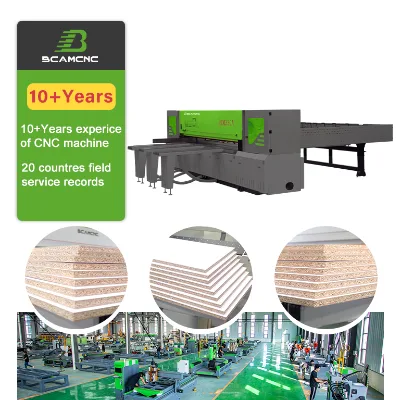
Panel Saw China Horizontal Saw Panels 1300mm Panel Saw Computer Panel Saw
$18988.00 - $22685.00
MOQ: 1


Wood Panel Saw Machine Table Panel Saw Wood Cutting Machine Woodworking Machine
$700.00 - $1000.00
MOQ: 1 Pieces


Comprehensive Sourcing Guide
Panel Saw Sourcing Guide
Panel saws represent a critical category of woodworking machinery designed for the precise cutting of large sheet materials such as plywood, MDF, and particle board. These machines are essential for furniture manufacturing, cabinetry, and interior fit-out projects where dimensional accuracy and edge quality are paramount. The market offers a spectrum of configurations ranging from manual table panel saws to fully automated CNC systems, each tailored to specific production volumes and operational workflows. Buyers must distinguish between vertical and horizontal layouts, as the physical arrangement of the saw carriage and workpiece support significantly impacts floor space utilization and operator ergonomics.
When evaluating potential suppliers, procurement teams should focus on the specific operational mode of the equipment, which dictates the level of human intervention required. The observed product data indicates a diverse range of controlling modes, including hydraulic semi-automatic, fully automatic, and manual artificial control systems. This variation allows buyers to align machinery selection with their labor strategy; for instance, a high-volume facility might prioritize a CNC-controlled unit to minimize operator fatigue and maximize throughput, while a custom workshop might prefer a semi-automatic model for flexibility. Understanding these distinctions is the first step in narrowing down the supplier list to those capable of delivering the exact automation level required for the intended production line.
Product Scope and Observed Listing Signals
The current market landscape for panel saws reveals a wide variance in product specifications, with observed listing prices ranging from 700 to 50,000 USD, reflecting the disparity between basic manual units and advanced automated systems. The minimum order quantity (MOQ) for these industrial machines is consistently observed at one unit, indicating that suppliers are generally willing to accommodate single-unit purchases for pilot projects or small-scale operations. This flexibility is crucial for buyers who may not yet be ready to commit to large bulk orders but need to validate machine performance before scaling up their procurement. The price range suggests that factors such as motor power, cutting capacity, and the sophistication of the control system are the primary drivers of cost.
Product attributes observed in the listings highlight distinct operational characteristics that buyers must verify against their specific needs. The data shows the availability of both vertical and horizontal layouts, with models like the Mj6132taz and CNC-32TA offering different approaches to material handling. Furthermore, the condition of the equipment is predominantly listed as new, ensuring that buyers receive machinery with full manufacturer warranties and zero prior wear. Customization is a key feature across the board, with many suppliers offering tailored solutions for cutting heights, workpiece lengths, and packing requirements. Buyers should scrutinize these customization options to ensure the machine can handle their specific material dimensions, such as the observed maximum cutting lengths of 3300mm or 3000mm, without requiring costly aftermarket modifications.
Technical Specifications to Verify
Technical due diligence for panel saws requires a rigorous verification of cutting dimensions and motor specifications to ensure the machine can handle the intended workload. Buyers must confirm the maximum cutting length and height capabilities, as the observed data includes models with a maximum cutting length of 3300mm and a maximum cutting height of 100mm, while others offer a cutting height of 500mm at 90 degrees. The main sawblade diameter is another critical parameter, with listings showing diameters of 405mm and 350mm, which directly influence the depth of cut and the quality of the edge finish. Additionally, the scoring sawblade speed, observed at 6,800 r.p.m., is vital for achieving clean cuts in materials prone to chipping, and buyers should verify if this speed is adjustable to accommodate different material densities.
The drive system and speed control mechanisms are equally important for maintaining production efficiency and safety. The observed specifications include a saw carriage drive motor of 2HP (1.5kw) with inverter control, allowing for adjustable forward speeds ranging from 0 to 45 M/Min. This adjustability is essential for optimizing the cutting process based on the material being processed, preventing burn marks or blade deflection. Buyers should also verify the auxiliary saw blade diameter, which is listed as 180mm in some models, to ensure compatibility with secondary cutting operations. Furthermore, the weight of the machine, observed at 2000 Kg for certain models, serves as an indicator of stability; heavier units generally offer better vibration damping, which is crucial for maintaining high precision during high-speed cutting operations.
Compliance and Safety Documentation
Compliance with international safety and quality standards is non-negotiable when sourcing industrial panel saws, as these machines operate with high-speed rotating blades and significant mechanical forces. The observed product data confirms that many listed units carry CE certification, indicating conformity with European health, safety, and environmental protection standards. Some listings also include ISO certification, which validates the manufacturer's adherence to international quality management systems, and FDA certification in specific contexts, suggesting compliance with material safety standards for food-contact applications. Buyers must request and verify these certificates directly from the supplier to ensure they are current and applicable to the specific model being purchased, rather than relying on generic claims.
Safety documentation extends beyond certifications to include detailed operational manuals and risk assessment reports. The controlling modes observed, ranging from hydraulic semi-automatic to CNC and artificial manual control, each present unique safety profiles that require specific training and protective measures. For instance, CNC-controlled units may require software safety protocols and emergency stop verification, while manual units rely heavily on physical guards and operator training. Buyers should ensure that the supplier provides comprehensive documentation detailing the machine's safety features, such as blade guards, emergency braking systems, and interlock mechanisms. Additionally, the packing method, observed as wooden cases or PE film, should be evaluated to ensure the machine arrives in a condition that allows for immediate safety inspection and setup without damage to critical components.
Cost Drivers and Commercial Terms
The total cost of ownership for a Panel Saw is influenced by several factors beyond the initial purchase price, including power consumption, maintenance requirements, and customization fees. The observed power ratings, such as 14 Kw for certain models, indicate significant energy consumption that will impact long-term operational costs. Buyers should calculate the energy efficiency of the machine based on its motor specifications and the expected production volume to determine the true cost per unit of output. Furthermore, the availability of customization options, such as specific cutting heights or workpiece lengths, often incurs additional costs that must be factored into the budget. The standard weight and dimensions of the machine, such as the 5300kg standard for some models, also affect shipping and installation expenses, which can be substantial for heavy industrial equipment.
Commercial terms and logistics play a pivotal role in the final procurement decision, particularly regarding packaging and origin. The observed product origin is consistently listed as China, which may influence lead times and shipping costs depending on the buyer's location. Packaging standards vary, with options including wooden cases, export-standard wooden cases, and PE film, each offering different levels of protection during transit. Buyers should negotiate clear terms regarding who bears the risk of damage during shipping and ensure that the packaging is robust enough to protect the machine's precision components. Additionally, the MOQ of one unit suggests that suppliers are flexible, but buyers should verify if bulk discounts are available for future orders to optimize long-term procurement costs.
Supplier Qualification and Quality Control
Supplier qualification for panel saws requires a thorough assessment of the manufacturer's production capabilities and quality control processes. The observed data indicates that all listed products are in new condition, which is a positive indicator, but buyers must verify the manufacturing standards that ensure this consistency. The presence of certifications like CE and ISO suggests that the suppliers adhere to recognized quality management systems, but buyers should request evidence of these certifications and inquire about the specific quality control checkpoints implemented during the assembly process. This includes verifying how the machine's precision is tested before shipment, as the observed specifications highlight high precision as a key attribute.
Quality control extends to the post-sales support and the availability of spare parts. Buyers should evaluate the supplier's track record in providing technical support, training, and maintenance services to ensure the machine remains operational over its lifespan. The customization options available, such as specific packing requirements or model variations, indicate a level of flexibility that can be a sign of a responsive supplier. However, buyers must ensure that these customizations do not compromise the machine's reliability or safety. It is also essential to verify the supplier's ability to handle the specific weight and dimensions of the machine, as observed in the 5300kg standard, to ensure they have the logistics infrastructure to deliver the equipment safely and on time.
Long-Term Procurement Checks
Long-term procurement success with panel saws depends on establishing a robust relationship with the supplier and implementing a proactive maintenance strategy. Buyers should plan for regular inspections of critical components such as the main sawblade, scoring sawblade, and drive motors to prevent unexpected downtime. The observed specifications, including the 2HP motor and adjustable forward speeds, suggest that these machines are designed for continuous operation, but their longevity relies on proper maintenance and the use of genuine spare parts. Buyers should negotiate service level agreements (SLAs) with the supplier that guarantee timely response times for technical issues and the availability of replacement parts.
Future-proofing the procurement investment involves monitoring technological advancements and the supplier's ability to upgrade existing machines. The market offers a range of controlling modes from manual to CNC, and buyers should consider whether their current machine can be upgraded to a more advanced system as production needs evolve. The observed customization options, such as adjustable cutting heights and lengths, provide a degree of flexibility that can extend the machine's useful life. However, buyers must remain vigilant about changes in safety regulations and industry standards, ensuring that their equipment remains compliant over time. By maintaining a close relationship with the supplier and staying informed about industry developments, buyers can maximize the return on their investment in Panel Saw technology.
FAQs
What certifications do panel saws typically have?
Panel saws commonly hold CE and ISO certifications to ensure compliance with international safety and quality standards. Some models may also include FDA certification depending on specific application requirements. These certifications verify that the machinery meets essential regulatory criteria for operation in various global markets, providing buyers with confidence in product reliability and legal compliance.
Can panel saws be customized for specific needs?
Yes, panel saws are available with customization options to suit diverse production requirements. Buyers can request specific cutting lengths, heights, or control modes such as CNC or hydraulic semi-automatic systems. Customization allows for tailored solutions that align with unique workshop layouts and material processing needs, ensuring optimal performance and efficiency for specialized manufacturing tasks.
How is the precision of a Panel Saw defined?
Panel saws are designed for high precision cutting, ensuring accurate dimensions for wood and composite materials. Features like CNC controlling modes and adjustable saw carriage speeds contribute to consistent results. High precision is critical for professional woodworking, allowing for clean cuts and minimal material waste, which is essential for maintaining quality standards in furniture making and construction projects.
What is the typical weight of a Panel Saw?
The weight of a Panel Saw varies by model, ranging from approximately 1,100 kg to over 5,300 kg. Heavier machines often indicate greater stability and capacity for larger workpieces. Understanding the weight is important for planning factory floor space and ensuring proper installation, as these machines require robust support structures to operate safely and effectively during high-volume production.
Which packaging methods are used for panel saws?
Panel saws are typically packed in export-standard wooden cases or wooden packages to protect against transit damage. Some models may use PE film for additional moisture protection. This robust packaging ensures that the machinery arrives in new condition, ready for immediate installation. Proper packaging is crucial for maintaining the integrity of sensitive components like saw blades and control systems during international shipping.