Source Panel PC for Medical, Industrial, Commercial Use
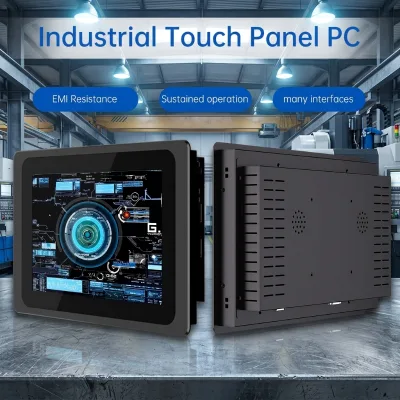
Find 27 Panel PC units with options like touch screens, various RAM sizes, and SSD storage. Buyers can compare models for medical, industrial, and commercial applications featuring connectivity like Wi-Fi and HDMI.
Key considerations
Products List










Comprehensive Sourcing Guide
Strategic Sourcing Guide for Industrial Panel PCs
The industrial Panel PC market represents a critical intersection of computing power and environmental resilience, serving as the primary human-machine interface (HMI) in sectors ranging from healthcare to heavy manufacturing. For procurement professionals, navigating this category requires a disciplined approach that separates marketing assertions from verifiable technical realities. The core objective is to secure a device that integrates seamlessly into existing infrastructure while withstanding the specific operational stresses of its intended environment. This guide outlines the essential factors for evaluating panel PCs, focusing on the technical specifications, compliance requirements, and cost drivers observed in current market listings.
Technical Architecture and Display Specifications
The foundational decision in Panel PC procurement involves selecting the appropriate form factor and display technology. Market data indicates a clear segmentation based on screen size, with common configurations ranging from compact 7-inch units to larger 19-inch industrial displays. The 7-inch category often features Half-size CPU cards, while larger 10.1-inch and 19-inch models frequently utilize Full-Size CPU cards. This distinction is vital for understanding the internal architecture and potential for future upgrades. Buyers must verify the CPU card size against their specific processing needs, as the physical slot constraints directly impact the type of processor that can be installed.
Display characteristics are equally critical for operational visibility. The observed market data highlights a variance in brightness, with some units rated between 200-300 nits and others reaching 300-700 nits. High-brightness panels are essential for environments with strong ambient light, such as outdoor kiosks or factory floors with significant overhead illumination. Conversely, lower brightness ratings may suffice for indoor control rooms. The display technology is predominantly TFT, offering a balance of cost and performance. Buyers should also scrutinize the contrast ratio, with observed values around 900:1, and the viewing angle, which is often specified as 89/89/89/89 degrees. These metrics ensure that operators can view data clearly from various positions without color shifting or degradation.
Touch technology is another primary differentiator. The majority of industrial units employ Capacitive Touch screens, which provide a responsive and durable interface. The number of touch points varies significantly, with options ranging from 2 to 10 points. This flexibility allows buyers to match the interface to the complexity of the application; a simple on/off switch might only require two points, while complex data entry or multi-user collaboration requires ten-point support. The protection rating is a crucial metric for durability, often cited in conjunction with specific resolution and screen size data. Procurement teams must ensure the protection rating aligns with the dust and moisture levels of the target facility.
Connectivity and System Expansion Capabilities
A robust connectivity suite is non-negotiable for industrial panel PCs, as these devices often serve as the central hub for data acquisition and machine control. The standard connectivity profile typically includes Wi-Fi for wireless networking, alongside wired options such as VGA, HDMI, USB, and Ethernet. The presence of multiple video outputs allows for dual-monitor setups, which is common in complex control scenarios. Ethernet ports are essential for stable, low-latency communication with PLCs and other industrial controllers.
System expansion is another area where specific models diverge. Some units are designed with a 7-slot expansion capability, allowing for the addition of specialized I/O cards, communication modules, or storage controllers. This modularity is a key advantage for applications that require customization beyond the base configuration. In contrast, other models may have fixed architectures. Buyers must verify the availability of expansion slots before finalizing a purchase, especially if the current application is expected to evolve. The power supply type is also a critical specification, with ATX and ATX12V being the observed standards. Ensuring compatibility with the facility's power distribution system is necessary to prevent installation issues.
Material Science and Environmental Durability
While the electronics define the functionality, the physical construction determines the longevity of the Panel PC. The market offers various material compositions, with PC (Polycarbonate) being a notable option for specific components like transparent plastic sheets. These materials are selected for their high impact strength and specific mechanical properties. For instance, tensile strength in the range of 41~50MPa and contraction percentages between 0.4%~1.4% are observed in high-quality plastic components. These figures indicate a material capable of withstanding physical stress without fracturing or deforming under thermal cycling.
Water absorption rates are also a key indicator of material quality, with observed ranges of 0.2%~0.3% suggesting excellent resistance to moisture ingress. This is particularly relevant for washdown environments or facilities with high humidity. The packing standards, such as "Bundle Inside, Veneer Pallet Outside," reflect the manufacturer's attention to protecting these sensitive components during transit. Buyers should verify that the packaging aligns with their logistics requirements to prevent damage before the product even reaches the installation site. The origin of the product, often listed as China, should be cross-referenced with the buyer's supply chain risk assessment and any trade compliance requirements.
Compliance, Certification, and Safety Standards
In the industrial sector, compliance is not merely a formality but a prerequisite for safe operation. Buyers must verify that the Panel PC meets relevant safety and environmental standards. One observed certification is the Reach standard for nontoxic materials, which is critical for applications in food processing or medical environments where chemical exposure is a concern. While specific certification documents are not universally listed for every model, the presence of such standards in product descriptions signals a commitment to regulatory adherence.
The installation method is also a compliance factor. Wall-mounted installations are common, but the specific mounting hardware and structural integrity must be verified against local building codes and safety regulations. The protection rating, often denoted with specific IP codes, must be matched to the environmental hazards present. For example, an IP rating suitable for a dry office environment may be insufficient for a dusty warehouse. Buyers should request detailed test reports or certification documents from the supplier to confirm that the claimed protection rating has been validated by an accredited third party.
Cost Drivers and Procurement Economics
The pricing of industrial panel PCs is influenced by a complex matrix of factors, including screen size, processor generation, touch technology, and build quality. The observed price range in the market is extensive, spanning from $0.20 to $923.82. This wide variance reflects the difference between basic components and high-end, fully integrated systems. The lower end of the spectrum may represent individual components or very basic units, while the higher end likely includes advanced processors, such as Intel Core 12th Gen i7, and specialized industrial features.
Minimum Order Quantity (MOQ) is another significant economic factor. The observed MOQ range is 1 to 1000 units, offering flexibility for both small pilot projects and large-scale deployments. Buyers with lower volume needs can often source single units, whereas large enterprises may negotiate better pricing through bulk orders. The lead time and production capacity are also hidden cost drivers that can impact project timelines. While specific lead times are not universally disclosed, the variability in MOQ suggests that suppliers have different production capacities. Buyers should factor in potential delays when planning their procurement schedule, especially for custom configurations.
Supplier Evaluation and Quality Assurance
Selecting the right supplier requires a rigorous evaluation process that goes beyond price comparison. The first step is to verify the supplier's ability to provide the specific technical attributes observed in the market, such as the 128GB SSD storage capacity or the specific CPU card sizes. Buyers should request detailed datasheets that confirm the RAM, storage, and connectivity options. The presence of customization availability is a strong indicator of a supplier's flexibility, allowing for tailored solutions that meet unique operational requirements.
Quality control should be a central part of the supplier evaluation. Buyers must inquire about the testing procedures used to validate the tensile strength, impact resistance, and water absorption properties of the materials. For electronic components, thermal testing and stress testing are essential to ensure reliability under continuous operation. The packing standards, such as the use of cartons or veneer pallets, should be reviewed to ensure they meet the buyer's shipping and handling protocols. Additionally, the supplier's track record in the specific industry vertical, such as medical or commercial applications, should be assessed to ensure they understand the unique demands of the sector.
Long-Term Procurement and Lifecycle Management
The procurement of panel PCs is not a one-time transaction but a long-term commitment that involves maintenance, upgrades, and eventual replacement. The modularity of the system, particularly the expansion slots and CPU card sizes, plays a significant role in the device's lifecycle. A system with 7 expansion slots offers greater longevity, as it can be upgraded to accommodate new technologies without requiring a full replacement. Similarly, the availability of spare parts and the supplier's support for older models are critical factors.
Buyers should also consider the software and firmware support provided by the supplier. The processor type, such as Intel X86 or specific generations like the 12th Gen, dictates the software compatibility and security update cycle. Ensuring that the supplier can provide long-term driver support and security patches is essential for maintaining the integrity of the industrial network. Finally, the disposal and recycling of the Panel PC should be planned in advance, considering the environmental impact of the materials used, such as the PC plastic sheets and electronic components. By focusing on these long-term considerations, buyers can optimize the total cost of ownership and ensure a sustainable procurement strategy.
FAQs
What touch technology do industrial panel PCs use?
Most industrial panel PCs utilize capacitive touch technology for responsive operation. This method supports multiple touch points ranging from two to ten, allowing flexibility for different application complexities like simple switches or multi-user data entry.
Which CPU card sizes are available for these units?
The available CPU card sizes include half-size and full-size configurations depending on the model. Smaller 7-inch units typically feature half-size cards, while larger 10.1-inch and 19-inch models often utilize full-size cards for enhanced processing capabilities.
Can I find panel PCs with 128GB SSD storage?
Yes, specific models are available with 128GB SSD storage capacity. This configuration is common in units designed for medical, industrial, and commercial applications where reliable local data storage is required for system operation.
How is the brightness rated for different screen sizes?
Brightness ratings vary by model, with observed ranges between 200-300 nits and 300-700 nits. Higher brightness levels are essential for environments with strong ambient light, ensuring clear visibility for operators in factories or outdoor kiosks.
What connectivity options are standard for these devices?
Standard connectivity options typically include Wi-Fi, VGA, HDMI, USB, and Ethernet ports. These interfaces support dual-monitor setups and stable communication with PLCs, ensuring the device functions as a central hub for data acquisition and control.
Which materials are used for high-impact components?
Polycarbonate (PC) is a common material used for transparent plastic sheets and high-impact components. These materials offer high impact strength with specific tensile strength values and low water absorption rates suitable for demanding industrial environments.
What expansion capabilities do some panel PCs offer?
Some units provide up to seven system expansion slots for adding specialized I/O cards or storage controllers. This modularity allows buyers to customize the device for evolving applications without requiring a full system replacement.